
The application of white cast iron as an economical and effective wear-resistant material spans decades across mining, mineral processing, and pumping industries. Its inherent brittleness, however, has historically limited its use in components subject to impact. The alloying of white cast iron with chromium has proven to be a transformative development, significantly enhancing toughness while often improving wear resistance, leading to the widespread adoption of chromium-alloyed white cast irons. Yet, a clear consensus on the precise relationship between composition, microstructure, and performance remains elusive. Conflicting rankings of wear resistance from different studies under ostensibly similar conditions, as highlighted in prior research, underscore the complexity of this material system and the need for controlled investigations.
This study is predicated on the hypothesis that to achieve meaningful and comparable insights into the wear and fracture behavior of chromium white cast irons, the volume fraction of the eutectic carbides—the primary hard phase—must be held constant. Variations in performance can then be more directly attributed to changes in carbide type, morphology, and matrix constitution, which are governed largely by the chromium-to-carbon ratio (Cr/C).
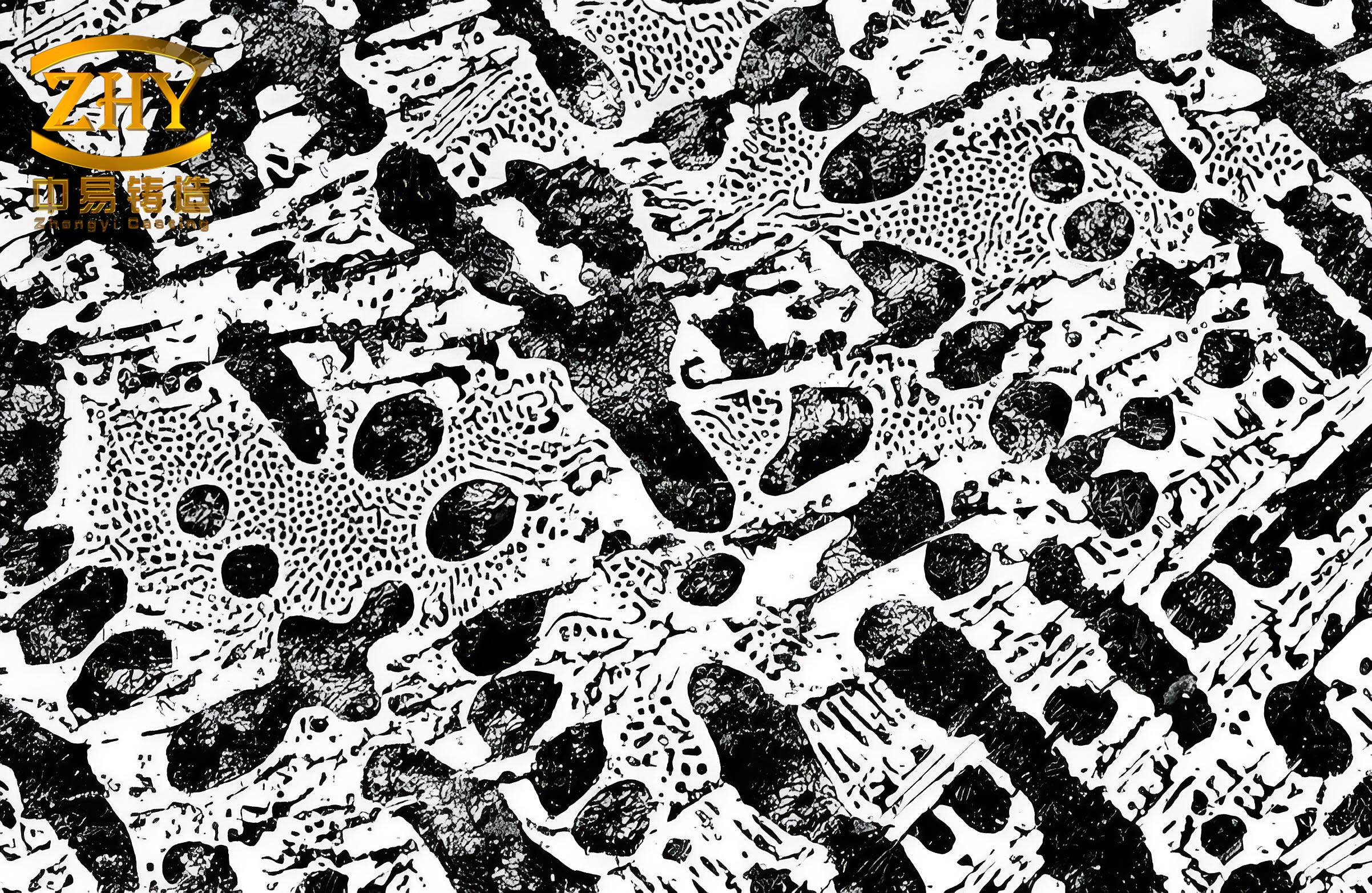
The microstructure of white cast iron is fundamentally a composite comprising hard, brittle carbides embedded in a metallic matrix. In chromium-alloyed white cast iron, the type of carbide evolves with the Cr/C ratio. At lower ratios, the carbides are predominantly of the M3C type (cementite), which are relatively less hard and exhibit a continuous, interconnected network morphology that contributes to brittleness. As the Cr/C ratio increases, the carbides transition to the harder, more discontinuous, and blocky M7C3 type. This microstructural evolution is central to the improved property balance. The matrix, which can be austenitic, martensitic, or a mixture thereof depending on composition and heat treatment, provides the necessary support for the carbides. The wear resistance of white cast iron is not merely a function of carbide hardness but a complex interplay between the carbide’s ability to resist penetration/fracture and the matrix’s ability to hold these carbides firmly in place. Similarly, fracture toughness is influenced by both the crack-blocking or deflecting ability of the carbides and the energy-absorbing capacity of the matrix.
1. Experimental Methodology: Material Design and Characterization
To isolate the effect of the Cr/C ratio, five distinct grades of chromium white cast iron were designed and produced. The target was to maintain a nearly constant volume fraction of eutectic carbides (approximately between 28% and 32%) while systematically varying the Cr/C ratio from a low value, representative of low-chromium irons, to a high value typical of high-chromium white cast irons. The chemical composition of the melts, verified via spectroscopy, is detailed in Table 1.
| Alloy Designation | C | Cr | Si | Mn | Mo | Ni | Cr/C Ratio |
|---|---|---|---|---|---|---|---|
| WCI-LC | 2.95 | 2.1 | 0.65 | 0.75 | 0.25 | 0.15 | 0.71 |
| WCI-MC1 | 2.85 | 4.8 | 0.70 | 0.80 | 0.30 | 0.20 | 1.68 |
| WCI-MC2 | 2.75 | 8.5 | 0.68 | 0.78 | 0.35 | 0.25 | 3.09 |
| WCI-HC1 | 2.65 | 15.2 | 0.72 | 0.82 | 0.40 | 0.30 | 5.74 |
| WCI-HC2 | 2.55 | 25.5 | 0.75 | 0.85 | 0.45 | 0.35 | 10.00 |
Image analysis was performed on deeply etched samples to quantify the eutectic carbide volume fraction (Vc). The results, presented in Table 2, confirm the successful stabilization of Vc across the alloy series, validating the experimental design.
| Alloy Designation | Cr/C Ratio | Carbide Volume Fraction, Vc (%) |
|---|---|---|
| WCI-LC | 0.71 | 29.8 ± 1.5 |
| WCI-MC1 | 1.68 | 30.5 ± 1.7 |
| WCI-MC2 | 3.09 | 31.2 ± 1.4 |
| WCI-HC1 | 5.74 | 30.1 ± 1.8 |
| WCI-HC2 | 10.00 | 29.5 ± 1.6 |
To evaluate the role of the matrix, two distinct heat treatment routes were applied to each alloy composition:
Treatment A (Austenitic Matrix): Austenitization at 950°C for 2 hours followed by air cooling, then sub-critical treatment at 450°C for 4 hours and air cooling. This yields a matrix predominantly comprising stabilized austenite with secondary carbides.
Treatment M (Martensitic Matrix): Austenitization at 1000°C for 2 hours followed by air cooling, then tempering at 250°C for 4 hours and air cooling. For the highest Cr/C alloy (WCI-HC2), an additional deep cryogenic treatment at -80°C for 2 hours was incorporated before tempering to maximize martensite transformation. This yields a matrix predominantly comprising tempered martensite.
Microstructural characterization included scanning electron microscopy (SEM) of deep-etched samples to reveal the three-dimensional morphology of the carbide networks. Microhardness testing was performed on both the individual eutectic carbides (HVc) and the matrix (HVm) using a Vickers indenter with appropriate loads. X-ray diffraction (XRD) and selective etching techniques were employed to identify the predominant carbide types (M3C vs. M7C3).
2. Wear Testing Under Multiple Conditions
The wear resistance of white cast iron is highly dependent on the wear system. To capture this, three different laboratory-scale wear tests were employed, each simulating different wear mechanisms prevalent in service.
2.1 Pin-on-Disc Abrasive Wear Test: This test simulates two-body abrasion with a fixed abrasive. A rectangular pin specimen (6x6x20 mm) of the white cast iron is pressed under a constant normal load (P) against a rotating disc covered with bonded abrasive paper. The wear volume (ΔV) is calculated from the mass loss and density. Two different abrasive grits were used to vary the abrasive severity:
– Silicon Carbide (SiC, HV ≈ 2600): A very hard abrasive.
– Garnet (HV ≈ 1350): A moderately hard abrasive.
The test parameters were: P = 40 N, sliding speed = 0.5 m/s, total sliding distance (L) = 300 m. Wear resistance is expressed as a relative wear resistance factor, β, defined as:
$$ \beta = \frac{\Delta W_{standard}}{\Delta W_{sample}} $$
where ΔW is the wear mass loss, and the standard material is normalized 1045 steel.
2.2 Wet Sand Rubber Wheel Abrasion Test: This test simulates low-stress three-body abrasion, common in slurry environments. A test block is pressed against a chlorobutyl rubber wheel rotating in a slurry of abrasive grit and water. The abrasive used was quartz sand (SiO2, HV ≈ 1100). The parameters were: Load = 130 N, wheel speed = 200 rpm, test duration = 60 min, abrasive feed rate = 300 g/min. The relative wear resistance β was calculated similarly.
2.3 Impeller-Drum Three-Body Abrasion Test: This custom test simulates high-stress three-body abrasion and impact, resembling conditions in mixer liners or pump casings. Test specimens are mounted on a rotating impeller inside a stationary drum containing a charge of abrasive ore (quartz sand, HV ≈ 1100). The tumbling action creates a combination of abrasion and minor impacts. Parameters were: Impeller speed = 400 rpm, test duration = 90 min, abrasive charge = 8 kg. Wear resistance is again reported as β.
The test conditions are summarized in Table 3.
| Test Type | Normal Load (N) | Abrasive Material (Hardness, HV) | Key Simulated Condition |
|---|---|---|---|
| Pin-on-Disc | 40 | SiC (~2600), Garnet (~1350) | Fixed, Two-body Abrasion |
| Wet Sand Rubber Wheel | 130 | Quartz Sand (~1100) | Low-Stress, Three-body Abrasion |
| Impeller-Drum | *Dynamic | Quartz Sand (~1100) | High-Stress, Three-body Abrasion with Impact |
*Load in the Impeller-Drum test is dynamic, resulting from centrifugal and impact forces.
3. Fracture Toughness Evaluation
The fracture toughness (KIC) of the white cast iron grades was evaluated to quantify their resistance to crack propagation and catastrophic failure. Due to the brittleness and limited plasticity of these materials, the linear elastic fracture mechanics (LEFM) approach is valid. Single-edge notched bend (SENB) specimens with dimensions of 10x20x100 mm were machined according to ASTM E399 guidelines. A sharp pre-crack was introduced at the root of the machined notch via fatigue cycling. Three-point bending tests were conducted on a servo-hydraulic testing machine, and the critical stress intensity factor at the onset of unstable crack growth was calculated as KIC.
4. Results and Microstructural Analysis
SEM examination of deep-etched samples confirmed the expected evolution in carbide morphology. The low Cr/C white cast iron (WCI-LC) exhibited a continuous, skeletal network of M3C carbides. With increasing Cr/C ratio, the carbides became progressively more isolated, blocky, and hexagonal-rod-like, characteristic of the M7C3 type. The interconnectivity of the carbide phase decreased significantly.
Microhardness traverses and selective area diffraction confirmed the change in carbide type. The average carbide hardness (HVc) increased monotonically with the Cr/C ratio, as shown in Figure 1a. More importantly, the frequency distribution of carbide microhardness measurements (Figure 1b) revealed a distinct shift. For low Cr/C white cast iron, nearly all carbides had a hardness below 1400 HV0.05. As the Cr/C ratio increased, a bimodal distribution emerged, with a growing population of carbides in the 1500-1800 HV0.05 range, confirming the increasing presence of the harder M7C3 carbides. In the highest Cr/C alloy, over 80% of the carbides exceeded 1500 HV.
The matrix hardness (HVm) was primarily governed by the heat treatment, as intended. The martensitic matrices (Treatment M) consistently showed higher hardness than their austenitic counterparts (Treatment A) for a given alloy. Interestingly, for the austenitic matrices, HVm showed a non-monotonic relationship with Cr/C, peaking at an intermediate ratio (Cr/C ≈ 5-6) likely due to solid solution strengthening from chromium and other elements retained in austenite, as shown in Figure 2.
The wear test results are consolidated in Figure 3, which plots the relative wear resistance (β) against the Cr/C ratio for the different test conditions and matrix states. The key observations are:
1. Under severe abrasion by SiC (Pin-on-Disc), the wear resistance β of white cast iron is relatively low and shows only a modest increase with Cr/C. The matrix state has a negligible effect.
2. Under abrasion by the softer Garnet (Pin-on-Disc), a strong, positive correlation between β and Cr/C is observed. Furthermore, the martensitic matrix consistently provides superior wear resistance compared to the austenitic matrix for the same alloy.
3. In three-body abrasion tests (Wet Sand and Impeller-Drum with quartz sand), the trends are similar to the Garnet test: β increases significantly with Cr/C, and the martensitic matrix is beneficial. The absolute β values are higher in the Wet Sand test compared to the more severe Impeller-Drum test.
The fracture toughness (KIC) results are plotted against the Cr/C ratio in Figure 4. A clear peak in toughness is observed at an intermediate Cr/C ratio (approximately 5-6 for the martensitic matrix and slightly higher for the austenitic). Both lower and higher Cr/C ratios result in decreased KIC. The austenitic matrix grades generally exhibit higher toughness than the martensitic ones at equivalent Cr/C ratios, which is expected due to the transformation-induced plasticity and crack-blunting capability of metastable austenite.
5. Discussion: Synthesizing Wear and Fracture Behavior
The experimental data reveal a comprehensive picture of how the Cr/C ratio governs the performance of chromium white cast iron when the carbide volume is constant. The underlying mechanisms can be interpreted through the lens of composite material theory and abrasive wear models.
5.1 The Central Role of Carbide Hardness and the Hmaterial/Habrasive Ratio:
A fundamental concept in abrasion is the hardness ratio between the material and the abrasive. A commonly cited model, such as the Rabinowicz or modified Ratner-Lancaster criteria, suggests that significant wear reduction occurs when:
$$ \frac{H_{material}}{H_{abrasive}} > \kappa $$
where κ is a constant often around 0.8-1.0, Hmaterial is the effective hardness of the wearing surface, and Habrasive is the hardness of the abrasive particle. For a white cast iron composite, the effective hardness in abrasion is dominated by the hardest constituent—the eutectic carbides.
Analyzing our system:
– For SiC abrasion (Ha ≈ 2600 HV): Even the hardest M7C3 carbides (~1800 HV) have Hc/Ha ≈ 0.69, which is below the critical threshold. Therefore, the SiC can effectively cut or fracture all carbides. The carbides offer little protection, and wear proceeds rapidly, with performance largely indifferent to carbide type or matrix. The wear mechanism is primarily micro-cutting and carbide fracture.
– For Garnet (Ha ≈ 1350 HV) and Quartz (Ha ≈ 1100 HV): The M7C3 carbides now have Hc/Ha ratios of ~1.33 and ~1.64, respectively, well above the critical value. These carbides are now highly resistant to direct penetration by the abrasive. The M3C carbides (Hc ≈ 1100-1300 HV), however, are vulnerable to Garnet and only marginally resistant to Quartz. This explains the dramatic increase in β with increasing Cr/C ratio (and thus increasing M7C3 content) observed in these tests. The wear mechanism shifts to one where the hard carbides shield the matrix, forcing the abrasive to preferentially wear the softer matrix material, which then leads to gradual carbides standing proud and eventually fracturing out of their sockets.
5.2 The Conditional Role of the Matrix:
The matrix’s contribution is conditional and synergistic. It becomes significant only when the carbides are hard enough to resist the abrasive, i.e., when Hc/Ha > κ. Under this condition, the primary wear process involves the erosion of the matrix surrounding the carbides. A harder, stronger matrix (like tempered martensite from Treatment M) provides superior mechanical support to the carbides, delaying their fracture and pull-out. This is confirmed by the statistical analysis (ANOVA) of the Pin-on-Disc Garnet test data, which identified both Cr/C ratio and matrix state as statistically significant factors (p < 0.01). In contrast, for the SiC test, the matrix effect was insignificant. In three-body abrasion, where impact and rolling contacts are involved, the matrix’s role is even more critical as it must absorb energy and resist fatigue to prevent carbide dislodgement.
5.3 Fracture Toughness Peak and Microstructural Optimization:
The observed peak in KIC at intermediate Cr/C ratios (Figure 4) is a critical finding. This can be modeled by considering the contributions of carbide morphology and matrix strength. Fracture toughness in such composites often follows a relationship that balances crack deflection and matrix plasticity:
$$ K_{IC} \propto \sigma_y \sqrt{d} \cdot f(\lambda, V_c) $$
where σy is the matrix yield strength, d is a characteristic microstructural dimension (e.g., carbide spacing), and f(λ, Vc) is a function of crack deflection parameters and carbide volume. At low Cr/C, the continuous, brittle M3C network provides an easy path for crack propagation, resulting in low KIC. As Cr/C increases, the carbides become more isolated and blocky (increasing effective d), promoting crack deflection and blunting, thereby increasing KIC. Simultaneously, the matrix solid solution strengthening increases (as seen in HVm peak in Figure 2), further enhancing KIC. However, at very high Cr/C ratios, the matrix may become overly saturated and embrittled, and the extreme hardness of the carbides might make them more prone to cleavage fracture rather than deflection, causing KIC to decline. The peak represents the optimal compromise between carbide discontinuity/bluntness and matrix strength for a given Vc.
5.4 The Performance Map: Integrating Wear Resistance and Toughness:
The ultimate goal in engineering white cast iron components is to achieve the best possible combination of wear resistance (β) and fracture toughness (KIC). Plotting β against KIC for all materials (Figure 5) creates a valuable performance map. The data points cluster along a trajectory where increasing Cr/C generally moves the performance upward and to the right initially, reaching a region of optimal compromise. The highest Cr/C alloys may offer the best wear resistance but at a cost to toughness relative to the peak. This map allows for selection based on service requirements: an application dominated by severe abrasion with minimal impact might justify a very high Cr/C white cast iron, while an application with significant impact loads would benefit from an alloy near the toughness peak (Cr/C ≈ 5-7).
6. Conclusions
This systematic investigation into chromium white cast iron with a constant eutectic carbide volume fraction leads to the following principal conclusions:
- The wear resistance of white cast iron is not an intrinsic property but is critically dependent on the abrasive environment, defined by the hardness ratio Hcarbide/Habrasive. Superior wear performance is realized only when the primary eutectic carbides are harder than the abrasive particles (Hc/Ha > ~0.8).
- Increasing the Cr/C ratio in white cast iron promotes the formation of the harder M7C3 carbide at the expense of M3C, thereby expanding the range of abrasives against which the material offers effective protection. This directly translates to higher wear resistance (β) under service conditions involving common mineral abrasives like quartz and garnet.
- The matrix plays a vital, but conditional, role in the wear of white cast iron. Its contribution is significant only when the carbides are load-bearing (Hc/Ha > κ). Under such conditions, a harder, stronger matrix (e.g., tempered martensite) provides better support to the carbides, delaying their removal and enhancing overall wear resistance compared to a softer, austenitic matrix.
- Fracture toughness (KIC) of chromium white cast iron exhibits a maximum at an intermediate Cr/C ratio (approximately 5-7 for the conditions studied). This peak represents an optimal microstructural balance where the benefits of discontinuous, crack-deflecting carbides and a strong, tough matrix are maximized.
- For engineering applications requiring a combination of abrasion resistance and fracture toughness, high-chromium white cast irons with Cr/C ratios in the range of 5 to 10 offer the best performance envelope. The specific choice within this range can be guided by the relative severity of wear versus impact loading in the intended service.
The findings underscore that the development and selection of white cast iron alloys must be driven by a fundamental understanding of the wear system and a holistic view of the microstructure-property relationships governing both material loss and fracture.
Mathematical Summary of Key Relationships:
1. Wear Resistance Condition:
$$ \beta \propto \left( \frac{H_c}{H_a} \right)^n \quad \text{for} \quad \frac{H_c}{H_a} > \kappa $$
where n is a positive exponent. For Hc/Ha ≤ κ, β is low and relatively insensitive to microstructure.
2. Matrix Effect (Conditional):
$$ \Delta \beta_{matrix} = f(H_m) \quad \text{only if} \quad \frac{H_c}{H_a} > \kappa $$
3. Fracture Toughness Model:
$$ K_{IC} \approx A \cdot \sigma_y^{m} \cdot \lambda^{p} – B \cdot V_c^{q} \cdot \chi_{brittle} $$
where A, B, m, p, q are constants, σy is matrix yield strength, λ is mean free path in the matrix (related to carbide spacing), Vc is carbide volume, and χbrittle is a factor representing the intrinsic brittleness of the carbide type.
| Primary Service Condition | Recommended Cr/C Range | Preferred Matrix | Key Rationale |
|---|---|---|---|
| Severe, High-Stress Abrasion + High Impact (e.g., Hammerheads, Impactor Blades) | 5.0 – 7.0 | Tempered Martensite (with possible retained austenite) | Optimizes the KIC peak while maintaining very high wear resistance against common siliceous abrasives. |
| High-Stress Abrasion, Moderate Impact (e.g., Pump Casings, Mixer Liners) | 7.0 – 10.0 | Tempered Martensite | Prioritizes maximum wear resistance; toughness is adequate for moderate impacts. |
| Low-Stress, Slurry Abrasion (e.g., Slurry Pump Impellers, Hydrocyclones) | 8.0 – 12.0+ | Austenitic or Austempered | Maximum corrosion-erosion resistance from high Cr content; matrix toughness helps resist erosion of supporting phase. |
| Abrasion by Very Hard Minerals (e.g., SiC, Alumina) | Material Selection Review Recommended | N/A | White cast iron may not be optimal if Hcarbide < Habrasive; consider ceramics or highly alloyed materials. |