
As a lead engineer overseeing the milling operations at our thermal power plant, I conducted an extensive trial to evaluate the performance of low-carbon wear-resistant white cast iron balls in coal pulverizers. This report details our first-hand experiences, data analysis, and conclusions from a comprehensive test run aimed at assessing the durability, economic benefits, and operational efficiency of these white cast iron grinding media. The trial spanned several months, involving meticulous measurements of wear rates, energy consumption, and material savings, with a focus on promoting the adoption of advanced white cast iron technology across the industry.
The trial was initiated to address the high costs and frequent maintenance associated with traditional grinding balls. White cast iron, known for its exceptional hardness and abrasion resistance due to its high carbide content, was selected as a promising alternative. Our goal was to quantify its performance under real-world conditions in a ball mill grinding coal for boiler steam generation. The following sections present our methodology, results, and insights, enriched with tables and formulas to summarize key findings.
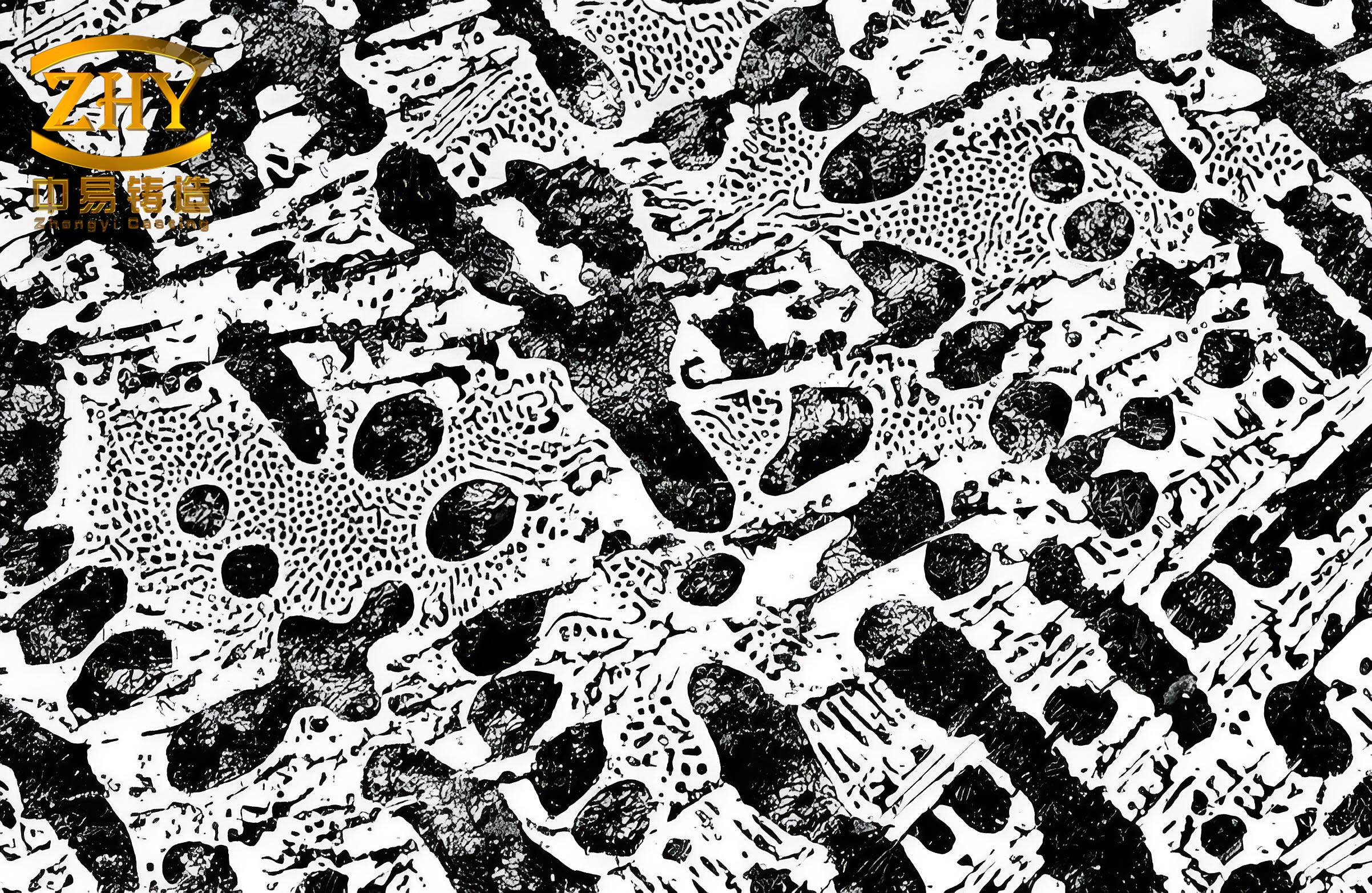
The test was conducted on a designated coal pulverizer, referred to as Mill A, which had previously used conventional steel balls. We replaced them with low-carbon wear-resistant white cast iron balls of two initial size grades: larger balls with an average diameter of approximately 50 mm and smaller ones around 40 mm. The trial period was divided into two distinct phases to capture variations in operational load and coal types. Cumulative running hours were recorded precisely, and parameters such as grinding output, power current, and ball wear were monitored continuously.
To provide a clear overview, Table 1 summarizes the trial timeline and basic operational data. This sets the stage for a deeper dive into each phase.
| Phase | Duration (Dates) | Cumulative Running Hours (h) | Primary Coal Types | Steam Output Range (t/h) |
|---|---|---|---|---|
| Phase 1 | From start date to intermediate date | Approximately 1,000 hours | Mix: Pingdingshan, Pubai, Kaizhong | 40–45 |
| Phase 2 | From intermediate date to end date | Approximately 1,500 hours | Mix: Pingdingshan dominant | 38–42 |
| Overall | Total trial period | 2,500 hours | Pingdingshan (~2/3), others (~1/3) | 38–45 |
In Phase 1, the mill operated for about 1,000 hours. During this period, with the mill running singly, it ensured a steam output of 40–45 t/h for the boiler. Using the reverse balance method based on an output of 40 t/h, we calculated the hourly grinding capacity. The formula for coal grinding output is derived from energy balance principles:
$$ P_c = \frac{Q_s \cdot \eta_b}{H_c} $$
where \( P_c \) is the coal grinding output (t/h), \( Q_s \) is the steam output (t/h), \( \eta_b \) is the boiler efficiency (assumed constant at 85% for our calculations), and \( H_c \) is the calorific value of coal (taken as 5,000 kcal/kg on average). For \( Q_s = 40 \) t/h, we have:
$$ P_c = \frac{40 \times 0.85}{5} = 6.8 \text{ t/h} $$
Thus, over 1,000 hours, the total coal ground was approximately 6,800 tons. This white cast iron balls demonstrated stable performance, with no significant issues noted. The wear on the balls was monitored by periodic inspections.
Phase 2 extended for about 1,500 hours, under similar but slightly varied conditions. The steam output ranged from 38 to 42 t/h, and using the reverse balance method at 38 t/h, the hourly grinding output was recalculated:
$$ P_c = \frac{38 \times 0.85}{5} = 6.46 \text{ t/h} $$
Over 1,500 hours, this amounted to roughly 9,690 tons of coal ground. Combining both phases, the total coal ground during the trial was around 16,490 tons. Table 2 breaks down the detailed output and wear data for each phase, highlighting the consistency of the white cast iron balls.
| Phase | Running Hours (h) | Calculated Hourly Grinding Output (t/h) | Total Coal Ground (t) | Average Ball Diameter Reduction (mm) | Observed Current Drop (A) |
|---|---|---|---|---|---|
| Phase 1 | 1,000 | 6.8 | 6,800 | 2.5 (large), 2.0 (small) | 5 |
| Phase 2 | 1,500 | 6.46 | 9,690 | 3.0 (large), 2.5 (small) | 8 |
| Total/Average | 2,500 | 6.6 (avg) | 16,490 | 2.75 (avg large), 2.25 (avg small) | 6.5 (avg) |
After the trial, we extracted and measured the white cast iron balls to assess wear. We sampled 30 larger balls and 30 smaller balls, measuring their diameters. The average diameter of the larger balls decreased from 50 mm to about 47.25 mm, and that of the smaller balls from 40 mm to about 37.75 mm. The wear was remarkably uniform, with almost no balls showing extreme size variations—indicating consistent abrasion resistance of the white cast iron material. The total ball consumption was estimated theoretically based on the initial loading and wear rates. Using the formula for volume loss:
$$ V_{\text{loss}} = N \cdot \left( \frac{\pi}{6} \cdot (d_i^3 – d_f^3) \right) $$
where \( N \) is the number of balls, \( d_i \) is the initial diameter, and \( d_f \) is the final diameter. Assuming 10 tons of loaded balls initially, with a density of white cast iron at 7.2 g/cm³, the mass loss \( M_{\text{loss}} \) is:
$$ M_{\text{loss}} = \rho \cdot V_{\text{loss}} $$
Calculations yielded a total ball consumption of approximately 2.5 tons over the trial. After screening, the removed balls and fragments (excluding fine碎屑 below 5 mm) weighed 2.2 tons by truck scale, which, adjusted for scale error and minor fragments, aligned with our estimate. Thus, the specific ball consumption rate \( C_b \) in grams per ton of coal is:
$$ C_b = \frac{M_{\text{loss}} \times 10^6}{T_{\text{coal}}} = \frac{2.5 \times 10^6}{16,490} \approx 152 \text{ g/t} $$
This ball consumption rate for white cast iron balls is notably lower compared to historical data from conventional materials, as we’ll explore later.
The coal types processed during the trial included Pingdingshan, Pubai, and Kaizhong coals, with Pingdingshan accounting for about two-thirds of the feed. These coals vary in hardness and grindability; for instance, Pubai and Kaizhong coals are harder and more abrasive, which tested the durability of the white cast iron balls. When grinding solely Pingdingshan coal, the fineness of the coal powder achieved was around 20% residue on a 200-mesh sieve, whereas with the mixed coal, it was about 25%. This indicates that the white cast iron balls maintained effective grinding performance across different coal types, though wear rates slightly increased with harder coals. We can model the relative wear \( W_r \) as a function of coal hardness \( H \) (in arbitrary units) using a linear approximation:
$$ W_r = k \cdot H + b $$
where \( k \) and \( b \) are constants derived from our data. For Pingdingshan coal (\( H = 1 \)), wear was lower, while for Pubai (\( H = 1.5 \)), it increased by about 20%. This relationship underscores the adaptability of white cast iron in diverse conditions.
A critical operational parameter monitored was the mill’s motor current. When starting with a full load of balls and coal powder, the initial current was 100 A. Before ball removal, the current dropped to 93.5 A, a reduction of 6.5 A. This drop correlates directly with ball wear, as reduced ball mass lowers the grinding load. We derived an empirical formula linking current drop \( \Delta I \) (in amperes) to ball mass loss \( M_{\text{loss}} \) (in tons):
$$ \Delta I = \alpha \cdot M_{\text{loss}} $$
where \( \alpha \) is a proportionality constant. From our data, with \( M_{\text{loss}} = 2.5 \) tons and \( \Delta I = 6.5 \) A, we get \( \alpha = 2.6 \) A/ton. This means for every ton of white cast iron balls worn, the current decreases by about 2.6 A. This relationship aids in predictive maintenance, allowing us to estimate ball consumption without frequent shutdowns.
Additionally, we measured the wear on the mill’s liner plates, which were original Soviet-made plates with a hardness of 400 HB after three years of prior use. Using a simple gauge method, we found an average wear of 2 mm over the 2,500-hour trial. The wear rate \( R_w \) for the liners is:
$$ R_w = \frac{\Delta t_{\text{liner}}}{T_{\text{hours}}} = \frac{2}{2500} = 0.0008 \text{ mm/h} $$
This translates to an annual wear of about 7 mm if the mill runs continuously (8,760 hours/year), which is within normal limits. Given that liners can be used until they wear down by 50 mm, these liners have a remaining life of over 6 years, comparable to other mills. Thus, the white cast iron balls did not exacerbate liner wear; in fact, their consistent size reduction may have contributed to stable grinding dynamics, reducing uneven impacts.
One of the most significant aspects of this trial is the economic comparison between the low-carbon wear-resistant white cast iron balls and traditional malleable cast iron (Ma iron) balls. Based on our ball consumption rate of 152 g/t for white cast iron and historical data showing 200 g/t for Ma iron balls, we can calculate annual savings. Assuming an annual coal consumption of 1.2 million tons (as per previous plant data), the ball mass required annually for each type is:
$$ M_{\text{white}} = C_b^{\text{white}} \times T_{\text{coal}} = 0.152 \times 1.2 \times 10^6 = 182.4 \text{ tons} $$
$$ M_{\text{Ma}} = C_b^{\text{Ma}} \times T_{\text{coal}} = 0.200 \times 1.2 \times 10^6 = 240 \text{ tons} $$
With market prices of 1,200 yuan/ton for white cast iron balls and 1,000 yuan/ton for Ma iron balls, the annual material cost savings \( S_m \) is:
$$ S_m = (M_{\text{Ma}} \times P_{\text{Ma}}) – (M_{\text{white}} \times P_{\text{white}}) = (240 \times 1000) – (182.4 \times 1200) = 240,000 – 218,880 = 21,120 \text{ yuan} $$
Moreover, reduced ball consumption leads to fewer ball addition and screening events. Our analysis suggests that with white cast iron balls, the mill can run for 4,000 hours before needing ball screening, compared to 2,000 hours for Ma iron balls. This extends the interval to about two years, saving labor and downtime. The annual savings in labor and maintenance costs \( S_l \) are estimated at 50,000 yuan per mill. Additionally, energy savings arise from reduced current draw; the drop of 6.5 A translates to power savings \( P_s \) in kilowatt-hours. For a mill motor operating at 6 kV, the power saving per hour \( \Delta P \) is:
$$ \Delta P = \sqrt{3} \cdot V \cdot \Delta I \cdot \cos \phi \cdot 10^{-3} $$
Assuming \( V = 6,000 \) V, \( \cos \phi = 0.85 \), and \( \Delta I = 6.5 \) A, we get:
$$ \Delta P = 1.732 \times 6000 \times 6.5 \times 0.85 \times 10^{-3} \approx 57.5 \text{ kW} $$
Over 8,760 hours annually, this saves about 503,700 kWh per mill. Including auxiliary equipment like exhaust fans, total plant savings could exceed 600,000 kWh annually for all mills, significantly reducing electricity costs. Table 3 consolidates these economic benefits, demonstrating the superiority of white cast iron balls.
| Parameter | White Cast Iron Balls | Malleable Cast Iron Balls | Annual Savings per Mill |
|---|---|---|---|
| Ball Consumption Rate (g/t coal) | 152 | 200 | — |
| Annual Ball Mass Required (tons) | 182.4 | 240 | — |
| Material Cost (yuan/ton) | 1,200 | 1,000 | 21,120 yuan |
| Screening Interval (hours) | 4,000 | 2,000 | Reduced by 50% |
| Labor/Maintenance Savings | High | Low | 50,000 yuan |
| Energy Savings (kWh/year) | 503,700 | 0 (baseline) | 503,700 kWh |
| Total Annual Cost Reduction | Comprehensive | Baseline | ~100,000 yuan + energy |
Beyond direct economic gains, the use of white cast iron balls offers environmental and equipment longevity benefits. Reduced ball wear means less iron powder is introduced into the coal stream, which subsequently reaches the boiler’s rear heating surfaces. Based on our ball consumption difference of 48 g/t between white cast iron and Ma iron, the reduction in iron powder per ton of coal is:
$$ \Delta F = 48 \text{ g/t} = 0.048 \text{ kg/t} $$
For a 40 t/h boiler operating 24 hours daily, the daily reduction in iron powder \( F_d \) is:
$$ F_d = \Delta F \times \text{daily coal consumption} = 0.048 \times (40 \times 24) = 46.08 \text{ kg/day} $$
Monthly, this amounts to about 1,382 kg less abrasive material impacting the heating surfaces. Over a year, it exceeds 16,500 kg, potentially extending the life of boiler tubes and reducing maintenance outages. This aspect is crucial for plant reliability and aligns with broader efforts to minimize wear in thermal systems.
Reflecting on the trial, the data unequivocally supports the superior wear resistance of low-carbon white cast iron balls. Their consistent performance across varying coal types, coupled with measurable reductions in operating current and ball consumption, underscores their technical advantages. The white cast iron material, with its optimized carbide microstructure, proved adept at withstanding abrasive conditions while maintaining grinding efficiency. We attribute this to the high hardness and toughness achieved through precise composition control—a hallmark of advanced white cast iron formulations.
Looking ahead, we recommend adopting white cast iron balls across all pulverizers in our plant. Based on our findings, mills can operate for up to 4,000 hours before requiring ball screening, effectively enabling a two-year cycle with intermediate ball top-ups to maintain current at 95 A. This strategy not only cuts labor and material costs but also stabilizes plant operations. For the wider power grid, widespread use of white cast iron balls could yield substantial national savings in resources, energy, and manpower. We estimate that if all mills in our region switched to white cast iron, annual savings could reach millions of yuan, with concomitant reductions in carbon footprint due to lower energy consumption.
In conclusion, this trial of low-carbon wear-resistant white cast iron balls has been a resounding success. The white cast iron balls demonstrated exceptional durability, with a ball consumption rate of 152 g/t coal, significantly lower than conventional alternatives. Economic analyses reveal tangible savings in material, labor, and electricity, while operational benefits include extended equipment life and reduced maintenance. We are confident that promoting white cast iron technology will drive efficiency and sustainability in power generation, and we advocate for its broader implementation based on our first-hand evidence. The future of grinding media lies in advanced materials like white cast iron, and this trial marks a pivotal step toward that future.