
In the field of material comminution, grinding balls are essential components used extensively in mills for pulverizing various materials. Particularly in ultra-fine grinding applications, such as in the powder metallurgy industry, bearing steel balls with diameters around 10 mm are commonly employed. However, the high wear rate of these balls leads to substantial annual consumption, resulting in significant economic costs. Bearing steel is a critical industrial material, and in some regions, a considerable portion must be imported, creating supply chain vulnerabilities. With the rapid expansion of industries like powder metallurgy, the demand for grinding balls is expected to increase further. Therefore, developing a cost-effective, high-performance alternative grinding ball that suits local conditions is an urgent and important research direction. Chromium-containing white cast iron has been widely adopted for large grinding balls, demonstrating excellent results. Hence, this study focuses on low-chromium white cast iron as a base material, exploring its microstructure and properties to assess its feasibility as a replacement for bearing steel balls.
We conducted a comprehensive investigation into the microstructure and mechanical performance of low-chromium white cast iron grinding balls. The aim was to evaluate their suitability in both dry and wet grinding environments, comparing them directly with traditional bearing steel balls. The white cast iron formulation was optimized for small-diameter balls, considering factors like hardness, toughness, and wear resistance. Through experimental trials, we characterized the alloy’s composition, heat treatment effects, and operational behavior under simulated grinding conditions. This article presents our findings in detail, utilizing tables and formulas to summarize key data and insights. The repeated emphasis on white cast iron throughout this work underscores its potential as a superior material for grinding applications.
The chemical composition of the low-chromium white cast iron was meticulously determined to balance properties such as hardness and impact resistance. After numerous trials, the optimal composition was established as follows: carbon content ranging from 2.8% to 3.2%, chromium between 1.5% and 2.0%, silicon below 0.8%, manganese around 0.5% to 1.0%, and trace amounts of other elements like molybdenum or copper to enhance specific characteristics. This composition ensures a microstructure dominated by hard carbides embedded in a metallic matrix, which is crucial for wear resistance. The white cast iron’s composition can be represented by a general formula for carbide formation: $$C_cCr_xFe_y$$, where c, x, and y depend on the alloying elements. For instance, the volume fraction of carbides $$V_c$$ can be estimated using: $$V_c = \frac{C_{\text{total}} – C_{\text{sol}}}{C_{\text{carbide}}}$$, where $$C_{\text{total}}$$ is the total carbon content, $$C_{\text{sol}}$$ is the carbon soluble in the matrix, and $$C_{\text{carbide}}$$ is the carbon in the carbide phase.
| Element | Carbon (C) | Chromium (Cr) | Silicon (Si) | Manganese (Mn) | Others |
|---|---|---|---|---|---|
| Range | 2.8-3.2 | 1.5-2.0 | <0.8 | 0.5-1.0 | Trace |
The casting process involved melting the raw materials in a 150 kg acid-lined medium-frequency induction furnace. A specialized casting technique was employed to form the balls, with a pouring temperature of approximately 1380°C. After casting, the white cast iron balls underwent various heat treatments to modify their microstructure and properties. Heat treatment temperatures included 880°C, 920°C, and 960°C, followed by air cooling (normalizing). This process aims to dissolve some carbides into the matrix, enhancing toughness and corrosion resistance. The heat treatment cycle can be described by the kinetic equation for carbide dissolution: $$\frac{dV_c}{dt} = -k \exp\left(-\frac{Q}{RT}\right) V_c^n$$, where k is a rate constant, Q is the activation energy, R is the gas constant, T is the temperature, and n is the reaction order. Post-heat treatment, the balls were subjected to hardness testing, impact fatigue tests, and wear tests under both dry and wet conditions to simulate real-world grinding scenarios.
Hardness measurements were taken across the cross-section of the grinding balls using a Vickers hardness tester. The results indicated that the low-chromium white cast iron balls achieved a bulk hardness of 58-60 HRC, which is about 10 hardness units higher than typical bearing steel balls (around 48-50 HRC). This superior hardness is attributed to the presence of hard carbides in the white cast iron microstructure. The hardness distribution can be modeled by a parabolic function: $$H(r) = H_0 – \alpha r^2$$, where H(r) is the hardness at radius r from the center, H_0 is the surface hardness, and α is a material constant. For our white cast iron balls, H_0 was approximately 60 HRC, with minimal degradation towards the core, ensuring consistent performance throughout the ball’s lifespan.
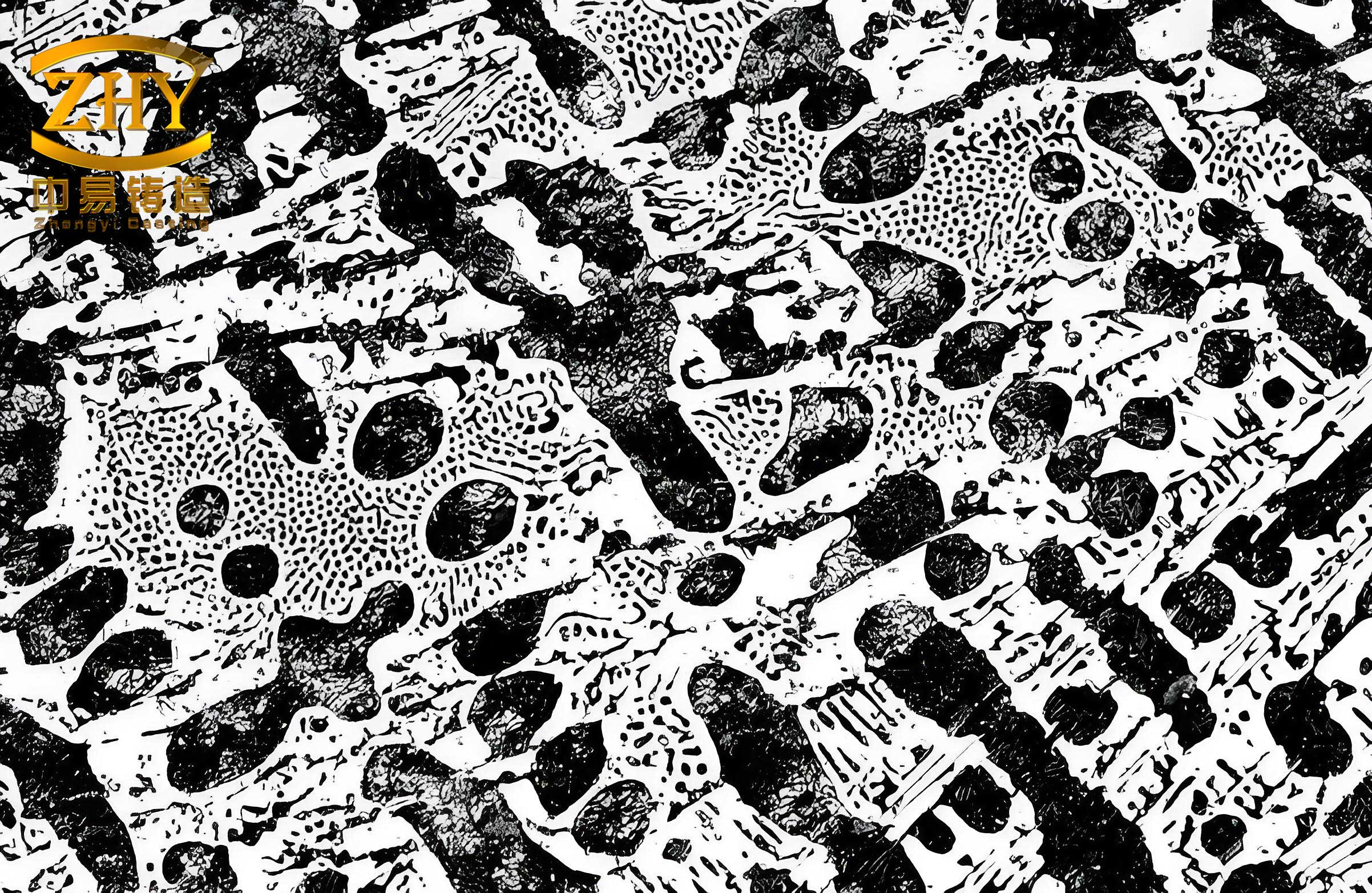
Wear resistance was evaluated using a three-body abrasion test, where the balls were subjected to abrasive particles like quartz sand. In dry grinding conditions, the low-chromium white cast iron balls exhibited a relative wear resistance index of 1.5 compared to bearing steel balls. In wet grinding, due to corrosive effects, the index was 1.2. The wear rate $$W$$ can be expressed as: $$W = k_d P v t$$ for dry grinding, and $$W = k_w P v t + \beta C_c$$ for wet grinding, where k_d and k_w are wear coefficients, P is the applied pressure, v is the sliding velocity, t is time, β is a corrosion factor, and C_c is the corrosion rate. The white cast iron’s performance stems from its carbide network, which impedes abrasive penetration. After prolonged wear, surface work-hardening was observed, increasing the matrix microhardness from 500 HV to 650 HV, further enhancing durability. In contrast, bearing steel balls showed no such work-hardening effect.
| Material Condition | Dry Grinding | Wet Grinding |
|---|---|---|
| Bearing Steel Ball | 12.5 | 13.0 |
| Low-Chromium White Cast Iron (As-cast) | 10.2 | 15.8 |
| Low-Chromium White Cast Iron (880°C Normalized) | 9.5 | 12.5 |
| Low-Chromium White Cast Iron (920°C Normalized) | 8.8 | 11.0 |
| Low-Chromium White Cast Iron (960°C Normalized) | 8.0 | 10.2 |
Impact fatigue life was assessed using a repeated impact testing machine. The bearing steel balls had an average impact fatigue life of about 8,000 cycles, whereas the low-chromium white cast iron balls exceeded 25,000 cycles, representing an improvement of more than 3 times. This enhanced durability is due to the toughening effect of the matrix after heat treatment, which reduces crack propagation. The impact fatigue life N_f can be correlated with the stress amplitude σ_a via the Basquin equation: $$N_f = C \sigma_a^{-b}$$, where C and b are material constants. For white cast iron, b is lower than for bearing steel, indicating better fatigue resistance. The combination of high hardness and improved toughness makes white cast iron ideal for high-stress grinding environments.
The wear mechanisms in dry and wet grinding differ significantly. In dry grinding, abrasion dominates, involving micro-cutting and plowing by abrasive particles. The white cast iron’s carbides, with microhardness exceeding 1200 HV, effectively resist penetration, whereas bearing steel (700-800 HV) is more susceptible. The wear volume V_w in dry conditions can be estimated using Archard’s wear equation: $$V_w = K \frac{F_n s}{H}$$, where K is a wear coefficient, F_n is the normal load, s is the sliding distance, and H is the hardness. Since white cast iron has higher hardness H, its wear volume is reduced. In wet grinding, corrosion accelerates wear due to galvanic effects between the carbide and matrix phases in white cast iron. The corrosion rate $$C_c$$ follows an exponential relationship with chromium content in the matrix: $$C_c = A \exp(-B[Cr])$$, where A and B are constants. Heat treatment increases chromium solubility in the matrix, raising the electrode potential and reducing corrosion. Thus, normalized white cast iron performs better in wet conditions. Bearing steel, being largely single-phase, has higher corrosion resistance but lower overall wear resistance due to its softer nature.
To quantify the microstructural features, we used image analysis to measure carbide volume fraction and size distribution. The white cast iron typically contained 20-25% carbide by volume, with an average carbide size of 5-10 μm. The carbide spacing λ influences wear resistance and can be calculated as: $$\lambda = \frac{1}{N_v^{1/3}}$$, where N_v is the number of carbides per unit volume. Smaller λ values enhance wear resistance by providing more barriers to abrasive particles. After heat treatment, carbide dissolution reduced the volume fraction to 15-20%, but the remaining carbides were more uniformly distributed, improving toughness without sacrificing hardness excessively. This balance is critical for grinding ball performance, and white cast iron offers a tunable microstructure through composition and heat treatment adjustments.
| Condition | Carbide Volume Fraction (%) | Average Carbide Size (μm) | Matrix Microhardness (HV) |
|---|---|---|---|
| As-cast | 24.5 | 8.2 | 500 |
| 880°C Normalized | 20.1 | 7.5 | 550 |
| 920°C Normalized | 18.3 | 7.0 | 580 |
| 960°C Normalized | 16.8 | 6.8 | 600 |
Economic analysis reveals substantial benefits from adopting low-chromium white cast iron grinding balls. The production cost for white cast iron balls is approximately 30-40% lower than the market price of bearing steel balls. Based on current data, bearing steel balls cost around $800 per ton, while white cast iron balls can be produced for about $500 per ton, including raw materials, energy, labor, and overheads. For a medium-sized plant consuming 100 tons of grinding balls annually, switching to white cast iron could save up to $30,000 per year. Moreover, a factory producing 1,000 tons of white cast iron balls annually could generate profits of $300,000, assuming a selling price of $600 per ton. These savings are driven by the lower material costs of white cast iron compared to alloy steel, without compromising performance. The widespread use of white cast iron in grinding applications could reduce reliance on imported bearing steel, enhancing industrial self-sufficiency.
The performance of white cast iron balls can be optimized based on grinding conditions. For dry grinding, such as in cement ultra-fine mills, normalizing at lower temperatures (e.g., 880°C) is recommended to retain higher carbide content for abrasion resistance. In wet grinding, like powder metallurgy slurry milling, higher normalizing temperatures (e.g., 960°C) improve corrosion resistance by enriching the matrix with chromium. Additionally, alloying elements like copper or nickel can be incorporated to further elevate the matrix electrode potential, reducing galvanic corrosion. The versatility of white cast iron allows tailoring for specific applications, making it a robust alternative to bearing steel. Future research could explore nano-structured carbides or composite formulations to push the limits of wear resistance and toughness.
In conclusion, low-chromium white cast iron grinding balls exhibit a favorable combination of high hardness, excellent wear resistance, and superior impact fatigue life compared to traditional bearing steel balls. The microstructure, characterized by hard carbides in a toughened matrix, can be controlled through composition and heat treatment to suit various grinding environments. Economic assessments confirm significant cost savings, with production costs roughly 40% lower than bearing steel. Therefore, white cast iron represents a viable and economical replacement for bearing steel balls in many industrial grinding processes. This study underscores the importance of material innovation in reducing operational costs and improving sustainability in comminution technologies. The repeated focus on white cast iron throughout this work highlights its pivotal role in advancing grinding media solutions.
To further elucidate the properties, we can derive key formulas. For instance, the relative wear resistance R_w can be defined as: $$R_w = \frac{W_{\text{steel}}}{W_{\text{white iron}}}$$, where W is the wear rate. From our data, R_w ranges from 1.2 to 1.5. The hardness-to-toughness ratio, a critical parameter for grinding balls, can be expressed as: $$\eta = \frac{H_v}{K_{IC}}$$, where H_v is Vickers hardness and K_{IC} is fracture toughness. For white cast iron, η is optimized through heat treatment to prevent brittle failure. Additionally, the corrosion-wear synergy in wet grinding can be modeled as: $$W_{\text{total}} = W_{\text{abrasion}} + W_{\text{corrosion}} + \Delta W_{\text{synergy}}$$, where ΔW_synergy represents the accelerated wear due to interactions. Our results show that for normalized white cast iron, ΔW_synergy is minimized, enhancing performance. These insights reinforce the value of white cast iron in demanding grinding applications.