
In my extensive experience working with cast steels, particularly for demanding applications such as railway vehicle components, I have frequently encountered the challenge of microstructural segregation. This phenomenon, often stemming from inherent solidification characteristics during casting, represents a significant class of heat treatment defects that can severely compromise the ductility and toughness of the final product. The steel grade ZG25MnCrNi, specified for its required balance of strength and ductility, is especially susceptible when cast into large, complex shapes. The standard requirement dictates a minimum tensile strength (Rm) of 550 MPa, yield strength (Rel) of 345 MPa, elongation (A) of 24%, and reduction of area (Z) of 36%. However, castings with pronounced segregation routinely fail to meet the ductility targets (A and Z) after conventional normalizing, sometimes achieving only half the specified values. Repeated normalizing cycles often exacerbate the problem, leading to scrapped components. This investigation was driven by the need to develop a robust heat treatment protocol that addresses these specific heat treatment defects—not by eliminating the segregation itself, which is often impractical, but by alleviating the associated detrimental stresses to restore mechanical performance.
The core issue lies in the non-uniform distribution of alloying elements like carbon, manganese, chromium, and nickel during solidification. These segregated zones possess different transformation kinetics and hardenability compared to the matrix. During subsequent heat treatment, particularly upon cooling from the austenitizing temperature, these regions transform at different rates and temperatures, generating intense localized transformation stresses. These internal stresses are a direct contributor to heat treatment defects manifesting as low ductility. The standard remedy of normalizing aims to refine the grain structure and homogenize the microstructure, but for severely segregated casts, it can be insufficient or even counterproductive if parameters are not meticulously controlled. This study systematically explores the effects of normalizing and tempering temperatures on the mechanical properties and microstructure of segregated ZG25MnCrNi castings, with the overarching goal of defining a process window that mitigates these critical heat treatment defects.
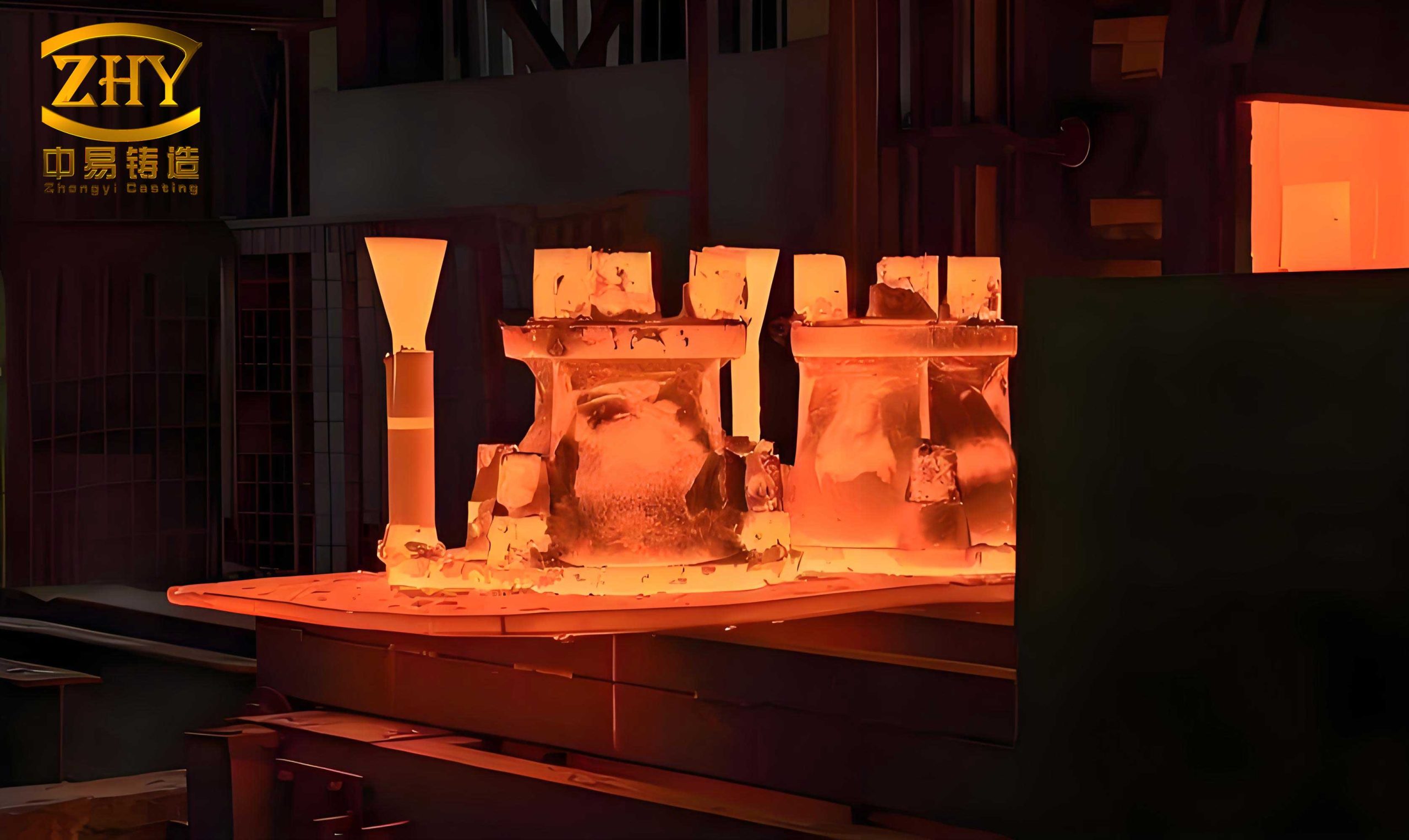
The material for this investigation was sourced from a scrapped ZG25MnCrNi casting that exhibited clear microstructural segregation and failed mechanical tests, particularly in elongation and reduction of area. Its chemical composition (in weight percent) was 0.23–0.29% C, 0.30–0.50% Si, 0.80–1.00% Mn, 0.30–0.50% Cr, and 0.20–0.40% Ni. Specimens measuring 25 mm × 25 mm × 150 mm were machined from this material. All heat treatments were conducted in a chamber-type resistance furnace. The experimental plan was divided into two major series to isolate variable effects and understand the interplay of parameters that lead to or alleviate heat treatment defects.
Series 1: Isolated Normalizing Study. This series aimed to evaluate the sole effect of austenitizing temperature. Specimens were normalized at four different temperatures: 900°C, 920°C, 950°C, and 980°C. The holding time at temperature was fixed at 120 minutes for all cases to ensure complete austenitization, followed by cooling in still air. The choice of this range brackets both the standard industrial practice (around 920°C) and higher temperatures sometimes explored to promote homogenization.
Series 2: Combined Normalizing and Tempering Study. Based on findings from Series 1, a normalizing temperature of 920°C (the standard production temperature) was selected for all specimens in this series. After normalizing (920°C/120 min/air cool), the specimens were subjected to a high-temperature tempering process. Three tempering temperatures were investigated: 600°C, 640°C, and 680°C, each with a holding time of 120 minutes, followed by air cooling.
After heat treatment, all specimens were machined into standard round tensile specimens with a 13 mm diameter gauge section. Tensile testing was performed on a CMT5105 (100 kN) electronic universal testing machine to determine yield strength (Rel), tensile strength (Rm), elongation (A), and reduction of area (Z). For microstructural analysis, samples of 15 mm × 15 mm × 20 mm were prepared, ground, polished, and etched with a 4% nital solution. Observation was carried out using a GX51 inverted optical microscope. The quantitative analysis of the mechanical data allows us to model the response, which can be summarized by empirical relationships. For instance, the change in yield strength with tempering temperature (T, in °C) after a fixed normalizing cycle can often be approximated by a linear decay relation, a common feature when addressing tempering-related relief of heat treatment defects:
$$ \text{Rel}(T) \approx \text{Rel}_0 – k \cdot (T – T_0) $$
where $\text{Rel}_0$ is the yield strength after normalizing only, $T_0$ is a reference temperature, and $k$ is a material-dependent constant.
The results from Series 1 clearly demonstrated the limitations of using elevated normalizing temperatures to correct segregation-related heat treatment defects. The mechanical properties as a function of normalizing temperature are consolidated in the table below.
| Normalizing Temperature (°C) | Yield Strength, Rel (MPa) | Tensile Strength, Rm (MPa) | Elongation, A (%) | Reduction of Area, Z (%) |
|---|---|---|---|---|
| 900 | 370 ± 5 | 625 ± 10 | 21.5 ± 1.0 | 35.0 ± 2.0 |
| 920 | 375 ± 5 | 630 ± 10 | 20.0 ± 1.5 | 33.0 ± 2.5 |
| 950 | 385 ± 8 | 645 ± 12 | 16.0 ± 2.0 | 28.0 ± 3.0 |
| 980 | 395 ± 10 | 660 ± 15 | 12.5 ± 2.5 | 22.5 ± 3.5 |
As evident from Table 1, in the range of 900–920°C, strength and ductility parameters remained relatively stable and close to, but still below, the required ductility specifications (A≥24%, Z≥36%). However, as the normalizing temperature increased from 920°C to 980°C, a subtle increase in strength was observed (Rel from ~375 MPa to ~395 MPa, Rm from ~630 MPa to ~660 MPa), but this was accompanied by a drastic and unacceptable deterioration in ductility. Elongation dropped from approximately 20% to 12.5%, and the reduction of area fell from 33% to 22.5%. This inverse relationship highlights a critical aspect of heat treatment defects in segregated materials: higher austenitizing temperatures increase the solutioning of alloying elements but also lead to greater undercooling during the subsequent air cooling, especially in the carbon- and alloy-rich segregated zones. This results in the formation of finer, harder transformation products like bainite or fine pearlite/sorbite in these zones, generating higher localized transformation stresses. The overall effect is an increase in residual stress and a severe reduction in macroscopic ductility, a classic manifestation of improper thermal processing amplifying pre-existing heat treatment defects. The microstructural observation confirmed this. After normalizing at 920°C, the matrix consisted of ferrite and pearlite, while the segregated zones showed sorbite and ferrite with a pronounced directional morphology. At 980°C, the overall grain structure was coarsened, but the segregated pattern remained starkly visible, with no improvement in homogeneity.
Given the failure of single normalizing to rectify the ductility heat treatment defects, the focus shifted to a combined normalizing and tempering process (Series 2). Tempering, especially at high temperatures, is a well-known method for relieving internal stresses and improving toughness. The results for specimens normalized at 920°C and tempered at different temperatures are summarized in Table 2.
| Tempering Temperature (°C) | Yield Strength, Rel (MPa) | Tensile Strength, Rm (MPa) | Elongation, A (%) | Reduction of Area, Z (%) |
|---|---|---|---|---|
| 600 | 400 ± 5 | 640 ± 8 | 28.5 ± 0.8 | 52.0 ± 2.0 |
| 640 | 385 ± 5 | 615 ± 8 | 29.5 ± 0.8 | 55.5 ± 2.0 |
| 680 | 350 ± 10 | 580 ± 12 | 29.5 ± 1.0 | 57.5 ± 2.5 |
The data in Table 2 reveals a transformative improvement. After tempering at 600–640°C, both elongation (A) and reduction of area (Z) not only met but significantly exceeded the technical requirements (A≥24%, Z≥36%). The strength values, while experiencing a slight decrease from the as-normalized state, remained well above the minimum specifications (Rel > 345 MPa, Rm > 550 MPa). This represents the successful mitigation of the ductility heat treatment defects. The effect of tempering temperature can be modeled. The trade-off between strength loss and ductility gain during tempering follows a predictable trend. The tensile strength after tempering can be related to the tempering parameter, often expressed using the Hollomon-Jaffe equation:
$$ P = T(\log t + C) $$
where $P$ is the tempering parameter, $T$ is the absolute temperature in Kelvin, $t$ is time in hours, and $C$ is a constant. For a fixed time, strength typically decreases exponentially with increasing tempering temperature:
$$ \text{Rm}(T) \approx \text{Rm}_0 \cdot \exp(-\lambda \cdot (T – T_{\text{ref}})) $$
where $\text{Rm}_0$ is the strength after normalizing, $\lambda$ is a decay constant, and $T_{\text{ref}}$ is a reference temperature. Conversely, ductility metrics like reduction of area often follow a saturating growth function:
$$ Z(T) \approx Z_{\text{max}} – (Z_{\text{max}} – Z_0) \cdot \exp(-\mu \cdot (T – T_{\text{ref}})) $$
where $Z_{\text{max}}$ is the maximum achievable ductility and $Z_0$ is the ductility after normalizing. The optimal window of 600–640°C represents a balance where significant stress relief occurs (greatly improving ductility) without an excessive drop in strength, effectively managing the heat treatment defects originating from segregation.
Microstructural analysis of the normalized-and-tempered specimens (e.g., at 920°C + 640°C) showed that, at the optical microscopy level, the fundamental microstructural constituents—ferrite, pearlite in the matrix, and sorbite in segregated zones—remained visually similar to the normalized-only state. The key change was not in the type or gross morphology of the phases but in the state of internal stress. The high-temperature tempering facilitated the recovery and polygonization processes, allowing dislocations to rearrange and annihilate, and promoted the spheroidization of carbides, especially in the harder, stressed segregated zones. This effectively dissipated the transformation stresses locked in these regions during the normalizing cool. Therefore, while the chemical and microstructural heterogeneity (segregation) persisted—a casting defect that heat treatment cannot erase—the associated heat treatment defects of high residual stress and poor ductility were successfully eliminated. This is a crucial distinction: the goal was not to homogenize the chemistry but to treat the consequential mechanical heat treatment defects.
To further generalize these findings for industrial practice, we can formulate guidelines for heat treating segregated low-alloy cast steels. Let the normalizing temperature be $T_N$ and the tempering temperature be $T_T$. For a steel like ZG25MnCrNi, the process window to avoid exacerbating heat treatment defects and to achieve optimal properties is defined by:
$$ 900^\circ\text{C} \leq T_N \leq 930^\circ\text{C} $$
$$ 600^\circ\text{C} \leq T_T \leq 650^\circ\text{C} $$
with holding times $t_N$ and $t_T$ proportional to section thickness, typically 1.5–2 minutes per millimeter for $t_N$ and similar or slightly longer for $t_T$. The mechanical performance outcomes can be estimated within this window. The final yield strength can be approximated as a function of both temperatures:
$$ \text{Rel}_{\text{final}} \approx \alpha \cdot \text{Rel}_{N}(T_N) – \beta \cdot (T_T – 600) $$
where $\alpha$ is close to 1, $\text{Rel}_{N}(T_N)$ is the yield strength after normalizing at $T_N$, and $\beta$ is a positive constant. More importantly, the ductility, particularly the reduction of area $Z$, shows a strong positive correlation with $T_T$ within the window, effectively countering the heat treatment defects of low ductility:
$$ Z_{\text{final}} \approx Z_{\text{min}} + \gamma \cdot (T_T – 600) \quad \text{for} \quad T_T \in [600, 640] $$
where $Z_{\text{min}}$ is the ductility after normalizing and $\gamma$ is a positive constant. Beyond 640–650°C, the strength drop becomes more pronounced without substantial further gain in ductility.
The broader implication of this work touches on the fundamental philosophy of addressing heat treatment defects in heterogeneous materials. Not all defects inherited from prior processing can be erased by heat treatment. Segregation is a prime example. However, a deep understanding of how thermal cycles interact with these inhomogeneities allows us to design treatments that mitigate their negative mechanical consequences. In this case, the heat treatment defects of low ductility and high residual stress were not due to the heat treatment process itself but were revealed and potentially aggravated by an inappropriate single-cycle normalizing process. The optimized two-stage process (normalizing + high-temperature tempering) redefines the thermal history to actively counteract these defects. It is also worth noting that other common heat treatment defects, such as overheating, grain growth, or insufficient transformation, were carefully avoided by staying within the identified temperature bands. Overheating above 950°C, as shown, leads to grain coarsening and aggravated stress in segregated zones, directly falling into the category of detrimental heat treatment defects.
In conclusion, the investigation unequivocally demonstrates that for ZG25MnCrNi steel castings with significant microstructural segregation, a two-stage heat treatment comprising normalizing at 900–920°C followed by high-temperature tempering at 600–640°C is essential to achieve the required mechanical property profile. While the normalizing step refines the general grain structure, it is the subsequent tempering that plays the critical role in relieving the transformation stresses concentrated in the segregated zones, thereby correcting the severe ductility heat treatment defects that cause rejection of cast components. This process window ensures that tensile and yield strengths remain comfortably above specification limits while elongation and reduction of area are enhanced to meet and exceed targets. The persistence of the segregated pattern at the microscale is acceptable because the harmful internal stresses associated with it are eliminated. This optimized protocol provides a reliable and practical solution for salvaging castings affected by this common form of heterogeneity, transforming a potential scrap product into a serviceable component by directly addressing the root cause of the mechanical failure—the stress-based heat treatment defects locked in during prior thermal processing. The principles derived here—balancing austenitizing temperature to avoid aggravating internal stresses and employing sufficient tempering to relieve them—are widely applicable to other alloyed cast steels facing similar challenges of segregation and the resultant heat treatment defects in ductility and toughness.