
The pursuit of optimal performance in high-speed steel (HSS) cutting tools is fundamentally a quest for the perfect balance between hardness and toughness, a balance that is critically mediated by the heat treatment process. As an engineer deeply involved in tool manufacturing and failure analysis, I have consistently observed that the majority of premature tool failures can be traced back to specific, often preventable, heat treatment defects. These heat treatment defects not only shorten tool life but also lead to unpredictable machining performance, increased downtime, and higher production costs. This article synthesizes extensive practical experience and technical data to explore the common heat treatment defects in HSS tools, their underlying causes, their impact on performance, and strategies for their mitigation.
The core challenge lies in the complex metallurgy of high-speed steels. These alloys, rich in carbide-forming elements like tungsten, molybdenum, vanadium, and cobalt, require precise thermal cycles to dissolve primary carbides, achieve a suitable austenite grain size, and then transform into a hardened matrix with a fine dispersion of secondary hardening carbides. Any deviation from the optimal parameters for heating, quenching, and tempering can introduce heat treatment defects that degrade the final properties. The consequences are not merely a matter of a few points on the Rockwell C scale; they directly translate into whether a drill bit lasts for 60 holes or 135 holes in the same material.
1. Hardness Anomalies: The Primary Manifestation of Heat Treatment Defects
Hardness is the most direct and commonly measured property of a cutting tool, and its deviation from the specified range is a primary indicator of underlying heat treatment defects. Both excessive and insufficient hardness constitute critical flaws.
Excessive Hardness (Overhardening): This heat treatment defect typically arises from quenching from an excessively high austenitizing temperature or from insufficient tempering. The result is a martensitic matrix with very high internal stresses and insufficient toughness. While wear resistance may be excellent, the tool becomes extremely prone to catastrophic brittle fracture, chipping, and micro-cracking. A classic case involved an M42 steel end mill with a hardness of 67.3 HRC, which exhibited severe chipping during use. Its performance and tool life improved significantly only after the hardness was reduced to 66 HRC, highlighting how an over-hardened state is a critical heat treatment defect.
Insufficient Hardness (Underhardening or Overtempering): This common heat treatment defect is caused by low austenitizing temperature (leading to incomplete carbide dissolution), slow quenching speed, or excessively high/long tempering cycles. The tool lacks the necessary wear resistance, leading to rapid flank wear, deformation under cutting loads, and a drastically shortened useful life. Experimental data starkly illustrates this: a φ10.9mm F205 steel drill with a hardness of 64.5 HRC drilled only 60 holes in 40Cr steel, while an identical drill from the same batch, hardened to 66.2 HRC, drilled 135 holes. Similarly, tools with hardness in the 64–64.5 HRC range were found to have only 70–80% of the service life of tools at 65–66 HRC. This persistent underperformance is a direct consequence of this specific heat treatment defect.
Hardness Non-Uniformity: Uneven heating during austenitization, inadequate agitation in the quenchant, or localized decarburization can lead to significant hardness variations within a single tool or between tools in the same batch. This inconsistency is a pernicious heat treatment defect that makes tool performance unpredictable. For example, a twist drill might have a hard cutting edge but a soft core, leading to premature failure.
The table below summarizes recommended hardness ranges for various HSS tools, highlighting the narrow window within which optimal performance is achieved. Deviations from these ranges are symptomatic of heat treatment defects.
| Tool Name | Specification | Conventional HSS (HRC) | Powder/High-Performance HSS (HRC) | Permissible Overheat Level | Notes |
|---|---|---|---|---|---|
| Straight Shank Twist Drill | ≤ φ4 mm | 63.5–66 | 64–66 | Not Allowed | Tang hardness 30-45 HRC |
| Straight Shank Twist Drill | > φ4 mm | 64–66.5 | 65–67 | ≤ Level 2 | Tang hardness 30-45 HRC |
| Taper Shank Twist Drill | All sizes | 64–66 | 65–67.5 | ≤ Level 2 | Tang hardness 25-40 HRC |
| End Mill | ≤ φ6 mm | 63.5–66 | 65–66 | ≤ Level 1 | Shank hardness 40-60 HRC |
| End Mill | > φ6 mm | 64–66.5 | 65–67 | ≤ Level 2 | Shank hardness 40-60 HRC |
| Lathe Tool | >4–16 mm | 64–66 | 66–67 | ≤ Level 2 | — |
| Gear Hob | All sizes | 64–66 | 65–67.5 | ≤ Level 2 | — |
| Broach / Push Broach | All sizes | 63.5–66 / 64–66 | 64–67 / 65–67.5 | Not Allowed / ≤1 | — |
2. Overheating and Burning: Catastrophic Heat Treatment Defects
Overheating and burning represent severe, often irreparable, heat treatment defects that originate in the high-temperature austenitization stage.
Overheating: This occurs when the tool is held at an austenitizing temperature that is too high, or for too long, resulting in excessive austenite grain growth. The coarse-grained structure after quenching and tempering has lower toughness and fatigue strength. The tables above often specify a maximum permissible “overheat level,” acknowledging this common heat treatment defect. Tools that have been overheated are more susceptible to chipping and fracture under impact loads.
Burning: A more extreme form of overheating where the temperature approaches or exceeds the solidus line of the steel, leading to partial melting of the grain boundaries or low-melting-point constituents. This creates networks of brittle, re-solidified phases along the grain boundaries, catastrophically embrittling the tool. Burning is a definitive and unacceptable heat treatment defect that renders the tool scrap. It is strictly forbidden for sensitive tools like small drills (≤φ4mm), thin milling cutters (≤1mm), broaches, and threading dies, as indicated in the specification tables.
The susceptibility to these heat treatment defects can be linked to the alloy’s composition and the prior carbide distribution. The driving force for grain growth $ (G) $ after the inhibiting carbides have dissolved can be conceptually related to the temperature excess above a critical threshold:
$$ G \propto \exp\left(-\frac{Q_g}{RT}\right) \cdot t^n $$
where $ Q_g $ is the activation energy for grain growth, $ R $ is the gas constant, $ T $ is the absolute austenitizing temperature, $ t $ is time, and $ n $ is a time exponent. Excessive $ T $ or $ t $ leads directly to the heat treatment defects of overheating.
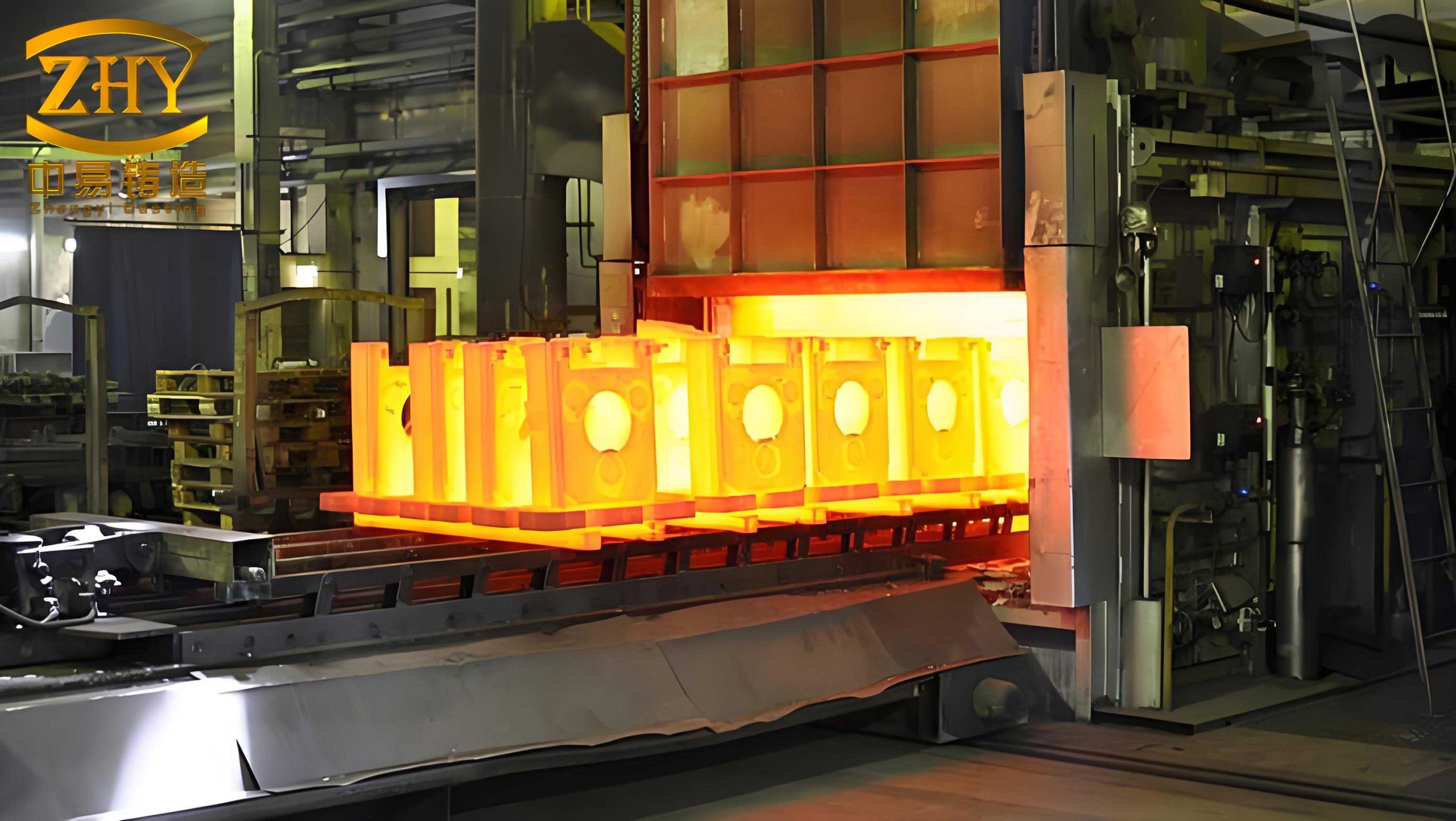
3. Inadequate Tempering and Residual Stresses
Tempering is not merely a step to adjust hardness; it is a critical process to relieve dangerous quenching stresses, transform retained austenite, and precipitate secondary hardening carbides. Failures in this stage create specific heat treatment defects.
Insufficient Tempering: Skipping tempering, using too low a temperature, or inadequate tempering time leaves the tool in a highly stressed, brittle state. High levels of untempered martensite and retained austenite remain. Retained austenite is metastable and can transform to brittle, untempered martensite during service under cutting pressures, leading to micro-cracking and sudden failure. This is a subtle but dangerous heat treatment defect.
Residual Stress Distribution: Quenching induces high surface compressive stresses and interior tensile stresses. Proper tempering reduces the magnitude of these stresses to a safe, balanced level. Inadequate quenching (e.g., insufficient agitation) or improper tempering can lead to an unfavorable residual stress profile—such as surface tensile stresses—which dramatically increases the tool’s susceptibility to crack initiation and propagation. This imbalance is a foundational heat treatment defect influencing fatigue life.
The tempering response for secondary hardening steels can be modeled to understand the risk of under-tempering. The hardness after tempering $ (H) $ is a function of the softening of the martensite and the hardening from carbide precipitation:
$$ H(T, t) = H_0 – k_1 \cdot f_1(T, t) + k_2 \cdot f_2(T, t) $$
where $ H_0 $ is the as-quenched hardness, $ T $ is tempering temperature, $ t $ is tempering time, $ k_1, k_2 $ are constants, and $ f_1, f_2 $ are functions describing softening and secondary hardening kinetics, respectively. Incorrect $ T $ and $ t $ that fail to maximize the $ k_2 \cdot f_2(T, t) $ term while adequately reducing $ H_0 $ lead directly to the heat treatment defects of poor toughness or insufficient wear resistance.
4. Decarburization and Carburization
Surface chemistry changes during heat treatment constitute a critical class of heat treatment defects that directly affect the surface integrity of the tool.
Decarburization: This is the loss of carbon from the surface layer of the steel due to reaction with oxygen, water vapor, or hydrogen in the furnace atmosphere during high-temperature holding. The decarburized layer is softer and has a lower transformation temperature (Ac1), which can lead to the formation of non-martensitic transformation products (like ferrite or pearlite) upon quenching. A tool with a decarburized surface will wear rapidly, lose its sharp edge quickly, and may even fail to harden properly at the surface. It is a severe heat treatment defect that robs the tool of its essential performance characteristics. The depth of decarburization $ (\delta_d) $ often follows a parabolic growth law:
$$ \delta_d \approx \sqrt{D_c \cdot t} $$
where $ D_c $ is the diffusivity of carbon in austenite (highly temperature-dependent) and $ t $ is time at temperature.
Carburization: Less common but equally problematic, carburization involves an unintended increase in surface carbon content. This can happen from contaminated furnace atmospheres (e.g., from hydrocarbon oils). An excessively high-carbon surface layer may have a lower melting point, be prone to retained austenite, or form brittle carbides networks, increasing the risk of thermal cracking and spalling.
5. Quenching Cracks and Distortion
These are perhaps the most visually obvious and immediately rejectable heat treatment defects. They result from the immense thermal and transformational stresses generated during rapid cooling.
Quenching Cracks: These are macroscopic cracks that often form during or immediately after the quench. They are promoted by:
- Excessive heating temperature or time (overheating, leading to coarse grains).
- Too severe a quench (e.g., water quenching an oil-hardening grade, or quenching a tool with sharp corners and thin sections in an un-agitated oil).
- Delayed tempering, leaving the tool in a high-stress state for too long.
- Pre-existing defects like forging folds, deep grinding marks, or material inhomogeneities that act as stress concentrators.
Quenching cracks are a terminal heat treatment defect.
Distortion and Warping: Uneven cooling or heating, non-uniform section thicknesses, and residual stresses from prior machining can cause the tool to change shape—bend, twist, or shrink/expand unevenly. While sometimes correctable by straightening, distortion often leads to out-of-tolerance geometry, making the tool unfit for purpose. It is a costly heat treatment defect that wastes both material and processing time.
The risk of quench cracking can be related to the stress intensity developed. A simplified view considers the thermal stress $ (\sigma_{th}) $ proportional to the temperature gradient $ (\nabla T) $ and the stress from martensitic transformation $ (\sigma_{tr}) $ proportional to the volume change and transformation rate:
$$ \sigma_{total} \approx E \cdot \alpha \cdot \Delta T_{surface-core} + \beta \cdot \Delta V \cdot \frac{d\xi}{dt} $$
where $ E $ is Young’s modulus, $ \alpha $ is thermal expansion coefficient, $ \Delta T $ is the temperature difference, $ \beta $ is a constraint factor, $ \Delta V $ is volumetric strain from transformation, and $ d\xi/dt $ is the martensite transformation rate. When $ \sigma_{total} $ exceeds the fracture strength of the untempered martensite at that temperature, a quench crack—a major heat treatment defect—initiates.
6. Microstructural Defects: The Root Cause of Property Deficiencies
Ultimately, all the property anomalies described stem from microstructural heat treatment defects. These are not always visible to the naked eye but are revealed under metallographic examination.
| Microstructural Defect | Primary Cause | Consequence for Tool Performance |
|---|---|---|
| Coarse Austenite Grain Size | Overheating; excessive time at temperature. | Reduced toughness, increased brittleness, lower fatigue strength. |
| Excessive Retained Austenite | High austenitizing temperature; insufficient or low tempering. | Unstable dimensions, potential transformation to brittle martensite in service, lower apparent hardness. |
| Insufficient Secondary Hardening | Low austenitizing temperature (incomplete carbide dissolution); incorrect tempering cycle. | Lower than expected wear resistance and hot hardness. |
| Carbide Agglomeration or Network | Poor original material (segregation); improper forging or annealing; overheating. | Acts as stress concentrators and crack initiation sites; reduces toughness and strength. |
| Non-Martensitic Transformation Products (Ferrite, Pearlite, Bainite) | Slow quenching speed; surface decarburization; inadequate hardenability for section size. | Soft areas leading to non-uniform wear, poor cutting edge stability, and accelerated failure. |
It is crucial to understand that two tools made from the same grade of steel (e.g., M42) can have the same measured bulk hardness (e.g., 65-66 HRC) yet exhibit vastly different service lives due to differences in these underlying microstructural heat treatment defects. Factors like the degree of carbide dissolution, the fineness of secondary hardening precipitates, and the actual grain size—all controlled by the specifics of the thermal cycle—create a wide dispersion in performance, even at identical hardness.
7. Strategies for Mitigating Heat Treatment Defects
Preventing heat treatment defects requires a systematic approach encompassing process design, control, and verification.
1. Precise Process Parameter Control:
- Austenitization: Use the lowest temperature that ensures complete dissolution of alloy carbides for the specific steel grade and tool size. Employ protective atmospheres or vacuum to prevent decarburization and oxidation. Control heating rates to minimize thermal stresses, especially for complex shapes.
- Quenching: Select the appropriate quenchant (oil, salt, high-pressure gas) to provide the necessary cooling speed for the tool’s cross-section while minimizing distortion and cracking risk. Ensure proper agitation and temperature control of the quenchant.
- Tempering: Always temper immediately after quenching. Use multiple tempers (typically 2-3 cycles) to thoroughly transform retained austenite and stabilize the microstructure. The temperature and time must be optimized for the specific steel’s secondary hardening response.
2. Material and Design Considerations: Start with high-quality steel with low levels of non-metallic inclusions and a uniform, fine carbide distribution. Tool design should avoid sharp corners and drastic changes in section thickness, which are prone to stress concentration and uneven cooling—key contributors to heat treatment defects like cracking and distortion.
3. Process Monitoring and Quality Assurance: Implement Statistical Process Control (SPC) for furnace temperatures, times, and atmosphere chemistry. Use thermocouples on load trays, not just in the furnace chamber. Regular calibration of all equipment is non-negotiable. Final inspection must go beyond hardness testing and include:
- Dye penetrant or magnetic particle inspection for surface cracks.
- Dimensional checks for distortion.
- Metallographic audits to check for decarburization, grain size, and general microstructure, ensuring the absence of critical microstructural heat treatment defects.
4. Tailoring Hardness to Application: As the data shows, the “optimal” hardness is not an absolute maximum but a compromise. The general rule is: select a higher hardness within the recommended range when machining hard, abrasive workpiece materials to maximize wear resistance. Select a mid-to-lower range hardness when machining tough, stringy materials or under unstable (interrupted) cutting conditions to prioritize toughness and avoid chipping. This intelligent selection is the final step in negating the risk of in-service failure related to improper property balance, which itself originates from a mismatch between the chosen heat treatment specification and the application—a final, strategic avoidance of a performance heat treatment defect.
Conclusion
The journey of a high-speed steel tool from a blank to a high-performance cutting instrument is governed by the precision of its heat treatment. Heat treatment defects—whether manifested as incorrect hardness, overheating, cracks, decarburization, or undesirable microstructure—are the primary antagonists in this process, relentlessly attacking tool life and machining economy. They are not random occurrences but the direct consequences of deviations from scientifically and empirically derived thermal cycles. The empirical evidence is clear: a difference of just 1-2 HRC can double or halve tool life, and the same hardness achieved through different thermal routes can yield vastly different performance outcomes due to hidden microstructural heat treatment defects.
Therefore, controlling heat treatment defects is synonymous with controlling tool quality and performance. It requires a deep understanding of the metallurgical principles involved, meticulous attention to process details, rigorous quality control, and an intelligent application-specific selection of the final hardness-toughness balance. The elimination of heat treatment defects remains a fundamental and perpetual challenge in tool manufacturing, one where continuous improvement in process technology and control directly translates into gains in productivity and reliability in the metalworking industry.