
In recent years, the demand for ultra-low temperature spheroidal graphite cast iron components in the rail transportation industry has grown significantly, particularly for applications in cold regions where temperatures can drop below -40 °C. As a researcher and practitioner in the field of casting technology, I have been deeply involved in the development and production control of spheroidal graphite cast iron grades such as QT400-18L and QT500-7L, which are designed to withstand these extreme conditions. This article shares my insights and findings on the production process control for -40 °C ultra-low temperature spheroidal graphite cast iron and extends the research to investigate the impact of key elements on the impact toughness at -60 °C. The goal is to provide a comprehensive overview that can guide industrial practices and further technological advancements.
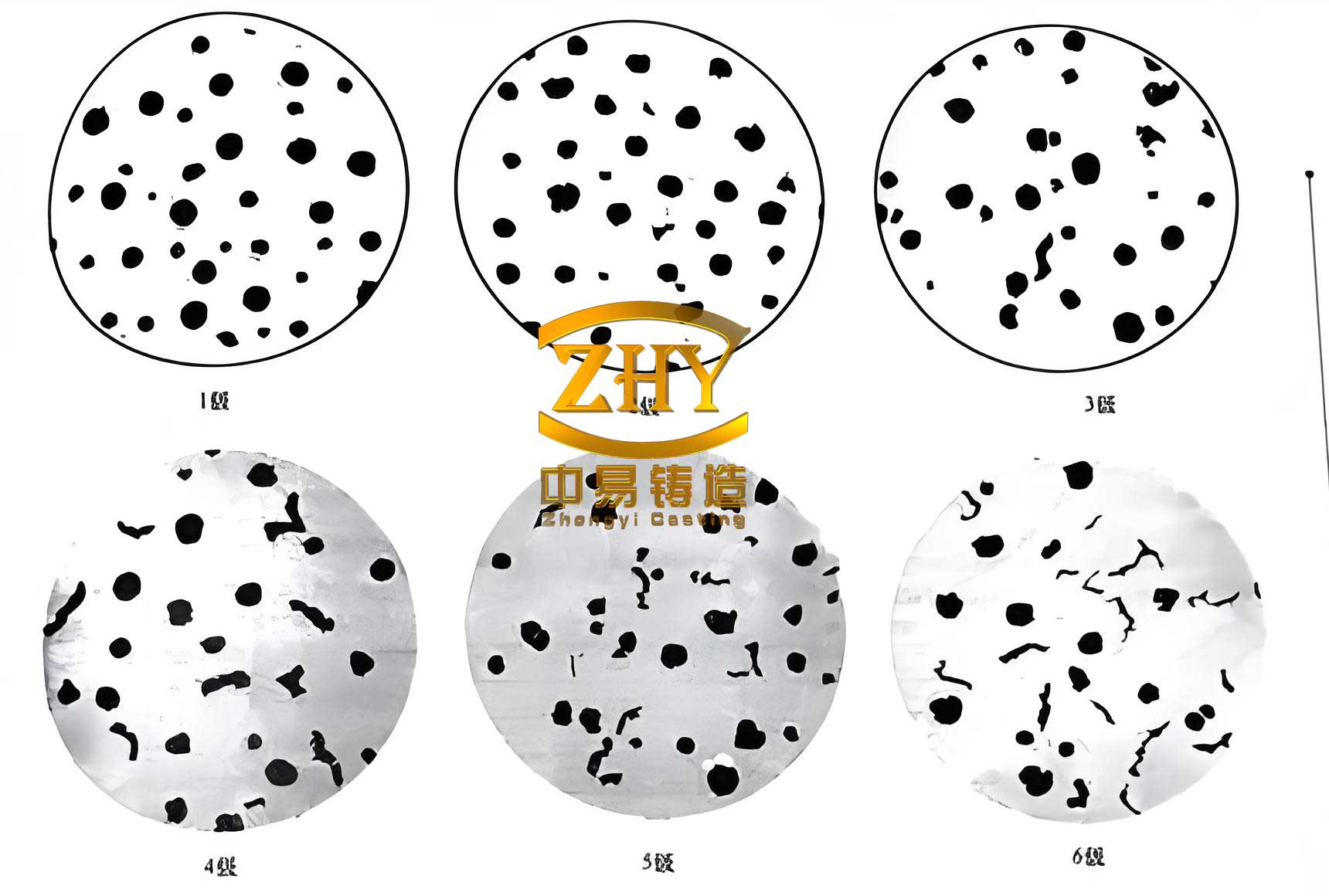
The use of spheroidal graphite cast iron in critical components like gearboxes for locomotives and urban rail vehicles requires stringent control over mechanical properties, especially impact toughness at low temperatures. In my work, I have focused on optimizing the entire production chain—from casting and molding to melting and quality assurance—to achieve high yield rates and consistent performance. Moreover, by delving into the effects of silicon, manganese, phosphorus, and sulfur on the material’s behavior at -60 °C, I aim to push the boundaries of what is achievable with spheroidal graphite cast iron in ultra-low temperature environments. This article details these aspects, incorporating tables and formulas to summarize key data and relationships, thereby offering a robust resource for engineers and metallurgists.
Production Process Control for -40 °C Ultra-Low Temperature Spheroidal Graphite Cast Iron
To ensure the reliability of spheroidal graphite cast iron components operating at -40 °C, a meticulous approach to production process control is essential. In my experience, this involves defining precise technical requirements, designing effective casting and molding processes, implementing rigorous melting practices, and establishing comprehensive quality management systems. The following sections outline these steps based on practical applications in manufacturing gearboxes for rail vehicles.
Product Technical Requirements
The mechanical properties for -40 °C ultra-low temperature spheroidal graphite cast iron are critical to meet industry standards. Two primary grades, QT400-18L and QT500-7L, are commonly used, each with specific performance criteria. As shown in Table 1, these requirements include tensile strength, elongation, impact absorption energy at -40 °C, and proof strength. These parameters ensure that the spheroidal graphite cast iron can withstand mechanical stresses and brittle fracture risks in cold climates.
| Material Grade | Tensile Strength, Rm (MPa) | Elongation, A (%) | Impact Energy at -40 °C, KV2 (J) | Proof Strength, Rp0.2 (MPa) |
|---|---|---|---|---|
| QT400-18L | ≥400 | ≥18 | ≥12 (average), ≥9 (individual) | ≥240 |
| QT500-7L | ≥500 | ≥8 | ≥4 (average), ≥3 (individual) | ≥320 |
These specifications guide the entire production process, from material selection to final inspection. In my projects, components such as gearbox housings—with wall thicknesses ranging from 8 mm to 16 mm and weights up to 390 kg—must adhere to these standards while also meeting surface and internal quality levels per international norms like EN 1369 and ASTM E 446.
Casting Process Design
The casting process for spheroidal graphite cast iron components is tailored to achieve sound castings with minimal defects. For urban rail gearboxes, I employ a semi-closed gating system with specific area ratios to ensure smooth filling and reduce oxidation. The gating ratio is typically set as $$ \sum A_{\text{inner}} : \sum A_{\text{runner}} : \sum A_{\text{sprue}} = 0.8 : (1.2 \text{ to } 1.5) : 1 $$, where the runner has the largest cross-section to slow down the molten metal flow. This design, coupled with a static head of 200 mm, minimizes turbulence and prevents gas entrapment. Additionally, risers and chills are strategically placed at hot spots like flanges and bearing housings to address shrinkage porosity, as illustrated in the process layouts.
For locomotive gearboxes, a bottom-gating system from both sides of the parting plane is used to ensure uniform filling of thin-walled sections. Multiple ingates—typically two layers with 4 upper and 6 lower ingates—are employed to promote sequential solidification and enhance feeding efficiency. Exothermic risers and external chills are applied to thick sections to further eliminate shrinkage defects. These approaches have proven effective in producing defect-free spheroidal graphite cast iron castings with consistent microstructures.
Molding Process Details
The molding process relies on nitrogen-free furan resin sand to avoid nitrogen-related brittleness in spheroidal graphite cast iron. I use high-purity silica sand with specific properties, as summarized in Table 2, to ensure good refractoriness and minimize impurities. The binder system involves a modified furan resin, often referred to as wood-flavored resin, which offers environmental benefits and low nitrogen content. Coupled with a low-sulfur catalyst, this system provides adequate strength with reduced sulfide emissions.
| Parameter | Value |
|---|---|
| SiO2 Content (%) | >95 |
| Fines Content (%) | 0 |
| Grain Size Distribution | 40-70 mesh (95% concentration) |
| Angularity Coefficient | 1-1.2 |
The resin and catalyst addition rates are optimized at 0.9-1.1 wt.% and 30-40% of resin weight, respectively. Table 3 and Table 4 detail the properties of the wood-flavored resin and low-sulfur catalyst, highlighting their suitability for producing high-quality spheroidal graphite cast iron molds. After molding, the copes and drags are coated with two layers of refractory paint—a base layer of alumina and a surface layer of graphite-alcohol—to prevent metal penetration and improve surface finish.
| Property | Value |
|---|---|
| Density (g/cm³) | 1.15-1.22 |
| Viscosity (mPa·s) | 38-42 |
| Free Formaldehyde (%) | ≤0.03 |
| Nitrogen Content (%) | ≤0.07 |
| pH Value | 6.0 |
| Moisture Content (%) | 1.50 |
| Property | Value |
|---|---|
| Density (g/cm³) | 1.3-1.6 |
| Viscosity (mPa·s) | ≤40 |
| Total Acidity (% as H2SO4) | 40-44 |
| Free Acid (%) | ≤18 |
Melting Process Optimization
The melting process for spheroidal graphite cast iron is critical to achieving the desired chemical composition and microstructure. I start with carefully selected charge materials, including high-purity pig iron, low-temperature scrap steel, graphite carburizer, returns, and alloying elements like copper and nickel. Table 5 outlines the target chemical composition ranges for QT400-18L and QT500-7L spheroidal graphite cast iron, emphasizing low levels of impurities such as sulfur and phosphorus to enhance low-temperature toughness.
| Element | QT400-18L | QT500-7L |
|---|---|---|
| Carbon (C) | 3.3-3.9 | 3.3-3.9 |
| Silicon (Si) | 1.7-2.3 | 1.7-2.3 |
| Manganese (Mn) | <0.2 | <0.2 |
| Phosphorus (P) | <0.035 | <0.035 |
| Sulfur (S) | <0.02 | <0.02 |
| Magnesium (Mg) | 0.02-0.05 | 0.02-0.05 |
| Copper (Cu) | 0-0.3 | – |
| Nickel (Ni) | 0.3-1.2 | 0.5-1.5 |
The charge makeup is calculated based on these targets, with returns limited to 0-50% to maintain consistency. Melting is conducted in medium-frequency induction furnaces, where the scrap steel and carburizer are charged first, followed by pig iron, returns, and nickel. After melting at 1530-1560 °C, the melt is slagged and held for homogenization. Copper and ferrosilicon are added before tapping at 1500-1530 °C for treatment.
Nodulizing and inoculating are performed using a covered ladle process. The nodulizer (containing Mg and rare earths) and inoculant (high-silicon alloy) are placed in the ladle well and compacted, with typical addition rates of 1.1-1.3 wt.% and 0.5-0.7 wt.%, respectively. Covering agent is added to prevent oxidation. The molten spheroidal graphite cast iron is tapped in two stages: the first portion triggers the reaction, and after covering, the remaining melt is added along with ladle inoculation (0.7-0.9 wt.% inoculant). Post-treatment, the melt is stirred, slagged, and poured at 1390-1420 °C with stream inoculation (0.1-0.2 wt.%) to enhance graphite nucleation. After pouring, molds are cooled to below 300 °C before shakeout to avoid thermal stresses.
Process Quality Control
To ensure consistent quality in spheroidal graphite cast iron production, I implement a structured quality control plan that spans 29 process steps. This includes First Article Inspection (FAI), control plans, Process Failure Mode and Effects Analysis (PFMEA), workflow cards, and detailed operating instructions. All documents are controlled and executed with strict record-keeping. Management systems cover raw material approval, pattern maintenance, batch tracking, and anomaly handling, creating a closed-loop quality assurance framework. Regular audits and data analysis help maintain high standards, as evidenced by the production statistics in Table 6, which show excellent yield and compliance rates for spheroidal graphite cast iron gearboxes produced between 2018 and 2021.
| Metric | Value |
|---|---|
| Total Production Quantity (pieces) | 43,789 |
| Magnetic Particle Testing合格率 (%) | 100 |
| Material Compliance Rate (%) | 99.85 |
| Radiographic Testing合格率 (%) | 97.87 |
| Overall Yield Rate (%) | 92.75 |
These results demonstrate that with rigorous process control, spheroidal graphite cast iron components can achieve stable yields above 92%, meeting the stringent demands of the rail industry.
Technical Research on Impact Toughness of -60 °C Ultra-Low Temperature Spheroidal Graphite Cast Iron
Building on the production expertise for -40 °C spheroidal graphite cast iron, I have extended my research to explore the behavior of spheroidal graphite cast iron at even lower temperatures, specifically -60 °C. This investigation focuses on how silicon, manganese, phosphorus, and sulfur influence the impact toughness, with the aim of developing guidelines for optimizing composition in ultra-low temperature applications. The study involves experimental melts of QT400-18L, QT500-7L, and a higher-strength QT600-7L spheroidal graphite cast iron, using Y-block samples cast in resin sand molds to ensure consistency.
Experimental Materials and Methods
The test materials were designed with varying levels of silicon, manganese, phosphorus, and sulfur while keeping other elements within typical ranges for spheroidal graphite cast iron. Table 7 summarizes the chemical composition ranges for the three grades studied. All samples were subjected to microstructural analysis to confirm a spheroidal graphite morphology with nodularity above 95%, graphite size rating better than 5, and graphite count of 100-300 nodules/mm². The matrix structures varied: QT400-18L was fully annealed to achieve over 95% ferrite, QT500-7L was as-cast with a mixed ferrite-pearlite structure (over 60% ferrite), and QT600-7L was as-cast with a pearlite-dominated matrix (over 60% pearlite).
| Element | QT400-18L | QT500-7L | QT600-7L |
|---|---|---|---|
| Silicon (Si) | 1.6-2.3 | 1.6-2.3 | 1.6-2.3 |
| Manganese (Mn) | 0.05-0.25 | <0.2 | <0.2 |
| Phosphorus (P) | 0.03-0.18 | <0.03 | <0.03 |
| Sulfur (S) | 0.003-0.02 | 0.003-0.02 | 0.003-0.02 |
| Carbon (C) | 3.3-3.9 | 3.3-3.9 | 3.3-3.9 |
| Magnesium (Mg) | 0.02-0.05 | 0.02-0.05 | 0.02-0.05 |
| Nickel (Ni) | 0.5-1.5 | 0.5-1.5 | 0.5-1.5 |
| Copper (Cu) | 0-0.3 | 0-0.5 | – |
Impact tests were conducted at -60 °C using standard Charpy V-notch specimens, and the results were analyzed to derive relationships between composition and toughness. The following sections detail the findings for each element, supported by empirical models.
Influence of Silicon on Impact Toughness
Silicon is a key alloying element in spheroidal graphite cast iron that strengthens the ferrite matrix but can adversely affect toughness at low temperatures if excessive. My experiments show that for ferritic spheroidal graphite cast iron (QT400-18L), the impact energy at -60 °C decreases with increasing silicon content. This relationship can be approximated by a linear decay model: $$ KV2 = -k_{Si} \cdot [Si] + C_{Si} $$ where \( k_{Si} \) is a positive constant, \( [Si] \) is the silicon content in wt.%, and \( C_{Si} \) is the intercept. When silicon exceeds 1.9%, the drop in toughness becomes drastic, especially at lower temperatures. To achieve impact energies above 12 J at -60 °C in ferritic spheroidal graphite cast iron, silicon should be kept below 2.0%.
For mixed-matrix spheroidal graphite cast iron (QT500-7L), the optimal silicon range is narrower, around 1.9-2.0%, where impact toughness is maximized. This suggests that silicon’s role is complex, involving both solid solution strengthening and segregation effects. Silicon tends to segregate at grain boundaries in spheroidal graphite cast iron, reducing boundary energy and potentially embrittling the material. Therefore, controlling silicon within precise limits is crucial for maintaining the ductility of spheroidal graphite cast iron in ultra-low temperature service.
Influence of Manganese on Impact Toughness
Manganese is often considered detrimental to low-temperature toughness in spheroidal graphite cast iron due to its tendency to promote pearlite formation and segregate. However, my research reveals a nuanced picture. In fully annealed ferritic spheroidal graphite cast iron (QT400-18L), impact toughness actually improves slightly with increasing manganese content, up to about 0.25%. This can be expressed as: $$ KV2 = m_{Mn} \cdot [Mn] + D_{Mn} $$ with \( m_{Mn} > 0 \). The beneficial effect is attributed to manganese’s ability to combine with sulfur to form MnS inclusions, which are less harmful than FeS films. At -60 °C, where sulfur-induced embrittlement is more pronounced, this sulfide modification helps preserve toughness. Thus, for ultra-low temperature spheroidal graphite cast iron, a moderate manganese content (e.g., 0.1-0.2%) can enhance performance stability without compromising other properties.
Influence of Phosphorus on Impact Toughness
Phosphorus is a notorious impurity in spheroidal graphite cast iron because it forms brittle phosphide phases that degrade toughness. My data indicates a critical threshold for phosphorus content. For ferritic spheroidal graphite cast iron, impact energy at -60 °C declines sharply when phosphorus exceeds 0.07%, following an exponential decay pattern: $$ KV2 = A_{P} \cdot e^{-B_{P} \cdot [P]} $$ where \( A_{P} \) and \( B_{P} \) are constants. Below 0.07%, the impact values remain above 12 J, but above this level, phosphorus leads to the formation of Fe3P and ternary phosphide eutectics that act as stress concentrators and crack initiators. Therefore, to ensure good low-temperature toughness in spheroidal graphite cast iron, phosphorus must be strictly controlled below 0.07%, preferably through the use of high-purity charge materials.
Influence of Sulfur on Impact Toughness
Sulfur is another harmful element in spheroidal graphite cast iron, primarily due to the formation of FeS films along grain boundaries. My experiments show that impact toughness at -60 °C decreases with rising sulfur content, with a critical limit around 0.012% for ferritic spheroidal graphite cast iron. The relationship can be modeled as: $$ KV2 = -s_{S} \cdot [S] + E_{S} $$ where \( s_{S} \) is a steep slope. When sulfur is below 0.012%, impact energies stay above 12 J; above this, they fall rapidly. For mixed-matrix spheroidal graphite cast iron (QT500-7L), the threshold is similar, with sulfur below 0.015% needed to achieve at least 4 J impact energy. This underscores the importance of thorough desulfurization during melting and careful selection of raw materials to keep sulfur levels minimal in ultra-low temperature spheroidal graphite cast iron.
Discussion and Implications
The combined effects of silicon, manganese, phosphorus, and sulfur on the impact toughness of spheroidal graphite cast iron at -60 °C highlight the need for balanced alloy design. Based on my findings, I propose the following composition guidelines for spheroidal graphite cast iron intended for -60 °C service:
- Silicon: Limit to 1.9% for ferritic grades and 1.9-2.0% for mixed-matrix grades.
- Manganese: Maintain at 0.1-0.2% to leverage sulfide modification without promoting pearlite excessively.
- Phosphorus: Keep below 0.07% to avoid phosphide embrittlement.
- Sulfur: Control below 0.012% to prevent grain boundary weakening.
These targets can be achieved through optimized melting practices, including the use of high-purity pig iron, effective nodulizing and inoculating, and stringent process controls. Moreover, the research suggests that with proper composition adjustments, spheroidal graphite cast iron can meet even more demanding specifications, such as impact energies of 12 J average for QT400-18L and 4 J average for QT500-7L at -60 °C.
Conclusion
In summary, the production of ultra-low temperature spheroidal graphite cast iron requires a holistic approach that integrates advanced casting techniques, precise molding, controlled melting, and robust quality management. My work demonstrates that for -40 °C applications, spheroidal graphite cast iron components like gearboxes can achieve yield rates over 92% with excellent mechanical properties. Extending this to -60 °C, I have identified key compositional factors that govern impact toughness: silicon should be limited to around 2%, manganese can be beneficial in moderation, while phosphorus and sulfur must be kept below 0.07% and 0.012%, respectively. These insights not only enhance the performance of spheroidal graphite cast iron in extreme environments but also pave the way for future innovations in material science. As the demand for reliable low-temperature materials grows, continued research and refinement of spheroidal graphite cast iron will remain vital for industries such as rail transportation, wind energy, and beyond.