
In the demanding field of construction machinery, components such as excavator sleeves are subjected to harsh operating conditions, including high loads, abrasive environments, and frequent impact. These sleeves, which connect pivotal points like the bucket, arm, and track rollers, often fail prematurely due to wear, leading to increased maintenance costs and downtime. Traditional materials like carbon steel have shown limitations in wear resistance, necessitating the exploration of advanced alternatives. In this study, I focus on the development and evaluation of austempered ductile iron (ADI) sleeves produced via centrifugal casting. The goal is to enhance service life through superior microstructure and self-lubricating properties inherent in ductile cast iron. This article delves into the process, microstructure, mechanical properties, and tribological performance, highlighting why ductile cast iron, particularly after austempering, stands out as a robust solution for heavy-duty applications.
The core material under investigation is ductile cast iron, a type of iron alloy characterized by spheroidal graphite nodules embedded in a metallic matrix. This structure imparts a unique combination of strength, ductility, and wear resistance. For this application, the ductile cast iron was tailored with specific alloying elements to optimize its performance. The chemical composition, as detailed in Table 1, includes carbon, silicon, manganese, and copper, with copper added to enhance density and graphite distribution. The presence of copper in ductile cast iron promotes austenite stability and refines the microstructure during heat treatment, which is critical for achieving high performance.
| Element | C | Si | Mn | Cu | S | P | Fe |
|---|---|---|---|---|---|---|---|
| Content | 3.5 | 1.9 | 0.9 | 0.5 | <0.04 | <0.04 | Balance |
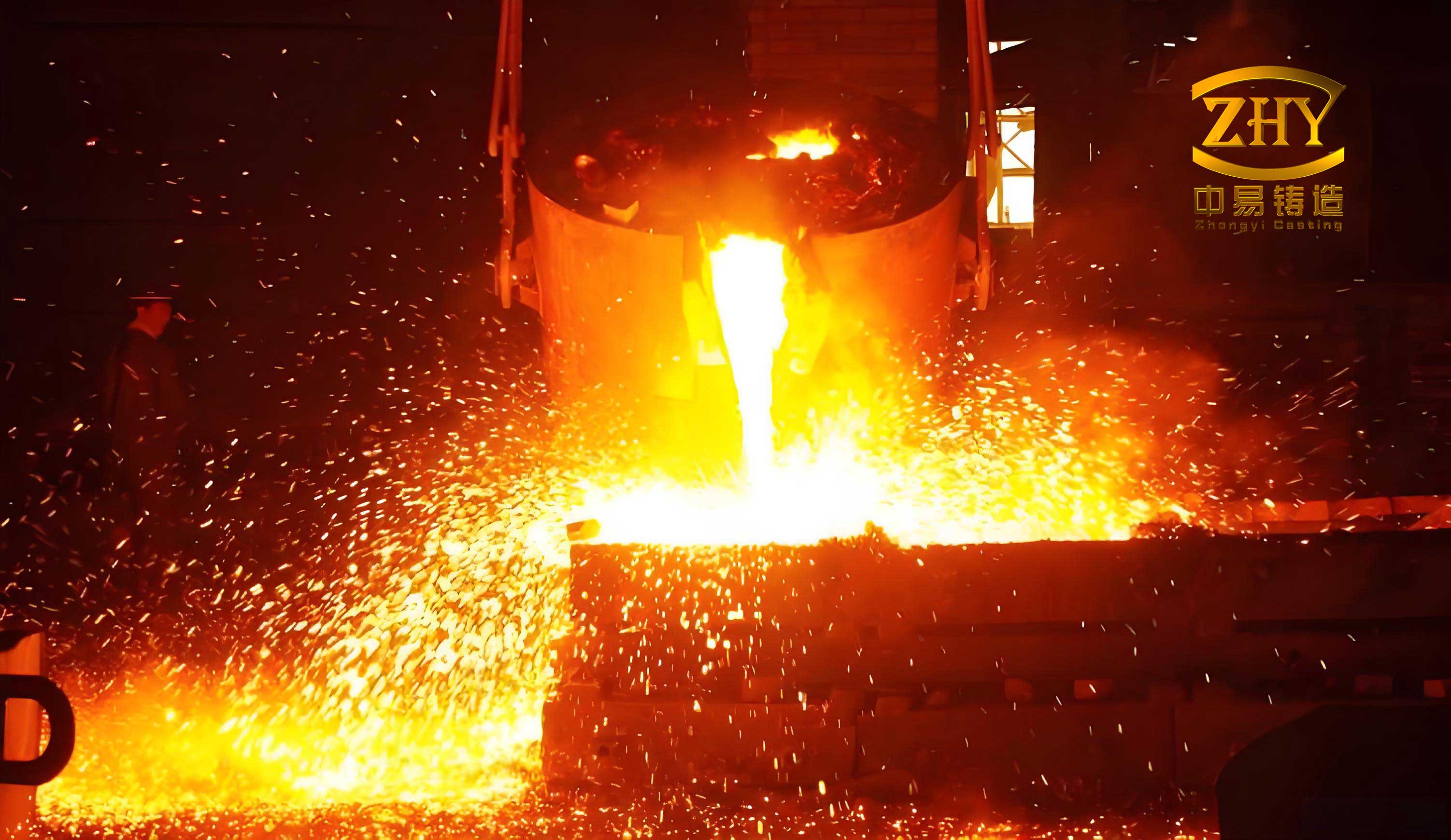
To manufacture the sleeves, centrifugal casting was employed—a process that utilizes rotational forces to distribute molten metal uniformly against the mold walls, resulting in dense, defect-free components with improved mechanical properties. The centrifugal casting process is especially advantageous for producing cylindrical parts like sleeves, as it minimizes porosity and enhances grain alignment. In this case, the ductile cast iron was melted in a medium-frequency induction furnace at 1,540–1,560°C, then subjected to spheroidization and inoculation treatments using rare-earth magnesium and silicon-ferro alloys, respectively. The molten ductile cast iron was poured into a preheated centrifugal mold rotating at 1,000 rpm, with a controlled pouring temperature of 1,400–1,420°C to prevent spheroidization decay. After casting, the sleeves were cooled and extracted for further processing.
Following casting, the ductile cast iron sleeves underwent austempering heat treatment to transform their microstructure into austempered ductile iron (ADI). This involved austenitizing at 900°C for 1.5 hours, followed by rapid quenching into oil at 100°C. Once the temperature dropped to 230–280°C, the sleeves were transferred to an isothermal furnace at 260°C for 100 minutes, then air-cooled. This treatment promotes the formation of a fine matrix consisting of lower bainite, retained austenite, and spheroidal graphite, which is key to the enhanced properties of ADI. The microstructure evolution in ductile cast iron during austempering can be described by phase transformation kinetics, often modeled using equations like the Johnson-Mehl-Avrami-Kolmogorov (JMAK) equation for phase fraction: $$ f(t) = 1 – \exp(-k t^n) $$ where \( f(t) \) is the transformed fraction, \( k \) is a rate constant, \( t \) is time, and \( n \) is an exponent. For ductile cast iron, this helps in optimizing the isothermal holding time to achieve the desired bainitic structure.
The mechanical properties of the ADI sleeves were evaluated through tensile testing and hardness measurements. Samples were cut from multiple sleeves to ensure consistency, and the results are summarized in Table 2. The ductile cast iron exhibited high tensile strength, averaging 1,099 MPa, with a hardness around 52.8 HRC. The reduction of area was relatively low, indicating a balance between strength and toughness typical of ADI materials. These properties stem from the fine bainitic needles and stable retained austenite in the microstructure, which work synergistically to resist deformation and crack propagation.
| Sample | Tensile Strength (MPa) | Reduction of Area (%) | Hardness (HRC) |
|---|---|---|---|
| 1 | 1,150 | 0.61 | 52 |
| 2 | 1,068 | 0.44 | 54 |
| 3 | 1,123 | 0.58 | 57 |
| 4 | 1,053 | 0.38 | 49 |
| 5 | 1,169 | 0.55 | 55 |
| 6 | 1,034 | 0.47 | 50 |
| Average | 1,099 | 0.50 | 52.8 |
Microstructural analysis revealed that the ADI consisted of ultra-fine needle-like lower bainite, uniformly distributed spheroidal graphite, and a significant amount of retained austenite. This combination is pivotal for wear resistance, as the bainite provides hardness, while the graphite acts as a solid lubricant. The retained austenite, which can undergo strain-induced transformation to martensite during friction, further enhances surface hardness through a work-hardening effect. The volume fraction of retained austenite in ductile cast iron after austempering can be estimated using X-ray diffraction, but qualitatively, its presence contributes to toughness and fatigue resistance. The graphite nodules in ductile cast iron, typically with a nodularity above 80%, play a crucial role in self-lubrication by releasing graphite particles that reduce direct metal-to-metal contact.
To assess wear performance, friction and wear tests were conducted under both dry and oil-lubricated conditions, simulating real-world excavator scenarios. The tests used a ball-on-disk configuration with a GCr15 steel ball as the counterface, applying a load of 30 N and a sliding speed of 10 mm/s over 1,800 seconds. The friction coefficient \( \mu \) was calculated as \( \mu = \frac{F_f}{F_n} \), where \( F_f \) is the frictional force and \( F_n \) is the normal load. Wear mass loss was measured to determine wear rate, often expressed as \( W = \frac{\Delta m}{\rho A d} \), where \( \Delta m \) is mass loss, \( \rho \) is density, \( A \) is contact area, and \( d \) is sliding distance. However, for simplicity, mass loss percentages are reported here. The results, compared to conventional 45 steel, are shown in Table 3 and Figure 1 (represented descriptively).
| Condition | Material | Initial Mass (mg) | Final Mass (mg) | Mass Loss (%) | Average Friction Coefficient |
|---|---|---|---|---|---|
| Dry Friction | Austempered Ductile Iron | 3,235 | 3,119 | 3.59 | 0.39 |
| 45 Steel | 3,218 | 2,516 | 21.8 | 0.58 | |
| Oil Lubrication | Austempered Ductile Iron | 3,223 | 3,141 | 0.82 | 0.12 |
| 45 Steel | 3,241 | 2,951 | 8.95 | 0.48 |
Under dry friction, the ADI sleeves demonstrated a friction coefficient of approximately 0.39, which is about two-thirds that of 45 steel (0.58). The wear mass loss for ductile cast iron was only 3.59%, compared to 21.8% for steel—a six-fold improvement. In oil-lubricated conditions, the benefits were even more pronounced: the friction coefficient for ADI dropped to 0.12, roughly one-fourth that of steel, and wear loss was merely 0.82% versus 8.95% for steel, indicating a ten-fold reduction. This dramatic enhancement underscores the efficacy of ductile cast iron in minimizing friction and wear, especially when lubricated.
The superior wear resistance of austempered ductile iron can be attributed to multiple factors rooted in its microstructure. Firstly, the fine bainitic matrix provides high hardness and strength, resisting abrasive wear. The hardness of ADI, derived from bainite, can be related to its carbon content and transformation temperature using empirical formulas like $$ H_v = H_0 + k_C C + k_T T $$ where \( H_v \) is Vickers hardness, \( H_0 \) is a base hardness, \( C \) is carbon content, \( T \) is transformation temperature, and \( k_C \), \( k_T \) are constants. For ductile cast iron, the typical hardness ranges from 300 to 500 HV, correlating well with the measured HRC values. Secondly, the spheroidal graphite in ductile cast iron acts as a built-in lubricant; during sliding, graphite particles detach and form a tribofilm that reduces adhesion and friction. This self-lubricating property is unique to ductile cast iron and becomes more effective under lubrication, as oil can seep into pores left by graphite, creating a hybrid lubrication system. Thirdly, the retained austenite in ADI undergoes strain-induced transformation to martensite under stress, a phenomenon described by the TRIP (Transformation-Induced Plasticity) effect. This increases surface hardness dynamically, preventing wear initiation and propagation. The volume fraction of transformed martensite \( V_m \) can be estimated as \( V_m = V_a (1 – \exp(-k \epsilon)) \), where \( V_a \) is initial austenite volume, \( k \) is a constant, and \( \epsilon \) is strain. In ductile cast iron, this contributes to a work-hardened layer that shields the bulk material.
Moreover, the centrifugal casting process itself enhances the properties of ductile cast iron by reducing defects like shrinkage and gas porosity. The centrifugal force \( F_c \) is given by \( F_c = m \omega^2 r \), where \( m \) is mass, \( \omega \) is angular velocity, and \( r \) is radius. For the sleeves, at 1,000 rpm, this force ensures dense packing of the molten ductile cast iron, leading to a homogeneous microstructure with evenly distributed graphite nodules. This uniformity is critical for consistent wear performance, as localized weaknesses could accelerate failure. The combination of centrifugal casting and austempering thus represents a synergistic approach to optimizing ductile cast iron for demanding applications.
In practical terms, the ADI sleeves offer significant advantages for excavator and other construction machinery components. Their extended service life reduces maintenance frequency and downtime, leading to cost savings and improved operational efficiency. The self-lubricating nature of ductile cast iron also means less dependency on external lubrication systems, which can fail in harsh environments. Future work could explore further alloy modifications, such as adding nickel or molybdenum to ductile cast iron, to enhance corrosion resistance or fatigue strength. Additionally, computational modeling using finite element analysis (FEA) could predict wear patterns in ADI sleeves under complex loading, aiding in design optimization. The wear rate \( \dot{w} \) might be modeled with Archard’s equation: $$ \dot{w} = K \frac{F_n}{H} $$ where \( K \) is a wear coefficient, \( F_n \) is normal load, and \( H \) is hardness. For ductile cast iron, \( K \) is lower due to graphite lubrication, explaining its superior performance.
In conclusion, austempered ductile iron produced via centrifugal casting exhibits exceptional wear resistance and self-lubricating properties, making it an ideal material for excavator sleeves. The microstructure of ductile cast iron, comprising fine bainite, spheroidal graphite, and retained austenite, delivers a combination of high strength, hardness, and tribological benefits. Under both dry and lubricated conditions, ADI outperforms traditional 45 steel by significant margins in friction reduction and wear minimization. This study underscores the potential of ductile cast iron in revolutionizing component durability in heavy machinery, paving the way for broader adoption in industries where wear is a critical concern. As research progresses, the versatility of ductile cast iron will likely expand, offering sustainable and cost-effective solutions for engineering challenges.