
In the demanding field of high-speed rail traction systems, the reliability of power components is non-negotiable. The engine frame, a critical structural element within the diesel engine power system, is subject to exceptionally stringent quality requirements. This casting, often fabricated from a high-strength alloyed gray iron with specifications positioned between GG30 and GG35, presents a formidable manufacturing challenge. Its complex geometry features significant variation in wall thickness, ranging from 15 mm to 120 mm, and incorporates demanding mechanical and microstructural specifications. These include a predominantly pearlitic matrix, tensile strength exceeding 258 MPa in critical sections, controlled hardness, and a defined graphite structure. Most critically, all machined surfaces and key areas must be completely free from any detectable defects, making the control of internal integrity, particularly shrinkage porosity, a paramount concern. While this specific case involves a high-alloy gray iron, the principles of thermal management and process control discussed are also profoundly relevant to preventing shrinkage in other iron families, such as ductile cast iron, where the morphology of graphite differs but the fundamental physics of solidification and feeding remain critical.
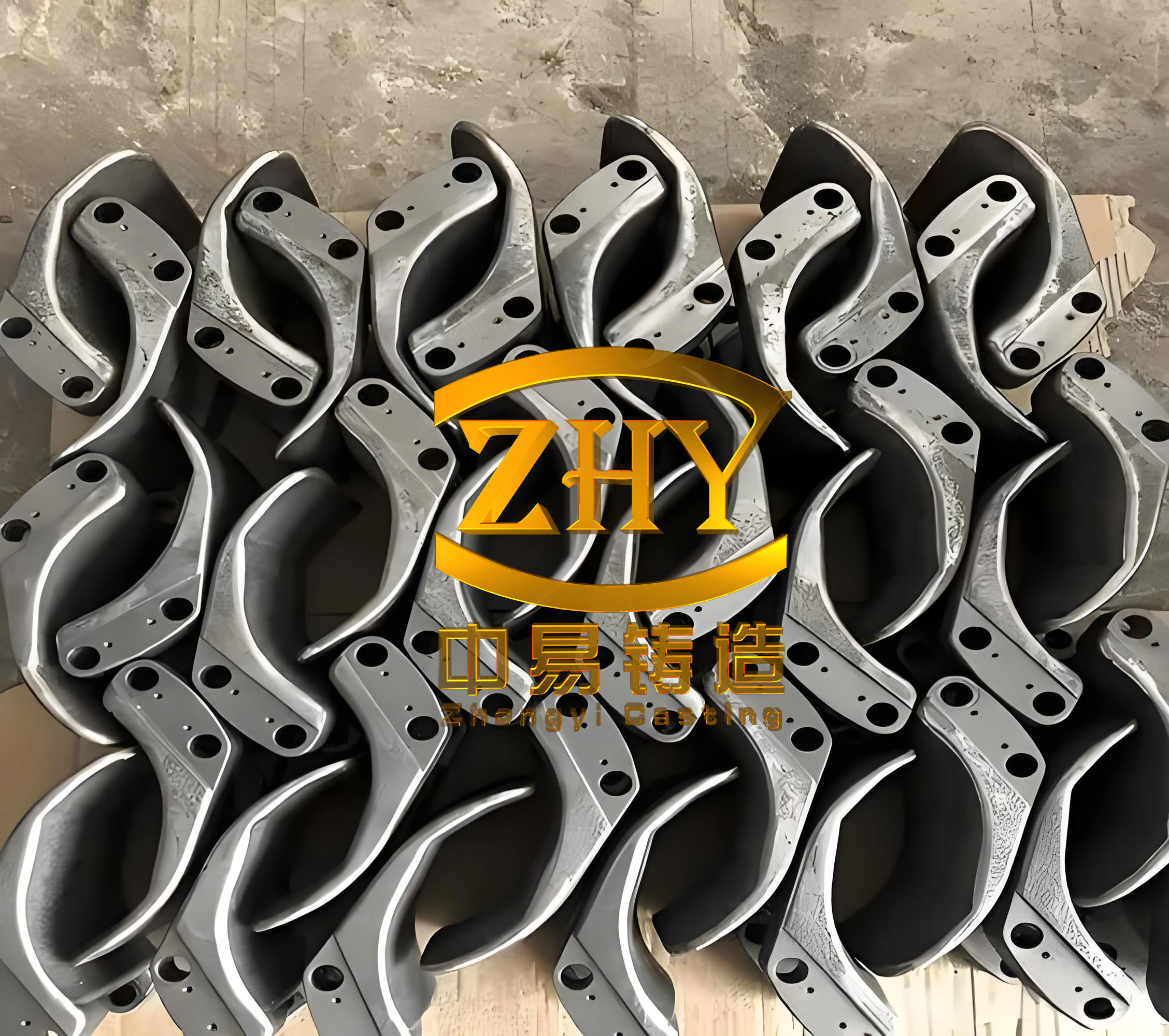
1. Deep-Dive Analysis of Shrinkage Porosity Defects
The manifestation of shrinkage porosity is rarely random; it is a direct consequence of the interplay between geometry, thermal gradients, and material behavior. In the case of the engine frame, post-machining inspection revealed a troubling trend: localized porosity consistently appearing in specific angular orientations (e.g., the 4 and 7 o’clock positions) within smaller boreholes. This pattern immediately signals a systematic issue rooted in the solidification sequence.
1.1 Defect Identification and Mechanism
Initial diagnosis based on photographs is insufficient. Confirmatory analysis involved sectioning a casting in the problematic region. Macroscopic examination and penetrant testing revealed subsurface cavities. Subsequent microstructural analysis at 100x magnification showed irregular, jagged cavities, characteristic of shrinkage porosity rather than gas-related pores. The mechanism can be summarized as follows: during the final stages of solidification, the localized region experiences both liquid contraction and the phase change contraction associated with the liquid-to-solid transformation. If this volumetric deficit is not compensated by feed metal from still-liquid reservoirs (a process known as feeding), microscopic cavities form. These cavities are often interconnected in a spongy network, hence the term “shrinkage porosity” or “microshrinkage.” The driving force is the thermal gradient, or lack thereof, creating isolated pools of liquid that shrink in situ.
The fundamental relationship governing the total volume change during cooling can be expressed as:
$$ V_{total} = V_{liquid\_contraction} + V_{solidification\_shrinkage} – V_{solid\_contraction} $$
Where porosity forms when the feeding flow $Q_{feed}$ is less than the volumetric deficit rate $rac{dV_{total}}{dt}$.
$$ If \quad Q_{feed} < \left| rac{dV_{liquid\_contraction}}{dt} + rac{dV_{solidification\_shrinkage}}{dt} ight|, \quad then \quad Porosity \quad occurs. $$
For gray irons, the solidification shrinkage is partially offset by graphite expansion, but in heavy sections or with certain alloying elements, this compensation can be inadequate.
1.2 Key Contributing Factors Identified
The analysis pinpointed several interconnected factors:
- Geometry-Induced Thermal Mass: The defect location coincided with a junction of varying wall thicknesses adjacent to the original ingate location. This created a significant thermal “hot spot” or hot zone, which remained liquid longer than surrounding areas, becoming isolated and unable to receive feed metal.
- Material Composition: The specified alloying elements (Cu, Cr, Mo) enhance strength and pearlite formation but also influence the solidification range and shrinkage characteristics. Excessive levels of certain elements like Chromium (Cr) can increase shrinkage propensity.
- Process Parameter Variability: Historical data indicated uncontrolled fluctuations in critical process parameters such as pouring temperature and elemental composition.
| Category | Specific Factor | Effect on Shrinkage Risk |
|---|---|---|
| Design & Geometry | Thick-thin wall junctions | Creates isolated thermal masses (hot spots) |
| Proximity to ingates | Superheats local area, delays solidification | |
| Material | High alloy content (Cu, Cr, Mo) | Can widen solidification range, reduce graphite expansion compensation |
| Carbon Equivalent (CE) balance | Low CE can increase shrinkage tendency | |
| Inoculation effectiveness | Poor inoculation reduces graphite count, worsening feeding | |
| Process | Unoptimized gating/risering | Fails to establish directional solidification towards a feeder |
| High/inconsistent pouring temperature | Increases total liquid contraction, enlarges thermal gradients | |
| Lack of controlled cooling (chills) | Fails to eliminate hot spots and promote directional solidification |
2. A Systematic Improvement Methodology
Resolving such a multi-faceted problem requires a systematic approach combining advanced simulation, rigorous process control, and fundamental metallurgical understanding. The methodology employed is not exclusive to gray iron and is equally vital for producing sound castings in ductile cast iron, where the risk of shrinkage, particularly in the form of “shrinkage cavities,” is a major concern due to the different solidification characteristics.
2.1 Optimization of Thermal Fields via Simulation
The cornerstone of the geometrical solution is the use of solidification simulation software (e.g., MAGMA, ProCAST, FLOW-3D). The initial process layout (Scheme A) was modeled, revealing a clear concentration of high temperature isotherms in the problematic bore region at critical solidification times. This confirmed it as the last-to-freeze zone with insufficient thermal gradient for effective feeding.
The improved scheme (Scheme B) involved:
- Ingate Relocation: Moving the ingates away from the critical bore area to prevent direct superheating of this thermal mass.
- Strategic Use of Chills: Introducing high thermal conductivity chills (e.g., iron, graphite) adjacent to the thick sections of the bore. Chills work by rapidly extracting heat, effectively increasing the local cooling rate ($rac{dT}{dt}$), modifying the solidification sequence, and turning a hot spot into a path for directional solidification. The heat extraction can be approximated by:
$$ Q_{chill} = k \cdot A \cdot \left( rac{T_{cast} – T_{chill}}{d} ight) \cdot \Delta t $$
where $k$ is the interfacial heat transfer coefficient, $A$ is the contact area, $d$ is an effective distance, and $T$ represents temperatures. - Riser Optimization: Ensuring adequate feeder size and placement to maintain a feed path to the solidifying region until the very end.
The comparative simulation output for Scheme B showed a more uniform temperature gradient, with the critical region solidifying earlier and in a controlled sequence towards a designated feed source, drastically reducing the isolated liquid pool risk.
| Feature | Initial Scheme (A) | Optimized Scheme (B) | Impact |
|---|---|---|---|
| Ingate Position | Adjacent to critical bore | Relocated to a less sensitive area | Reduced localized superheating |
| Cooling Aids | None in bore region | Strategic iron chills applied | Eliminated hot spot, promoted directional solidification |
| Predicted Solidification Sequence | Bore area is last-to-freeze, isolated | Solidification fronts converge controllably towards a riser | Ensured feed metal availability until final solidification |
| Thermal Gradient (Critical Region) | Shallow, isotherms concentrated | Steeper, isotherms evenly distributed | Enabled effective feeding, minimized porosity risk |
2.2 Metallurgical and Process Parameter Control via SPC
Even with an optimized geometry, inconsistent process execution can induce defects. Statistical Process Control (SPC) is the tool to monitor and control these variables. Traditional methods of checking against specification limits fail to reveal process drift or instability. Control charts, specifically the $\bar{X}-R$ (Average-Range) chart, were implemented for key variables.
The control limits for an $\bar{X}-R$ chart are calculated as follows:
$$ \bar{X} Chart: \\
Center\ Line\ (CL) = \bar{\bar{X}} \\
Upper\ Control\ Limit\ (UCL) = \bar{\bar{X}} + A_2 \bar{R} \\
Lower\ Control\ Limit\ (LCL) = \bar{\bar{X}} – A_2 \bar{R} $$
$$ R Chart: \\
Center\ Line\ (CL) = \bar{R} \\
Upper\ Control\ Limit\ (UCL) = D_4 \bar{R} \\
Lower\ Control\ Limit\ (LCL) = D_3 \bar{R} $$
where $A_2$, $D_3$, and $D_4$ are constants based on subgroup size.
Analysis of historical data using these charts revealed excessive variability in:
- Pouring Temperature: High and fluctuating pouring temperatures increase the total liquid contraction volume and can enlarge the mushy zone, hampering feeding. The target was stabilized and slightly lowered within an optimal range.
- Key Element Concentrations:
- Silicon (Si): As a graphitiser, Si content influences the amount of expansion during eutectic solidification. Its level was tightly controlled to ensure consistent graphite formation and the associated expansion to counteract shrinkage.
- Copper (Cu) and Chromium (Cr): While both promote pearlite, Cr strongly increases shrinkage tendency. SPC monitoring identified periods where Cr was at the high end of the specification. Its target mean was reduced, and its variability minimized through better charge make-up and melting practice control.
By bringing these parameters into a state of statistical control, the inherent variability of the process—and thus the risk of sporadic shrinkage—was significantly reduced. This principle is universal: controlling melt chemistry and temperature is as critical for preventing defects in ductile cast iron as it is for gray iron, albeit with different target values and sensitivities (e.g., magnesium treatment control in ductile cast iron).
| Parameter | Initial State (Uncontrolled) | SPC-Based Action | Mechanism of Improvement |
|---|---|---|---|
| Pouring Temperature | Wide variation, often near upper spec limit. | Stabilized to a lower, narrower target range. $\bar{X}$ and $R$ charts used for daily monitoring. | Reduced total liquid contraction volume and improved thermal gradient definition. |
| Silicon (Si) | Acceptable mean, but high variability (large $\bar{R}$). | Tightened control on ferro-silicon additions. Reduced process variability. | Ensured consistent graphitization potential and associated expansion during eutectic reaction. |
| Chromium (Cr) | Mean near upper spec limit, unpredictable spikes. | Reduced target mean level. Strict control of Cr-bearing charge materials. | Minimized the shrinkage-promoting effect of chromium, a strong carbide stabilizer. |
| Copper (Cu) | Variable, not correlated with other elements. | Standardized alloy addition practice. Monitored for stability. | Provided consistent pearlite promotion without introducing unwanted interaction effects from variability. |
3. Validation and Broader Implications
The effectiveness of the combined approach was unequivocally validated. Castings produced with the optimized Scheme B geometry and under SPC-controlled process parameters were sectioned and subjected to rigorous penetrant testing (PT). The previously defective bore regions showed no indications of porosity. This result was consistently replicated in subsequent production batches, confirming the elimination of the systematic failure mode.
The success of this case study underscores several universal principles in foundry engineering:
- Proactive Risk Identification: Potential solidification problems must be identified during the design and process planning phase using simulation tools, not discovered through costly trial-and-error production.
- Holistic Problem-Solving: Defects like shrinkage porosity are rarely solved by a single change. A synergistic approach addressing geometry (through simulation and chills), material science (composition control), and process stability (SPC) is required.
- Economics of Prevention: Implementing SPC and simulation represents an upfront investment in process capability. This cost is vastly outweighed by the avoidance of internal scrap, machining waste, field failures, and associated reputation damage. This is true for all high-integrity castings, from complex alloy gray iron frames to high-pressure valve bodies made from ductile cast iron.
- Cross-Material Relevance: While the specific material was an alloyed gray iron, the methodologies are directly applicable to other casting alloys. For instance, solving shrinkage in ductile cast iron demands even greater attention to thermal gradients and feeding due to its pasty solidification mode, making simulation and controlled cooling (chills, cooling fins) essential. The use of SPC to control magnesium treatment, inoculation, and temperature is equally critical in ductile cast iron production to ensure consistent nodule count and structure, which directly influence the material’s shrinkage behavior.
In conclusion, achieving defect-free castings in high-performance applications is a multidisciplinary challenge. It mandates the integration of computational modeling to engineer the solidification event, metallurgical expertise to tailor the material’s solidification behavior, and statistical rigor to ensure process execution remains within designed limits. By adopting this integrated framework, foundries can systematically mitigate the risk of shrinkage porosity and other solidification defects, thereby enhancing quality, reliability, and competitiveness in the production of critical components, whether they are made from high-strength gray iron or high-performance ductile cast iron.