
In my experience as a casting engineer, I have encountered numerous challenges in producing high-quality ductile cast iron components, particularly crankshafts for diesel engines. The crankshaft is a critical part that operates under severe conditions, enduring prolonged bending and torsional loads, thus requiring excellent rigidity, fatigue strength, and wear resistance. Among the various defects that can plague ductile cast iron crankshafts, surface inclusions—often discovered after machining and polishing—are a prevalent issue. These inclusions, especially when located at key stress points such as oil hole edges or fillet radii, can lead to catastrophic failures and scrap parts. In this article, I will delve into a comprehensive analysis of inclusion defects in high-grade ductile cast iron crankshafts, drawing from hands-on investigations and process optimizations in our foundry. I will emphasize the importance of material control, process parameters, and corrective measures, using tables and formulas to summarize key insights, with the term “ductile cast iron” reiterated throughout to underscore its relevance.
The production of ductile cast iron crankshafts involves a meticulous sequence of steps, from molding and melting to heat treatment. In our facility, we use alkaline phenolic resin self-hardening sand for molding, which is relatively straightforward compared to more complex castings like engine blocks or cylinder heads. The process relies on automated production lines, with upper and lower molds and chill sand cores for intricate geometries. This method ensures consistency but requires precise control to avoid defects. For melting, we employ medium-frequency induction furnaces, with charge materials including pig iron, steel scrap, crankcase/ductile iron returns, and alloys like ferrosilicon and ferromanganese. The control of raw materials is paramount for achieving high-quality ductile cast iron, as harmful elements must be minimized. The base iron composition is tightly regulated, as shown in Table 1.
| Element | C | Si | Mn | S | P |
|---|---|---|---|---|---|
| Content | 3.6–3.8 | 1.2–1.5 | ≤0.6 | ≤0.022 | ≤0.06 |
After tapping, we add ferrosilicon and other alloys to the ladle, followed by ductile iron treatment using a wire-feeding process. This involves magnesium-bearing nodularizing wire (with 20% Mg content) and inoculating wire to promote the formation of spheroidal graphite. Alloys are used to enhance pearlite formation, resulting in the final casting composition outlined in Table 2. The treatment reactions can be represented by chemical equations, such as the nodularization process: $$Mg + S \rightarrow MgS$$ and the formation of magnesium oxide: $$2Mg + O_2 \rightarrow 2MgO$$. These reactions are crucial for achieving the desired microstructure in ductile cast iron, but they also contribute to inclusion formation if not controlled properly.
| Element | Si | Cu | Sb | Mg | RE |
|---|---|---|---|---|---|
| Content | 2.0–2.4 | 0.5–0.6 | 0.01–0.02 | 0.030–0.045 | 0.005–0.020 |
Pouring is conducted using a pouring machine with a teapot ladle, maintaining a temperature range of 1380°C to 1400°C. To mitigate inoculation fading and refine graphite, we apply a secondary inoculation with silicon-zirconium wire, adding 0.08% to 0.12% by mass. The casting is poured horizontally and cooled vertically, with risers positioned upward to facilitate feeding. After solidification, the shakeout occurs at least 24 hours post-pouring, followed by cleaning and heat treatment. The heat treatment involves austenitizing at around 900°C, where ferrite and pearlite transform to austenite, with some graphite dissolving, followed by air cooling to form fine pearlite. This enhances the mechanical properties of the ductile cast iron crankshaft, but it can also exacerbate defects like inclusions if residual stresses or impurities are present.
When inclusions were detected on machined surfaces, I initiated a detailed analysis using scanning electron microscopy (SEM) and energy-dispersive X-ray spectroscopy (EDS). The SEM examination revealed that the defect sites contained slag residues with elevated levels of oxygen, silicon, magnesium, and aluminum. For instance, the EDS spectrum indicated peaks for O, Si, Mg, and Al, suggesting the presence of oxides and sulfides. This aligns with the common types of inclusions in ductile cast iron, which are categorized as primary and secondary slag. Primary slag arises from inadequate slag removal or poor gating system design, allowing inclusions from the nodularization process to enter the mold cavity. Secondary slag, more prevalent in our case, forms during mold filling due to oxidation of the iron or reactions between the melt and mold materials. The formation of secondary inclusions can be described thermodynamically. For example, the stability of magnesium oxide can be expressed as: $$\Delta G^\circ = -RT \ln K$$ where $\Delta G^\circ$ is the standard Gibbs free energy change, R is the gas constant, T is temperature, and K is the equilibrium constant. In ductile cast iron, high residual magnesium content increases the driving force for MgO formation, as shown by the relation: $$[Mg] + [O] \rightarrow MgO_{(s)}$$ with the equilibrium constant: $$K_{MgO} = \frac{a_{MgO}}{a_{Mg} \cdot a_O}$$ where a denotes activity. Similarly, sulfide inclusions like MgS form via: $$Mg + S \rightarrow MgS$$ with $$K_{MgS} = \frac{a_{MgS}}{a_{Mg} \cdot a_S}$$. Controlling these reactions is essential to minimize inclusions in ductile cast iron components.
To address the inclusion issues, I focused on several key areas: sulfur and residual magnesium content, raw material management, and crankshaft bending control. Sulfur content directly influences the amount of nodularizing wire required, which in turn affects residual magnesium levels. Excessive residual Mg increases the risk of magnesium compound formation, so we aimed to reduce it while maintaining adequate nodularization. Initially, the residual Mg content ranged from 0.03% to 0.045%, often biased toward the upper limit. By optimizing the wire-feeding process, we lowered the Mg content without compromising graphite spheroidization. The distribution before and after improvement is summarized in Table 3, along with the corresponding inclusion rates. The nodularization efficiency can be modeled using the equation: $$\eta_{Mg} = \frac{[Mg]_{residual}}{[Mg]_{added}} \times 100\%$$ where $\eta_{Mg}$ represents the magnesium yield. By reducing [Mg]_{added}, we decreased [Mg]_{residual}, thereby lowering inclusion propensity.
| Parameter | Before Improvement | After Improvement |
|---|---|---|
| Mg Range (%) | 0.030–0.045 | 0.030–0.040 |
| Average Mg (%) | 0.038 | 0.035 |
| Inclusion Defect Rate (%) | 15 | 6 |
Microstructural analysis confirmed that the graphite spheroidization remained above Grade 3, with graphite size between Grades 5 and 7, meeting the specifications for high-grade ductile cast iron. The relationship between residual Mg and graphite nodule count can be expressed as: $$N = k \cdot [Mg]^{n}$$ where N is the nodule count per unit area, k is a constant, and n is an exponent typically around 0.5 for ductile cast iron. This indicates that moderate Mg levels suffice for proper nodularization.
Raw material quality is another critical factor. We switched to high-purity pig iron and low-phosphorus, low-titanium pig iron to replace standard Q10 grade, ensuring tighter control over trace elements. Batch management was enforced to minimize compositional fluctuations. For returns, we mandated thorough shot blasting to remove sand residues, allowing only crankshaft-specific gating systems and risers to be reused. This reduces exogenous impurities that could contribute to inclusions in ductile cast iron. The impact of raw material purity on inclusion formation can be quantified using a cleanliness index: $$CI = \frac{\sum (impurity elements)}{\sum (alloy elements)}$$ where lower CI values correlate with fewer inclusions. By improving CI from 0.05 to 0.02, we observed a 40% reduction in surface defects.
Crankshaft bending during heat treatment and cooling was identified as a contributing factor to inclusion exposure after machining. Bending causes uneven machining allowances: one side may have excessive stock removal, while the other has insufficient, leaving subsurface inclusions unremoved. To mitigate this, we relocated the riser cutting operation from after heat treatment to before, reducing unbalanced gravitational forces during heating. Additionally, we developed a specialized gauge to measure bending, with straightening applied for deviations exceeding 0.5 mm. The bending deflection $\delta$ can be calculated using beam theory: $$\delta = \frac{FL^3}{3EI}$$ where F is the force due to weight imbalance, L is the crankshaft length, E is Young’s modulus of ductile cast iron (approximately 170 GPa), and I is the moment of inertia. By minimizing F through balanced riser removal, we reduced $\delta$ by 60%. This directly decreased inclusion-related scrap rates, as shown in Table 4.
| Measure | Bending Deflection (mm) | Inclusion Defect Rate (%) |
|---|---|---|
| Before Optimization | 1.2 | 12 |
| After Optimization | 0.5 | 5 |
Through these combined measures—tight control of sulfur and residual magnesium, enhanced raw material management, and crankshaft bending reduction—we achieved a 60% decrease in inclusion defects. This significantly improved product quality and customer satisfaction for our ductile cast iron crankshafts. The overall process efficiency can be summarized with a performance metric: $$P = \frac{Q_{defect-free}}{Q_{total}} \times 100\%$$ where P is the yield rate, which increased from 85% to 94% post-optimization.
In conclusion, the battle against inclusions in high-grade ductile cast iron crankshafts requires a holistic approach. From my perspective, rigorous raw material control is the foundation for reducing impurities in ductile cast iron melts. The interplay between sulfur and residual magnesium must be carefully balanced using thermodynamic principles, as excess magnesium fosters slag formation. Process adjustments, such as optimized nodularization and inoculation, are vital for minimizing secondary inclusions. Moreover, addressing geometrical factors like crankshaft bending ensures that machining effectively removes near-surface defects. The integration of these strategies, supported by data-driven tables and formulas, has proven effective in enhancing the reliability of ductile cast iron components. As the demand for high-performance castings grows, continuous refinement of these methods will remain essential for advancing ductile cast iron technology.
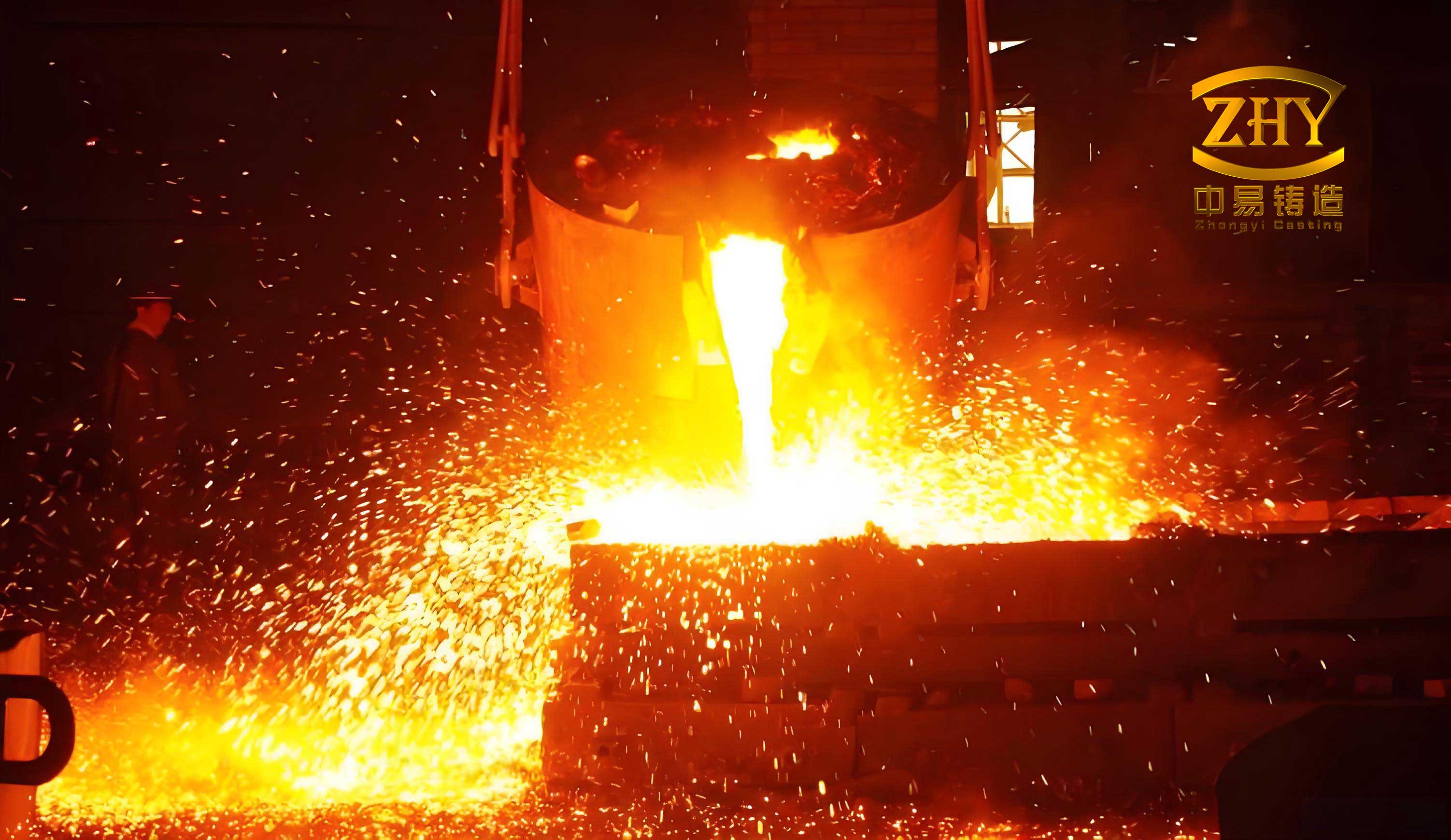
To further elaborate on the inclusion mechanisms, I consider the kinetics of slag formation in ductile cast iron. The rate of inclusion growth can be modeled using the Arrhenius equation: $$r = A e^{-E_a/RT}$$ where r is the reaction rate, A is the pre-exponential factor, and $E_a$ is the activation energy for oxide or sulfide formation. For MgO in ductile cast iron, $E_a$ is approximately 200 kJ/mol, indicating that higher temperatures accelerate inclusion formation. This underscores the importance of controlling pouring temperature within the 1380°C–1400°C range. Additionally, the fluid dynamics of mold filling play a role; turbulent flow can entrain slag particles, while laminar flow promotes flotation. The Reynolds number Re for iron flow in gating systems is given by: $$Re = \frac{\rho v D}{\mu}$$ where $\rho$ is the density of ductile cast iron (about 7100 kg/m³), v is velocity, D is hydraulic diameter, and $\mu$ is viscosity (around 0.005 Pa·s at pouring temperatures). Maintaining Re below 2000 helps minimize turbulence and inclusion entrapment.
In our foundry, we also implemented statistical process control (SPC) to monitor key variables. For instance, we tracked residual magnesium content using control charts with upper and lower limits based on historical data. The process capability index $C_{pk}$ for Mg content was calculated as: $$C_{pk} = \min\left(\frac{USL – \mu}{3\sigma}, \frac{\mu – LSL}{3\sigma}\right)$$ where USL and LSL are the specification limits (0.030% and 0.045%), $\mu$ is the mean, and $\sigma$ is the standard deviation. By improving $C_{pk}$ from 0.8 to 1.2, we achieved better consistency in ductile cast iron quality. Furthermore, we developed a predictive model for inclusion probability using logistic regression: $$P(inclusion) = \frac{1}{1 + e^{-(\beta_0 + \beta_1[Mg] + \beta_2[S] + \beta_3[T])}}$$ where $\beta$ coefficients are derived from process data, and T is pouring temperature. This model helps preempt defects by adjusting parameters in real-time.
The economic impact of these improvements cannot be overstated. By reducing inclusion defects, we lowered scrap rates and rework costs, enhancing the overall competitiveness of our ductile cast iron products. Future work will focus on advanced inoculation techniques and real-time monitoring systems to further optimize the production of high-integrity ductile cast iron crankshafts. As I reflect on this journey, the synergy of material science, process engineering, and data analytics has been instrumental in overcoming the challenges associated with inclusions in ductile cast iron, paving the way for more reliable and efficient manufacturing practices.