
Within the modern foundry industry, particularly in the sector dedicated to renewable energy components, a significant logistical and production challenge has emerged. The drive towards larger, more powerful offshore wind turbines, with generators reaching 8–12 MW and beyond, has directly led to the demand for massive nodular cast iron castings such as hubs, main shafts, bearing housings, and front frames. These components often possess single-piece weights ranging from 20 to 60 tonnes. A central, bottleneck process in their manufacture is the melting stage, where molten iron is prepared for pouring. Foundries are typically equipped with medium-frequency induction furnaces of finite capacity, commonly up to 20 or 30 tonnes per furnace. Consequently, a single casting’s weight can far exceed the safe melting capacity of any single available furnace. This reality necessitates a multi-heat melting strategy, where several furnaces must be operated in parallel, and their combined molten metal output must be synchronously poured into a single mold cavity to produce one massive casting.
This scenario fundamentally alters the traditional “lot-sizing” or “heat planning” problem in foundries. Classical models assume each casting task (or order) can be wholly assigned to and completed by one furnace in one heat, subject to grouping constraints like material grade compatibility. Our problem introduces a dual-space constraint system: smaller castings (weight ≤ single furnace capacity) obey the classical 0–1 assignment rule (assign wholly to one furnace or not at all), while large wind power castings (weight > single furnace capacity) must be split across multiple furnaces simultaneously, with their entire weight allocated proportionally. The core challenge, therefore, is to create a weekly or daily melting schedule that: 1) groups compatible smaller castings into efficient furnace loads; 2) splits large castings appropriately across available furnaces; and 3) does both while maximizing furnace utilization, respecting material compatibility, and prioritizing orders based on delivery urgency. The goal is to minimize total heats (saving energy and time) and reduce order delays.
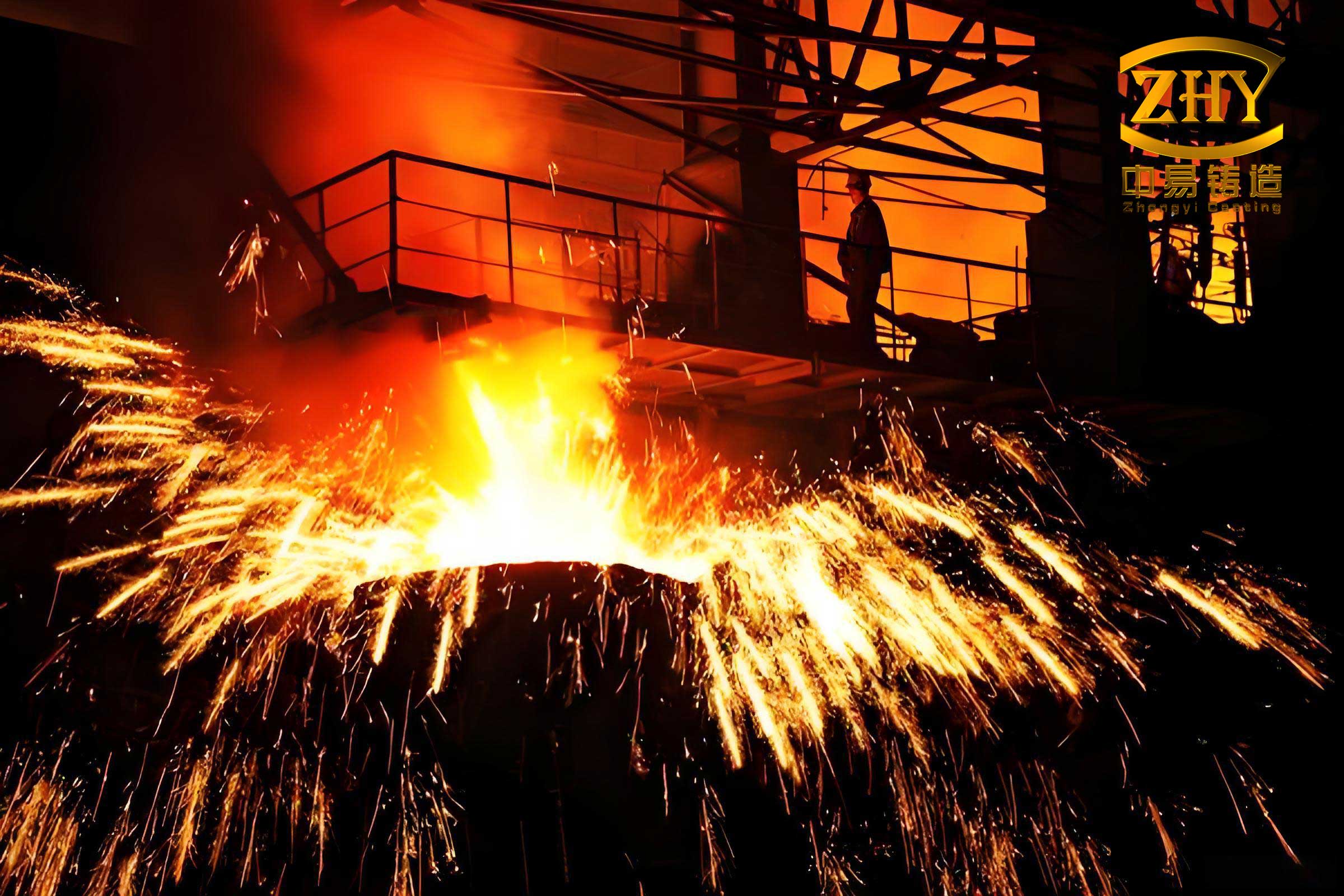
The necessity for high-integrity, thick-section nodular cast iron components in renewable energy infrastructure underscores the importance of solving this production puzzle efficiently.
1. Problem Formalization and Mathematical Model
The production flow, with melting as the bottleneck, is considered. We make the following critical assumptions for model formulation:
- The total weight of any single casting order assigned to a planned set of furnaces cannot exceed the sum of their maximum safe melting capacities.
- Furnaces scheduled for the same heat can pour their molten metal into a shared casting mold simultaneously.
- Each furnace’s heat is used completely for pouring, with no leftover metal.
1.1 Notation and Decision Variables
Sets and Indices:
$K$: Total number of furnace heats to be scheduled.
$L$: Total number of casting orders (tasks).
$N$: Total number of distinct material grades (e.g., QT400, QT500).
$k \in \{1, 2, …, K\}$: Index for a melting furnace (or heat).
$l \in \{1, 2, …, L\}$: Index for a casting order.
$n \in \{1, 2, …, N\}$: Index for a material grade.
Parameters:
$W_l$: Total weight (in kg) of casting order $l$.
$V_l$: Remaining time-to-delivery (or priority factor) for order $l$. A smaller $V_l$ indicates higher urgency.
$Q_k$: Maximum safe melting capacity (in kg) of furnace $k$.
$M_l \in \{1,…,N\}$: Material grade index of order $l$.
$T_k \in \{1,…,N\}$: Material grade index assigned to furnace $k$ for a given heat.
Derived Parameter – Order Priority:
To quantitatively incorporate delivery urgency into the scheduling objective, we define a priority value $P_l$ for each order. A common transformation is:
$$ P_l = \frac{1}{V_l} $$
This ensures that orders with nearer deadlines (smaller $V_l$) receive a higher priority weight $P_l$.
Decision Variable:
$x_{lk}$: The proportion of order $l$’s weight assigned to furnace $k$.
$$ 0 \leq x_{lk} \leq 1 $$
This variable’s domain is critically constrained by the order size:
- If $W_l \leq \max(Q_k)$ (small casting): $x_{lk} \in \{0, 1\}$. The order is either fully assigned to one furnace or not at all.
- If $W_l > \max(Q_k)$ (large wind turbine casting): $x_{lk} \in [0, 1]$. The order can be split across multiple furnaces.
1.2 Objective Function and Constraints
The goal is twofold: maximize furnace capacity utilization (minimize wasted capacity) and prioritize orders based on delivery urgency. A multiplicative objective function effectively balances these aims, preventing the schedule from simply favoring numerous small orders or a single large, low-priority order.
Objective Function:
We aim to maximize the total “melting value” of the schedule, defined as the sum over all orders and furnaces of the product of the assigned weight, the order’s priority, and an indicator for assignment.
$$ \text{Maximize } Z = \sum_{l=1}^{L} \sum_{k=1}^{K} (W_l \cdot P_l \cdot x_{lk}) $$
This can be simplified to:
$$ \text{Maximize } Z = \sum_{l=1}^{L} \sum_{k=1}^{K} (W_l \cdot \frac{1}{V_l} \cdot x_{lk}) $$
Model Constraints:
1. Order Completion Constraint: Each order must be either completely scheduled across the furnaces or not scheduled at all.
$$ \sum_{k=1}^{K} x_{lk} \in \{0, 1\} \quad \forall l $$
For large castings, this sum equals 1 if scheduled. For small castings, it enforces the binary nature of assignment per order.
2. Furnace Capacity Constraint: The total weight assigned to any furnace cannot exceed its safe capacity.
$$ \sum_{l=1}^{L} (W_l \cdot x_{lk}) \leq Q_k \quad \forall k $$
3. Material Compatibility (Grouping) Constraint: All orders assigned to the same furnace $k$ must be of the same material grade. This is enforced by ensuring that if $x_{lk} > 0$, then $M_l$ must equal $T_k$. A linear formulation uses a binary helper variable $y_{lk}$ indicating if order $l$ uses furnace $k$, but the core logic is:
$$ x_{lk} > 0 \implies M_l = T_k \quad \forall l, k $$
4. Variable Domain Constraints: As defined previously.
$$ x_{lk} \in \{0,1\} \text{ for } W_l \leq \max(Q_k) $$
$$ x_{lk} \in [0,1] \text{ for } W_l > \max(Q_k) $$
2. Hybrid Solution Strategy: Decomposition and Algorithm
The presented model is a complex mixed-integer linear programming (MILP) problem with conditional variable domains. A direct, monolithic solution is computationally challenging for real-world problem sizes. Therefore, a heuristic decomposition strategy is adopted, breaking the problem into three sequential, more manageable sub-problems.
Sub-Problem 1: Grouping by Material. All casting orders are first partitioned into $N$ distinct groups based solely on their material grade $M_l$. Scheduling is then performed independently for each material group, as inter-group mixing is prohibited.
Sub-Problem 2: Batch Selection (0-1 Knapsack). For a given material group and a planned “heat” involving $m$ parallel furnaces, the task is to select a subset of orders to form a production batch. This is analogous to a 0-1 knapsack problem with multiple “knapsacks” (furnaces) of capacity $Q_k$. The objective is to maximize the total value $\sum (W_l \cdot P_l)$ of selected orders, subject to the condition that their total weight can theoretically be partitioned among the $m$ furnaces (a pre-condition check).
Sub-Problem 3: Weight Allocation (Linear Programming). Once a batch of orders is selected, the exact weight proportion $x_{lk}$ of each order $l$ to each furnace $k$ is determined. This is a linear programming problem (or a simple LP with potential integer constraints for small castings) to satisfy the capacity and completion constraints.
2.1 Solving the Knapsack Problem: A Hybrid Genetic Whale Optimization Algorithm (HGWOA)
The core of the strategy lies in efficiently solving Sub-Problem 2. Traditional algorithms like standard Genetic Algorithm (GA) or Particle Swarm Optimization (PSO) have limitations: GA can be slow to converge, while PSO may converge prematurely to local optima. We propose a Hybrid Genetic Whale Optimization Algorithm (HGWOA) that synergizes the global exploration strength of GA with the efficient exploitation mechanism of the Whale Optimization Algorithm (WOA).
Algorithm Framework and Improvements:
- Encoding & Population: An individual (chromosome) is a binary string of length equal to the number of orders in the material group. A gene value of ‘1’ indicates the order is selected for the current batch; ‘0’ means it is not.
- Fitness Function: The fitness of an individual is the total melting value of the selected orders, aligning with our main objective:
$$ \text{Fitness} = \sum_{l \in \text{Selected}} (W_l \cdot P_l) $$
This directly encourages the selection of high-priority, heavier orders that contribute significantly to furnace load. - Constrained Feasibility Check: A candidate solution must pass two checks:
- Capacity Feasibility: The total weight of selected orders must be less than or equal to the sum of the capacities of the $m$ furnaces: $\sum W_l \leq \sum_{k=1}^{m} Q_k$.
- Split Feasibility (Pre-Condition): To ensure the subsequent LP (Sub-Problem 3) has a solution, the number of selected “large” orders (with $W_l > \min(Q_k)$) must not exceed the number of furnaces with sufficient capacity to accommodate at least part of them. This is checked via a bin-packing pre-filter.
- Chromosome Repair: Infeasible chromosomes are repaired using a greedy strategy. For violations of the split feasibility condition, the least valuable large orders are deselected (set to ‘0’). For capacity violations, the least valuable orders (based on $W_l \cdot P_l$) are deselected until feasibility is achieved. Subsequently, to improve utilization, non-selected orders are evaluated in descending order of value and added back if capacity allows.
- HGWOA Operation: The algorithm initializes a population of random binary strings. In each iteration, for each individual, a random number $p$ is generated. The WOA’s logic guides the update: if a condition based on a coefficient $|A| \geq 1$, the individual explores by crossing over with a random peer. If $|A| < 1$, it exploits by crossing over with the current best individual. This hybrid update rule balances exploration and exploitation more effectively than standard GA or WOA alone. Selection, crossover, and mutation operations from GA are integrated within this WOA-guided framework.
3. Computational Experiments and Validation
To validate the model and the HGWOA, experiments were conducted using real-world production data from a foundry specializing in wind turbine nodular cast iron castings. The scenario involved two parallel medium-frequency furnaces, each with a maximum safe capacity $Q = 20,000$ kg. A planning horizon required scheduling 8 total heats (4 per furnace). A dataset of 191 casting orders across 3 material grades was used.
3.1 Batch Selection and Allocation Example
Applying the HGWOA to one material group (e.g., QT400) for a single heat event yielded a selected batch of orders. The subsequent LP allocation for that batch produced the following result for one heat involving two furnaces:
| Casting ID | Material | Gross Weight (kg) | Assigned to Furnace 1 (kg) | Assigned to Furnace 2 (kg) |
|---|---|---|---|---|
| 9 | QT400 | 1,028 | 0 | 1,130.8 |
| 71 | QT400 | 1,240 | 0 | 1,364.0 |
| 23 | QT400 | 920 | 0 | 1,012.0 |
| 98 | QT400 | 21,800 | 20,000.0 | 3,980.0 |
| 15 | QT400 | 1,033 | 0 | 1,136.3 |
| 17 | QT400 | 1,100 | 0 | 1,320.0 |
| Total Load per Furnace | 20,000.0 kg | ~19,943.1 kg | ||
| Furnace Utilization | 100.0% | 99.7% | ||
Note: The pouring weight includes a 10% yield factor (metal weight / yield). Casting #98 is a large wind turbine component whose weight (21.8t) exceeds a single furnace’s capacity (20t), so it is successfully split across both furnaces. All smaller castings are assigned wholly to Furnace 2, demonstrating the hybrid nature of the schedule.
3.2 Performance Comparison: Intelligent vs. Manual Scheduling
The entire dataset was scheduled using the proposed intelligent system and compared against historical manual scheduling practices. The key performance indicators are Average Furnace Utilization and Total Number of Heats required.
| Performance Metric | Manual Scheduling | Intelligent Scheduling (Proposed) | Improvement |
|---|---|---|---|
| Average Furnace Utilization | 86.57% | 95.89% | +10.76% |
| Total Heats Required | 42 | 39 | -7.14% (3 heats saved) |
The results clearly show the superiority of the optimization model. Higher utilization reduces energy waste per tonne of metal melted, while fewer total heats save on furnace preheating time and operational overhead, contributing to both cost reduction and lower carbon footprint.
3.3 Algorithm Performance Benchmarking
The HGWOA was benchmarked against standard PSO and GA on test sets of varying complexity (grouped by number of material grades). Each algorithm was run 20 times per test set. Key metrics are average runtime and solution quality (best and average fitness found).
| Material Groups | Algorithm | Avg. Runtime (s) | Best Fitness (×10⁴) | Avg. Fitness (×10⁴) |
|---|---|---|---|---|
| 1 Group | PSO | 2.25 | 3.1842 | 2.9935 |
| GA | 6.34 | 3.2178 | 3.0114 | |
| HGWOA | 2.53 | 3.1918 | 3.0230 | |
| 2 Groups | PSO | 3.42 | 3.1911 | 3.0222 |
| GA | 10.98 | 3.2169 | 3.0928 | |
| HGWOA | 7.98 | 3.2113 | 3.0898 | |
| 3 Groups | PSO | 11.12 | 3.2945 | 3.0521 |
| GA | 17.24 | 3.2961 | 3.1121 | |
| HGWOA | 12.18 | 3.2969 | 3.1125 |
Analysis of the results and convergence curves reveals that:
- PSO is fastest but consistently yields the lowest fitness values, indicating a tendency to get trapped in local optima.
- GA finds solutions of high quality (comparable or slightly better best fitness) but is the slowest computationally.
- HGWOA strikes an effective balance. It achieves best and average fitness values equal to or very close to GA’s best, while maintaining runtimes significantly faster than GA and closer to PSO. Its convergence curve shows it reaches high-quality solutions much earlier in the iterative process than GA.
4. Conclusion
This work addresses a pressing practical problem in the production of large-scale wind turbine components made from nodular cast iron. By developing a multi-heat planning mathematical model that explicitly accommodates the splitting of oversized casting orders across multiple furnaces, we provide a formal framework for a previously unaddressed real-world constraint. The model intelligently balances the dual objectives of high furnace utilization and adherence to delivery deadlines through a multiplicative objective function.
The proposed hybrid solution strategy, decomposing the problem into grouping, knapsack selection, and weight allocation sub-problems, makes it computationally tractable. The novel Hybrid Genetic Whale Optimization Algorithm (HGWOA) proves to be a robust solver for the core batch selection knapsack problem, outperforming standard PSO and GA in the trade-off between solution quality and computational speed.
Validation with industrial data confirms the model’s effectiveness. Compared to manual scheduling, the intelligent system boosted average furnace utilization by over 10% and reduced the total number of required heats by 7%, translating directly into reduced energy consumption, lower operating costs, and enhanced on-time delivery performance for critical nodular cast iron castings. This approach facilitates optimal resource configuration and supports the sustainable and efficient manufacturing required for the growing renewable energy sector.
Future Work: The current model focuses primarily on the melting bottleneck. A more integrated approach could consider interactions with preceding (e.g., molding capacity, core production) and subsequent (e.g., pouring time synchronization, cooling space) production stages. Furthermore, dynamic rescheduling in response to unforeseen disruptions like furnace breakdowns or urgent order insertions presents an important avenue for further research.