
As a practitioner deeply involved in the day-to-day operations of an investment casting foundry, I have witnessed firsthand the intricate balance between achieving high-quality metal components and mitigating the significant environmental footprint of our processes. The investment casting process, while precise and versatile, inherently generates a spectrum of pollutants—dust, fumes, wastewater, noise, and solid waste—across nearly every production stage. This narrative details our comprehensive, first-hand approach to identifying, quantifying, and controlling these environmental aspects, transforming theoretical knowledge into practical, actionable measures on the shop floor.
The journey begins with a fundamental understanding of our material inputs and their transformation pathways. Every raw material, from metal scrap to refractory sands and binders, carries the potential for waste and emission. The core sequence of the investment casting process—pattern making, shell building, dewaxing, sintering, melting, pouring, and finishing—is a continuum of physical and chemical reactions, each a potential node for pollution generation.
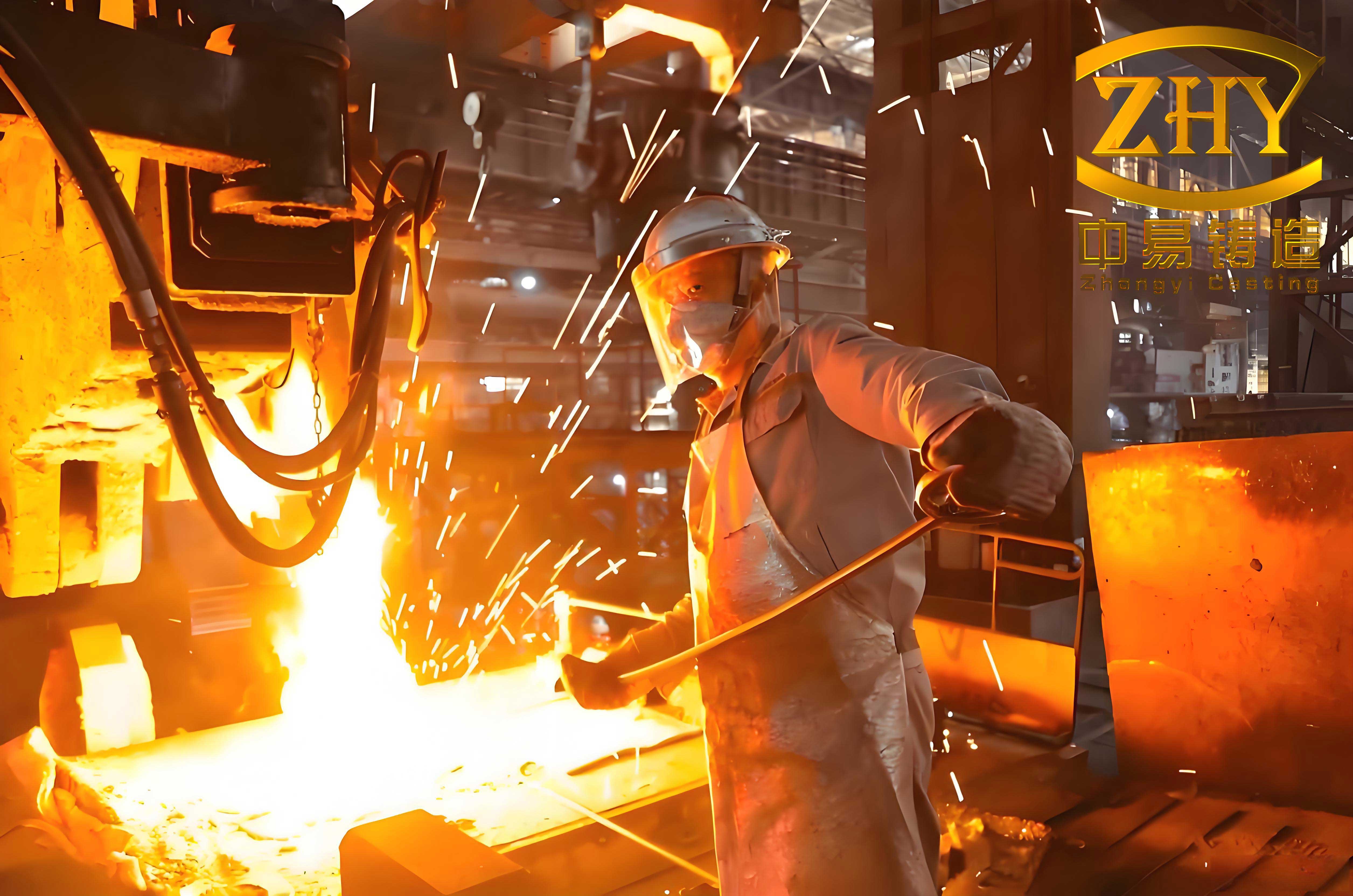
A systematic analysis is crucial. We map every operation to its corresponding waste stream. This mapping forms the bedrock of our environmental management strategy, allowing for targeted interventions.
| Process Stage | Key Operation | Pollutant Type | Primary Contaminants |
|---|---|---|---|
| Pattern Making | Wax Injection, Assembly | Gaseous Emissions, Solid Waste | Non-Methane Hydrocarbons (NMHC), Waste Wax |
| Shell Building | Slurry Dipping, Sand Stuccoing | Particulate Matter (Dust) | Zircon, Mullite Silica Dust |
| Dewaxing & Sintering | Autoclave, Furnace Burn-out | Gaseous Emissions, Particulate Matter | Wax Vapors (NMHC), Combustion Particulates |
| Melting & Pouring | Induction Furnace Operation | Gaseous Emissions, Slag, Dust | CO, Metal Fumes, Oxides |
| Finishing | Knock-out, Shot Blasting, Cutting, Grinding | Particulate Matter, Noise, Solid Waste | Metallic Dust, Refractory Dust, Noise, Sprues |
This table encapsulates the environmental challenge inherent to the investment casting process. Our goal is to intercept these pollutants at source with maximum efficiency.
1. Particulate Matter Abatement: A Multi-Point Capture Strategy
Dust is the most pervasive byproduct in our facility. Our strategy is based on localized capture at every major generation point, followed by central filtration. The design of hoods, ducting, and fan capacity is specific to each operation’s dust characteristics and generation rate.
For bulk material handling at warehouse doors, we employ large capture hoods (2m x 0.8m) connected via 350mm diameter ducts to a dedicated filter. The slurry dip and sand rain stations are encapsulated with circular hoods (ϕ1.5m) and served by a powerful 25 kW extraction system with 600mm ducts. A critical insight we’ve implemented is the installation of floor-level pickups in the shell drying rooms to capture settled dust disturbed by circulation fans.
The knock-out process is intensely dusty. Our solution is a fully enclosed vibratory table with integrated top extraction. Similarly, for shot blasting, dual hoods at the machine entrance and exit, connected via 800mm ducts to a high-capacity dust collector, contain the abrasive and metallic dust. Cutting and grinding stations are fitted with semi-enclosed or fully enclosed hoods, with separate collection bins for metallic swarf to facilitate recycling.
The workhorse of our dust control is the pulse-jet cartridge filter. Its performance is quantified by key parameters that we constantly monitor:
| Parameter | Symbol | Value / Range | Significance |
|---|---|---|---|
| Filter Face Velocity | $v_f$ | 0.4 – 0.55 m/min | Determines filter size and dust cake stability. |
| Pressure Drop | $\Delta P$ | 300 – 1000 Pa | Indicator of filter cleanliness; high $\Delta P$ signals need for cleaning. |
| Air-to-Cloth Ratio | $A_c$ | – | Calculated as $A_c = \frac{Q}{A_f}$, where $Q$ is flow rate and $A_f$ is filter area. Ours is designed for low ratio (<1). |
| Cleaning Pulse Pressure | $P_{pulse}$ | 0.5 – 0.7 MPa | Critical for effective cake dislodgement. |
| Collection Efficiency | $\eta$ | > 99% | Target performance for particulate matter. |
The required fan power ($P_{fan}$) to overcome system resistance can be estimated by:
$$ P_{fan} \approx \frac{Q \cdot \Delta P_{total}}{\eta_{fan}} $$
where $Q$ is the volumetric flow rate, $\Delta P_{total}$ is the sum of filter drop and ducting losses, and $\eta_{fan}$ is the fan efficiency. Regular maintenance—checking for leaks, cleaning filter cartridges, and emptying collection bins—is as vital as the initial design in the investment casting process.
2. Fume and Gas Emission Control: Thermal and Adsorptive Treatment
Gaseous emissions in the investment casting process primarily involve organics from wax and combustion products from sintering and melting. These require different treatment philosophies.
For the medium-frequency induction furnace, we capture fumes (metal oxides, CO) via a close-capture hood above the crucible. The hot, moisture-laden gases first pass through a cyclone or settling chamber to drop out larger particles, then through a high-temperature baghouse fitted with PTFE-coated filters capable of withstanding 200°C. The cleaned gas is exhausted through an 18m stack to ensure adequate dispersion. We monitor particulate concentration to ensure it remains below a stringent target of 15 mg/m³.
The sand cooling area post-casting is another significant fume source. A large canopy hood (3.5m x 2.5m) with multiple extraction points captures the rising heat and residual fumes, routing them to the same high-temperature filtration system as the furnace.
Organic vapors (Non-Methane Total Hydrocarbons – NMTHC) from wax operations present a different challenge. Sources include wax melters, injection presses, pattern assembly stations, and the dewaxing autoclave. For these, we use a centralized activated carbon adsorption system. Contaminated air from all these points is ducted to a two-stage carbon bed. The efficiency of an adsorber depends on the properties of the carbon and the contaminants. The adsorption capacity can be related to the concentration through isotherms like the Freundlich model:
$$ q_e = K_F \cdot C_e^{1/n} $$
where $q_e$ is the amount adsorbed per unit mass of carbon, $C_e$ is the equilibrium concentration of the contaminant in the air, and $K_F$ and $n$ are constants specific to the carbon-vapor system. Our system is sized to ensure NMTHC emissions are well below 60 mg/m³. Spent carbon is handled as hazardous waste.
3. Water Management: Segregation, Recirculation, and Treatment
Water use in the investment casting process is diverse, ranging from cooling to cleaning. Our principle is to segregate streams, maximize recirculation, and treat necessary discharges.
We maintain two separate drainage systems: surface drains for relatively clean rainwater and sanitary water, and a dedicated underground PVC network (ϕ100mm) for process wastewater. This prevents cross-contamination. The primary contaminated streams are wax wash water, shell slurry area runoff, and spent cooling water.
| Stream Source | Primary Contaminants | Management Strategy |
|---|---|---|
| Wax Pattern Washing | Emulsified wax, suspended solids | Oil-water separation, coagulation/flocculation, filtration. |
| Slurry Area Spillage/Rinse | High pH, colloidal silica, fine refractories | Neutralization (e.g., with acid), sedimentation, clarification. |
| Induction Furnace Cooling | Heat, scale inhibitors, corrosion products | Closed-loop cooling tower with water treatment (biocides, anti-scalant). |
| Dewaxing Autoclave Condensate | Traces of wax, organic acids | Collection and routing to organic wastewater treatment or incineration. |
A central clarifier or sedimentation tank is used for combined treatment, often with the addition of lime ($CaO$) to adjust pH and precipitate phosphates and some metals:
$$ CaO + H_2O \rightarrow Ca(OH)_2 $$
$$ 3Ca^{2+} + 2PO_4^{3-} \rightarrow Ca_3(PO_4)_2 \downarrow $$
The clarified effluent is then passed through a sand filter and an activated carbon column for final polishing before any discharge, ensuring compliance with local regulations for COD, BOD, and suspended solids.
4. Noise Attenuation: Engineering and Administrative Controls
The investment casting process is acoustically demanding. Our approach combines source control, path interruption, and receiver protection. We conducted a detailed noise survey to identify major sources, both indoors and outdoors.
| Noise Source Category | Typical Lp @1m (dBA) | Primary Control Measures | Expected Reduction |
|---|---|---|---|
| Air Handling Fans | 80-85 | Installation of silencers on inlet/outlet, acoustic enclosures, vibration isolation pads. | 15-20 dBA |
| Vibratory Equipment (Knock-out) | 85+ | Full acoustic enclosure with lined panels, vibration isolation from floor. | 25-30 dBA |
| Shot Blasting Cabinets | 75-80 | Acoustic lining inside cabinet, mufflers on compressed air exhausts. | 10-15 dBA |
| Cutting & Grinding | 75-85 | Partial acoustic barriers/booths, anti-vibration mounts. | 10-20 dBA |
| Induction Furnace (Cooling Fans, Hum) | 75-78 | Fan silencers, strategic placement, and building mass as barrier. | 5-10 dBA |
To predict the sound level at a receiver point (e.g., the factory boundary), we use standard acoustical engineering models that account for propagation losses. The basic equation for a point source outdoors is:
$$ L_p(r) = L_w + D_C – (A_{div} + A_{atm} + A_{gr} + A_{bar}) $$
Where:
- $L_p(r)$: Sound pressure level at distance $r$.
- $L_w$: Sound power level of the source.
- $D_C$: Directivity correction.
- $A_{div}$: Geometrical divergence loss, calculated as $A_{div} = 20 \log_{10}(r/r_0)$.
- $A_{atm}$: Atmospheric absorption loss (depends on frequency, humidity, temperature).
- $A_{gr}$: Ground absorption loss.
- $A_{bar}$: Barrier loss.
By modeling our facility and implementing these controls, we ensure worker exposure limits are met and community noise impact is minimized. Administrative controls, such as limiting high-noise operations to specific daytime hours, provide an additional layer of management.
5. Solid and Hazardous Waste Stream Management
The investment casting process generates substantial solid waste, categorized as either general industrial or hazardous. Our system is built on segregation at source, safe storage, and documented disposal to licensed contractors.
General Industrial Waste: This includes the majority of our waste by volume. Key streams are:
- Spent Ceramic Shells: The largest single waste stream, consisting of used refractory material (mullite, zircon). It is collected, stored dry, and sent for recycling as an aggregate or to licensed landfills.
- Metallic Waste: Includes sprues, gates, scrap castings, and grinding swarf. These are meticulously sorted by alloy type and sold as high-value scrap for remelting.
- Slag: The oxide layer skimmed from the molten metal. Collected in slag pots, cooled, and sent for metal recovery or use in construction materials.
- Consumable Waste: Used sandpaper, worn-out shot blast media, and general packaging materials are collected separately for disposal or recycling.
Hazardous Waste: This requires stringent controls under a “cradle-to-grave” manifest system. Our primary hazardous wastes include:
- Dust from Melting & High-Temp Filtration: Contains heavy metals (Ni, Cr, Mn). Stored in sealed drums labeled as HW21 (or equivalent).
- Spent Activated Carbon & Filter Media: Saturated with organic compounds (wax vapors). Designated as HW49.
- Empty Chemical Containers: Drums and bottles that held solvents, binders, or release agents. Handled as HW49 (contaminated packaging).
We maintain a dedicated, impermeable hazardous waste storage area with secondary containment. Each waste type is stored in compatible, labeled containers. Inventory logs are meticulously kept, and wastes are shipped quarterly to permitted Treatment, Storage, and Disposal Facilities (TSDFs). The economic and environmental impact of waste generation can be conceptualized by a simple metric like the Waste Generation Factor ($WGF$) for the investment casting process:
$$ WGF_{total} = \sum_{i=1}^{n} (M_{waste,i} / M_{good \ casting}) $$
where $M_{waste,i}$ is the mass of waste stream $i$ and $M_{good \ casting}$ is the mass of shipped product. Our continuous improvement programs aim to minimize this factor through yield optimization and recycling.
6. Continuous Improvement and Systemic Integration
Effective environmental management in the investment casting process is not a static achievement but a dynamic commitment to continuous improvement. We integrate our control measures into a formal Environmental Management System (EMS), often aligned with ISO 14001 standards. This involves regular monitoring, auditing, and review.
Key performance indicators (KPIs) are tracked:
- Specific Energy Consumption (SEC) per ton of casting.
- Water Reuse/Recirculation Rate.
- Emission concentrations for dust and VOCs (verified by stack testing).
- Waste Diversion Rate from landfill (through recycling).
We also invest in technological upgrades, such as switching to more efficient, low-NOx burners for shell sintering furnaces, implementing advanced process control for melting to reduce dross formation, and experimenting with bio-based or more easily reclaimed pattern waxes. Employee training is paramount—ensuring every operator understands not just how to run a machine, but how its operation fits into our environmental objectives and what their role is in maintaining control systems.
In conclusion, mastering the environmental dimensions of the investment casting process requires a deep, systemic understanding of the craft itself. It demands viewing the foundry not just as a production line, but as a complex metabolic system with inputs, valuable outputs, and controlled, managed byproducts. By implementing robust engineering controls at the source, enforcing rigorous operational discipline, and fostering a culture of environmental stewardship, we can produce the intricate, high-performance castings demanded by modern industry while fulfilling our responsibility to the workplace and the wider community. The path forward lies in the relentless pursuit of efficiency—where every particle captured, every joule saved, and every gram of waste diverted represents a step towards a more sustainable future for this ancient and vital manufacturing art.