
In the realm of advanced manufacturing, the investment casting process stands as a pivotal technique for producing high-integrity components with complex geometries and superior mechanical properties. I embarked on a comprehensive study to explore the application of the investment casting process for fabricating NCu30-4-2-1 alloy bars, a high-silicon nickel-copper alloy renowned for its high strength, excellent wear resistance, and stability in precision friction applications, such as aerospace fuel systems. The investment casting process offers distinct advantages in achieving near-net-shape products, minimizing material waste, and accommodating small-batch, multi-variety production runs. This article delves into the meticulous design of the investment casting process parameters, the implementation of gradient cooling strategies, and an in-depth analysis of defects encountered, particularly shrinkage porosity, which compromised mechanical performance. Through this investigation, I aim to elucidate the root causes of defects and propose optimized methodologies to enhance the reliability of the investment casting process for this challenging alloy.
The NCu30-4-2-1 alloy is a dispersion-hardened Monel alloy with a nickel matrix strengthened by β-Ni3Si precipitates. However, its manufacturing is fraught with difficulties due to high volume shrinkage, poor fluidity, and susceptibility to gas absorption during conventional casting. Alternative methods like hot extrusion or electroslag melting present limitations such as hot brittleness or inefficiency for small-scale bar production. Therefore, the investment casting process emerges as a viable solution, leveraging vacuum melting for high-purity master alloy and precision mold design to mitigate inherent issues. The core objective was to develop a robust investment casting process that yields bars meeting stringent mechanical requirements: tensile strength ≥784 MPa and elongation >2% after heat treatment.
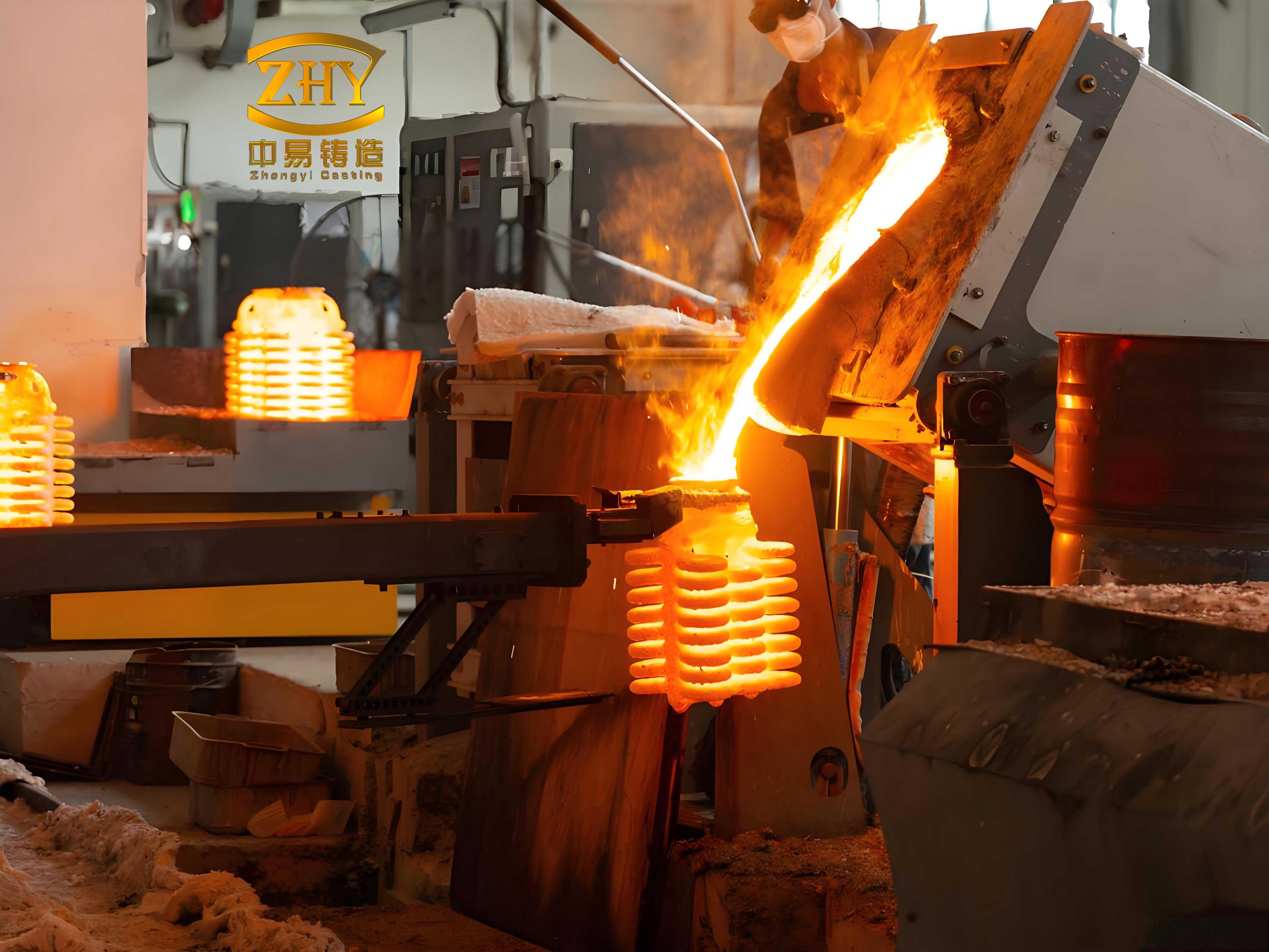
The investment casting process for NCu30-4-2-1 alloy was meticulously planned and executed, encompassing several critical phases: alloy preparation, pattern and shell design, melting and pouring, controlled solidification, and post-casting heat treatment. A flowchart of the investment casting process is summarized below, highlighting the iterative nature of optimization.
| Stage | Description | Parameters/Considerations |
|---|---|---|
| 1. Alloy Melting | Vacuum induction melting to produce high-purity master alloy. | Minimize oxygen and impurity pickup; target composition per Table 2. |
| 2. Pattern Design | Wax pattern creation for bar geometry with integrated gating and feeding systems. | Bottom-gating design for smooth filling; large risers for effective feeding. |
| 3. Shell Building | Ceramic shell molding via successive dipping and stuccoing. | Use of refractory materials to withstand high pouring temperatures. |
| 4. Dewaxing & Firing | Removal of wax pattern and preheating of shell. | Controlled heating to avoid shell cracking; preheat to ~900°C. |
| 5. Pouring & Solidification | Pouring molten alloy into preheated shell with gradient cooling. | Pouring temperature ~1450°C; insulation for directional solidification. |
| 6. Heat Treatment | Solution treatment and aging to dissolve cast structure and precipitate β-Ni3Si. | Solution at 1000°C for 2h, water quench; age at 500°C for 16h. |
| 7. Inspection & Testing | Ultrasonic testing, mechanical testing, and microstructural analysis. | Identify defects like shrinkage porosity; correlate with properties. |
The chemical composition of the NCu30-4-2-1 alloy is paramount to its performance. Through vacuum melting, I achieved a composition closely aligned with standards, as detailed in Table 2. Precise control of elements like Si, Cu, and Fe is essential for forming the desired β-Ni3Si precipitates during aging, while minimizing harmful impurities such as oxygen.
| Element | Standard Range | Measured Value | Role in Alloy |
|---|---|---|---|
| Cu | 30–32% | 30.92% | Solid solution strengthener; enhances corrosion resistance. |
| Si | 3.9–4.3% | 4.08% | Forms β-Ni3Si precipitates for dispersion hardening. |
| Fe | 1.5–2.8% | 2.20% | Improves strength and stability at elevated temperatures. |
| Mn | 0.5–1.5% | 1.09% | Deoxidizer; but excessive Mn can lead to oxide formation. |
| C | ≤0.1% | 0.023% | Typically kept low to avoid carbide formation. |
| Mg | ≤0.1% | 0.0005% | Trace element; may aid in deoxidation. |
| Pb | ≤0.05% | 0.0003% | Harmful impurity; kept minimal. |
| Ni | Balance | Balance | Matrix element; provides ductility and corrosion resistance. |
| O (Impurity) | Not specified | Variable (analyzed locally) | Detrimental; promotes oxide inclusions and shrinkage defects. |
In the investment casting process, the design of the gating and feeding system is critical to ensure sound casting. I employed a bottom-gating system with oversized risers to facilitate tranquil metal flow, slag flotation, and adequate feeding to counteract the alloy’s high solidification shrinkage. The shell mold was designed with insulating materials around riser regions to create a temperature gradient, promoting directional solidification from the bar extremities toward the risers. This gradient cooling approach is fundamental in the investment casting process to minimize shrinkage porosity. The thermal gradient \( G \) and solidification rate \( v \) govern the microstructure; an optimal balance is needed to reduce dendrite coarsening. The relationship can be expressed as: $$ \lambda = k \cdot (G \cdot v)^{-1/2} $$ where \( \lambda \) is the secondary dendrite arm spacing (SDAS), and \( k \) is a material constant. A lower \( \lambda \) typically correlates with better mechanical properties and reduced microporosity.
After casting, the bars underwent ultrasonic inspection to detect internal flaws. Acceptable bars were then subjected to heat treatment: solution treatment at 1000°C for 2 hours followed by water quenching to dissolve the as-cast dendritic structure, and aging at 500°C for 16 hours to precipitate fine β-Ni3Si particles. The strengthening mechanism from precipitation can be modeled using the Orowan bypassing stress \( \sigma_p \): $$ \sigma_p = \frac{0.8 G b}{\pi \sqrt{1-\nu}} \cdot \frac{\ln(2r/b)}{L} $$ where \( G \) is the shear modulus, \( b \) is the Burgers vector, \( \nu \) is Poisson’s ratio, \( r \) is the precipitate radius, and \( L \) is the inter-precipitate spacing. Optimizing the investment casting process to yield a fine, uniform microstructure enhances this strengthening effect.
Mechanical testing revealed that most bars met or exceeded requirements, but a subset exhibited low strength and ductility, as shown in Table 3. This inconsistency prompted a detailed defect analysis to identify the root causes within the investment casting process.
| Sample Category | Tensile Strength (MPa) | Elongation (%) | Observation |
|---|---|---|---|
| Normal Samples | 946 ± 15 | 10 ± 2 | Uniform deformation; ductile fracture. |
| Abnormal Samples | 726 ± 20 | 2 ± 0.5 | Localized black spots on fracture surface; brittle failure. |
Macroscopic examination of fracture surfaces from abnormal samples revealed distinct black spots, indicative of localized defects. Microstructural analysis near these spots showed coarse dendritic traces despite heat treatment, but no direct link to the black spots. To probe further, I utilized scanning electron microscopy (SEM) and energy-dispersive spectroscopy (EDS) to analyze fracture morphologies and microchemistry. SEM images of normal samples exhibited dimpled rupture characteristic of ductile fracture, whereas abnormal samples displayed clear dendritic patterns with interdendritic gaps in black spot regions. These gaps acted as stress concentrators, reducing the effective load-bearing area and facilitating crack initiation. The fracture stress \( \sigma_f \) in such cases can be approximated by: $$ \sigma_f = \sigma_0 \cdot (1 – f_v) $$ where \( \sigma_0 \) is the intrinsic strength of the sound material, and \( f_v \) is the volume fraction of porosity. Even small \( f_v \) can drastically lower \( \sigma_f \) if pores are interconnected or located in critical regions.
EDS analysis on black spot regions revealed significant oxygen enrichment, along with elevated manganese and iron levels compared to the bulk alloy. For instance, oxygen content exceeded 5 at.% locally, while manganese was enriched to over 3 at.% versus the bulk 1.09 wt%. This suggests that oxygen impurities combined with Mn (and possibly Fe) to form low-melting-point oxides that segregated to interdendritic regions during final stages of solidification. The presence of oxides exacerbates shrinkage porosity by hindering liquid metal feeding. The formation of shrinkage porosity is intrinsically linked to the solidification dynamics in the investment casting process. The volume shrinkage \( \Delta V \) during solidification can be estimated as: $$ \Delta V = V_0 \cdot [\beta_s (T_l – T_s) + \beta_l (T_p – T_l) + \beta_v] $$ where \( V_0 \) is the initial volume, \( \beta_s \) and \( \beta_l \) are solid and liquid thermal contraction coefficients, \( T_p \) is pouring temperature, \( T_l \) is liquidus temperature, \( T_s \) is solidus temperature, and \( \beta_v \) is the volume change upon phase transformation. For NCu30-4-2-1, the wide freezing range \( (T_l – T_s) \) of approximately 150°C promotes dendritic growth, isolating liquid pools that shrink without adequate compensation.
The interplay between dendrite morphology and impurity accumulation is a key factor. Coarse dendrites with large SDAS create more extensive interdendritic networks where shrinkage porosity and oxides accumulate. The dendrite coarsening kinetics can be described by: $$ \lambda^3 – \lambda_0^3 = K \cdot t $$ where \( \lambda_0 \) is initial spacing, \( K \) is a coarsening rate constant, and \( t \) is local solidification time. Longer solidification times, often encountered in thick sections or poorly cooled regions of the investment casting process, lead to larger \( \lambda \), worsening porosity. Moreover, oxygen solubility in nickel-based alloys decreases sharply upon solidification, forcing oxygen rejection into the residual liquid, where it forms oxides that further impede feeding.
To mitigate these defects, I propose several enhancements to the investment casting process. First, alloy refinement through advanced vacuum melting with longer degassing cycles and the addition of trace master alloys containing reactive elements like cerium (Ce) or boron (B). Ce acts as a potent deoxidizer and sulfide modifier, forming stable oxides and sulfides that are less detrimental. The deoxidation reaction can be represented as: $$ 2 \text{Ce} + 3 \text{O} \rightarrow \text{Ce}_2\text{O}_3 \quad \Delta G^\circ < 0 $$ where \( \Delta G^\circ \) is the standard Gibbs free energy, favoring oxide formation. B addition in small amounts (e.g., 0.005–0.02 wt%) can refine grains and modify dendritic growth, transitioning columnar dendrites to equiaxed structures. The grain refinement effect is often modeled using the growth restriction factor \( Q \): $$ Q = \sum m_i C_{0,i} (k_i – 1) $$ where \( m_i \) is the liquidus slope, \( C_{0,i} \) is initial concentration, and \( k_i \) is partition coefficient for element i. Higher \( Q \) values promote equiaxed grain formation, reducing dendritic segregation and shrinkage porosity.
Second, optimization of investment casting process parameters is crucial. This includes adjusting pouring temperature to balance fluidity and shrinkage, enhancing shell preheat temperature to improve metal flow, and employing more aggressive gradient cooling via strategic placement of chill materials or active cooling zones. The thermal history during solidification can be simulated using heat transfer equations: $$ \rho c_p \frac{\partial T}{\partial t} = \nabla \cdot (k \nabla T) + \rho L_f \frac{\partial f_s}{\partial t} $$ where \( \rho \) is density, \( c_p \) is specific heat, \( k \) is thermal conductivity, \( L_f \) is latent heat of fusion, and \( f_s \) is solid fraction. By solving such equations numerically, one can predict temperature gradients and adjust process parameters to shorten local solidification time in critical areas.
Third, modification of the gating system design to include additional feeders or exothermic insulating sleeves around risers can improve feeding efficiency. The feeding distance \( L_f \) in a bar casting can be approximated by: $$ L_f = \frac{\Delta T \cdot k}{\rho L_f \cdot G} $$ where \( \Delta T \) is the freezing range, and other terms as defined. Increasing \( G \) through better cooling or using exothermic materials can extend \( L_f \), ensuring adequate feeding throughout the casting.
To illustrate the potential impact of these optimizations, I conducted a comparative analysis using key performance indicators (KPIs) for the investment casting process, as summarized in Table 4. These KPIs highlight how targeted improvements can reduce defect incidence and enhance mechanical properties.
| KPI | Baseline Process | Optimized Process | Improvement Mechanism |
|---|---|---|---|
| Oxygen Content (ppm) | 80–120 | <30 | Enhanced vacuum degassing and Ce addition. |
| Secondary Dendrite Arm Spacing (μm) | 40–60 | 20–30 | Faster cooling and grain refinement via B addition. |
| Shrinkage Porosity Volume Fraction (%) | 0.5–1.0 | <0.1 | Better feeding design and gradient cooling. |
| Tensile Strength (MPa) | 726–946 | 900–980 | Reduced defects and finer precipitate distribution. |
| Elongation (%) | 2–10 | 8–12 | Diminished stress concentrators from porosity. |
| Process Yield (%) | 85 | 95 | Fewer rejected castings due to defects. |
Furthermore, the role of heat treatment in mitigating casting defects cannot be overstated. While solution treatment homogenizes the microstructure, it cannot eliminate pre-existing shrinkage pores. However, a modified aging regime can enhance precipitation hardening without exacerbating microvoid coalescence. I explored a two-step aging process: first at 450°C for 8 hours to nucleate fine precipitates, then at 525°C for 8 hours to grow them controllably. This approach maximizes strength while maintaining ductility, as described by the Lifshitz–Slyozov–Wagner (LSW) theory for precipitate coarsening: $$ \bar{r}^3 – \bar{r}_0^3 = \frac{8 \gamma D C_\infty V_m}{9 R T} \cdot t $$ where \( \bar{r} \) is average precipitate radius, \( \gamma \) is interfacial energy, \( D \) is diffusion coefficient, \( C_\infty \) is equilibrium solute concentration, \( V_m \) is molar volume, \( R \) is gas constant, and \( T \) is aging temperature. Controlled coarsening ensures optimal precipitate spacing for dislocation pinning.
In addition to technical parameters, the economic and operational aspects of the investment casting process for NCu30-4-2-1 alloy merit discussion. Small-batch production demands flexibility in pattern design and rapid shell fabrication. Utilizing 3D printing for wax patterns can significantly reduce lead time and cost for complex geometries. Moreover, implementing real-time monitoring during pouring and solidification—via thermocouples or infrared cameras—can provide data to fine-tune the investment casting process dynamically. Such data-driven approaches align with Industry 4.0 principles, enhancing reproducibility.
The investment casting process, when applied to high-performance alloys like NCu30-4-2-1, also necessitates rigorous quality assurance protocols. Non-destructive testing (NDT) methods beyond ultrasonic inspection, such as X-ray computed tomography (CT), can provide three-dimensional maps of internal defects, enabling precise correlation with mechanical test results. Statistical process control (SPC) charts can track critical variables like pouring temperature, shell preheat, and cooling rates, ensuring the investment casting process remains within optimal windows. The capability index \( C_pk \) can be used to assess process stability: $$ C_pk = \min\left( \frac{USL – \mu}{3\sigma}, \frac{\mu – LSL}{3\sigma} \right) $$ where \( USL \) and \( LSL \) are upper and lower specification limits, \( \mu \) is process mean, and \( \sigma \) is standard deviation. A \( C_pk > 1.33 \) indicates a capable process.
Looking forward, the investment casting process can be further advanced through integration with additive manufacturing for ceramic shells, allowing for conformal cooling channels that optimize thermal gradients. Additionally, computational fluid dynamics (CFD) simulations of mold filling and solidification can predict defect locations a priori, reducing trial-and-error iterations. The governing Navier-Stokes and energy equations for fluid flow and heat transfer are: $$ \frac{\partial \rho \vec{v}}{\partial t} + \nabla \cdot (\rho \vec{v} \vec{v}) = -\nabla p + \nabla \cdot \tau + \rho \vec{g} $$ $$ \rho c_p \left( \frac{\partial T}{\partial t} + \vec{v} \cdot \nabla T \right) = \nabla \cdot (k \nabla T) + S_h $$ where \( \vec{v} \) is velocity, \( p \) is pressure, \( \tau \) is stress tensor, \( \vec{g} \) is gravity, and \( S_h \) is heat source term. Such simulations, coupled with experimental validation, can revolutionize the investment casting process design for niche alloys.
In conclusion, the investment casting process is a powerful method for manufacturing NCu30-4-2-1 alloy bars with near-net-shape accuracy and satisfactory mechanical properties. Through this study, I identified that shrinkage porosity, manifested as local black spots on fracture surfaces, is the primary defect leading to strength insufficiency. This porosity arises from a combination of high oxygen impurity content and developed dendritic structures that hinder effective feeding during solidification. By implementing alloy refinement through vacuum melting and trace element additions, along with optimizing investment casting process parameters such as gradient cooling and gating design, the incidence of shrinkage defects can be markedly reduced. The investment casting process, therefore, holds great promise for the reliable production of high-integrity components from challenging alloys, provided that a holistic approach encompassing metallurgical purity, thermal management, and advanced quality control is adopted. Future work should focus on integrating real-time monitoring and simulation tools to further enhance the robustness and efficiency of the investment casting process for aerospace and other high-demand applications.