
The pursuit of superior surface finish and metallurgical integrity in complex, high-performance castings is a fundamental challenge within the investment casting process. This challenge is acutely magnified when dealing with advanced nickel-based superalloys destined for extreme service environments, such as the hot sections of aerospace engines. As a practitioner deeply involved in the development and production of such critical components, I have encountered and systematically investigated a pervasive issue: the formation of pitting and crater-like defects on the surface of castings. These defects are not merely cosmetic; they can act as stress concentrators, potentially initiating cracks and compromising the component’s lifespan under thermal-mechanical fatigue. This article presents a first-person, detailed account of the root-cause analysis and the multi-faceted engineering solutions developed to eliminate these defects, with a continuous focus on refining every stage of the investment casting process.
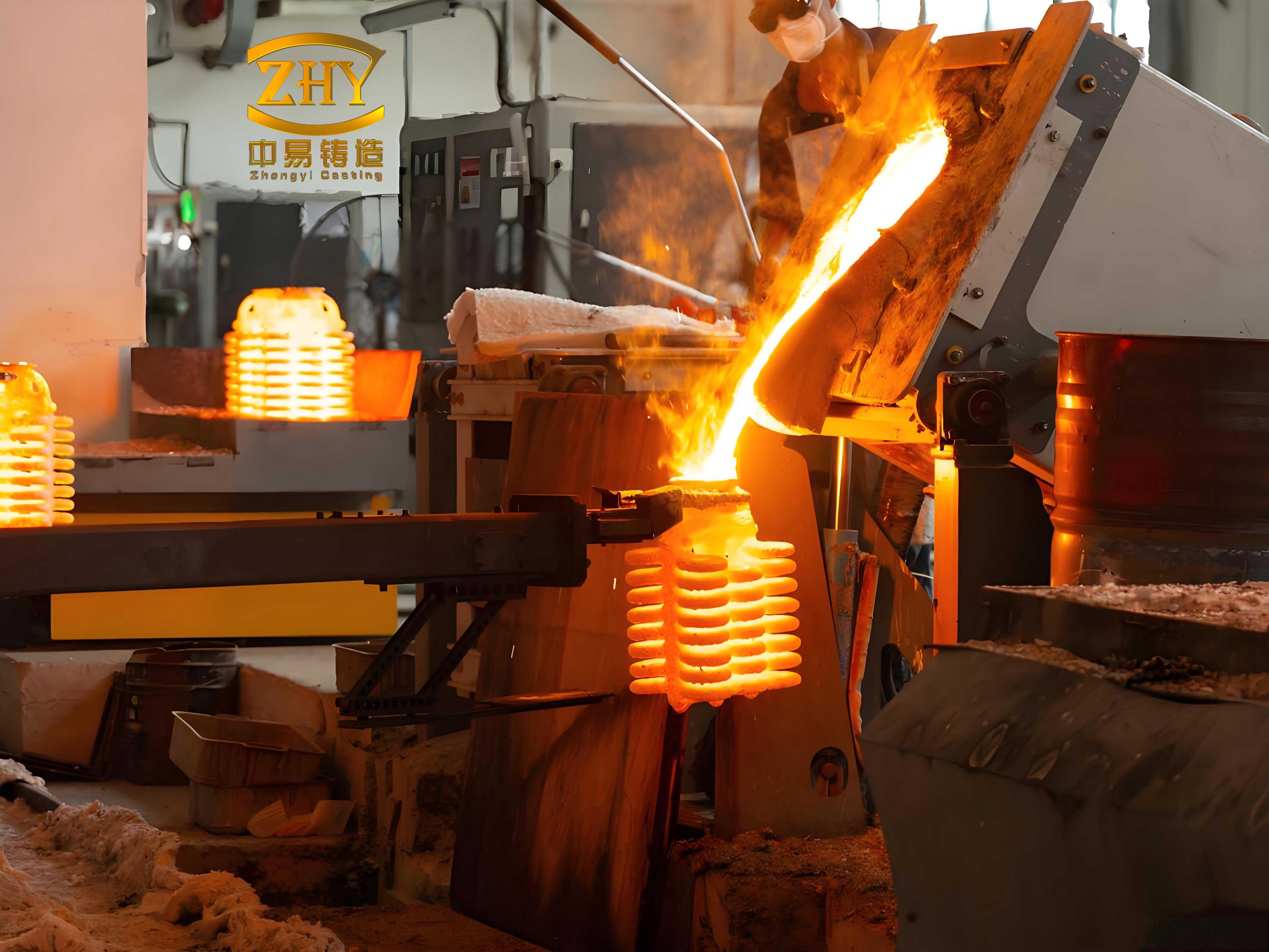
The component in question is a swirl cup (vortex generator), a critical part of a combustion chamber assembly. Fabricated from a high-chromium nickel-based superalloy analogous to K605, it operates in a severely aggressive environment with exposure to high temperatures and oxidizing atmospheres. The manufacturing route is the ceramic shell investment casting process, which inherently involves intimate contact between the molten alloy, heated to approximately 1500°C and above, and the refractory ceramic shell. This high-temperature interface is a site for potential chemical interactions, leading to defects generically classified as metal-mold reaction products, which manifest as rough surface textures, subsurface contamination, or, in the case studied here, discrete pits.
Initial Defect Characterization and Hypothesis Formation
During the initial production trials, a significant proportion of cast swirl cups exhibited unacceptable surface quality. Visual and microscopic inspection revealed scattered, irregularly shaped craters and fine pits on the casting surface. Tracing this defect back through the process, a corresponding phenomenon was observed on the fired ceramic shells: localized black or dark brown blotches on the shell’s facecoat surface. The spatial correlation between these shell blotches and the casting pits was strong, suggesting a direct causal relationship. This prompted a detailed investigation to understand the linkage.
Examination of the defect sites on the castings using stereomicroscopy and scanning electron microscopy (SEM) revealed consistent features. The pits varied in depth, and crucially, their bottoms were often filled with a grey, non-metallic substance distinct from the alloy matrix. Energy-dispersive X-ray spectroscopy (EDS) analysis of this grey material showed a composition rich in oxygen, aluminum, silicon, and chromium, with traces of carbon. This was a clear indicator of a chemical reaction product, not an entrapment of loose sand. The base alloy’s composition, particularly its high chromium content (19-21 wt%), pointed to the likely involvement of chromia (Cr2O3) in the reaction.
Concurrently, analysis of the “black blotches” on the shell facecoat was conducted. SEM imaging revealed a disturbing microstructure at these locations: the facecoat appeared porous, cracked, and sometimes partially detached, resembling a honeycomb or an ant’s nest structure. EDS analysis of material within these porous zones identified high concentrations of alumina (Al2O3), silica (SiO2), and, critically, iron (Fe). The hypothesis began to form: iron-containing compounds from within the shell system were migrating to the shell surface during high-temperature processing, creating a chemically active site that would aggressively interact with the molten alloy during pouring.
| Location / Material | Ni | Co | Cr | O | Al | Si | Fe |
|---|---|---|---|---|---|---|---|
| Alloy Matrix (Nominal) | Bal. | Bal. | 19-21 | – | – | ≤0.4 | ≤3.0 |
| Grey Deposit in Casting Pit | ~5 | ~2 | ~25 | ~35 | ~15 | ~12 | ~6 |
| Black Blotch on Shell Facecoat | – | – | – | ~45 | ~40 | ~12 | ~3 |
Deep Dive into the Defect Mechanism: A Thermodynamic and Process Perspective
The core of the problem was unraveled by examining the materials and thermal history of the shell within the investment casting process. The backup (or secondary) layers of the shell were built using a mullite-based stucco (3Al2O3·2SiO2). Routine and spot chemical checks on this stucco revealed a critical issue: while the bulk material had an acceptable iron oxide (Fe2O3) content of ~0.67%, it contained occasional dark, iron-rich granules. Isolated analysis of these “black sand” particles showed Fe2O3 content soaring to over 25%. The shell firing process, typically conducted between 1000°C and 1100°C, provided the necessary energy for reactions involving these iron oxides.
At these temperatures, Fe2O3 can decompose and react with free silica (SiO2, often present as a binder decomposition product or impurity) to form low-melting-point iron silicates. For example, the formation of fayalite (2FeO·SiO2) is highly relevant:
$$ 2FeO + SiO_2 \rightarrow 2FeO\cdot SiO_2 $$
The melting point of fayalite is approximately 1205°C, but in the presence of other impurities (Al2O3, alkalis like Na from binders), eutectic mixtures can form with liquidus temperatures well below 1050°C. This creates a mobile, viscous liquid phase during shell firing.
This is where the integrity of the facecoat becomes paramount. If the facecoat layer—applied using a zircon flour-based slurry in the initial process—is not perfectly dense and continuous (due to low coating viscosity, improper drying, or sand penetration from subsequent layers), microscopic channels or “ant nests” form. The low-melting iron silicate liquid, under capillary forces, wicks through these channels from the backup layers to the shell cavity surface. Upon reaching the surface, it spreads and solidifies as the characteristic black blotch. This phenomenon is schematically represented in the following reaction sequence model for the investment casting process:
- Contaminant Presence: Fe2O3-rich inclusions in backup stucco.
- Liquid Phase Formation during Firing:
$$ Fe_2O_3 \xrightarrow{\Delta} 2FeO + \frac{1}{2}O_2 $$
$$ 2FeO + SiO_2 \xrightarrow{900-1100^\circ C} (2FeO\cdot SiO_2)_{(l)} $$ - Infiltration: Liquid silicate permeates through a porous/defective facecoat.
- Alloy-Mold Reaction during Pouring: Molten alloy (at T > 1450°C) contacts the iron-silicate-rich blotch. Chromium in the alloy oxidizes preferentially, and the resulting Cr2O3 reacts:
$$ Cr_2O_3 + (2FeO\cdot SiO_2)_{(s/l)} \rightarrow FeO\cdot Cr_2O_3 + 2SiO_2 + \text{Other complex silicates} $$
This highly reactive interfacial process dissolves and erodes the local shell material and alloy surface, resulting in the pit filled with a chromium-aluminum-silicate slag.
The driving force for this reaction can be assessed thermodynamically. The stability of oxides is often compared using Gibbs free energy of formation. At pouring temperatures, the Ellingham diagram shows that chromium has a higher affinity for oxygen than iron. Therefore, the reaction between Cr in the melt and FeO in the shell blotch is favorable:
$$ 2[Cr]_{alloy} + 3(FeO)_{shell} \rightarrow (Cr_2O_3) + 3[Fe] $$
This [Fe] may dissolve into the melt locally, altering composition. The newly formed Cr2O3 then interacts with the silicate matrix. This sequence underscores that controlling shell chemistry and integrity is non-negotiable in a robust investment casting process.
A Systemic Solution Framework: Modifying the Investment Casting Process
Addressing this defect required a holistic approach, targeting multiple stages of the investment casting process chain. The solution set was built on four interconnected pillars.
1. Wax Pattern Tooling: Foundation for Consistency
The initial wax pattern quality sets the ceiling for final casting quality. The original tooling for the swirl cup comprised multiple loose pieces, resulting in wax patterns with prominent parting lines, flash, and dimensional variability. This necessitated extensive manual finishing of wax patterns, introducing inconsistency and potential damage to delicate features. The solution was the design and implementation of a monolithic, unitized tool. This new tool produced wax patterns with an integral pouring cup and runner system and, most importantly, no parting lines on the critical casting surfaces. This single change dramatically improved pattern repeatability, eliminated a source of potential shell damage during pattern assembly, and reduced downstream labor, establishing a pristine starting point for the shell-building investment casting process.
| Quality Parameter | Multi-piece Tool (Previous) | Unitized Tool (Implemented) |
|---|---|---|
| Presence of Parting Lines | Pronounced, on all major surfaces | None on casting surfaces |
| Dimensional Variance (Key feature) | High (±0.3 mm) | Low (±0.1 mm) |
| Required Manual Finishing Time | ~15 minutes/pattern | ~2 minutes/pattern (runner trim only) |
| Pattern Surface Roughness (Ra) | ~3.2 µm | ~1.6 µm |
2. Shell Engineering: The Primary Defense Line
This was the most critical intervention. Two major changes were made to the shell building sequence in the investment casting process.
A. Facecoat Material Substitution: The zircon flour (ZrSiO4) facecoat was replaced with a slurry based on fused alumina (Al2O3) powder. Alumina is thermodynamically more stable than zirconia/silica in contact with high-chromium melts, significantly reducing the propensity for chemical reaction. Furthermore, alumina-based slurries can be formulated to produce denser, less permeable coatings. To achieve this density, the slurry viscosity was tightly controlled. A model for effective coating thickness (ECT) based on dip parameters was considered:
$$ ECT = k \cdot \sqrt{\frac{\eta \cdot v}{\rho \cdot g}} $$
where $\eta$ is slurry viscosity, $v$ is withdrawal rate, $\rho$ is slurry density, $g$ is gravity, and $k$ is a material constant. For the alumina slurry, viscosity was maintained in the 45-51 second range (Ford Cup #4), ensuring a primary coat thickness of 90-100 µm. The use of a bimodal or trimodal alumina powder distribution was recommended (and later adopted) to enhance particle packing density, further reducing porosity and the risk of stucco penetration from the next layer.
B. Rigorous Control of Backup Material Purity: A stringent incoming quality control protocol was established for all refractory stucco materials, particularly the mullite used for backup layers. The acceptance criterion for iron oxide (Fe2O3) content was tightened, and visual inspection for dark, iron-rich granules was mandated. Lots containing such contaminants were rejected. This eliminated the source of the mobile iron silicate phase at its origin.
| Layer | Slurry Binder | Refractory Flour | Slurry Viscosity (s) | Stucco Material | Stucco Grit Size | Drying Condition (Temp, RH) | Minimum Dry Time (h) |
|---|---|---|---|---|---|---|---|
| Primary (Facecoat) | Silica Sol | Fused Alumina | 45 – 51 | Fused Alumina | 80 mesh | 22±2°C, 65±5% | 3-4 |
| Secondary | Silica Sol | Mullite | 22 – 36 | Mullite | 30/60 mesh | 22±2°C, 45±5% | ≥6 |
| Tertiary & Backup (3 layers) | Silica Sol | Mullite | 8 – 12 | Mullite | 16/30 mesh | 22±2°C, 45±5% | ≥8 |
| Seal Coat | Silica Sol | Mullite | 8 – 12 | — | — | 22±2°C, 45±5% | ≥12 |
3. Gating and De-waxing Strategy: Ensuring Process Hygiene
The original gating design positioned the swirl cups laterally off a central runner. While compact for tree assembly, this configuration created “pockets” in the lower hemispherical regions of the wax patterns that were difficult to drain completely during the autoclave de-waxing step. Residual wax trapped in these pockets would pyrolyze during shell firing, leaving carbonaceous deposits on the shell cavity surface. These deposits could then interact with the molten metal or create localized reduction atmospheres, exacerbating surface reactions. Experiments with extended de-wax times or secondary de-wax cycles proved ineffective.
The solution was a fundamental redesign to a top-gated system. In this configuration, each swirl cup is attached at its top to a down-sprue, ensuring that every section of the wax pattern has a direct, downward path for molten wax drainage during de-waxing. This change guaranteed complete wax removal, resulting in clean, residue-free shell cavities post-firing and eliminating another variable that could degrade casting surface finish in the investment casting process.
4. Process Control and Monitoring
Implementing these changes required enhanced process controls. Statistical Process Control (SPC) charts were established for key parameters: slurry viscosities, drying chamber temperature and humidity, and shell firing temperature profiles. Furthermore, a regular audit of fired shell quality was instituted, including visual inspection for surface discolorations under controlled lighting. Any shell exhibiting blotches was quarantined and analyzed, providing continuous feedback to the material and process controls.
Results, Validation, and Generalized Learnings
The implementation of this integrated solution package yielded transformative results. The scrap rate for swirl cups due to surface pitting and crater defects plummeted from an initial, unsustainable level of approximately 85% to below 5%. The consistency of high-quality surface finish became a routine expectation rather than an exception. Beyond the quantitative metrics, the investigation yielded profound insights applicable to the broader investment casting process for reactive alloys:
- The Shell is a Reactor, Not Just a Mold: The ceramic shell is an active participant in high-temperature metallurgical processes. Its chemical purity, especially regarding transition metal oxides (Fe, Ti, Mn), is as critical as its refractoriness and permeability.
- Defect Propagation is Multi-Stage: A final casting defect often has its genesis in earlier, seemingly unrelated process steps. The “black blotch” defect chain started with impurity-laden stucco, was enabled by a sub-optimal facecoat, and was activated during shell firing—long before metal was poured.
- Interdependence of Process Steps: Success in investment casting process relies on the synergistic optimization of all steps—tooling design, pattern quality, slurry rheology, stucco selection, gating geometry, and de-waxing dynamics. Optimizing one area while neglecting another will not yield a robust solution.
- The Criticality of the First Interface: The density, chemical stability, and continuity of the first coat of ceramic that contacts the molten metal are paramount. Investing in high-purity, well-engineered facecoat materials and precise application parameters is non-negotiable for casting high-integrity superalloys.
In conclusion, the eradication of surface pitting defects in the production of high-temperature alloy swirl cups was achieved not by a single adjustment but through a comprehensive re-engineering of the investment casting process chain. This approach, rooted in detailed defect mechanism analysis and systemic problem-solving, transformed a high-reject scenario into a reliable, high-yield manufacturing process. The principles established—material purity, interface engineering, and holistic process control—provide a validated framework for addressing similar metal-mold reaction challenges across the spectrum of advanced investment casting applications.