
The relentless pursuit of higher efficiency and performance in modern aviation engines has led to the ever-increasing utilization of superalloy components, with their proportion in aero-engine structures growing significantly. This evolution necessitates manufacturing techniques capable of producing parts with intricate geometries, thin walls, and exceptional dimensional accuracy. The investment casting process stands as the preeminent method for fabricating such high-integrity components, particularly hollow turbine blades and complex structural casings. At the heart of creating these sophisticated internal cavities lies the ceramic core—a sacrificial, precision-shaped component that defines the internal passages of the final metal casting. The performance and reliability of these ceramic cores are paramount, and their fabrication methods have become a critical area of research and development. Traditional molding techniques, while established, often face limitations in complexity, precision, lead time, and yield when confronted with next-generation component designs. Consequently, advanced molding technologies are rapidly evolving to overcome these bottlenecks. This article, from my perspective as a researcher immersed in this field, delves into the significant progress in ceramic core molding, focusing on injection freeze molding, moldless solid freeform fabrication (SFF), the negative replica method, and core-packing slip casting techniques, exploring their principles, advantages, and the challenges they present for industrial adoption in the investment casting process.
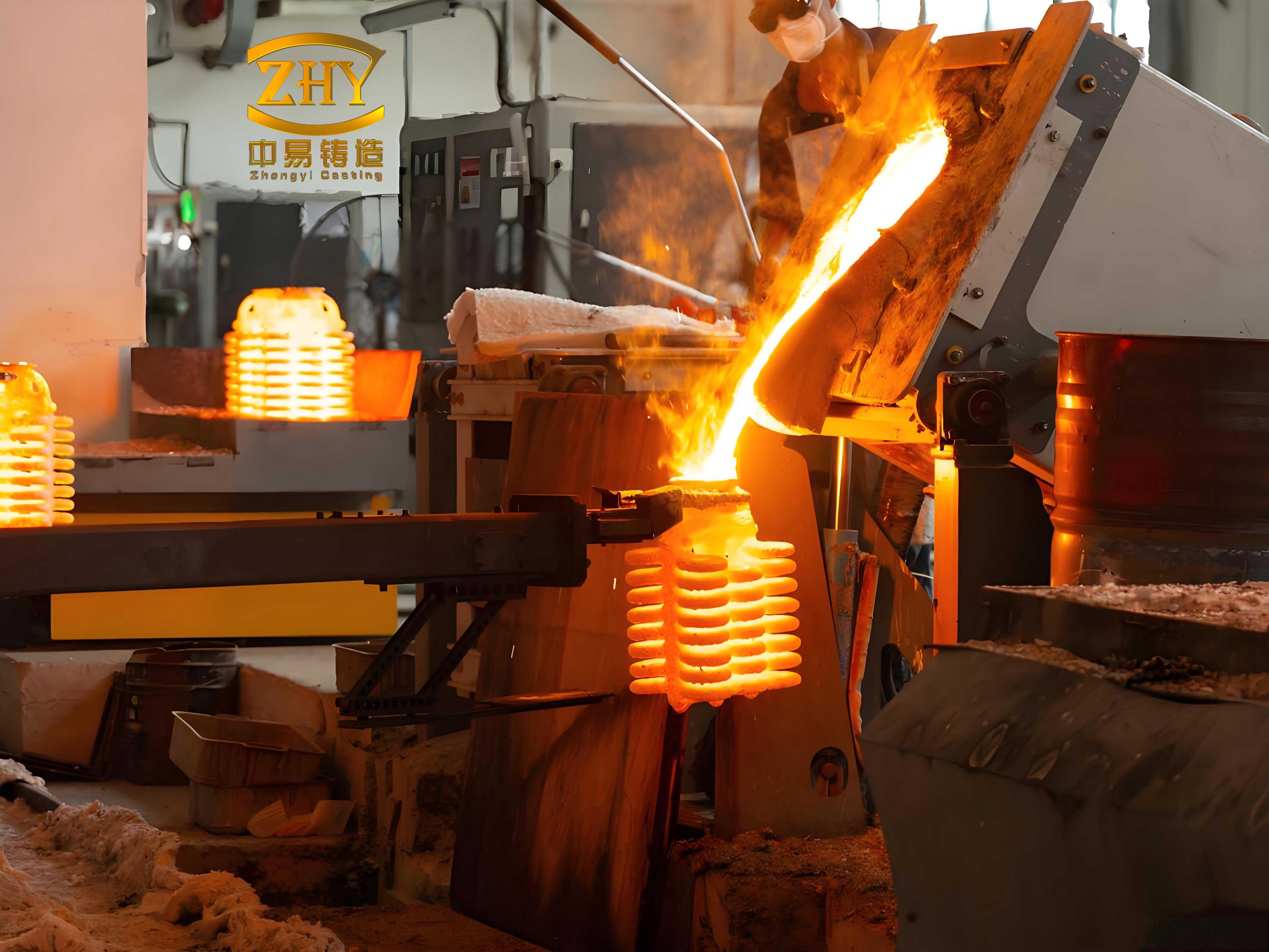
The investment casting process relies fundamentally on the stability and leachability of the ceramic core. After the metal has solidified, the core must be chemically removed, often via leaching in a hot alkaline solution, to reveal the complex internal cooling channels. Therefore, the core material must possess a unique combination of properties: sufficient room-temperature and elevated-temperature strength to withstand wax injection, shell building, and metal pouring; controlled porosity to allow for eventual leaching; minimal and predictable sintering shrinkage for dimensional fidelity; and excellent chemical stability against the molten superalloy. The molding process is the pivotal step that translates a formulated ceramic slurry or powder into a green body possessing the required shape and enough handleable strength for subsequent processing. It acts as the bridge between material design and final sintered performance. Innovations in molding directly enable the production of cores for more advanced cooling schemes, making them a cornerstone for advancing the entire investment casting process.
Injection Freeze Molding
Injection freeze molding is an advanced near-net-shape technique derived from freeze-drying principles. It involves the solidification of a ceramic slurry by freezing, followed by a controlled thawing process where gelling agents within the slurry form a rigid network that locks the particle structure in place. This method offers a distinctive pathway to create ceramic bodies with aligned porosity and reduced organic binder content compared to conventional hot injection.
The process, as I have studied and implemented it, follows a specific sequence. A slurry is first prepared by mixing ceramic powders (often silica-based for superalloy casting) with a water-based plasticizer system. The solid loading is critical, typically targeting around 58 vol% to balance fluidity and final density. This slurry is heated to approximately 60–66°C to optimize viscosity and then transferred to an injection unit maintained at 35–45°C. The key to this investment casting core technique lies in the temperature differential. The mold itself is chilled to between -30°C and -20°C. The slurry is injected under pressure (1.4–6.9 MPa) into this cold mold, where it freezes solid within 15–60 seconds. The initial rigidity of the green body comes from the frozen liquid medium, not a polymerized binder.
The frozen part is then demolded and placed in a room-temperature setting to thaw. During thawing, which can take 48 to 100 hours, the gelling agents slowly activate from the surface inward, creating a high-viscosity gel structure that provides the final green strength. This gradual process avoids the stresses associated with rapid drying. A significant advantage for the investment casting process is the subsequent thermal treatment. Since the organic content is low and the structure is already set by the gel network, the cores can be fired without the need for a traditional burnout hold or supporting packing material, enabling faster firing cycles.
The properties achieved are well-suited for the demands of the investment casting process. Cores produced this way exhibit good room-temperature bending strength (e.g., ~14.5 MPa), apparent porosity around 33%, and contain a manageable level of cristobalite after firing. Their leaching performance in hot alkaline solutions is reported to be efficient, with complete removal possible within 25 hours for alloys like IN713. The table below summarizes typical properties of a freeze-molded silica-based core after calcination.
| Property | Value | Notes |
|---|---|---|
| Room-Temperature Bending Strength | 14.5 MPa | Provides adequate handleability |
| Apparent Porosity | 33 vol% | Facilitates post-casting leaching |
| Bulk Density | 1.62 g/cm³ | Indicates a relatively porous structure |
| Thermal Expansion (20–960°C) | 0.31% | Must be matched with shell material |
| Cristobalite Content | 25 wt% | Affects high-temperature stability |
Furthermore, the slurry-based nature of injection freeze molding allows for the incorporation of ceramic whiskers or fibers, which can act as reinforcement to reduce sintering shrinkage, improve dimensional accuracy, and enhance high-temperature creep resistance—all critical factors for maintaining core integrity during the investment casting process.
Moldless Solid Freeform Fabrication (SFF)
The advent of additive manufacturing, or solid freeform fabrication, represents a paradigm shift for ceramic core production. These moldless techniques liberate design from the constraints of hard tooling, enabling the direct fabrication of cores with unprecedented geometric complexity, internal features, and rapid prototyping capabilities—a revolutionary advantage for the investment casting process where lead times for new core designs are a critical path.
Among the various SFF technologies, two have shown particular promise for ceramics: Stereolithography (SL) and Three-Dimensional Printing (3DP). My research focus has been on adapting these processes to meet the stringent requirements of investment casting cores.
Stereolithography (SL) of Ceramics
Ceramic stereolithography involves using a UV-curable resin loaded with ceramic powder. A vat of this photosensitive slurry is selectively exposed to a UV laser or digital light source, layer by layer, solidifying the resin and binding the ceramic particles. The main challenges lie in formulating a slurry with high solid loading (40-60 vol%) for adequate fired density, low viscosity for recoating, and appropriate optical properties for sufficient cure depth and resolution.
The process for creating an investment casting core via SL can be summarized by the following critical parameters and their interplay, which I often optimize:
$$ V_c = E_c \cdot D_p $$
Where $V_c$ is the critical curing velocity, $E_c$ is the critical exposure energy, and $D_p$ is the penetration depth of the UV light into the slurry. Achieving a precise cure requires balancing these factors against the ceramic powder’s refractive index and absorbance.
After printing, the “green” core undergoes a post-curing step under UV light to fully polymerize any uncured resin, followed by a meticulous thermal debinding and sintering cycle to burn out the polymer network and densify the ceramic. The resulting cores can achieve excellent surface finish and feature resolution below 100 µm, making them suitable for intricate cooling channel features. Perhaps the most transformative application is the fabrication of integral ceramic molds, where the core and shell are printed as a single, monolithic piece. This eliminates core positioning and sealing issues inherent in the traditional investment casting process, dramatically improving the dimensional accuracy of the internal passages.
Three-Dimensional Printing (3DP)
3DP for ceramics primarily encompasses two variants: Powder-Based 3DP (P-3DP) and Slurry-Based Inkjet Printing. In P-3DP, a thin layer of ceramic powder is spread, and a liquid binder is selectively inkjet-printed onto it, gluing the particles together. The process repeats, layer by layer, within a powder bed. After printing, the unbound powder is removed, revealing the fragile green part.
Slurry-Based Inkjet Printing, conversely, directly deposits a ceramic nanoparticle ink (a stable colloidal suspension) onto a substrate, relying on droplet evaporation or a reactive agent to induce solidification. This method can achieve very fine features but often requires careful control of drying to prevent cracking.
The choice of binder chemistry is crucial for the investment casting process. It must provide sufficient green strength for handling but also allow for complete burnout without leaving harmful residues. The dimensional accuracy and surface roughness of 3DP-printed cores are generally not as high as those from SL, but the process can be faster and more material-efficient for certain geometries. The ability to print multiple unique cores in a single build plate is a significant advantage for prototyping and low-volume production in the investment casting process.
The following table contrasts the main SFF technologies relevant to ceramic core production, highlighting their distinct feedstock requirements and performance characteristics, which I consider when selecting a process for a specific investment casting application.
| Technology | Feedstock | Typical Feature Size | Surface Quality | Relative Cost (Feedstock/Process) | Suitability for Complex Cores |
|---|---|---|---|---|---|
| Stereolithography (SL) | Photocurable Suspension | 10 – 50 µm layer | High | Medium-High / Medium | Excellent |
| Powder 3DP (P-3DP) | Powder + Binder | >100 µm | Medium | Low / Medium | Good |
| Slurry 3DP / Inkjet | Colloidal Ink | 50 – 200 µm | Medium-High | Low / Medium | Good |
The Negative Replica Method
A highly pragmatic hybrid approach that leverages the strengths of polymer additive manufacturing is the negative replica method, sometimes called negative AM technology. In my work, this has proven to be an effective bridge toward manufacturing high-quality ceramic cores without directly printing the ceramic material itself. The process ingeniously reverses the typical workflow: first, a disposable polymer mold with the precise negative shape of the desired ceramic core is fabricated using a high-resolution AM process like Stereolithography. This polymer mold is then used in a conventional ceramic shaping process, most commonly gel casting.
Gel casting is ideal for this purpose within the investment casting process. It involves pouring a high-solid-loading, low-viscosity ceramic slurry into the polymer mold. A chemical reaction (initiated by an added catalyst or temperature change) causes the slurry to in-situ polymerize, forming a strong, wet gel network that holds the ceramic particles in shape. This method yields green bodies with high strength and excellent shape fidelity. After demolding, the polymer master and the organic gel binder are removed during a controlled thermal cycle, and the part is sintered.
The chemical reaction for a common gel casting system using acrylamide can be represented as:
$$ \text{CH}_2=\text{CH}-\text{C}(=O)-\text{NH}_2 + \text{Crosslinker} + \text{Initiator} \xrightarrow{\text{Catalyst}} \text{3D Polymer Network} $$
This network encapsulates the ceramic particles, providing the green strength.
The primary advantage for investment casting core fabrication is decoupling. We utilize the superior speed, resolution, and surface finish of polymer AM to create the mold, while employing the reliable and scalable gel casting process to produce the actual ceramic part. This avoids many of the challenges associated with direct ceramic AM, such as light scattering in SL or weak green strength in 3DP. Researchers have successfully used this method to produce both standalone alumina-based cores and, more impressively, integral ceramic shell molds with embedded core structures for casting hollow turbine blades, showcasing its significant potential to simplify and improve the investment casting process.
Core-Packing Slip Casting Technology
For certain large-scale investment castings, such as engine casings with long, thin internal passages, neither traditional pre-cast cores nor integrally printed molds may be practical. Pre-cast cores can be heavy and cause wax pattern distortion, while the size may exceed the build volume of direct printing systems. In such cases, core-packing technology offers an ingenious solution. This technique is a sequential hybrid of shell building and core formation.
The process, as I have applied it, begins by building up a few initial ceramic shell layers on the wax pattern assembly via the standard dip-and-stucco method of the investment casting process. Once the internal cavity is partially lined but still open enough for easy access, a specially formulated fluid slurry—the core-packing material—is poured or injected to fill the cavity. This slurry is designed to set and harden in-situ, typically via a chemical reaction, forming a solid ceramic mass that acts as the core. After this internal core sets and dries sufficiently, the standard shell-building process resumes on the outside until the full shell thickness is achieved.
The core-packing material faces unique demands in the investment casting process. It must have excellent fluidity for complete filling, a controllable set time (delayed gelation), and most critically, very high wet and dry strength. This is because it cures in a confined space and must withstand the substantial stresses of wax removal (steam autoclave dewaxing) without cracking. Phosphate-bonded systems have been widely studied for this role. A common reaction system involves monoammonium phosphate (NH₄H₂PO₄) and a magnesia (MgO) hardener in water:
$$ \text{NH}_4\text{H}_2\text{PO}_4 + \text{MgO} + 5\text{H}_2\text{O} \rightarrow \text{NH}_4\text{MgPO}_4 \cdot 6\text{H}_2\text{O} $$
The formation of crystalline struvite (ammonium magnesium phosphate hexahydrate) provides the binding strength. These materials offer good refractoriness and can be designed to disintegrate easily after casting.
Alternative systems I have investigated use silica sol as a binder with calcium aluminate cement as a hardening additive. The calcium aluminate reacts with water to form strong hydraulic bonds:
$$ \text{CaO} \cdot \text{Al}_2\text{O}_3 + 10\text{H}_2\text{O} \rightarrow \text{CaO} \cdot \text{Al}_2\text{O}_3 \cdot 10\text{H}_2\text{O} $$
This reaction provides steadily increasing green strength over time without significant exothermic heat, which is beneficial for maintaining wax pattern dimensions. The success of core-packing is evident in its industrial adoption for manufacturing large, complex structural castings, proving its value as a versatile solution within the broader investment casting process toolkit.
Conclusions and Future Outlook
The evolution of ceramic core molding technologies is fundamentally reshaping the capabilities of the superalloy investment casting process. From injection freeze molding that reduces organic content and enables rapid firing, to the revolutionary design freedom offered by moldless solid freeform fabrication techniques like stereolithography and 3D printing, the field is moving towards greater integration, intelligence, and efficiency. The negative replica method cleverly combines the best of both polymer AM and traditional ceramic forming, while core-packing slip casting addresses the specific challenge of large, enclosed cavities.
Each advanced method brings distinct advantages to the investment casting process: reduced lead times for prototyping, the ability to create previously impossible internal geometries, improved dimensional accuracy, and the potential for integrated core-shell structures that eliminate assembly errors. However, significant challenges remain on the path to full-scale industrialization. For SFF techniques, the high cost of equipment and proprietary materials, along with the need for optimized, reproducible slurry formulations and complex post-processing cycles, are current barriers. The mechanical properties, particularly high-temperature creep resistance and leachability of additively manufactured cores, must match or exceed those of cores made by established techniques to gain full trust for mission-critical applications in the investment casting process.
Future research will undoubtedly focus on overcoming these hurdles. This includes developing more robust and cost-effective ceramic AM platforms, creating standardized material systems with tailored properties for the investment casting process, and establishing comprehensive databases linking printing parameters to final core performance. As these challenges are met, advanced molding technologies will transition from research novelties to mainstream production tools, ultimately enabling the manufacture of lighter, stronger, and more efficient superalloy components that push the boundaries of aerospace and energy technology. The progress in ceramic core molding is not merely an incremental improvement; it is an enabler for the next generation of investment casting.