
In my experience at a medium-sized manufacturing facility specializing in precision components, the evolution of the investment casting process has been a central focus. The rapid advancement of technology has driven significant improvements in casting techniques, yet balancing quality and cost remains a persistent challenge. Our primary production involved steel castings, where we traditionally employed a water glass-based shell system. However, this conventional investment casting process often resulted in suboptimal surface quality, necessitating extensive post-casting labor. This narrative details our journey to refine the shell-building methodology, integrating lessons from both traditional and advanced systems to achieve a superior balance.
The foundational investment casting process we used relied on sodium silicate (water glass) as a binder, with silica flour for the slurry and graded silica sand for stuccoing. The sequence involved applying layers with sand of specific grain sizes: coarse grades for initial layers and finer ones for subsequent coats. Dewaxing was performed using a hot water method, followed by mold firing. While functional, this approach exhibited critical limitations that compromised final part integrity. The defects were primarily twofold: elevated surface roughness, often requiring additional finishing steps like grinding and chipping, and undesirable metal protrusions (such as iron beads and fins) in intricate geometries like narrow slots and deep recesses. These flaws not only degraded aesthetic appeal but also hindered downstream machining operations, increasing scrap rates and production costs.
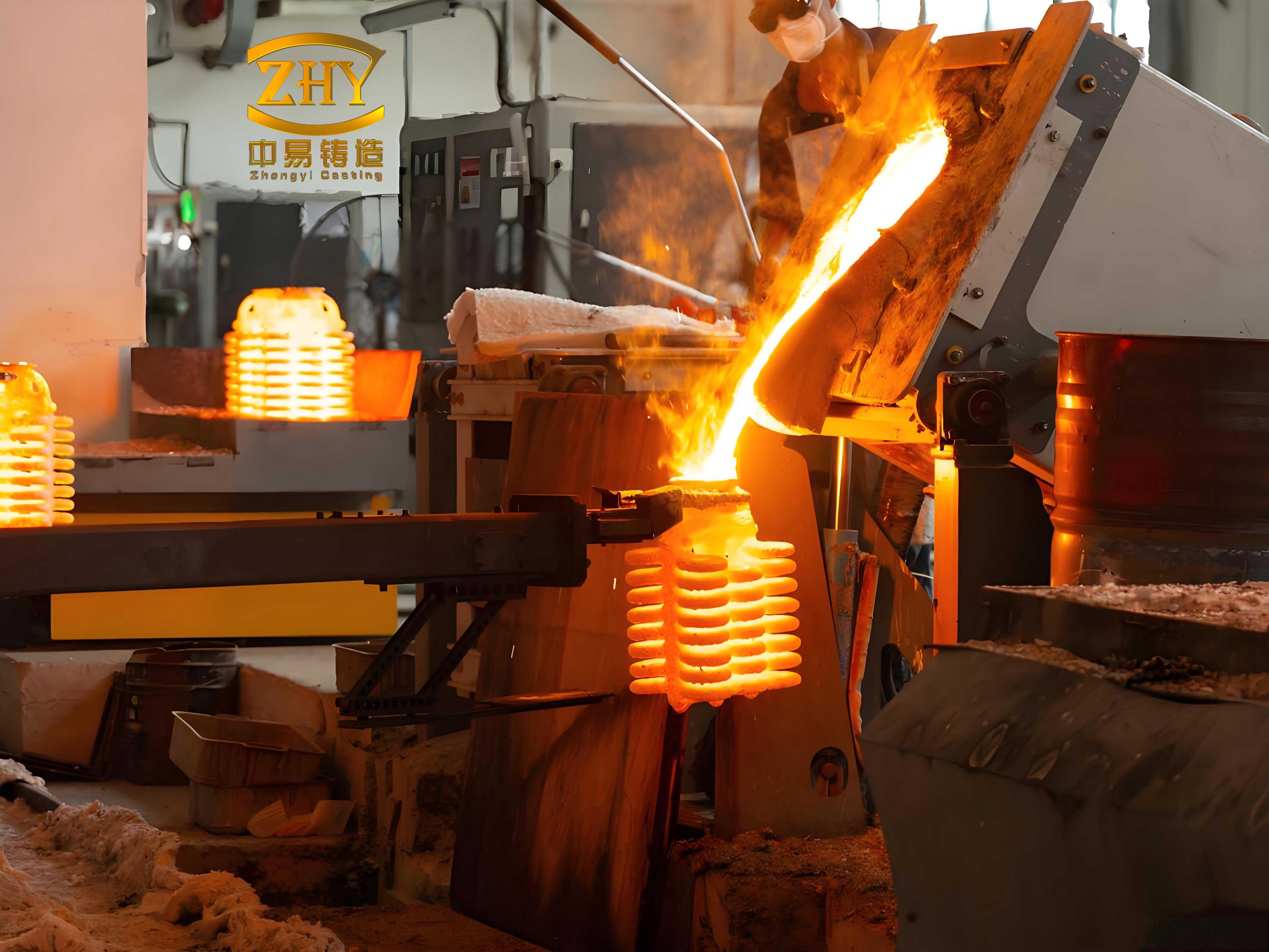
Motivated by these challenges, we initiated a systematic R&D program to enhance our investment casting process. The goal was to bridge the gap between the cost-effective but limited water glass technique and the high-quality yet expensive silica sol alternative. Our investigation unfolded in three distinct experimental phases, each yielding valuable insights into shell performance and casting outcomes.
Phase I: Exploration of Silica Sol System
In this initial stage, we adopted a shell system using silica sol as the primary binder. The face coat employed fine zircon sand (grain size grouping 15), followed by intermediate layers of mullite (group 30), and backup layers of coarse silica sand (group 60). Dewaxing and firing parameters mirrored our standard protocol. We produced a batch of components to evaluate this modified investment casting process. Results were disappointing; approximately one-third of the castings exhibited surface defects like pits and pinholes. Analysis revealed that the silica sol binder exhibited poor adhesion to the wax patterns under our existing workshop conditions. Furthermore, this advanced investment casting process proved highly sensitive to environmental factors—temperature, humidity, slurry mixing duration, and drying kinetics—which our facility could not consistently control. Consequently, shell integrity did not improve substantially, leading to defect formation. This highlighted a critical constraint: adopting a sophisticated investment casting process necessitates stringent ambient control, which may not be feasible without significant infrastructure investment.
Phase II: Hybrid Water Glass-Zircon Sand Approach
Learning from Phase I, we devised a hybrid strategy. We retained the water glass binder but introduced two initial face coats using fine zircon sand (group 15). Subsequent layers followed the original water glass-silica sand sequence. This approach aimed to leverage the superior refractory properties of zirconia while maintaining the cost and operational simplicity of the water glass system. Castings from this trial showed remarkable improvement. Surface smoothness increased significantly, with minimal occurrence of iron beads and fins. The surface roughness quality improved by approximately one grade. This success prompted further analysis into the material science behind it.
The enhanced performance can be attributed to the thermal and chemical properties of zircon sand versus silica sand. Silica sand undergoes a polymorphic transformation at around 573°C, accompanied by a sudden volume expansion. This abrupt change can induce micro-cracking in the shell, degrading its dimensional stability and leading to surface defects on the casting. Moreover, silica readily reacts with iron oxides at high temperatures, promoting chemical burn-on or penetration. In contrast, zircon sand (zirconium silicate, ZrSiO₄) exhibits a lower and more linear thermal expansion coefficient, approximately one-sixth that of silica. Its expansion behavior is summarized by the formula for linear thermal expansion: $$\Delta L = L_0 \cdot \alpha \cdot \Delta T$$ where $L_0$ is the original length, $\alpha$ is the coefficient of thermal expansion (CTE), and $\Delta T$ is the temperature change. For silica sand, $\alpha_{silica}$ is roughly $12 \times 10^{-6} \, \text{K}^{-1}$ in the relevant range, while for zircon sand, $\alpha_{zircon} \approx 2 \times 10^{-6} \, \text{K}^{-1}$. This difference significantly reduces thermal stress during the investment casting process. Additionally, zircon’s chemical inertness minimizes interactions with molten steel, providing excellent resistance to metal penetration.
We can quantify the relative volumetric stability. The volumetric expansion coefficient $\beta$ is approximately $3\alpha$ for isotropic materials. The volumetric change $\Delta V$ during heating is: $$\Delta V = V_0 \cdot \beta \cdot \Delta T = 3 V_0 \cdot \alpha \cdot \Delta T$$ For a typical shell heating cycle from room temperature to 1000°C ($\Delta T \approx 975$ K), the volumetric expansion for silica sand is about: $$\Delta V_{silica} \approx 3 V_0 \cdot (12 \times 10^{-6}) \cdot 975 = 0.0351 V_0$$ or 3.51% expansion. For zircon sand: $$\Delta V_{zircon} \approx 3 V_0 \cdot (2 \times 10^{-6}) \cdot 975 = 0.00585 V_0$$ or 0.585% expansion. This order-of-magnitude difference explains the reduced shell distortion and improved casting fidelity.
| Material Property | Silica Sand (SiO₂) | Zircon Sand (ZrSiO₄) |
|---|---|---|
| CTE (α, ×10⁻⁶ K⁻¹) | ~12 | ~2 |
| Volumetric Expansion at 1000°C | ~3.5% | ~0.6% |
| Polymorphic Transformation | Yes (α ↔ β quartz at 573°C) | No |
| Reactivity with FeO | High | Low |
| Typical Cost Ratio | 1 (baseline) | 8-12 |
Phase III: Cost-Reduction Trial with Fine Silica Sand
Given the higher cost of zircon sand, we attempted to substitute it with fine silica sand of identical grain size in the face coats, keeping the hybrid structure. The results were intermediate: surface roughness was better than the original all-silica process but worse than the zircon-faced shells. Defects like fins and beads reappeared in hard-to-clean areas. This confirmed that the benefits of Phase II were intrinsically linked to the zircon sand’s material properties, not merely the finer grain size. It underscored that in the investment casting process, the face coat material selection is critical for achieving superior surface finish, and compromises using cheaper alternatives can diminish returns.
Based on these findings, we formally adopted the hybrid water glass-zircon face coat system as our standard investment casting process. The implementation has yielded measurable advantages across several metrics, which we have documented over production cycles.
Technical and Economic Benefits of the Optimized Process
The refined investment casting process delivers a multifaceted improvement. Firstly, cast surface roughness consistently meets a higher quality standard, often achieving a reduction by one full grade (e.g., from Ra 12.5 µm to Ra 6.3 µm). Secondly, the near-elimination of surface metal protrusions has drastically reduced post-casting labor. Data indicates that cleaning, grinding, and finishing time has been cut to approximately one-third of the original duration. This directly boosts productivity. Thirdly, the improved casting integrity facilitates subsequent machining; tools experience less wear from hard inclusions, and dimensional consistency is enhanced, lowering rejection rates in machining departments. Finally, the overall casting yield (percentage of sound castings) increased from around 85% to over 93%.
We can model the economic impact. Let $C_m$ be the material cost per shell, $C_l$ the labor cost per casting for finishing, $C_s$ the scrap cost, and $Y$ the yield. For the old process (O) and new process (N), the total cost per good casting $C_{total}$ is: $$C_{total} = \frac{C_m + C_l}{Y} + C_s \cdot (1-Y)$$ For the old process: $C_{m,O}$ is low, $C_{l,O}$ is high, $Y_O=0.85$. For the new process: $C_{m,N} = C_{m,O} + \Delta C_{zircon}$ (incremental cost for zircon sand), $C_{l,N} \approx C_{l,O}/3$, $Y_N=0.93$. Even with a 10-15% increase in material cost due to zircon, the reduction in $C_l$ and increase in $Y$ lead to a net decrease in $C_{total}$. A simplified comparison is tabulated below.
| Cost Factor | Original Process (Water Glass + Silica) | Optimized Process (Water Glass + Zircon Face) | Change |
|---|---|---|---|
| Material Cost per Shell (Relative) | 1.00 | 1.12 | +12% |
| Finishing Labor Cost per Casting (Relative) | 1.00 | 0.33 | -67% |
| Casting Yield | 85% | 93% | +8% pts |
| Effective Cost per Good Casting (Normalized) | 1.00 | 0.78 | -22% |
Furthermore, the shell’s mechanical properties can be analyzed. The green strength and fired strength of the shell are crucial for handling and metal pouring. While quantitative measurements were not part of the initial trial, empirical observations indicated that shells with zircon face coats exhibited better resistance to cracking during dewaxing and handling. The modulus of rupture (MOR) for a composite shell can be approximated by a rule of mixtures for layered structures. If we consider the face coat as a distinct layer with properties $E_f$ (Young’s modulus) and $\sigma_f$ (strength), and the backup as having $E_b$ and $\sigma_b$, the overall shell strength under bending depends on the thickness and adhesion between layers. For a bilayer system, the stress distribution is complex, but the presence of a low-expansion, well-adhered face coat reduces tensile stresses in subsequent layers during thermal cycles, thereby increasing overall durability in the investment casting process.
The success of this optimization extends beyond immediate cost savings. It has enabled our facility to tackle more complex geometries with higher confidence. For instance, parts with deep pockets or thin walls now show reduced incidence of veining or mistruns, as the shell maintains better dimensional accuracy and thermal stability. This expands our capability within the precision investment casting process market. Additionally, the reduced need for aggressive finishing means that surface integrity is preserved, which is critical for components subjected to fatigue or corrosion in service.
Another aspect worth noting is the environmental and safety dimension. The hybrid process still uses water glass, which is generally considered less hazardous than some organic binders used in advanced investment casting processes. Moreover, by extending the life of the shell system (through reduced failure rates), we minimize waste generation from discarded molds. The reduction in grinding and chipping also decreases airborne particulate matter in the workshop, improving workplace air quality.
To generalize our findings, we can propose a framework for selecting face coat materials in a cost-sensitive investment casting process. The decision involves trading off material cost against quality gains. Let $Q$ represent a quality metric (e.g., inverse of surface roughness, or yield strength). We can posit a relationship: $$Q = k_1 \cdot M + k_2 \cdot P + k_3$$ where $M$ is a material property index (e.g., inverse of CTE, chemical inertness), $P$ is a process control parameter (e.g., humidity control, drying time), and $k_i$ are coefficients. For facilities with limited control over $P$ (like ours), investing in a higher $M$ (e.g., using zircon) becomes the most effective lever to boost $Q$. This aligns with our empirical results.
Looking forward, the evolution of the investment casting process continues. While our hybrid system is effective, further gains might be possible by exploring other refractory materials like fused silica or alumina for face coats, or by adopting intermediate binders like colloidal silica-modified water glass. Each option requires a similar rigorous evaluation cycle. However, the core lesson remains: incremental, evidence-based modifications tailored to specific production constraints can yield substantial improvements without necessitating a wholesale overhaul of the investment casting process.
In conclusion, our journey to refine the shell-building aspect of the investment casting process demonstrates that significant quality enhancements are achievable through strategic material substitution within a conventional binder system. By integrating a zircon sand face coat into a water glass-based shell sequence, we achieved a superior surface finish, reduced post-casting labor, improved yield, and lowered total cost per casting. This optimized investment casting process has proven robust in production, providing a reliable method for manufacturing high-integrity steel components. The key takeaway is that continuous innovation in the investment casting process need not be prohibitively expensive; it often involves smart hybridization of existing knowledge with selective adoption of advanced materials. As we move forward, this approach will remain central to our efforts in delivering precision cast components efficiently and economically.