
The investment casting process, renowned for its ability to produce net-shape components with exceptional dimensional accuracy and complex geometries, has long been a cornerstone of precision manufacturing for industries such as aerospace, energy, and automotive. Traditionally, this process involves creating a wax or polymer pattern, building a ceramic shell around it, melting out the pattern, and pouring molten metal into the resulting cavity. While effective, the traditional method for creating these expendable patterns—through injection molding using metal dies—is time-consuming and costly, especially for low-volume production or prototyping of intricate parts like impellers. The advent of additive manufacturing (AM), commonly known as 3D printing, presents a paradigm shift. By directly printing the sacrificial patterns, the investment casting process can be drastically accelerated, eliminating the need for hard tooling and enabling rapid iteration of designs. This synergy between AM and investment casting is revolutionizing how high-integrity, complex castings are developed and produced.
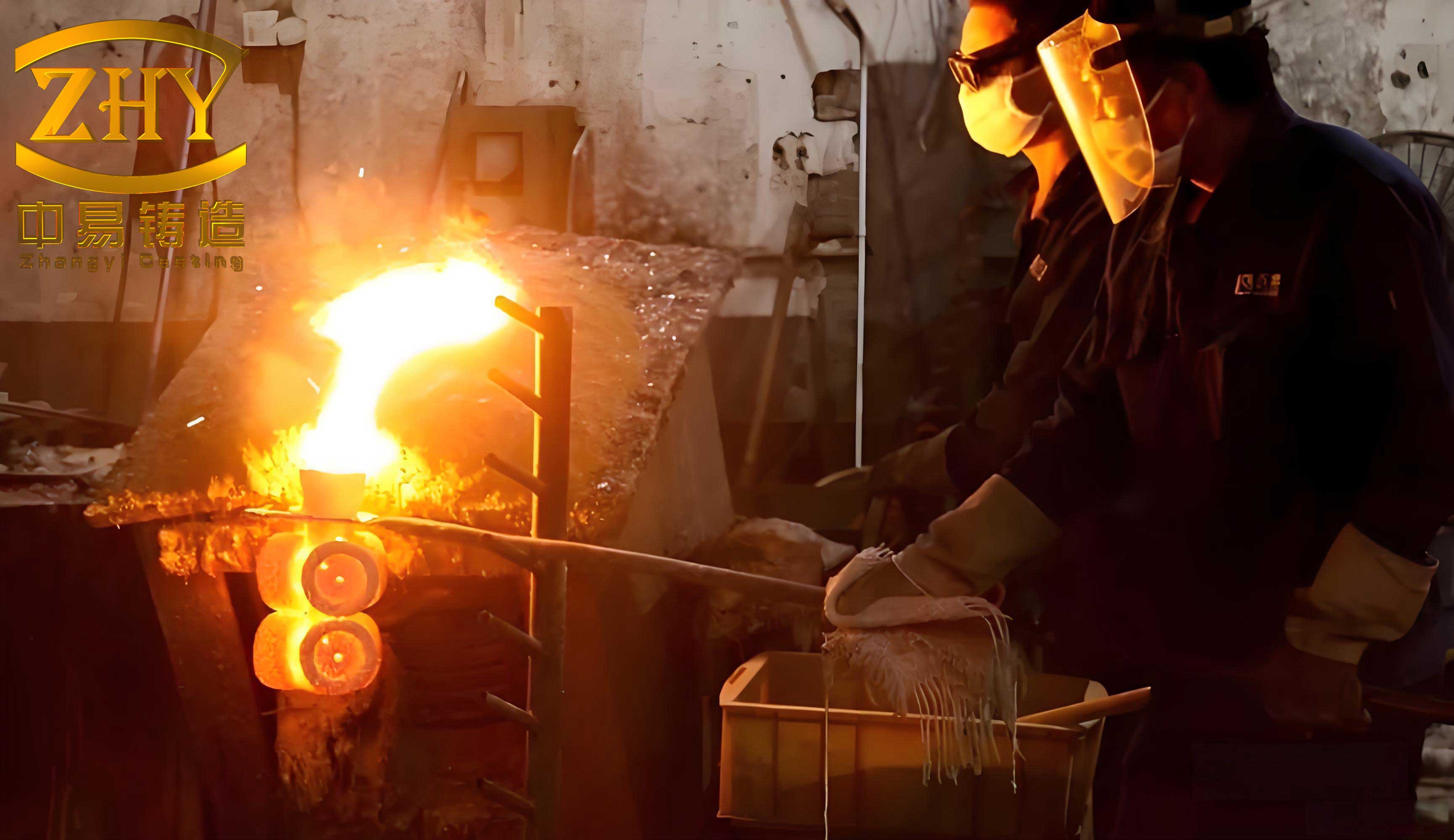
This article delves into a comprehensive study on optimizing the investment casting process for a specific complex component: a centrifugal impeller. The impeller, with its twisted, thin-walled blades, presents significant challenges in achieving complete, defect-free fill and sound solidification. To systematically address these challenges, this research employs a dual approach: advanced numerical simulation to virtually prototype and optimize the casting parameters, followed by physical validation using additively manufactured patterns. The core of the optimization focuses on the design of the gating system, which is critical for controlling metal flow, temperature gradients, and final soundness in the investment casting process.
Component Analysis and Casting Challenges
The subject of this study is a radial impeller with a major diameter of approximately 120 mm and a hub height of about 25 mm. The most critical features are its multiple, aerodynamically shaped blades. Each blade has an average thickness of only 2.0 mm and exhibits a pronounced twist along its length. This geometry creates several inherent challenges for the investment casting process:
- Turbulent Fill: The thin, twisted passages can disrupt smooth metal flow, leading to turbulence, air entrapment, and cold shuts.
- Premature Solidification: The high surface-area-to-volume ratio of the blades causes them to cool and solidify rapidly, potentially blocking feed paths from the risers to thicker sections.
- Shrinkage Defects: The thicker hub and central regions solidify last. Without adequate thermal control and feeding, these areas are prone to forming shrinkage porosity and cavities.
Therefore, a foundational step in this investment casting process study is the strategic design of the gating and feeding system to promote progressive solidification towards the risers and ensure peaceful filling of the blade cavities.
Gating System Design and Numerical Simulation Methodology
Three distinct gating system designs were conceived for the impeller investment casting process: Top, Side, and Bottom Gating. Each design fundamentally alters the thermal and fluid dynamics during pouring.
- Top Gating System: Metal is introduced from the top of the mold cavity, directly onto the impeller’s hub. This can facilitate rapid filling but risks mold erosion and turbulence as the metal falls.
- Side Gating System: Metal enters the mold cavity at the parting line, typically at the impeller’s periphery. This aims for a more balanced fill around the component.
- Bottom Gating System: Metal enters from the bottom of the mold, rising steadily to fill the cavity. This promotes the calmest fill but can create unfavorable temperature gradients where the metal cools as it rises.
To objectively evaluate these designs without costly physical trials, numerical simulation using AnyCasting software was employed. The simulation protocol for the investment casting process was standardized as follows:
| Parameter | Value / Description |
|---|---|
| Mesh Type & Count | Finite Volume Method (FVM), ~1,000,000 elements |
| Alloy | ZL104 (A356 Equivalent) |
| Pouring Temperature ($T_{pour}$) | 750 °C |
| Shell Preheat Temperature ($T_{shell}$) | 650 °C |
| Pouring Speed ($v_{pour}$) | 25 cm/s |
| Analysis Modules | Filling, Solidification, Defect Prediction (Shrinkage Porosity) |
The governing equations solved during the simulation of the investment casting process include the Navier-Stokes equations for fluid flow, the energy equation for heat transfer, and a volume-of-fluid (VOF) method for tracking the melt front:
$$ \frac{\partial \rho}{\partial t} + \nabla \cdot (\rho \vec{u}) = 0 $$
$$ \frac{\partial (\rho \vec{u})}{\partial t} + \nabla \cdot (\rho \vec{u} \vec{u}) = -\nabla p + \nabla \cdot \mu (\nabla \vec{u} + (\nabla \vec{u})^T) + \rho \vec{g} + \vec{F}_{drag} $$
$$ \frac{\partial (\rho C_p T)}{\partial t} + \nabla \cdot (\rho C_p \vec{u} T) = \nabla \cdot (k \nabla T) + \rho L \frac{\partial f_s}{\partial t} $$
Where $\rho$ is density, $\vec{u}$ is velocity, $p$ is pressure, $\mu$ is viscosity, $\vec{g}$ is gravity, $C_p$ is specific heat, $k$ is thermal conductivity, $L$ is latent heat, and $f_s$ is solid fraction.
Defect prediction, particularly for shrinkage porosity, is often based on criteria like the Niyama criterion ($NY$), which is derived from local thermal conditions during solidification:
$$ NY = \frac{G}{\sqrt{\dot{T}}} $$
where $G$ is the temperature gradient and $\dot{T}$ is the cooling rate. Regions with a Niyama value below a critical threshold are predicted to be susceptible to microporosity.
Simulation Results and Comparative Analysis
The simulation outputs for filling sequence, solidification progression, and defect prediction were analyzed for each gating system design in the investment casting process.
Top Gating System Analysis
The top-gated design showed a fill pattern where metal initially splashed onto the hub, creating some turbulence before spreading radially into the blades. The solidification sequence was directional, starting from the thin blades and moving towards the central hub and the top risers.
| Metric | Observation |
|---|---|
| Total Fill Time | ~3.2 seconds |
| Final Solidification Time ($t_{solid}$) | 390.9 seconds |
| Filling Behavior | Moderately turbulent initial impact. |
| Solidification Front | Progressive from blades to hub to risers. |
| Predicted Defect Location | Minimal porosity predicted at the junction between the hub and the central sprue. Very minor defects in blade roots. |
| Key Advantage | Good thermal gradient for feeding from top risers. |
| Key Risk | Potential for dross or oxide entrainment due to initial fall. |
The defect analysis indicated that this design could be viable, as the predicted shrinkage was largely isolated to the feeder channels themselves, not the functional impeller geometry.
Side Gating System Analysis
The side-gated system demonstrated a more balanced radial fill from the outer diameter inwards. However, the simulation revealed a less ideal thermal history.
| Metric | Observation |
|---|---|
| Total Fill Time | ~3.0 seconds |
| Final Solidification Time ($t_{solid}$) | 366.4 seconds |
| Filling Behavior | Smooth radial fill, but potential for conflicting flow fronts. |
| Solidification Front | Uneven; blades solidified rapidly, isolating the hub. |
| Predicted Defect Location | Significant shrinkage porosity predicted in the central hub and near the blade roots due to inadequate feeding. |
| Key Advantage | Potentially calm fill of blade passages. |
| Key Risk | Poor feeding leading to major shrinkage defects in critical areas. |
The faster overall solidification time and the isolation of the hub from the liquid metal reservoir in the risers made this design prone to serious shrinkage issues in the investment casting process.
Bottom Gating System Analysis
The bottom-gated design provided the calmest fill as metal rose steadily. Yet, it created an inverse temperature gradient.
| Metric | Observation |
|---|---|
| Total Fill Time | ~3.5 seconds |
| Final Solidification Time ($t_{solid}$) | 370.8 seconds |
| Filling Behavior | Very smooth, laminar-like rise. |
| Solidification Front | Metal at the bottom (entry point) cooled first, while the top (risers) remained hottest. |
| Predicted Defect Location | Porosity predicted at the top of the hub and in the upper regions of the casting, precisely where risers are intended to feed. |
| Key Advantage | Excellent fill quality, minimal air entrapment. |
| Key Risk | Worst-case thermal gradient for feeding, leading to shrinkage in the casting body. |
This “bottom-up” solidification is fundamentally opposed to the principle of directional solidification required for soundness in the investment casting process.
Optimal System Selection
Based on a holistic review of the simulation data, the **Top Gating System** was selected as the optimal configuration for this impeller investment casting process. The decisive factors were:
- Controllable Solidification Path: It established a clear thermal gradient from the thin blades (first to freeze) to the thicker hub, and finally to the top-mounted risers (last to freeze). This is described by the solidification time gradient:
$$ \nabla t_{solid} = \frac{\delta t_{solid}}{\delta x} $$
where a positive gradient from casting to riser is desirable. - Effective Feeding: The risers remained liquid longest, able to feed shrinkage in the hub section effectively, as per Chvorinov’s rule governing solidification time of a riser versus the casting section it feeds.
- Acceptable Fill Characteristics: While not perfectly calm, the initial turbulence was mitigated by the high shell preheat temperature, and the defect analysis showed no critical flaws propagating into the final part.
The final design incorporated three equally spaced top risers to ensure adequate feeding capacity and pressure head during the investment casting process. The modulus ($M$) of the risers was designed to be greater than that of the hub:
$$ M_{riser} > M_{hub} \quad \text{where} \quad M = \frac{V}{A} $$
(V = Volume, A = Cooling Surface Area).
Physical Validation via Additive Manufacturing and Casting
With the optimal gating design validated digitally, the next phase involved physical execution of the investment casting process using additive manufacturing for pattern production.
Pattern Fabrication and Shell Building
The complete assembly, including the impeller pattern and the selected top-gating system, was modeled and exported for 3D printing. Polylactic Acid (PLA) filament was chosen as the pattern material due to its low cost, good print resolution, and favorable burnout characteristics. The entire pattern cluster was printed on a fused deposition modeling (FDM) printer. This step replaced weeks of potential tooling manufacture with less than a day of printing, highlighting a primary benefit of integrating AM into the investment casting process.
A refractory shell was built using a high-temperature gypsum-bonded investment. The process followed a standard protocol:
- Slurry Preparation: Investment powder and water were mixed in a 100:45 ratio to form a slurry, which was de-aired to remove bubbles.
- Pattern Coating: The PLA pattern cluster was meticulously coated with the slurry, ensuring all blade passages were fully filled to capture fine details.
- Stuccoing and Drying: The coated pattern was subsequently invested in a flask filled with the same slurry to form the primary mold body.
- Burnout Cycle: The mold was placed in a furnace and subjected to a controlled thermal cycle:
- Ramp to 600°C, hold for 1 hour to slowly pyrolyze and volatilize the PLA pattern.
- Ramp to 750°C, hold for 2 hours to ensure complete pattern removal and preheat the mold.
- Cool and stabilize at the target pouring temperature of 650°C.
The burnout is critical; the time-temperature profile must ensure complete removal of the AM polymer without causing shell cracking. The relationship can be modeled as a kinetic decomposition:
$$ \frac{d\alpha}{dt} = k(T) (1-\alpha)^n $$
where $\alpha$ is the fraction decomposed, $k(T)$ is the temperature-dependent rate constant, and $n$ is the reaction order.
Melting, Pouring, and Finishing
ZL104 alloy was melted in a resistance furnace and superheated to 750°C. The preheated mold (at 650°C) was extracted from the furnace, and the metal was poured steadily at the simulated speed of ~25 cm/s. The small temperature differential between mold and metal ($\Delta T = 100°C$) minimized thermal shock and promoted the planned filling and solidification behavior. After complete cooling, the mold was broken away, and the casting cluster was recovered. The gates and risers were removed via sawing and grinding. The final impeller casting was then subjected to visual and dimensional inspection.
Results and Discussion
The resulting impeller casting validated the simulation-led investment casting process. The key outcomes were:
- Complete Fill: All thin blade sections were fully formed, with no visible cold shuts or misruns. This confirmed the adequacy of the gating design and the process parameters (pour temperature, mold temperature) in overcoming the fluidity challenges.
- Dimensional Fidelity: The casting accurately replicated the dimensions of the 3D printed pattern, including the challenging twisted blade profiles, demonstrating the precision achievable with the AM-integrated investment casting process.
- Surface Quality: The surface finish was good, characteristic of a well-made ceramic shell, with no major surface defects like scars or folds.
- Internal Soundness: Non-destructive inspection and sectioning of sample castings confirmed the absence of gross shrinkage cavities or large porosity clusters in the hub and blade root areas. The shrinkage was successfully migrated to the sacrificial risers, as predicted by the simulation.
The success of this trial underscores the effectiveness of using numerical simulation as a virtual foundry to debug and optimize the investment casting process before any metal is poured. It allows for the quantitative comparison of multiple gating strategies—assessing not just fill but, more importantly, the solidification thermodynamics—which is the root cause of most casting defects. Furthermore, the use of additively manufactured patterns fundamentally compressed the lead time. The cycle from final CAD model to functional metal prototype was reduced to a matter of days, encompassing simulation, pattern printing, shell building, and casting. This integrated approach dramatically enhances production efficiency for prototypes, custom parts, and low-volume batches within the investment casting process.
Conclusion and Future Perspectives
This study successfully demonstrated a modern, optimized framework for the investment casting process of complex thin-walled components. By leveraging computational simulation to select an optimal top-gating design and employing additive manufacturing for rapid pattern fabrication, a high-quality aluminum impeller casting was produced efficiently and effectively. The chosen gating system promoted favorable directional solidification, leading to a sound casting with minimal defects.
The integration of these digital and additive technologies offers a transformative pathway for the investment casting process:
- Risk Mitigation: Simulation identifies potential defects (shrinkage, turbulence) early, allowing for corrective action in the virtual stage.
- Cost and Time Reduction: AM eliminates expensive and time-consuming hard tooling for patterns, making small-batch production economically viable.
- Design Freedom: Complex geometries that are difficult or impossible to produce via traditional pattern injection molding become feasible.
Future work in this domain could explore further refinements: optimizing the exact riser size and placement using simulation-driven sensitivity analysis, experimenting with different AM pattern materials (e.g., wax-like resins) for even better surface finish, and applying the same combined methodology to other challenging alloys, such as nickel-based superalloys or titanium, within the investment casting process. The continuous improvement of simulation accuracy and AM material properties will only deepen this synergy, solidifying digital-foundry and additive-pattern-making as standard best practices in advanced investment casting process engineering.