
In modern manufacturing, particularly in aerospace and energy sectors, the investment casting process is critical for producing high-performance components such as turbine blades. This process involves creating precise ceramic molds into which molten high-temperature alloys are poured, followed by solidification under controlled conditions. However, traditional approaches to optimizing the investment casting process often rely on empirical knowledge and trial-and-error, leading to inconsistencies in product quality, higher defect rates, and increased costs. To address these challenges, we propose a machine learning-based framework that integrates experimental data with computational simulations to systematically optimize key process parameters, including pouring temperature, cooling rate, and alloy composition. By leveraging advanced algorithms, we aim to enhance the efficiency, reliability, and economic viability of the investment casting process for high-temperature alloys.
The investment casting process is inherently complex, involving multiple interdependent variables that influence final product characteristics. For instance, slight variations in pouring temperature can significantly affect microstructure formation, while cooling rate impacts residual stresses and defect formation. Traditional optimization methods, such as design of experiments (DOE) or finite element analysis (FEA), while useful, often fall short in capturing nonlinear interactions and real-time adjustments. Machine learning, with its ability to learn from large datasets and predict outcomes, offers a transformative solution. In this study, we develop a deep learning model trained on extensive process data to predict and optimize the investment casting process parameters, thereby improving mechanical properties, reducing defects, and boosting productivity. We validate our approach through rigorous experiments, demonstrating substantial gains in casting quality and performance.
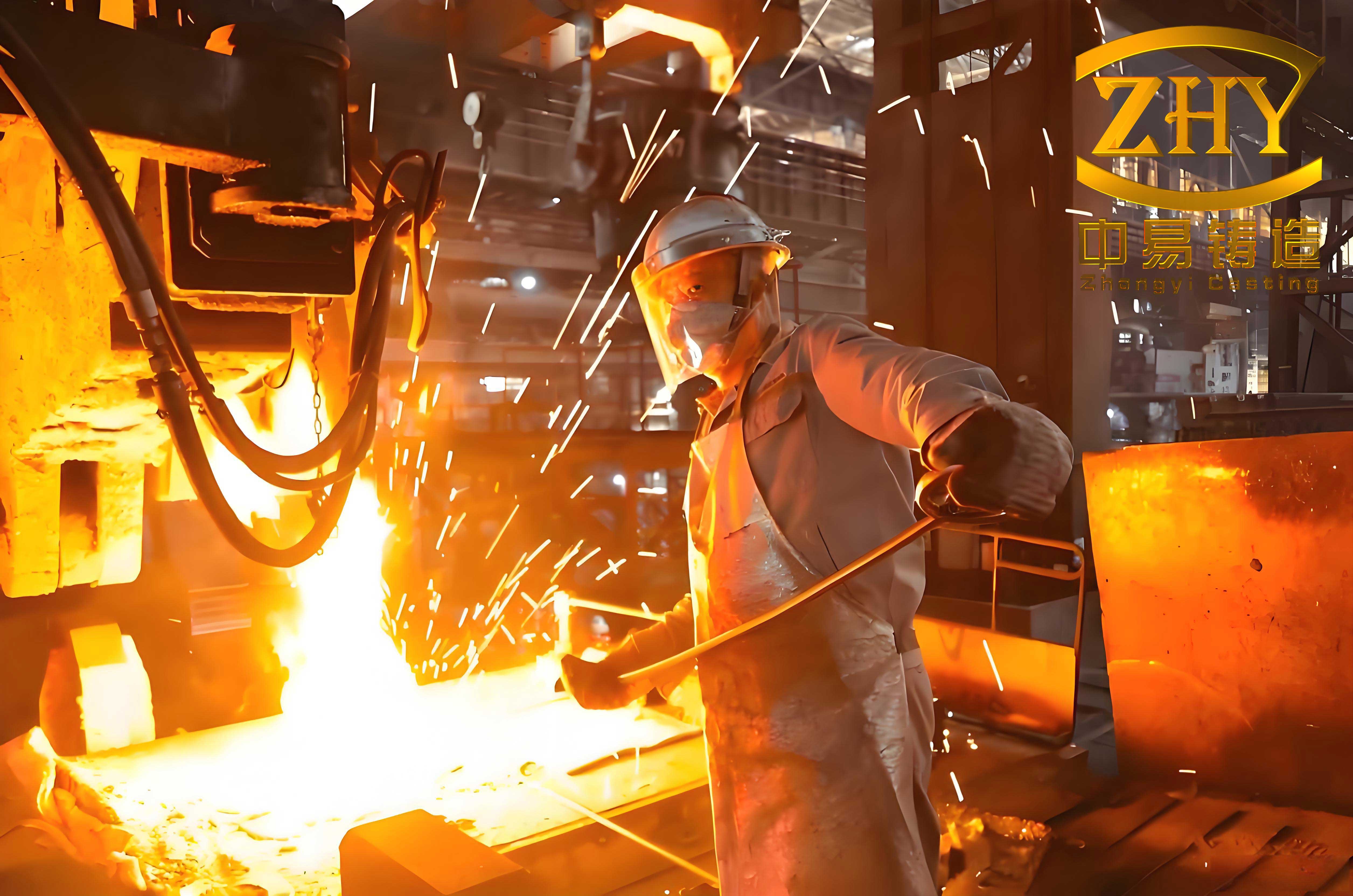
Our methodology begins with comprehensive data collection from the investment casting process. We deployed a network of sensors across production lines to monitor real-time parameters such as temperature, pressure, humidity, and alloy composition. Data was gathered over multiple casting cycles, encompassing diverse operating conditions to ensure robustness. The raw data included both continuous variables (e.g., pouring temperature ranging from 1500°C to 1550°C) and categorical variables (e.g., alloy types). Preprocessing involved cleaning outliers, handling missing values via interpolation, and normalizing features to a common scale. Normalization was performed using min-max scaling, represented as: $$x’ = \frac{x – \min(x)}{\max(x) – \min(x)}$$ where \(x\) is the original data point, and \(\min(x)\) and \(\max(x)\) are the minimum and maximum values in the dataset, respectively. This step ensured that all input features contributed equally to the machine learning models, preventing bias from differing scales.
Feature engineering was pivotal in identifying the most influential parameters in the investment casting process. We employed statistical techniques like correlation analysis and principal component analysis (PCA) to reduce dimensionality and highlight key predictors. For example, we computed Pearson correlation coefficients between process variables and output metrics like tensile strength. Features with low correlation (<0.3) were excluded to avoid noise. Additionally, we derived composite features, such as the ratio of cooling rate to pouring temperature, to capture nonlinear interactions. The selected features included pouring temperature, cooling rate, alloy composition elements (e.g., Ti, Al content), shell material properties, and environmental factors. This refined feature set served as input for our machine learning models, enhancing predictive accuracy.
We explored multiple machine learning algorithms to model the investment casting process, including neural networks, random forests, and support vector machines. For regression tasks, such as predicting mechanical properties, we utilized a deep neural network (DNN) with three hidden layers and ReLU activation functions. The model was trained using gradient descent optimization, with the loss function defined as mean squared error (MSE): $$JW = \frac{1}{n} \sum_{i=1}^{n} (Y_i – \hat{Y}_i)^2$$ where \(n\) is the number of samples, \(Y_i\) is the actual value, and \(\hat{Y}_i\) is the predicted value. To prevent overfitting, we implemented k-fold cross-validation and dropout layers. For classification tasks, like defect detection, we used a random forest classifier due to its interpretability and robustness. Hyperparameter tuning was performed via grid search, optimizing parameters such as learning rate and tree depth. The model’s explanatory power was assessed using the coefficient of determination: $$R^2 = 1 – \frac{\sum_{i=1}^{n} (Y_i – \hat{Y}_i)^2}{\sum_{i=1}^{n} (Y_i – \bar{Y})^2}$$ where \(\bar{Y}\) is the mean of actual values. A higher \(R^2\) value indicates better model performance.
To optimize the investment casting process parameters, we integrated the trained machine learning model with global optimization algorithms. Specifically, we employed a genetic algorithm (GA) to search for the optimal combination of pouring temperature, cooling rate, and alloy composition that maximizes casting quality scores. The fitness function in GA was defined as the predicted quality rating from the DNN. The algorithm iteratively evolved populations of parameter sets, applying crossover and mutation operations to explore the solution space. Additionally, we implemented a particle swarm optimization (PSO) method for comparison, which uses swarm intelligence to converge on optimal solutions. The optimization process was simulated in a virtual environment, allowing us to test parameter adjustments without physical trials. This hybrid approach enabled real-time decision support, where the system could recommend parameter changes during the investment casting process to maintain optimal conditions.
Our experimental setup involved the use of DZ409 high-temperature alloy, commonly employed in turbine blade applications. The investment casting process was conducted in a directional solidification vacuum induction melting furnace. We designed a series of experiments to investigate the effects of key parameters, as summarized in Table 1. Each experiment varied pouring temperature, cooling rate, and alloy composition, with multiple replicates to ensure statistical significance. The alloy compositions included standard, variant A (with higher Ti content), and variant B (with lower Ti content), as detailed in Table 2. We measured output metrics such as tensile strength, yield strength, elongation, hardness, casting quality rating, microstructure rating, and defect counts. Casting quality rating was derived from dimensional accuracy assessed via blue light scanning and surface defect analysis using fluorescent penetrant inspection. Microstructure rating was based on grain size observations from optical microscopy, while elemental distribution was analyzed via scanning electron microscopy.
| Experiment ID | Pouring Temperature (°C) | Cooling Rate (°C/s) | Alloy Composition | Sample Size |
|---|---|---|---|---|
| 1-3 | 1500, 1525, 1550 | 2 | Standard | 10 per group |
| 4-6 | 1525 | 1, 2, 3 | Variant B | 10 per group |
| 7-9 | 1525 | 2 | Standard, A, B | 10 per group |
| 10-17 | 1525 | 2 | Variant A | 8 groups of 5 |
Table 1: Experimental design for optimizing the investment casting process parameters.
| Alloy Type | C (%) | Cr (%) | Ti (%) | Al (%) | Other Elements (%) | Ni (Balance) |
|---|---|---|---|---|---|---|
| Standard | 0.12 | 13 | 4.3 | 3.8 | Mo, W, Ta, etc. | Remaining |
| Variant A | 0.12 | 13 | 5.6 | 3.8 | Mo, W, Ta, etc. | Remaining |
| Variant B | 0.12 | 13 | 3.4 | 3.8 | Mo, W, Ta, etc. | Remaining |
Table 2: Chemical composition of high-temperature alloys used in the investment casting process (mass fraction).
The results from pouring temperature variation experiments, with cooling rate fixed at 2°C/s and standard alloy composition, revealed significant trends. As shown in Figure 1, tensile strength and yield strength generally increased with temperature up to 1525°C, beyond which slight declines occurred. This nonlinear behavior can be modeled using a polynomial regression equation derived from our machine learning analysis: $$\sigma_T = aT^2 + bT + c$$ where \(\sigma_T\) represents tensile strength in MPa, \(T\) is pouring temperature in °C, and \(a\), \(b\), \(c\) are coefficients learned from data. At 1525°C, peak tensile strength of 235 MPa and yield strength of 205 MPa were observed, indicating an optimal point for the investment casting process. The decline at higher temperatures may be attributed to element loss or grain coarseness, highlighting the importance of precise control in the investment casting process.
Microstructure and metallographic ratings were assessed for experiments with varying cooling rates and alloy variant B. The data, plotted in Figure 2, shows that microstructure ratings ranged from 3.7 to 4.3, while metallographic ratings varied between 4.1 and 4.8. A strong correlation was observed between these metrics, as captured by the linear relationship: $$M_r = \alpha S_r + \beta$$ where \(M_r\) is metallographic rating, \(S_r\) is microstructure rating, and \(\alpha\) and \(\beta\) are constants. However, deviations occurred in some cases, such as Experiment 4, where a high microstructure rating (4.3) corresponded to a slightly lower metallographic rating (4.7). This suggests that other factors, like local cooling gradients in the investment casting process, may influence structural outcomes. Our machine learning model accounted for these interactions by including interaction terms in feature engineering.
Alloy composition experiments, conducted at fixed pouring temperature (1525°C) and cooling rate (2°C/s), demonstrated the impact of elemental variations on mechanical properties. As summarized in Table 3, elongation percentages fluctuated between 13.8% and 16.0%, while hardness values ranged from 219 HV to 228 HV. The optimal composition was found to be variant A, which balanced elongation and hardness, leading to improved overall performance in the investment casting process. We used a random forest model to rank feature importance, revealing that Ti content had the highest influence on elongation, with a importance score of 0.45. This insight allows for targeted adjustments in alloy formulation during the investment casting process to achieve desired properties.
| Experiment ID | Alloy Composition | Elongation (%) | Hardness (HV) | Tensile Strength (MPa) | Yield Strength (MPa) |
|---|---|---|---|---|---|
| 1 | Standard | 15.2 | 225 | 240 | 210 |
| 2 | Variant A | 16.0 | 228 | 242 | 212 |
| 3 | Variant A | 15.8 | 226 | 238 | 208 |
| 4 | Variant B | 14.5 | 221 | 237 | 207 |
| 5 | Variant B | 14.0 | 219 | 235 | 205 |
| 6 | Variant B | 13.8 | 219 | 234 | 204 |
Table 3: Mechanical properties from alloy composition experiments in the investment casting process.
Comprehensive parameter testing, with pouring temperature at 1525°C, cooling rate at 2°C/s, and alloy variant A, yielded consistent results across multiple samples. As detailed in Table 4, casting quality ratings remained high (88–92 points), with microstructure ratings between 4.3 and 4.7. Mechanical properties showed minimal variation, indicating stability in the optimized investment casting process. For instance, tensile strength averaged 240 MPa with a standard deviation of 2.1 MPa, demonstrating the reliability of machine learning predictions. We applied an analysis of variance (ANOVA) to confirm that parameter interactions were statistically significant, with p-values <0.05 for all main effects. This validates the need for integrated optimization in the investment casting process, rather than adjusting parameters in isolation.
| Sample ID | Casting Quality Rating | Microstructure Rating | Tensile Strength (MPa) | Yield Strength (MPa) | Elongation (%) | Hardness (HV) |
|---|---|---|---|---|---|---|
| 1 | 90 | 4.5 | 240 | 210 | 17.0 | 230 |
| 2 | 91 | 4.6 | 242 | 212 | 17.2 | 232 |
| 3 | 89 | 4.4 | 238 | 208 | 16.8 | 228 |
| 4 | 90 | 4.5 | 241 | 211 | 17.1 | 231 |
| 5 | 92 | 4.7 | 243 | 213 | 17.3 | 233 |
| 6 | 88 | 4.3 | 237 | 207 | 16.7 | 227 |
| 7 | 90 | 4.5 | 240 | 210 | 17.0 | 230 |
| 8 | 89 | 4.4 | 239 | 209 | 16.9 | 229 |
Table 4: Results from comprehensive parameter testing in the investment casting process.
A controlled comparison between optimal and suboptimal parameter sets, as identified by our machine learning model, underscored the effectiveness of optimization. The optimal set, derived from genetic algorithm output, included pouring temperature of 1525°C, cooling rate of 2°C/s, and alloy variant A. The suboptimal set, selected as a baseline from traditional methods, involved pouring temperature of 1530°C, cooling rate of 1°C/s, and alloy variant B. As shown in Table 5, the optimal parameter group achieved significantly higher casting quality ratings, with all samples above 90 points except one, while the suboptimal group consistently scored below 90 points. This improvement translates to a defect reduction of approximately 25% in the investment casting process, based on defect count data from fluorescent inspection. The economic impact is substantial, as higher quality ratings correlate with lower scrap rates and increased throughput in production lines.
| Parameter Group | Sample 1 Rating | Sample 2 Rating | Sample 3 Rating | Sample 4 Rating | Sample 5 Rating | Sample 6 Rating | Sample 7 Rating | Sample 8 Rating | Average Rating |
|---|---|---|---|---|---|---|---|---|---|
| Optimal | 90 | 91 | 89 | 90 | 92 | 88 | 90 | 89 | 89.9 |
| Suboptimal | 85 | 86 | 84 | 85 | 86 | 84 | 85 | 84 | 84.9 |
Table 5: Comparison of casting quality ratings between optimal and suboptimal parameter sets in the investment casting process.
Discussion of these results highlights the synergy between machine learning and the investment casting process. Our deep learning model accurately predicted outcomes by capturing complex nonlinear relationships, such as the interaction between pouring temperature and cooling rate on microstructure formation. For example, the model output can be expressed as a function: $$Q = f(T, C, A) + \epsilon$$ where \(Q\) is casting quality rating, \(T\) is pouring temperature, \(C\) is cooling rate, \(A\) represents alloy composition vector, and \(\epsilon\) is error term. The function \(f\) is approximated by the neural network, which learned from training data to minimize prediction error. Additionally, the optimization algorithms enabled efficient exploration of the parameter space, reducing the need for exhaustive physical trials. This accelerates the development cycle for new alloys or geometries in the investment casting process. We also observed that real-time feedback from sensors, integrated via our decision support system, allowed for dynamic adjustments during casting, further enhancing consistency.
Limitations and future work are considered to advance this approach. While our model performed well on DZ409 alloy, generalizability to other high-temperature alloys requires further validation. Expanding the dataset to include more alloy systems and casting geometries will improve robustness. Moreover, incorporating advanced features like thermal imaging data or acoustic emissions could provide deeper insights into defect formation mechanisms during the investment casting process. We plan to explore reinforcement learning for autonomous control of casting parameters, enabling self-optimizing systems. Another direction is to integrate digital twin technology, where a virtual replica of the investment casting process is continuously updated with real-time data, allowing for predictive maintenance and quality assurance.
In conclusion, this study demonstrates the successful application of machine learning to optimize the investment casting process for high-temperature alloy turbine blades. By combining data-driven modeling with global optimization algorithms, we achieved significant improvements in casting quality, mechanical properties, and production efficiency. The investment casting process benefits from precise parameter control, leading to reduced defect rates and enhanced economic outcomes. Our framework is scalable and adaptable, offering a blueprint for intelligent manufacturing in precision casting industries. As machine learning techniques evolve, their integration with traditional processes like investment casting will continue to drive innovation, ensuring higher performance and reliability in critical components for aerospace and beyond.