
The relentless pursuit of performance in aerospace, power generation, and advanced propulsion systems has placed immense demands on materials capable of withstanding extreme thermal and mechanical loads. High-temperature alloys, renowned for their exceptional elevated-temperature strength and superior corrosion resistance, have become indispensable in these fields. The manufacturing of intricate cast components from these alloys, however, presents a formidable challenge due to the alloys’ intrinsic characteristics—high melting points, limited fluidity, and complex metallurgical requirements. Traditional casting methods often fall short in achieving the necessary dimensional precision, surface finish, and internal integrity for mission-critical parts.
This is where the investment casting process demonstrates its pivotal role. As a premier precision casting technique, it offers unparalleled advantages for producing complex, near-net-shape components from high-performance alloys. The ability to replicate fine details, achieve excellent surface finishes, and cast intricate internal passages makes the investment casting process a preferred manufacturing route. However, to fully harness its potential for high-temperature alloys and elevate manufacturing standards, a systematic optimization of the entire investment casting process chain is imperative. In my professional experience, overcoming the inherent challenges requires a holistic approach that integrates parameter refinement, innovative tooling design, and rigorous quality assurance protocols.
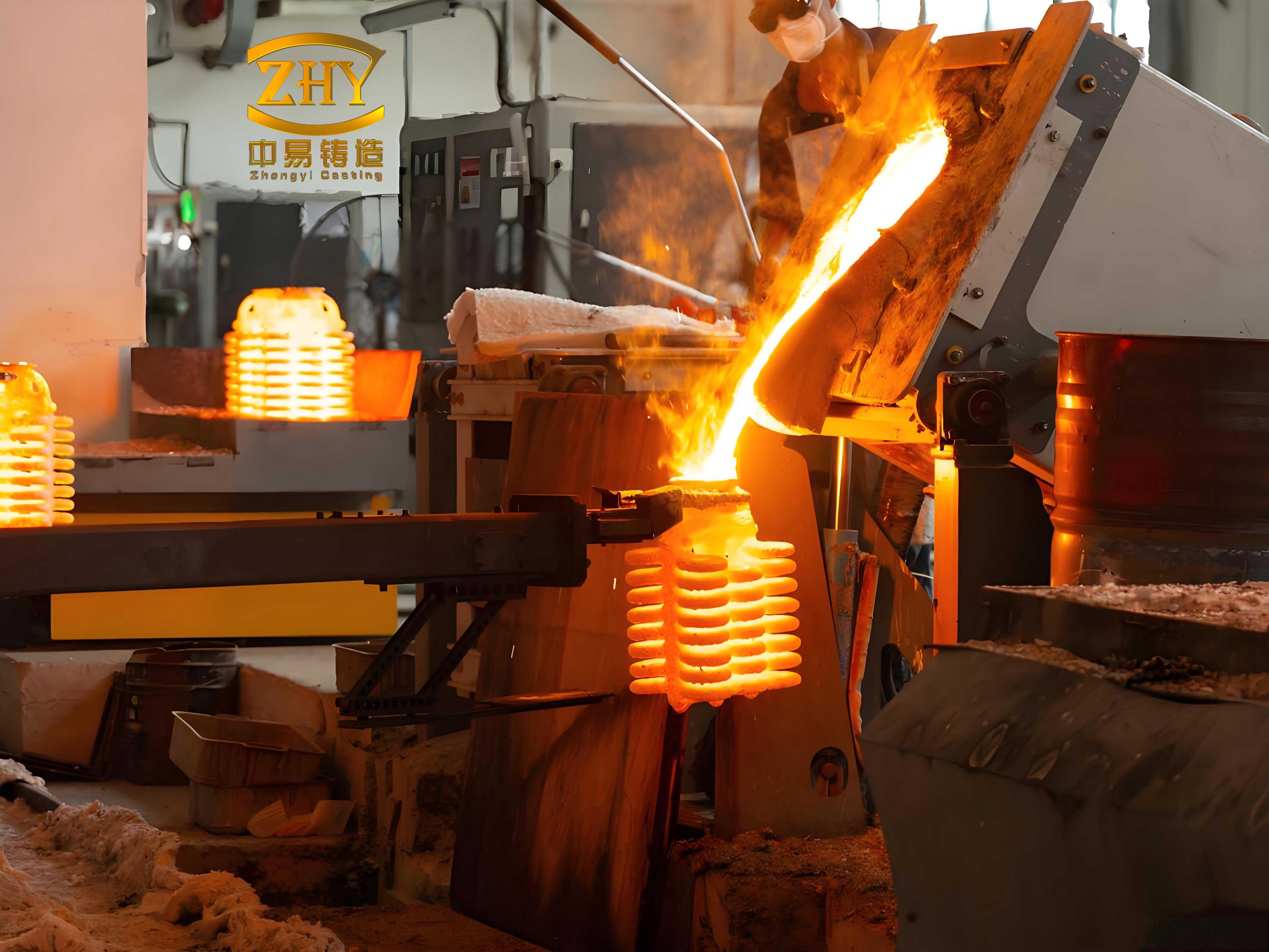
Inherent Challenges in the Investment Casting of High-Temperature Alloys
While powerful, the application of the investment casting process to high-temperature alloys is fraught with specific difficulties that must be meticulously managed. These challenges primarily revolve around three core aspects: quality, productivity, and cost.
| Challenge Category | Specific Issues | Root Causes |
|---|---|---|
| Quality Control | Shrinkage porosity, hot tears, misruns, inclusions, segregation. | Narrow processing windows, high melting temperature, poor alloy fluidity, sensitivity to shell/metal interaction. |
| Production Efficiency | Lengthy shell-building cycles, extended dewaxing and firing times, long overall lead times. | Multiple ceramic coats required for structural integrity, slow drying kinetics, complex thermal cycles. |
| Production Cost | High material and equipment costs, significant energy consumption, yield losses. | Expensive ceramic materials, vacuum melting furnaces, extensive post-casting inspection and rework. |
The first and most critical hurdle is quality control. High-temperature alloy castings demand exceptionally sound microstructure and mechanical properties. The investment casting process involves numerous interacting variables—alloy superheat, shell preheat temperature, thermal conductivity of the mold, vacuum/pressure during pouring, and solidification gradient. A minor deviation in any parameter can lead to defects. For instance, insufficient superheat may cause mistuns in thin sections, while excessive superheat can promote coarse grains and severe microsegregation. The relationship between pouring temperature ($T_{pour}$) and fluidity length ($L_f$) can be conceptually modeled, highlighting the narrow window:
$$ L_f \propto \frac{\Delta T_{superheat} \cdot \rho \cdot g \cdot h_{sprue}}{\mu} $$
Where $\Delta T_{superheat}$ is the superheat, $\rho$ is density, $g$ is gravity, $h_{sprue}$ is effective sprue height, and $\mu$ is dynamic viscosity. The viscosity $\mu$ itself is highly temperature-dependent for these alloys, making the process highly sensitive.
Secondly, production efficiency is often hampered by the sequential and time-intensive nature of shell building. Each ceramic layer requires dipping, stuccoing, and drying. For large components, this cycle can span weeks. Furthermore, the dewaxing (wax removal) and high-temperature firing of the ceramic shell are critical steps that cannot be rushed without risking shell cracking or residual ash. The total lead time from pattern assembly to finished casting can be prohibitively long, limiting throughput and responsiveness.
Finally, production cost remains a significant barrier. The investment casting process consumes expensive materials: specialized waxes, high-purity refractories like zircon, alumina, or fused silica, and costly binders. The capital investment for vacuum induction melting (VIM) furnaces and precision-controlled dewaxing autoclaves is substantial. When coupled with potential yield losses from defects, the cost per qualified casting can be high, especially for low-volume, high-complexity parts.
A Systematic Framework for Optimization
Addressing these challenges requires a multi-pronged optimization strategy. Based on extensive application experience, the most impactful improvements are derived from synergistic enhancements in process parameters, mold (tooling) design, and integrated quality systems.
1. Optimization of Key Process Parameters
The heart of a robust investment casting process lies in defining and controlling its thermal and kinetic parameters. This is not a one-size-fits-all endeavor; it requires a component-specific approach. Consider a representative case: a complex stainless steel housing with numerous thick sections (hot spots) and thin ribs.
Initial trials using standard parameters resulted in mistuns in the thin ribs and internal shrinkage in the thick sections. The optimization proceeded as follows:
Thermal Parameter Optimization: The primary focus was on establishing the correct thermal gradient. The pouring temperature was carefully increased within the alloy’s specification to enhance fluidity, as suggested by the fluidity model. Crucially, the shell preheat temperature ($T_{shell}$) was optimized in tandem. A higher $T_{shell}$ reduces thermal shock and improves filling but can decrease the solidification rate, promoting shrinkage. An empirical relationship guiding this balance is:
$$ G \approx \frac{T_{pour} – T_{shell}}{d_{shell} / k_{shell}} $$
where $G$ is the initial thermal gradient at the metal-shell interface, $d_{shell}$ is the effective shell thickness, and $k_{shell}$ is its thermal conductivity. We targeted a $T_{shell}$ that ensured complete filling without compromising the directional solidification needed for feeding.
Kinetic & Environmental Control: Pouring speed was controlled to ensure laminar filling, minimizing oxide entrapment. The vacuum level in the furnace chamber during melting and pouring was tightened to reduce gas porosity ($V_{gas}$), which can be related to the partial pressure of dissolved gases (Sievert’s Law):
$$ [H]_{melt} \propto \sqrt{P_{H_2}} $$
where $[H]_{melt}$ is the hydrogen concentration in the melt and $P_{H_2}$ is the partial pressure of hydrogen in the furnace atmosphere. Maintaining a high vacuum minimizes $P_{H_2}$, thereby reducing $[H]_{melt}$ and the subsequent risk of hydrogen porosity upon solidification.
| Parameter | Initial Value | Optimized Value | Impact on Process |
|---|---|---|---|
| Alloy Superheat ($\Delta T_{superheat}$) | ~75°C | ~110°C | Improved fluidity, eliminated mistuns in thin sections. |
| Shell Preheat ($T_{shell}$) | ~850°C | ~950°C | Reduced thermal shock, aided filling, controlled gradient. |
| Chamber Vacuum (during pour) | ~1.0 x 10⁻² mbar | < 5.0 x 10⁻³ mbar | Significantly reduced gas porosity and oxide inclusions. |
| Pouring Time (for part volume) | ~8 seconds | ~5-6 seconds | Faster fill while maintaining laminar flow. |
2. Advanced Mold and Gating System Design
Optimizing parameters alone is insufficient without a complementary gating and feeding system design. The goal is to engineer a predictable solidification pattern that promotes directional solidification toward the feeders (risers). For the housing component, the initial design failed to adequately feed the numerous isolated hot spots.
The redesign employed several key principles of the investment casting process:
Feeder Optimization: Feeders were strategically relocated and their dimensions calculated using modulus-based methods. The feeder modulus ($M_f$) must be greater than the casting modulus ($M_c$) at the point it is intended to feed:
$$ M_f > M_c \quad \text{, where } M = \frac{Volume}{Cooling Surface Area} $$
For complex junctions, this often required adding explicit “chill” materials or “padding” (localized increases in section thickness leading to the feeder) to manipulate the local modulus and create a thermal channel for feeding.
Gating for Controlled Filling: The gating system was redesigned from a single entry point to multiple, smaller gates to distribute metal flow more evenly and reduce turbulence. The cross-sectional area progression from the pour cup down to the gates was calculated to maintain a pressurized, non-aspirating flow.
Shell Design Innovation: Contrary to the intuition that thicker shells are always better, we optimized shell thickness. In areas requiring rapid cooling (like thin sections adjacent to thick ones), the shell was designed to be thinner or made with a ceramic of higher thermal conductivity (e.g., zircon vs. fused silica). This targeted approach enhanced the thermal gradient without compromising overall shell strength. The effective shell thickness ($d_{eff}$) in critical zones became a design variable, informed by thermal simulation data.
3. Integrated Quality Control and Advanced Inspection
Quality in the investment casting process must be assured, not just inspected. This involves process control from raw material certification to final part validation.
In-process Control: Key process parameters like slurry viscosity, stucco size distribution, drying environment humidity, and furnace thermal profiles are continuously monitored and logged. Statistical Process Control (SPC) charts are used to detect deviations from the optimized process window before they result in defects.
Non-Destructive Evaluation (NDE): A multi-modal NDE strategy is essential. For the optimized housing:
- Radiographic Testing (RT): Used to detect volumetric internal defects like shrinkage and porosity. The acceptance criteria were strictly aligned with ASTM standards.
- Fluorescent Penetrant Inspection (FPI): Applied to reveal surface-breaking defects like hot tears or cracks.
- Advanced Techniques: For critical applications, computed tomography (CT) scanning provides a 3D volumetric map of internal integrity, allowing for precise defect characterization and even assembly verification.
The inspection data is not merely for pass/fail decisions. It is fed back into the process design loop. For example, the location and morphology of defects identified via CT can be correlated with solidification simulation results to further refine feeder placement or chill design in subsequent iterations.
Quantitative Assessment of Optimization Outcomes
The efficacy of the described optimizations within the investment casting process can be measured through tangible improvements in quality, efficiency, and cost.
1. Significant Enhancement in Casting Quality
The most direct outcome of optimizing the investment casting process is a dramatic reduction in defects and an improvement in property consistency. For the case study component, the results were quantified as follows:
| Quality Metric | Pre-Optimization Baseline | Post-Optimization Result | Improvement |
|---|---|---|---|
| First-Pass Yield (Qualified Castings) | ~85% | > 98% | > 13 percentage points |
| Internal Shrinkage/Porosity Defect Rate | 8.5% of units affected | 1.2% of units affected | ~86% reduction |
| Hot Tear / Crack Defect Rate | 5.8% of units affected | 0.8% of units affected | ~86% reduction |
| Inclusion / Oxide Defect Rate | 4.2% of units affected | 0.4% of units affected | ~90% reduction |
| Dimensional Conformance (Cpk) | ~1.2 | > 1.6 | Substantial process capability increase |
Beyond defect reduction, microstructural analysis showed more uniform grain size and reduced elemental segregation, directly translating to more consistent and superior mechanical properties, particularly in high-temperature creep and fatigue performance.
2. Tangible Increase in Production Efficiency
Optimizations also targeted the time-consuming elements of the investment casting process. By implementing changes such as optimized shell build-up (fewer, more effective coats), faster-drying slurry formulations, and streamlined thermal cycles, the overall manufacturing lead time was compressed.
- Shell Building Cycle: Reduced by approximately 30% through the use of engineered ceramic materials and controlled drying environments.
- Total Lead Time: For the housing component, the time from pattern release to ready-for-inspection casting was reduced from 15 days to 10 days, a 33% improvement. This significantly enhances production agility and capacity.
- Resource Utilization: Higher first-pass yield means that the same capital equipment (furnaces, autoclaves) produces more sellable components per unit time, effectively increasing capacity without additional investment.
3. Measurable Reduction in Total Cost
While the investment casting process involves high-value inputs, strategic optimization drives down the total cost per good part. The cost savings are multi-faceted:
| Cost Category | Source of Saving | Estimated Impact |
|---|---|---|
| Material Cost | Reduced alloy usage via optimized gating/feeding; use of lower-cost ceramic blends where possible. | ~10-15% saving |
| Rework & Scrap Cost | Drastic reduction in defect-driven scrap and salvage operations. | ~80% reduction in scrap costs |
| Energy Cost | Shorter firing cycles, reduced melting time per good part. | ~15% saving |
| Inspection Cost | Higher yield reduces the per-part burden of NDE. | Indirect saving, improved flow |
A simplified model for the total cost per qualified casting ($C_{total}$) illustrates the leverage of yield ($Y$):
$$ C_{total} \approx \frac{C_{fixed} + C_{variable}}{Y} $$
where $C_{fixed}$ includes tooling and equipment amortization, $C_{variable}$ includes material and direct labor. Optimizing the investment casting process increases $Y$ (from 0.85 to 0.98) and can reduce $C_{variable}$, causing a disproportional decrease in $C_{total}$. In practical terms, for the case study, the unit cost was reduced by approximately 20%.
Conclusion and Future Trajectory
The journey of optimizing the investment casting process for high-temperature alloys is a continuous one, demanding a deep understanding of the interplay between material science, thermal physics, and precision engineering. The systematic approach outlined—centered on parameter refinement, intelligent tooling design, and data-driven quality integration—provides a proven roadmap for overcoming the traditional challenges of quality, speed, and cost.
The results are unequivocal: a significantly more robust and economical manufacturing pathway for high-integrity components. Looking forward, the investment casting process will be further transformed by trends such as the integration of advanced simulation (digital twins for solidification and stress), additive manufacturing for direct ceramic shell or wax pattern fabrication, and machine learning for real-time process control and predictive defect analysis. These advancements promise to widen the processing window, enable even more complex geometries, and push the performance boundaries of high-temperature alloy castings, solidifying the role of investment casting as a cornerstone technology for advanced manufacturing in the most demanding industries.