
The relentless drive towards lightweight, integrated, and high-performance components in aerospace and advanced engineering sectors has placed unprecedented demands on manufacturing processes. Among these, the investment casting process stands out for its ability to produce net-shape components with exceptional dimensional accuracy and complex geometries. When applied to titanium alloys—renowned for their high strength-to-weight ratio, excellent corrosion resistance, and good elevated temperature performance—the investment casting process becomes a critical enabling technology. However, the inherent characteristics of titanium alloys, such as high melting point, low thermal conductivity, and poor fluidity, present significant challenges, especially for thin-walled, structurally intricate castings. Defects like shrinkage porosity, hot tears, and deformation are frequent, leading to high scrap rates and increased development costs. This article, drawing from extensive practical experience, details the systematic application of numerical simulation to de-risk and optimize the investment casting process for a demanding thin-walled titanium alloy component, transforming a traditionally trial-and-error approach into a predictive, science-driven methodology.
The core challenge in the investment casting process for thin-walled titanium parts lies in managing solidification. Unlike bulkier castings, thin sections cool and solidify rapidly, while adjacent thicker sections (like mounting lugs or flanges) remain molten much longer. This disparity in cooling rates creates several problems. First, the premature solidification of thin walls can block feeding paths, leading to shrinkage porosity and micro-shrinkage (shrinkage cavity) in the isolated liquid pockets of thicker sections. Second, the significant thermal gradients induce substantial internal stresses during cooling. If these thermal stresses exceed the material’s hot strength at a given temperature, hot tearing occurs. Post-casting weld repair of such cracks in thin sections is often impractical, as the localized heat input can cause catastrophic distortion or collapse of the delicate cavity walls. Therefore, the primary objective of process design is to achieve either directional solidification towards a feed source or, more suitably for complex shapes, balanced solidification to minimize thermal gradients and ensure adequate liquid metal feeding.
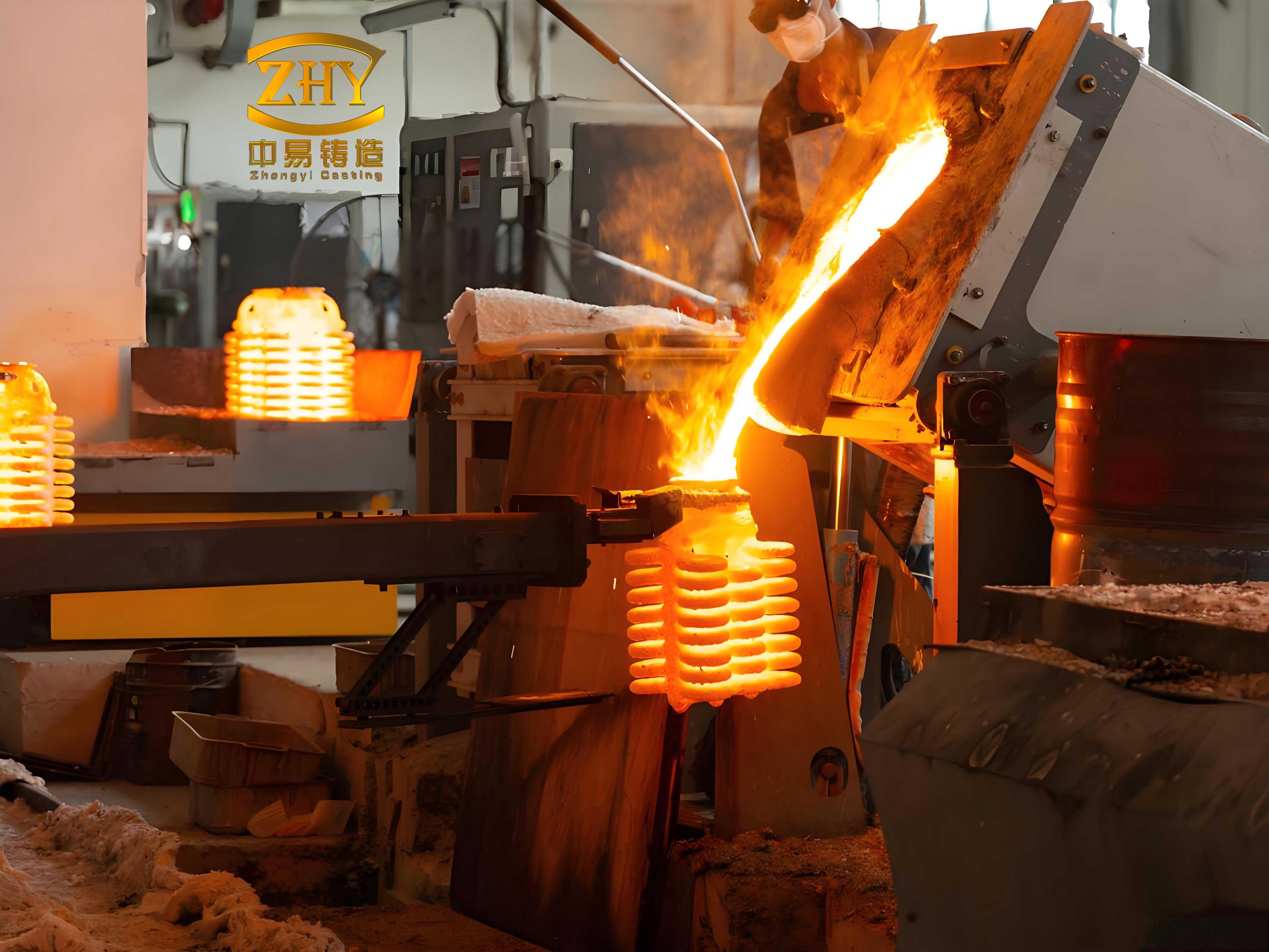
This is where numerical simulation proves invaluable. Modern casting simulation software, such as ProCAST, FLOW-3D CAST, or MAGMASOFT, allows for the virtual modeling of the entire investment casting process. These tools solve the fundamental equations governing fluid flow, heat transfer, and stress development. The Navier-Stokes equations with free surface tracking model the mold filling:
$$
\rho \left( \frac{\partial \mathbf{v}}{\partial t} + \mathbf{v} \cdot \nabla \mathbf{v} \right) = -\nabla p + \mu \nabla^2 \mathbf{v} + \rho \mathbf{g}
$$
where $\rho$ is density, $\mathbf{v}$ is velocity, $t$ is time, $p$ is pressure, $\mu$ is dynamic viscosity, and $\mathbf{g}$ is gravity. The heat transfer during solidification is governed by the energy conservation equation, incorporating the latent heat of fusion ($L$):
$$
\rho c_p \frac{\partial T}{\partial t} = \nabla \cdot (k \nabla T) – \rho L \frac{\partial f_s}{\partial t}
$$
Here, $c_p$ is specific heat, $T$ is temperature, $k$ is thermal conductivity, and $f_s$ is the solid fraction. The stress analysis is based on the incremental theory of plasticity, calculating thermal strain ($\epsilon^{th}$) and stress ($\sigma$):
$$
\epsilon^{th} = \alpha (T – T_{ref})
$$
$$
d\sigma = \mathbf{D} : (d\epsilon – d\epsilon^{th} – d\epsilon^{pl})
$$
where $\alpha$ is the coefficient of thermal expansion, $T_{ref}$ is a reference temperature, $\mathbf{D}$ is the elastic stiffness matrix, $d\epsilon$ is the total strain increment, and $d\epsilon^{pl}$ is the plastic strain increment. By running these simulations, one can visualize the progression of the metal front, identify last-to-freeze zones prone to shrinkage, and map the evolution of thermal stresses, all before any wax pattern is even produced.
The case study component is a representative thin-walled, box-like titanium alloy (ZT C4, similar to Ti-6Al-4V) cavity structure. Key dimensions are approximately 530 mm in length, with average wall thicknesses of 2 mm on two sides and 4 mm on the other two. Integral to the design are several thicker mounting bosses and flanges, with local wall thickness ratios exceeding 16:1 relative to the adjacent thin walls. This geometry encapsulates the classic dilemma of the investment casting process: integrating substantial, functional features with delicate, weight-saving membranes.
Initial process design focused on the gating and feeding system. Two top-pour schemes were devised, as top-gating often promotes a favourable thermal gradient. Scheme 1 located the primary ingates (Ø10 mm) on the 4 mm wall side, directly feeding the thicker boss features, aiming for directional solidification from the thin walls back to these ingates. Scheme 2 placed the ingates on the 2 mm wall side, positioning the thick bosses laterally. The intent here was to leverage the geometry and gating to promote a more balanced solidification pattern, where the thin walls and thick sections would solidify in a more synchronized manner, reducing thermal gradients.
| Simulation Aspect | Scheme 1 (Ingates on 4mm wall) | Scheme 2 (Ingates on 2mm wall) |
|---|---|---|
| Filling Pattern | Sequential bottom-up fill. Final fill areas at top bosses and gates. | Sequential bottom-up fill. Final fill at top gate region. |
| Solidification Sequence | Thin walls (2mm) solidify first, followed by 4mm walls, with thick bosses/gates last. Clear directional trend. | More synchronized solidification of thin walls and medium sections. Thick bosses and gates are last. |
| Predicted Shrinkage Defects | Major shrinkage porosity predicted in all thick bosses and flange hot spots (isolated liquid zones). | Major shrinkage porosity predicted in thick bosses and flange hot spots. |
| Stress Development | High stress (>1000 MPa) develops early and concentrates in 2mm walls. Final stress differential >1000 MPa. | Stress develops more gradually and evenly. Final stress differential ~500 MPa in critical areas. |
| Hot Tearing Risk Assessment | Very High. Extreme stress concentration and gradient in thin sections. | Moderate. Lower and more uniform stress distribution. |
The simulation outcomes, summarized in Table 1, were revealing. While both schemes predicted shrinkage in the thick sections—a expected outcome without dedicated feeders—their stress profiles differed drastically. Scheme 1 resulted in severe stress concentration in the 2 mm walls very early in the cooling process, leading to a final stress differential exceeding 1000 MPa between thin and thick areas. This level of internal stress virtually guarantees hot tearing in brittle titanium alloys. Scheme 2, in contrast, showed a markedly more uniform stress development. Stresses in the thin walls remained significantly lower, with a maximum differential around 500 MPa. This indicated a substantially lower propensity for cracking. From a stress-management perspective, Scheme 2 was clearly superior for this specific investment casting process layout.
However, the shrinkage problem remained. The solution lies in the strategic placement of feeders (risers). The goal of a feeder in the investment casting process is to remain liquid longer than the casting section it is intended to feed, providing a reservoir of molten metal to compensate for solidification shrinkage. The required feeder size can be estimated using the modulus method, where the modulus (M) is the volume (V) to cooling surface area (A) ratio: $M = V/A$. A feeder must have a higher modulus than the casting region it feeds. For the thick bosses with modulus $M_{boss}$, the feeder modulus $M_{feeder}$ must satisfy:
$$
M_{feeder} > M_{boss}
$$
Furthermore, to ensure sufficient feed metal volume, the feeder must satisfy:
$$
V_{feeder} \geq \frac{V_{casting} \cdot \beta}{\eta}
$$
where $\beta$ is the volumetric shrinkage of the alloy (approximately 3-4% for Ti-6Al-4V) and $\eta$ is the feeding efficiency of the feeder (typically 10-30% for top feeders in investment casting).
Based on the simulation results from Scheme 2, cylindrical feeders were designed and virtually attached to the three critical locations: the two large side bosses and the central flange hot spot. Their dimensions were calculated using the modulus approach and adjusted virtually to ensure they were the last points to solidify in their local regions. The optimized investment casting process layout with added feeders was then simulated again.
| Casting Region | Scheme 2 (No Feeders) | Optimized Scheme (With Feeders) | Improvement Mechanism |
|---|---|---|---|
| Large Side Bosses | Major shrinkage cavity predicted internally. | Shrinkage transferred to the feeder body. Casting section sound. | Feeder provides thermal mass and liquid metal reservoir, creating a directional solidification path from casting into feeder. |
| Central Flange Hot Spot | Subsurface shrinkage porosity predicted. | Porosity minimized and localized to the feeder neck region. | Feeder acts as a hot spot, ensuring the thermal center is in the feeder, not the casting. |
| General Thin Walls | No predicted shrinkage. | No predicted shrinkage. | Walls solidify rapidly and are self-feeding due to low modulus. |
| Stress State | Max differential ~500 MPa. | Max differential ~300 MPa. | More uniform temperature field from balanced solidification reduces thermal gradients and stresses. |
The results were transformative. As Table 2 shows, the subsequent simulation confirmed that the major shrinkage defects were successfully relocated from the critical casting sections into the feeder bodies. The stress distribution showed further improvement, with the maximum differential now reduced to approximately 300 MPa, well within a safer margin for this alloy. The underlying principle was validated: by ensuring a controlled solidification sequence where feeders solidify last, the internal soundness of the casting is guaranteed. The investment casting process was now optimized not just for fillability, but for internal quality and structural integrity.
The virtual confidence provided by simulation was then translated into physical reality. The optimized design was used to manufacture wax patterns via rapid prototyping, which were assembled onto a wax gating tree replicating the simulated layout. The ceramic shell was built using standard investment casting process steps: primary slurry coats, stuccoing, and drying, followed by autoclave dewaxing and high-temperature firing. The mold was cast in a vacuum arc melting furnace using ZT C4 titanium alloy. After standard post-casting procedures—shell removal, cut-off, grinding, and chemical milling—the castings underwent non-destructive evaluation (NDE).
Radiographic inspection (X-ray) confirmed the absence of any detectable shrinkage porosity in the thick boss and flange areas. The internal soundness matched the simulation prediction of sound metal in these regions. Fluorescent penetrant inspection (FPI) revealed no surface-connected defects, such as hot tears or cracks, on the thin walls or anywhere on the casting surface. This critical outcome validated the stress simulation; the predicted stress state below the cracking threshold resulted in a crack-free component. The final castings fully met the stringent requirements of aerospace specification GJB2896A-2007 Class II B, demonstrating a successful first-pass yield that is rarely achieved in complex titanium investment casting without simulation guidance.
This case study underscores several key conclusions about the modern investment casting process for challenging alloys:
- Simulation is a Decision-Making Tool: It allows for the quantitative comparison of multiple gating/feeding schemes early in the design phase. Critical metrics like shrinkage volume, solidification time, and stress magnitude can be compared directly, moving beyond qualitative guesswork.
- Balanced Solidification is Key for Complex Thin-Wall Parts: While directional solidification is a classic goal, for parts with extreme wall thickness variations, promoting a balanced thermal field can be more effective in minimizing stresses and distortion, even if it requires more strategic feeder placement to handle isolated hot spots.
- Stress Simulation is Non-Negotiable for Titanium: Given titanium’s susceptibility to hot tearing, simulating the thermo-mechanical behavior is as important as simulating shrinkage. A process that yields a sound casting mechanically can still fail if it induces cracks.
- Integration of Simulation and Foundry Practice: The ultimate success depends on correlating simulation predictions with practical foundry knowledge. The size and placement of feeders, for instance, must be manufacturable within the constraints of the shell-building and cut-off processes.
The future of the investment casting process lies in deeper integration of simulation, not just as a validation tool but as a generative design partner. Coupling optimization algorithms with simulation engines can automatically iterate through thousands of gating and feeder designs to find the global optimum based on multi-objective criteria (minimize porosity, minimize stress, maximize yield). Furthermore, the incorporation of microstructure and grain growth prediction will allow for the concurrent optimization of mechanical properties alongside geometric integrity. For thin-walled complex titanium castings pushing the boundaries of performance and lightness, this model-driven, simulation-verified approach to the investment casting process is no longer just advantageous—it is essential.
| Parameter / Property | Symbol | Value / Description (for ZT C4 / Ti-6Al-4V) | Role in Simulation |
|---|---|---|---|
| Liquidus Temperature | $T_L$ | ~1660 °C | Defines start of solidification in thermal model. |
| Solidus Temperature | $T_S$ | ~1605 °C | Defines end of solidification. |
| Pouring Temperature | $T_{pour}$ | $T_L$ + 50-100°C (~1710-1760°C) | Initial condition for fluid flow and heat transfer. |
| Latent Heat of Fusion | $L$ | ~360 kJ/kg | Critical for accurate solidification time prediction in energy equation. |
| Thermal Conductivity (Solid) | $k_s$ | ~7 W/(m·K) | Low conductivity promotes steep thermal gradients and hot spots. |
| Volumetric Shrinkage | $\beta$ | 3.0 – 4.5 % | Determines the required volume of feed metal from risers. |
| Coeff. of Thermal Expansion | $\alpha$ | ~9.5 x 10⁻⁶ /K | Drives the development of thermal strain and stress. |
| Young’s Modulus (at Temp.) | $E$ | Varies with T (~110 GPa at room temp) | Key property in the elastic stress calculation. |
| Yield Strength (at Temp.) | $\sigma_y$ | Decreases rapidly near solidus | Determines the onset of plastic deformation and hot tearing risk. |
| Mold-Metal Heat Transfer Coefficient | $h$ | 500 – 1000 W/(m²·K) | Critical interfacial boundary condition affecting cooling rate. |