
In the investment casting process, the production of high-precision, complex-shaped castings is paramount. As castings evolve from traditional rough blanks to near-net-shape integral components, surface quality demands have escalated significantly. The coating application stage, particularly for the face coat, directly influences this quality. During the investment casting process, air bubbles can become entrapped in the slurry, leading to defects on the shell surface and, consequently, on the final casting. To address this, I have designed and applied a fully automatic vacuum slurry tank. This system integrates vacuum technology, automation, and flexible control to eliminate bubble inclusion, ensuring a dense, uniform refractory coating and substantially improving casting surface quality. The core innovation lies in achieving a breakthrough in domestic equipment that combines flexibility, full automation, and excellent vacuum performance tailored for the investment casting process.
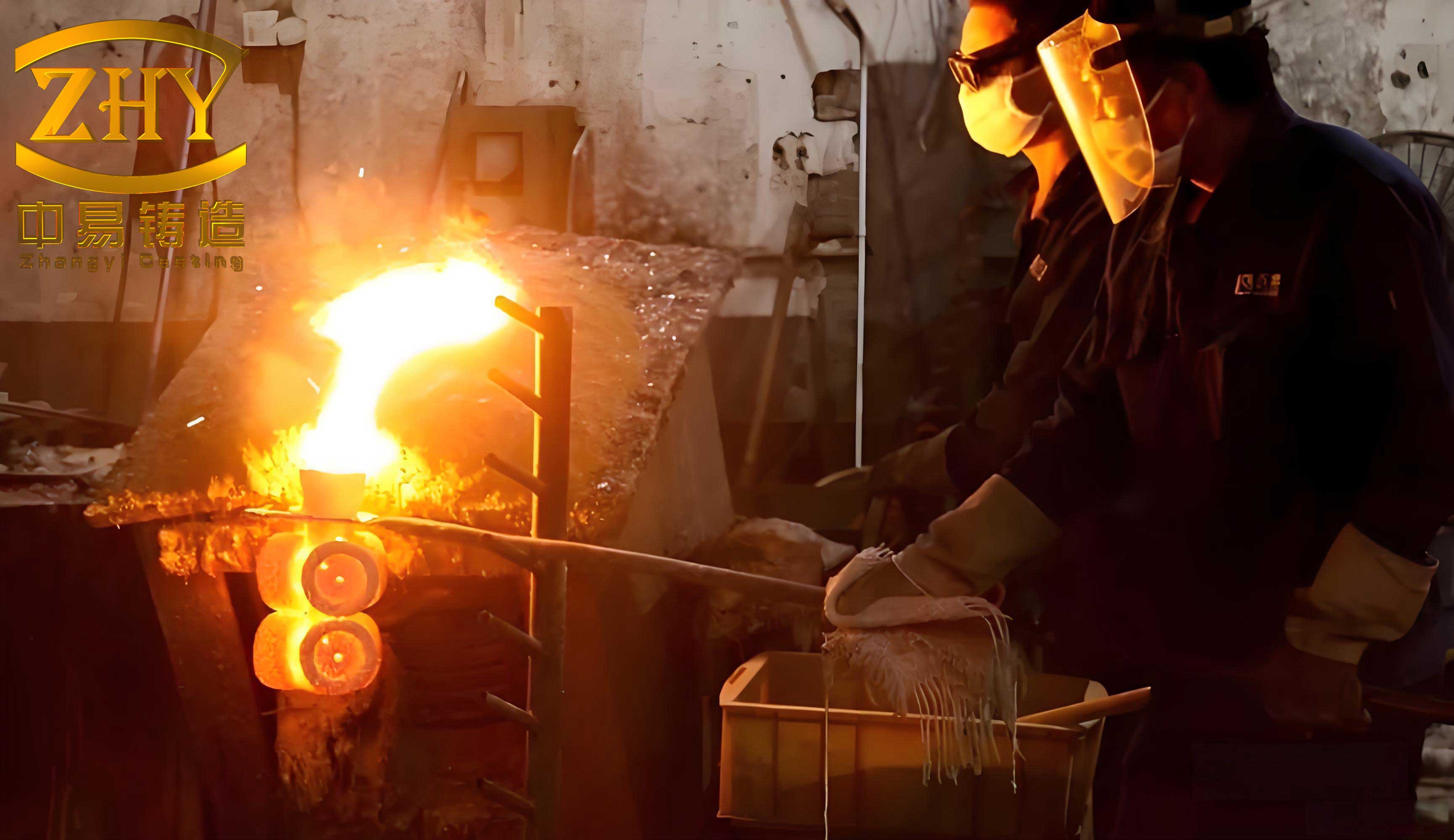
The investment casting process involves creating a ceramic shell around a wax pattern. The face coat slurry, typically a water-based binder like silica sol, must perfectly replicate the pattern’s surface. However, wetting agents added to reduce interfacial tension lower the slurry’s surface tension, making it prone to air entrapment during mixing. These bubbles can lodge in intricate details of the pattern, such as grooves and corners, causing spherical voids in the shell. When metal is poured, these voids result in surface defects like metal beads, degrading the casting’s quality. Traditional dipping methods under atmospheric pressure are insufficient for removing these microbubbles. The vacuum slurry dipping technique operates by reducing the ambient pressure above the slurry. In a vacuum environment, the partial pressure drop above the liquid surface increases the driving force for bubbles to escape. The reduced gas pressure decreases the resistance bubble coalescence and rise, facilitating their release from the slurry. Furthermore, after dipping, when the vacuum is released and atmospheric pressure is rapidly restored, the sudden pressure increase forces the slurry into the pattern’s minute features, enhancing wettability and promoting the formation of a dense, uniform layer. This principle is fundamental to improving the investment casting process’s reliability for high-integrity components.
To effectively implement this in a production setting, the automatic vacuum slurry tank must meet specific technical requirements. It must seamlessly integrate with robotic arms for loading and unloading patterns, achieve a defined vacuum level quickly, maintain slurry temperature within a strict range, and accommodate various pattern sizes—a key aspect of flexible manufacturing in modern investment casting lines. Unlike existing single-function units, this design aims for full automation within a flexible production cell. The critical performance indicators are summarized in Table 1.
| Parameter | Specification |
|---|---|
| Applicable Pattern Size | < 800 mm |
| Tank Inner Diameter | 1000 mm |
| Inner Tank Rotation Speed | 0–50 rpm, continuously adjustable |
| Vacuum Level Requirement | Reach 5000 Pa within 2 minutes |
| Temperature Control | Maintain slurry at 18–22 °C within 30 minutes |
| Auxiliary Functions | Rotation stop detection, automatic lid operation, automatic slurry replenishment |
The overall design of the vacuum slurry tank is a complex integration of mechanical, pneumatic, and control systems. As the principal designer, I structured the system around a central vacuum vessel. The main components include: a structural frame, the vacuum vessel assembly (comprising an outer pressure-resistant barrel and an inner rotating barrel), a lid lifting mechanism, a pattern carrier feed system, a pattern clamping device, a flipping protective cover, a vacuum system, a drive assembly for inner barrel rotation, a stirring and cooling assembly, and detection modules. The frame provides a rigid base. The lid is lifted via a pneumatic cylinder connected to a chain and counterweight system, ensuring smooth, stable motion and reducing cylinder load. A unique flipping protective cover shields the sealing surface from dripping slurry when the lid is open, a critical feature for maintaining seal integrity and easing maintenance—a common oversight in conventional designs. The pattern carrier feed system uses a servo motor, trapezoidal lead screw, and linear guides to precisely lower and raise the pattern rack into the slurry. A clamping device secures the pattern to prevent movement during the turbulent dipping phase. The drive assembly transmits power from an electric motor to the inner barrel via a triple V-belt system, chosen for its smooth operation, overload protection, and ease of adjustment. The stirring assembly consists of hollow side blades and bottom blades fixed inside the inner barrel. The side blades double as conduits for circulating cooling water, enabling direct heat exchange with the slurry. Temperature and level detection are handled by non-contact infrared sensors and laser level sensors mounted on the lid, providing real-time feedback to the programmable logic controller (PLC). The vacuum system features an oil-sealed rotary vane pump (model equivalent to U5.201), selected based on the required pumping speed and ultimate pressure, complemented by valves and filters.
The operational sequence for the investment casting process is fully automated. Initially, the inner barrel rotates, and the slurry temperature is stabilized. A robot places the pattern assembly onto the carrier inside the tank. The carrier is clamped, and the robot retracts. The lid closes, forming a sealed chamber. The vacuum pump activates, drawing the chamber down to the target pressure of 5000 Pa within two minutes. The dipping process can be adapted based on pattern geometry: either a single immersion with a dwell time or dynamic dipping involving vertical and rotational movements. For single immersion, the laser level sensor measures the slurry height, and the PLC calculates the optimal immersion depth for the specific pattern height, commanding the feed system to position the carrier accordingly. This flexibility ensures optimal coating thickness and coverage for diverse patterns, enhancing the adaptability of the investment casting process. After the dip cycle, the vacuum is released, the lid opens, the carrier raises the pattern to a convenient retrieval height, and the robot removes it for the next stage. The entire cycle is monitored and controlled via a human-machine interface, displaying real-time data and alarm status.
A critical component demanding detailed engineering analysis is the vacuum vessel itself. It is a cylindrical pressure vessel subjected to external atmospheric pressure (approximately 0.1 MPa gauge) and internal vacuum during operation. Its design must ensure structural stability, minimal deformation, and safe operation. The initial wall thickness was determined using standard formulas for externally pressurized cylinders, as outlined in vacuum design handbooks. The fundamental equation for the calculated wall thickness \( S_0 \) of a cylindrical shell under external pressure is:
$$S_0 = 1.25 D \sqrt[3]{\frac{p}{E}}$$
Where \( D \) is the inner diameter (1000 mm), \( p \) is the external design pressure (0.1 MPa), and \( E \) is the modulus of elasticity of the material (for Q235A steel at 25°C, \( E = 193 \times 10^3 \) MPa). However, this formula is valid within specific slenderness ratios. A more comprehensive set of conditions and formulas was applied. The required parameters for the calculation are listed in Table 2.
| Parameter | Symbol | Value |
|---|---|---|
| Design External Pressure | \( p \) | 0.1 MPa |
| Inner Diameter | \( D \) | 1000 mm |
| Design Temperature | \( t \) | 25 °C |
| Calculated Length of Cylinder | \( L \) | 1000 mm |
| Modulus of Elasticity at Temperature \( t \) | \( E_t \) | 193,000 MPa |
| Wall Thickness Allowance | \( C \) | 1.5 mm |
| Calculated Wall Thickness | \( S_0 \) | 3.9 mm |
| Final Design Wall Thickness | \( S \) | \( S_0 + C = 5.4 \) mm |
The wall thickness allowance \( C \) accounts for manufacturing tolerances \( C_1 \) (0.5 mm), corrosion allowance \( C_2 \) (1.0 mm for single-sided exposure), and forming allowance \( C_3 \) (0 mm for non-formed parts). Thus, \( C = C_1 + C_2 + C_3 = 1.5 \) mm. The initial calculation yielded a wall thickness of 5.4 mm. However, this analytical method provides an estimate. To verify structural integrity and optimize material usage, I performed a finite element analysis (FEA) using ANSYS software. This is a crucial step in modern design for the investment casting process equipment, ensuring safety and efficiency.
The FEA model simulated the worst-case scenario: the vessel under full atmospheric pressure (0.101325 MPa) on all external surfaces, with a vacuum inside, and including the gravitational load (acceleration \( g = 9.8 \, \text{m/s}^2 \)). The material was defined as Q235A steel with an elastic modulus \( E = 2 \times 10^5 \) MPa, Poisson’s ratio \( \nu = 0.3 \), yield strength \( \sigma_y = 235 \) MPa, ultimate strength \( \sigma_u = 375 \) MPa, and a density \( \rho = 7850 \, \text{kg/m}^3 \). The allowable stress was taken as 138 MPa. A mesh convergence study was conducted to ensure accurate results. The analysis for a wall thickness of 6 mm showed a maximum deformation of 0.1454 mm and a maximum von Mises stress of 43.79 MPa, located on the lid’s top surface. Both values were well within acceptable limits, confirming the design’s safety. To find the optimal thickness balancing strength, weight, and cost, I ran iterative simulations for wall thicknesses ranging from 5 mm to 10 mm. The relationship between wall thickness and maximum deformation is non-linear, as summarized in the data below and illustrated by the trend. The deformation \( \delta \) can be empirically related to thickness \( S \) by a power-law decay function, which for this geometry can be approximated as:
$$\delta(S) \approx k \cdot S^{-n}$$
Where \( k \) and \( n \) are positive constants derived from the FEA data. The results clearly indicated that increasing thickness beyond 6 mm yielded diminishing returns in reducing deformation. At 6 mm, deformation was minimal (0.1454 mm) and stress was safe (43.79 MPa), making it the optimal choice. This optimization through FEA exemplifies how computational tools enable lightweight and cost-effective design in equipment for the investment casting process.
The successful fabrication and testing of a functional prototype validated the design. The physical unit demonstrated robust construction and smooth operation. Performance testing focused on vacuum capability and seal integrity. Using a high-precision vacuum gauge, the system achieved a vacuum level of 1000 Pa within one minute of pump operation, exceeding the specified requirement of 5000 Pa within two minutes. This high pumping speed benefits the investment casting process by reducing cycle time. A pressure holding test was then conducted: after reaching 1000 Pa, the vacuum pump was isolated, and the chamber pressure was monitored. After two hours, the pressure had risen only to 2200 Pa, indicating excellent sealing performance and minimal leakage. These tests confirm that the vacuum slurry tank meets and surpasses all key performance indicators, ensuring reliable operation in a production environment for the investment casting process.
In conclusion, the development of this automatic vacuum slurry tank represents a significant advancement for the investment casting process. Key achievements include: superior vacuum performance (1000 Pa achievable in 1 minute) and excellent seal integrity (minimal pressure rise over 2 hours), ensuring consistent coating quality; the incorporation of a flipping protective cover that maintains seal surface cleanliness, simplifying maintenance and enhancing reliability; inherent flexibility through programmable immersion depth control, allowing the same equipment to handle a wide range of pattern sizes efficiently, which is vital for flexible manufacturing cells in modern investment casting; and full automation via integration with robotics and a comprehensive PLC-based control system that monitors temperature, level, and all operational sequences, reducing labor dependency and ensuring process repeatability. The design process, combining theoretical calculations with finite element analysis optimization, resulted in a robust yet efficient structure. This equipment effectively addresses the perennial problem of bubble inclusion in ceramic shells, thereby elevating the surface quality of precision castings. Its successful application underscores the potential of integrated automation and advanced process control in refining the investment casting process for high-value, complex components.