
The relentless march of technological innovation continues to reshape manufacturing landscapes, and from my perspective, few synergies are as potent as the convergence of additive manufacturing, or 3D printing, with the ancient art of investment casting. The traditional investment casting process, revered for its ability to produce net-shape metal components with exceptional surface finish and dimensional accuracy, has long been constrained by the time, cost, and complexity associated with pattern and tooling fabrication. My exploration into this field confirms that 3D printing is not merely an adjunct technology but a catalyst for a fundamental reimagining of the entire investment casting workflow, enabling unprecedented agility, complexity, and economic efficiency.
The Foundational Principles and Inherent Challenges of Investment Casting
To appreciate the transformative impact, one must first understand the core of the conventional investment casting process. It is a multi-step, precision-driven method. The process begins with the creation of a sacrificial pattern, typically from wax or a similar low-melting-point material. This pattern is an exact replica of the desired final metal part. A cluster of these patterns is assembled onto a central “sprue” to form a “tree.” This assembly is then repeatedly dipped into a ceramic slurry, coated with refractory sand, and allowed to dry, building up a robust ceramic shell layer by layer. The crucial “investment” step involves placing this shelled cluster into a furnace or autoclave to melt out or vaporize the wax pattern, leaving behind a pristine, hollow cavity within the fired ceramic mold. Molten metal is then poured into this cavity. Once solidified, the ceramic shell is broken away to reveal the metal casting, which is then cut from the sprue and finished. The process can be summarized by a key relationship defining the final cavity:
$$C_{f} = P_{w} – \Delta_{s}$$
Where:
$C_{f}$ = Final cavity geometry in the fired shell,
$P_{w}$ = Initial wax pattern geometry,
$\Delta_{s}$ = Geometric deviation due to shell firing and pattern removal.
The primary bottlenecks I have consistently observed in this traditional investment casting process are:
- Tooling Lead Time and Cost: Manufacturing the metal dies (tooling) used to injection-mold wax patterns is expensive and can take weeks or months, making it prohibitive for prototypes or low-volume production.
- Design Inflexibility: Complex geometries with internal channels, undercuts, or intricate details are often impossible to mold or require prohibitively complex and costly multi-part dies.
- Iterative Inefficiency: Design modifications necessitate new tooling, stalling development cycles and increasing project risk.
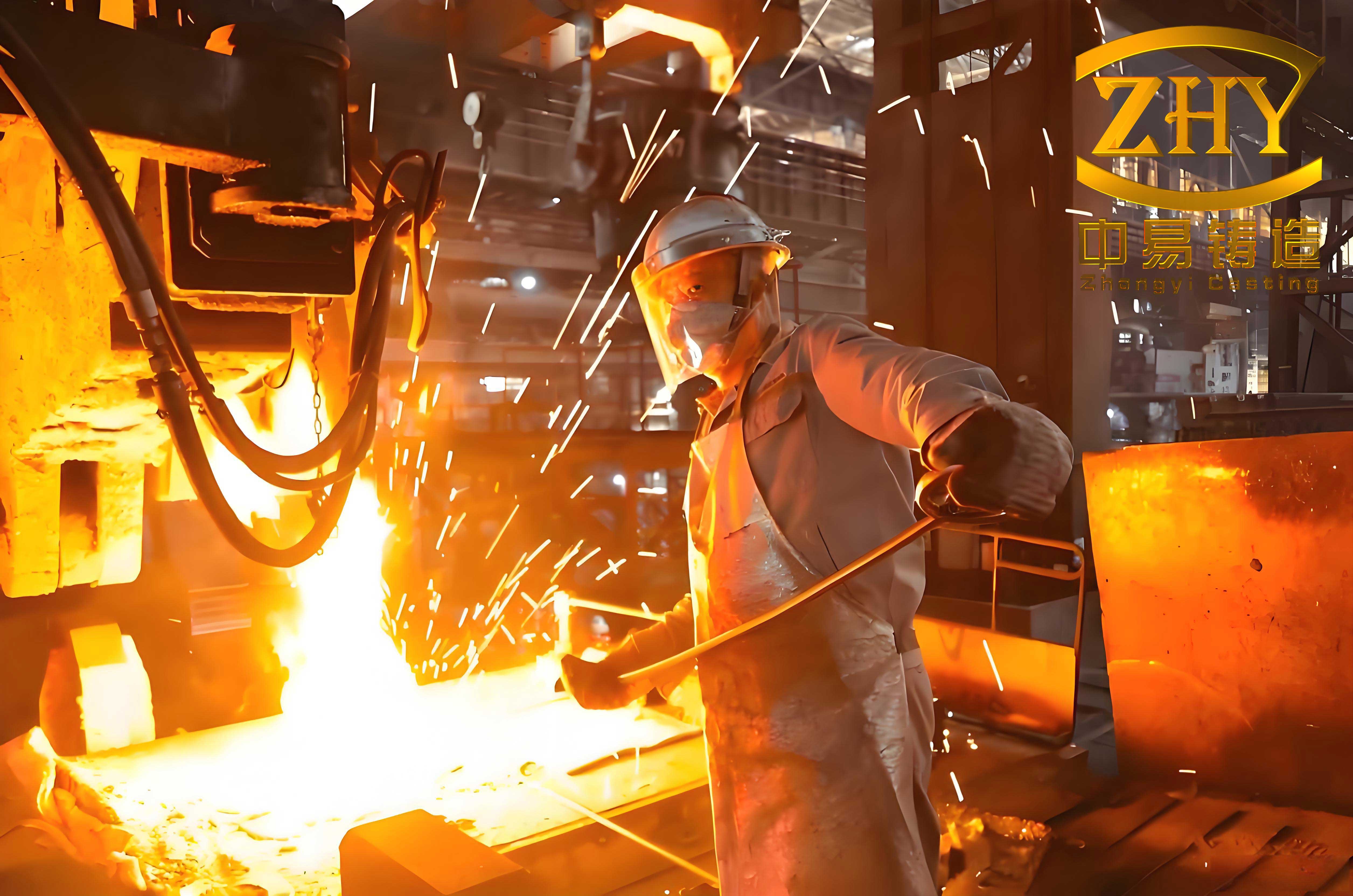
This image illustrates the intricate ceramic shell creation and the resulting high-integrity metal components central to the investment casting process, highlighting the precision the method is known for, yet also hinting at the underlying pattern-making complexity that 3D printing seeks to simplify.
The Additive Manufacturing Paradigm: A Direct Digital Pathway
3D printing operates on a fundamentally different principle: adding material layer by layer based on a digital 3D model. This eliminates the need for part-specific tooling altogether. For integration with the investment casting process, two primary additive approaches have emerged, each addressing a different stage of the traditional workflow:
- Direct Pattern Printing: Printing the sacrificial patterns themselves using materials compatible with the shell-building and dewaxing stages.
- Direct Shell Printing: Using binder jetting or similar processes to fabricate the ceramic mold directly, bypassing the pattern-making stage entirely.
My focus here is predominantly on the first approach—direct pattern printing—as it represents a more direct and widely adopted substitution within the existing investment casting process infrastructure. The feasibility hinges on material properties. The printed pattern material must exhibit:
- A melting point or decomposition temperature low enough for clean removal without damaging the ceramic shell.
- Sufficient strength and handling stability for shell build-up.
- Minimal residual ash after burnout to prevent ceramic shell contamination or defects.
The following table contrasts traditional wax pattern materials with common 3D printing polymers used for this purpose, based on my material evaluation studies:
| Material Type | Primary Composition / Technology | Key Processing Temperature Range | Critical Advantages for Investment Casting Process | Notable Limitations |
|---|---|---|---|---|
| Traditional Wax Blends | Paraffin, Stearic Acid, Polymers | Melting Point: 60-80°C | Excellent flow for injection molding; very low ash. | Requires expensive metal tooling; limited geometric freedom. |
| Stereolithography (SLA) Resins | Photopolymer (e.g., Castable Resin) | Decomposition/Burnout: 80-150°C | Extremely high feature resolution and surface finish; direct from CAD. | Material cost; may require specific burnout cycles. |
| Fused Deposition Modeling (FDM) | ABS, PLA, PVA (Support) | Glass Transition/Melt: 170-240°C | Low-cost equipment and materials; good mechanical strength. | Visible layer lines may transfer to shell; higher ash content possible. |
| PolyJet / MultiJet Printing (MJP) | Acrylic-Based Photopolymer (e.g., VisiJet® Cast) | Burnout: ~150-300°C | High resolution with multi-material capability (e.g., dissolvable supports). | High material and system cost. |
A Detailed Implementation Framework: From Digital File to Metal Part
Integrating 3D printing into the investment casting process creates a streamlined, digital thread. I will outline the step-by-step methodology, using the production of a complex impeller as a canonical example, and introduce quantitative models where applicable.
Stage 1: Digital Model Creation & Preparation
The process is initiated entirely in the digital domain. A 3D CAD model of the impeller is created or obtained via 3D scanning. This model must be optimized for the investment casting process, which includes adding necessary gating and feeding systems (sprue, runners, risers) to ensure sound metal filling and solidification. The combined model is then converted to an STL file and “sliced” into discrete layers for the 3D printer. A critical preparatory step is the calculation of shrinkage allowances. The final metal part will shrink during solidification and cooling, and the ceramic shell may also dimensionally change during firing. The pattern must be scaled accordingly. The total scaling factor $S_{t}$ can be approximated as:
$$S_{t} = (1 + \alpha_{m}) \cdot (1 + \alpha_{s})$$
Where:
$\alpha_{m}$ = Linear shrinkage coefficient of the metal alloy (e.g., ~2% for steel),
$\alpha_{s}$ = Linear expansion/contraction coefficient of the ceramic shell during firing (can be positive or negative).
Stage 2: Additive Manufacturing of the Sacrificial Pattern
For a high-resolution impeller with fine blades, Stereolithography (SLA) using a proprietary castable resin is selected. The SLA printer uses a UV laser to selectively cure liquid resin layer by layer. After printing, the pattern is washed in a solvent to remove uncured resin and then post-cured under UV light to achieve final mechanical properties. The surface finish is typically excellent, requiring minimal post-processing before shell building.
Stage 3: Shell Building (Investment)
The 3D-printed resin pattern tree undergoes the standard shell-building investment casting process. It is repeatedly dipped into a colloidal silica or ethyl silicate binder-based ceramic slurry, stuccoed with progressively coarser refractory sands (e.g., zircon, fused silica), and dried. The shell thickness $T_{shell}$ built over $n$ coats is a function of the slurry viscosity $\eta$, withdrawal speed $v$, and stucco particle size $d$:
$$T_{shell} \approx \sum_{i=1}^{n} k(\eta_i, v_i) \cdot \ln(1 + \frac{\rho \cdot d_i}{2\sigma})$$
Where $k$ is a process-dependent constant, $\rho$ is slurry density, and $\sigma$ is surface tension. This build-up continues until the shell achieves the required green strength, typically 6-8 coats for ferrous alloys.
Stage 4: Dewaxing & Shell Firing
This is a critical phase where the 3D-printed pattern is removed. The shell is placed upside-down in a high-temperature steam autoclave or a flash fire furnace. The rapid heating causes the resin pattern to melt, vaporize, or combust, escaping through the sprue cup. The thermal kinetics of dewaxing must be carefully controlled to avoid shell cracking from rapid gas generation. The efficiency of pattern removal $E_{removal}$ can be modeled as a function of heating rate $H$ and pattern material vapor pressure $P_v(T)$:
$$E_{removal} \propto \int_{T_{room}}^{T_{dewax}} \frac{P_v(T)}{H} \, dT$$
Following dewaxing, the shell is fired at temperatures often exceeding $900\,^{\circ}\mathrm{C}$ to eliminate residual volatiles, sinter the ceramic for maximum strength, and prepare it for metal pouring.
Stage 5: Metal Pouring, Cooling, and Finishing
The preheated ceramic mold is filled with molten metal. After solidification, the shell is removed via mechanical vibration or high-pressure water jetting. The cast impeller is cut from the sprue and subjected to standard finishing operations like grinding, shot blasting, and machining of critical interfaces.
The dimensional fidelity of the final cast part versus the original digital model is the ultimate metric of success. For the impeller, critical dimensions were measured and compared to nominal CAD values. The results consistently show that the hybrid 3D printing-investment casting process can achieve tolerances comparable to or exceeding traditional methods for complex forms.
| Feature | Nominal CAD Dimension (mm) | As-Cast Dimension (mm) | Deviation (mm) | Percent Error (%) |
|---|---|---|---|---|
| Base Diameter | 100.00 | 99.82 | -0.18 | -0.18 |
| Hub Diameter | 26.00 | 26.15 | +0.15 | +0.58 |
| Blade Height | 45.00 | 45.25 | +0.25 | +0.56 |
| Blade Thickness (min) | 1.50 | 1.55 | +0.05 | +3.33 |
Quantifiable Advantages and Strategic Impact
The integration of 3D printing fundamentally redefines the economics and capabilities of the investment casting process. The benefits are not merely qualitative but can be quantified across several key performance indicators (KPIs).
1. Radical Reduction in Lead Time and Tooling Cost:
This is the most dramatic advantage. The elimination of hard tooling collapses the front-end timeline of the investment casting process. The lead time savings $\Delta LT$ can be expressed as:
$$\Delta LT = T_{tooling} + T_{pattern\ molding} – T_{3D\ print}$$
Where $T_{tooling}$ (often 4-12 weeks) is reduced to zero. For prototyping and bridge production, the cost avoidance is substantial. The non-recurring expense (NRE) model shifts:
$$NRE_{Traditional} = C_{tooling} + C_{pattern\ development}$$
$$NRE_{3D\ Printing} = C_{3D\ model\ prep} + C_{print\ material} + C_{machine\ time}$$
2. Unprecedented Geometric Complexity and Design Freedom:
Additive manufacturing imposes no penalty for complexity. Organic shapes, internal lattice structures, integrated cooling channels, and consolidated assemblies that are impossible to mold or machine become feasible within the investment casting process. This enables performance-optimized designs that were previously theoretical.
3. Enhanced Material Utilization and Sustainability:
The investment casting process is already efficient in metal use. 3D printing enhances this further at the pattern stage. Unlike subtractive methods for mold making, additive processes use material only where needed. The material utilization efficiency $\epsilon_{material}$ for pattern creation is significantly higher:
$$\epsilon_{material,\ 3DP} \approx \frac{V_{pattern}}{V_{pattern} + V_{supports}} \quad (Often > 80\%)$$
$$\epsilon_{material,\ Machined\ Tool} \approx \frac{V_{final\ tool}}{V_{stock\ billet}} \quad (Often < 50\%)$$
4. Agile Iteration and Risk Mitigation:
Design modifications require only a digital model change and a new print cycle, allowing for rapid physical validation of multiple design iterations within a single investment casting process development cycle. This drastically reduces the risk and cost associated with design flaws detected only after tooling is committed.
| Key Performance Indicator | Traditional Investment Casting | 3D-Printing Enhanced Investment Casting | Quantitative Impact |
|---|---|---|---|
| Time-to-First-Cast | Weeks to Months | Days to 1 Week | Reduction of 70-95% |
| Non-Recurring Engineering (NRE) Cost | High (Tooling-Dependent) | Low to Moderate | Cost Avoidance of 60-90% for prototypes |
| Feasible Geometric Complexity | Limited by Moldability | Virtually Unlimited | Enables Topology-Optimized & Consolidated Parts |
| Economic Batch Size 1 | Not Economical | Highly Economical | Breakeven point shifted to lower volumes |
| Design Change Implementation Time | Very Slow (New Tooling) | Very Fast (Digital File Update) | Iteration cycle reduced from weeks to days |
Future Trajectories and Evolving Challenges
While the present synergy is powerful, the future of 3D printing within the investment casting process points toward even deeper integration and new challenges to overcome. From my analysis, several key trajectories are emerging:
1. Material Science Advancements: The development of next-generation 3D printing materials specifically engineered for the investment casting process is crucial. Goals include:
- Ultra-Low Ash Polymers: Materials that leave virtually no residue (<< 0.01% ash) to enable casting of high-integrity, defect-sensitive alloys for aerospace and medical implants.
- Tailored Thermal Decomposition Profiles: Materials designed to decompose cleanly at specific, predictable temperatures and rates, allowing for more reliable, crack-free dewaxing cycles and further optimization of the investment casting process.
2. Direct Ceramic Shell Printing: Binder Jetting of ceramic molds (e.g., using silica or alumina powder) is advancing rapidly. This approach skips the pattern-making stage entirely, printing the shell directly from the CAD model. The potential benefits for the investment casting process are immense, including:
- Elimination of all pattern-related steps and materials.
- Creation of conformal cooling channels within the shell wall itself.
- Digital control of shell permeability and thickness gradients.
The technical challenge lies in achieving shell strength, surface finish, and burnout cleanliness comparable to traditional dipped shells.
3. Hybrid and Automated Workflows: The future lies in fully digital, automated cells. Imagine a system where a robot arm transfers a 3D-printed pattern tree directly to a robotic dipping station, with process parameters (dip time, slurry viscosity, stucco application) dynamically controlled by a digital twin of the investment casting process. This would maximize consistency and minimize manual intervention.
4. Addressing Current Limitations: To achieve broader industrialization, current limitations must be tackled:
- Throughput for Mass Production: While ideal for low/medium volumes, print speed and post-processing remain bottlenecks for very high-volume production runs compared to injection molding of wax. Parallel printing and automated post-processing are key research areas.
- Standardization and Qualification: Establishing industry-wide standards for material properties, print parameters, and burnout cycles for 3D-printed patterns is essential for adoption in regulated industries like aerospace and healthcare.
- Total Cost Analysis for Medium Volumes: The economic crossover point where traditional tooling becomes cheaper than repeated 3D printing needs clearer modeling. The equation must factor in not just part cost, but also the value of reduced time-to-market and design flexibility afforded by the agile investment casting process.
Conclusion
My investigation confirms that 3D printing has evolved from a novel prototyping tool into a core enabler for the modernization and advancement of the investment casting process. It decisively addresses the historical triad of constraints—time, cost, and complexity—associated with pattern and mold fabrication. By providing a direct digital pathway from CAD geometry to a sacrificial pattern or even directly to the ceramic mold, it injects unparalleled agility and design freedom into this precision foundry technique. The hybrid workflow not only preserves the superior metallurgical quality and surface finish inherent to the investment casting process but extends its reach to parts of previously unimaginable geometry and to economically viable low-volume production. The ongoing evolution of materials, processes, and digital integration promises to further solidify this synergy, driving the investment casting process towards a future characterized by heightened responsiveness, sustainability, and capability. This convergence is not merely an improvement; it is a foundational shift towards a more intelligent, flexible, and efficient manufacturing paradigm.