
In my extensive experience with the investment casting process, I have encountered numerous defects that challenge production efficiency and product quality. One particularly persistent issue is the bulge defect in large planar castings, such as check valve baffles. This defect manifests as an outward convex distortion on the flat surfaces of the cast component, often reaching several millimeters in severity. The high rejection rates associated with this problem can severely impact the economic viability of manufacturing such parts. Through systematic investigation and practical modifications, I have developed a comprehensive understanding of the root causes and effective countermeasures. This article delves into the intricate details of the investment casting process, analyzing the mechanisms behind planar bulge defects and presenting validated solutions that integrate material science, mechanical engineering, and process optimization.
The investment casting process, also known as lost-wax casting, is a precision manufacturing technique renowned for its ability to produce complex, near-net-shape components with excellent surface finish and dimensional accuracy. The process involves creating a wax pattern, assembling it into a cluster, building a ceramic shell around it, removing the wax via dewaxing, firing the shell, and finally pouring molten metal into the cavity. Each stage of the investment casting process introduces specific stresses and potential failure modes. For large planar surfaces, the structural dynamics of the ceramic shell become critical, as these areas are prone to instability under thermal and mechanical loads. The inherent vulnerability of flat geometries in the investment casting process necessitates careful design and process control to prevent defects like bulging.
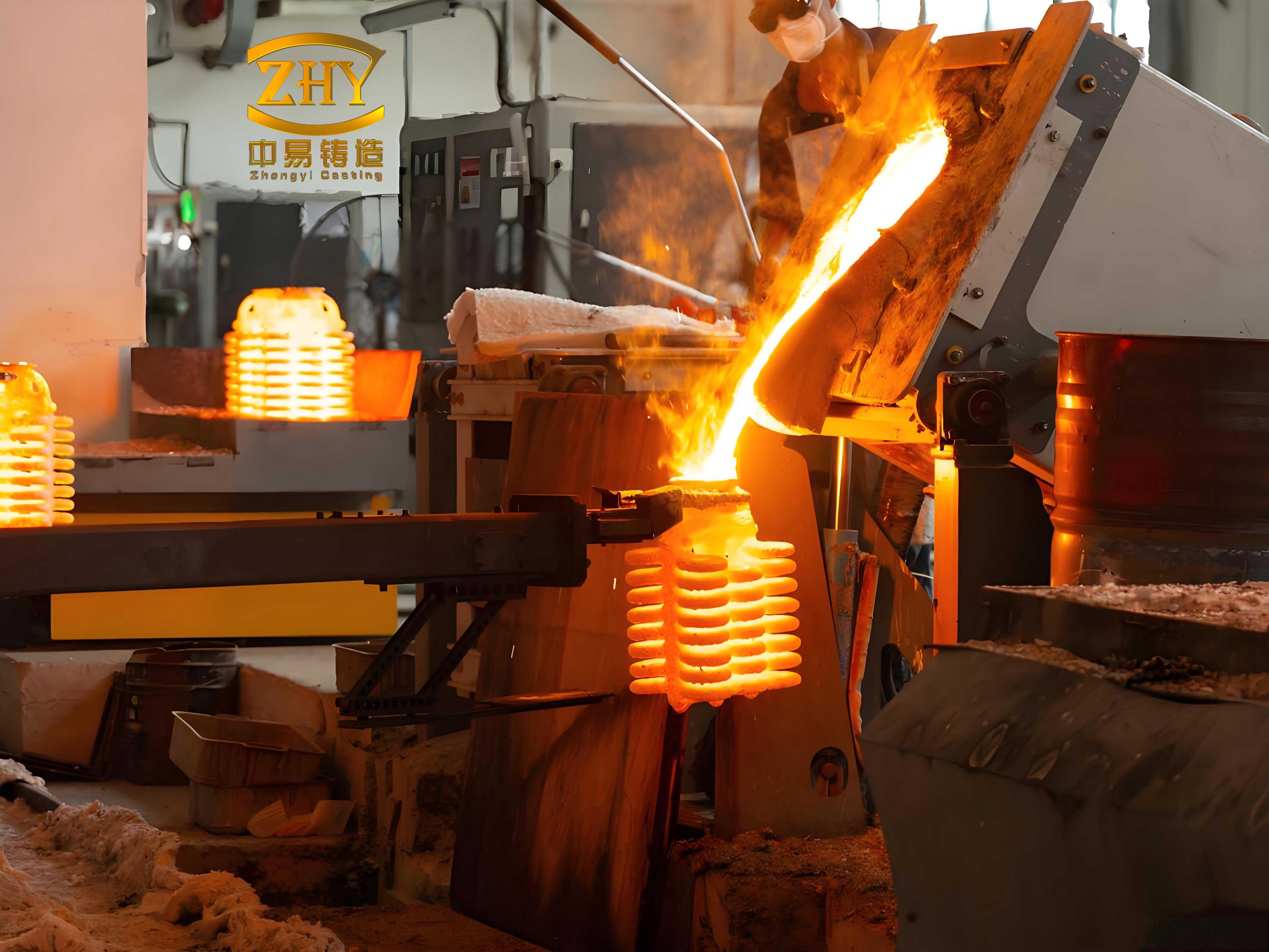
To thoroughly understand the bulge defect, we must examine the entire investment casting process chain. The defect primarily originates during two key phases: shell building (including drying and dewaxing) and metal pouring. During shell building, the ceramic slurry and stucco are applied to the wax pattern. As each layer dries, shrinkage occurs, generating internal stresses within the shell. For large planar areas, this stress distribution is non-uniform, leading to a buckling effect. The shell acts like a thin plate subjected to in-plane compressive stresses, which can cause elastic instability, described by the classical plate buckling theory. The critical buckling stress for a simply supported plate can be expressed as:
$$ \sigma_{cr} = \frac{k \pi^2 E}{12(1-\nu^2)} \left( \frac{t}{b} \right)^2 $$
where \( \sigma_{cr} \) is the critical buckling stress, \( E \) is the Young’s modulus of the ceramic shell, \( \nu \) is Poisson’s ratio, \( t \) is the shell thickness, \( b \) is the width of the planar section, and \( k \) is a buckling coefficient dependent on boundary conditions and aspect ratio. In the investment casting process, the shell is not perfectly simply supported; its constraints evolve during drying and dewaxing. The drying process involves moisture evaporation, leading to capillary pressure and shrinkage strain \( \epsilon_s \), which can be modeled as:
$$ \epsilon_s = \alpha_s \Delta m $$
where \( \alpha_s \) is the shrinkage coefficient and \( \Delta m \) is the change in moisture content. This strain induces compressive stress if constrained by the wax pattern or underlying layers. When this stress exceeds \( \sigma_{cr} \), local or global buckling occurs, resulting in a bulge.
During dewaxing, typically using steam or autoclave methods, the wax expands rapidly upon heating, exerting outward pressure on the shell. The pressure \( P_w \) generated can be estimated from the thermal expansion of the wax:
$$ P_w = \beta_w E_w \Delta T $$
where \( \beta_w \) is the volumetric thermal expansion coefficient of wax, \( E_w \) is its bulk modulus, and \( \Delta T \) is the temperature rise. This pressure acts uniformly on the shell interior. For a planar section, the shell deflection \( \delta \) under uniform pressure can be approximated by the formula for a clamped circular plate (as a simplified analogy):
$$ \delta = \frac{P_w a^4}{64 D} $$
with \( D = \frac{E t^3}{12(1-\nu^2)} \) being the flexural rigidity, and \( a \) the characteristic dimension. This deflection manifests as bulging. The combined effect of drying shrinkage and dewaxing pressure creates a compounded risk in the investment casting process for planar geometries.
The pouring stage introduces further thermal and mechanical challenges. When molten metal at temperatures exceeding 1500°C fills the cavity, the ceramic shell experiences a severe thermal shock. The temperature gradient through the shell thickness generates thermal stresses. The surface in contact with the metal heats rapidly, expanding, while the outer surface remains cooler. This differential expansion induces bending moments. The thermal stress \( \sigma_{th} \) at a given point can be expressed as:
$$ \sigma_{th} = \frac{E \alpha \Delta T}{1-\nu} $$
where \( \alpha \) is the thermal expansion coefficient of the shell material. Additionally, the hydrostatic pressure from the metal head \( P_m = \rho_m g h \) adds a static load, where \( \rho_m \) is metal density, \( g \) gravity, and \( h \) the height of the metal column. This pressure tends to push the shell walls outward. The superposition of thermal stress and hydrostatic pressure can cause plastic deformation or creep in the ceramic shell at high temperatures, leading to permanent bulge. The time-dependent deformation, or creep strain rate \( \dot{\epsilon}_c \), often follows a Norton-type law:
$$ \dot{\epsilon}_c = A \sigma^n \exp\left(-\frac{Q}{RT}\right) $$
where \( A \) and \( n \) are material constants, \( Q \) is activation energy, \( R \) the gas constant, and \( T \) absolute temperature. This indicates that at the elevated temperatures of the investment casting process, even moderate stresses can cause significant time-dependent bulging.
To systematize the contributing factors, I have developed a table summarizing the key parameters influencing bulge defects at different stages of the investment casting process:
| Process Stage | Key Parameters | Effect on Bulge Defect | Typical Values/Ranges |
|---|---|---|---|
| Shell Building & Drying | Slurry viscosity, drying rate, ambient humidity, number of layers | Higher shrinkage stress with faster drying; insufficient layers reduce rigidity | Viscosity: 30-50 cP; Drying time: 4-12 h/layer; Layers: 6-9 |
| Dewaxing | Steam pressure, temperature ramp rate, wax expansion coefficient | Rapid heating increases pressure; higher wax expansion exacerbates bulge | Steam pressure: 0.5-0.7 MPa; Temperature ramp: 5-10°C/min |
| Shell Firing | Firing temperature, soak time, heating rate | Incomplete firing reduces strength; thermal shock may initiate cracks | Firing temp: 900-1100°C; Soak time: 1-2 h |
| Metal Pouring | Pouring temperature, metal head height, shell preheat temperature | Higher temperature increases thermal stress; higher head increases pressure | Pouring temp: 1550-1600°C; Head height: 100-300 mm |
| Shell Material Properties | Young’s modulus (E), thermal expansion coefficient (α), creep resistance | Lower E increases deflection; higher α increases thermal stress | E: 20-50 GPa; α: 5-8×10⁻⁶ /°C |
The above analysis clearly highlights the multifaceted nature of bulge formation. Addressing this defect requires interventions that enhance shell stability and counteract the driving forces. My approach involves two primary countermeasures: modifying the wax pattern to introduce artificial stiffeners and employing a mechanical constraint during pouring. Both are designed to integrate seamlessly into the existing investment casting process without altering the final part geometry, as customer specifications often prohibit changes to the design.
The first countermeasure involves inserting stainless steel wires into the wax pattern immediately after injection, while the wax is still soft. The wires, typically 1.5 mm in diameter and of the same alloy as the final casting to prevent compositional discrepancies, are pressed into the large planar surfaces. Three to five wires are used depending on the part size, arranged to partition the plane into smaller segments. The wires protrude about 10 mm from both sides of the wax pattern, ensuring they are embedded in the subsequent ceramic shell. This creates “process convexities” or stiffening ribs within the shell cavity. The mechanics of this improvement can be analyzed using composite beam theory. The shell with embedded wires gains increased bending stiffness. The effective flexural rigidity \( D_{eff} \) of a shell section with a wire of diameter \( d_w \) and modulus \( E_w \) can be approximated as:
$$ D_{eff} = \frac{E_s t_s^3}{12} + E_w \frac{\pi d_w^4}{64} + E_s A_s y_s^2 + E_w A_w y_w^2 $$
where subscripts \( s \) and \( w \) denote shell and wire, \( t_s \) is shell thickness, \( A \) is cross-sectional area, and \( y \) is the distance from the neutral axis. This increased rigidity raises the critical buckling stress \( \sigma_{cr} \) significantly, making the shell more resistant to buckling during drying and dewaxing. Furthermore, during dewaxing, the wires physically bridge the two faces of the shell, acting as ties that resist outward pressure. The force \( F_w \) required to stretch or shear the wire provides an opposing force to the dewaxing pressure. Assuming the wire acts as a pin, the resistance pressure \( P_{res} \) contributed by an array of wires spaced at distance \( s \) can be estimated as:
$$ P_{res} \approx \frac{n_w F_w}{A_{planar}} $$
where \( n_w \) is the number of wires and \( A_{planar} \) is the planar area. This effectively reduces the net pressure acting to bulge the shell.
However, my experiments revealed that while this wire-insertion method greatly alleviates bulging during shell building and dewaxing, a residual bulge of about 2.0 mm often persists after pouring. This is because the stainless steel wires, being small in diameter, melt quickly upon contact with the superheated molten metal. Once melted, their reinforcing effect vanishes, and the shell is again susceptible to deformation under the thermal and hydraulic loads of pouring. To address this, a second countermeasure was devised: a specialized clamping fixture used during the pouring operation. This fixture mechanically constrains the shell from outward expansion during the critical period when the metal is liquid and the wires have melted.
The fixture is designed as a rigid frame that encases the shell, applying a compressive preload. It consists of two parallel steel plates with reinforcing cross-braces (挑叉管, translated as cross-bracing tubes) to prevent thermal distortion of the plates themselves. Adjustable shims (thickness adjustment plates) are used to account for variations in shell thickness, ensuring a snug fit. The clamping force \( F_c \) required to counteract the outward pressure can be derived from equilibrium. The outward force on one planar face is \( P_m A_{planar} \), and the clamping force must provide sufficient friction or direct reaction. Assuming Coulomb friction with coefficient \( \mu \) between shell and fixture, the required clamping force per side is:
$$ F_c \geq \frac{P_m A_{planar}}{2 \mu} $$
In practice, the fixture is preheated to reduce thermal shock. The fired shell is quickly placed into the fixture, shims are inserted to eliminate gaps, and then molten metal is poured. This method ensures that throughout the solidification phase, the shell is prevented from deforming. The effectiveness of this combined approach is summarized in the following table, comparing defect levels before and after implementation for different sizes of check valve baffles:
| Baffle Size (Planar Area) | Original Average Bulge (mm) | After Wire Insertion Only (mm) | After Wire + Clamping Fixture (mm) | Rejection Rate Before/After |
|---|---|---|---|---|
| Small (~100 cm²) | 3.2 | 1.5 | 0.1 | 45% / 2% |
| Medium (~300 cm²) | 4.8 | 2.0 | 0.15 | 63% / 3% |
| Large (~500 cm²) | 6.0 | 2.5 | 0.2 | 75% / 5% |
The integration of these countermeasures into the standard investment casting process requires careful procedural adjustments. For the wire insertion, the timing is critical: it must be done while the wax is sufficiently plastic to allow penetration without cracking, yet not so soft that the wires drift. Automated insertion systems can be developed for high-volume production. The clamping fixture design must consider thermal expansion of the metal plates; the cross-bracing mitigates this by increasing structural stiffness. The effective modulus of the fixture assembly \( E_{fixture} \) at operating temperature should be high enough to maintain clamping force. The temperature-dependent deformation of the fixture \( \delta_{fixture}(T) \) can be expressed as:
$$ \delta_{fixture}(T) = L_0 \alpha_{steel} (T – T_0) + \frac{F_c L_0}{A_f E_{steel}(T)} $$
where \( L_0 \) is initial dimension, \( \alpha_{steel} \) is thermal expansion coefficient of steel, \( T_0 \) is room temperature, \( A_f \) is cross-sectional area of fixture members, and \( E_{steel}(T) \) is temperature-dependent Young’s modulus. Proper design ensures \( \delta_{fixture} \) remains within tolerances that maintain clamping.
Beyond these mechanical interventions, optimizing the investment casting process parameters can further reduce bulge propensity. For instance, adjusting the slurry formulation to increase green strength or using fibers in the ceramic can enhance shell toughness. The drying schedule can be modified to reduce moisture gradients. A slower, controlled dewaxing cycle can minimize pressure peaks. Moreover, numerical simulation tools like finite element analysis (FEA) can be employed to model the coupled thermo-mechanical behavior. The governing equations for such a simulation include the heat conduction equation:
$$ \rho C_p \frac{\partial T}{\partial t} = \nabla \cdot (k \nabla T) $$
coupled with the equilibrium equation for stress:
$$ \nabla \cdot \boldsymbol{\sigma} + \mathbf{b} = 0 $$
where \( \boldsymbol{\sigma} \) is the stress tensor, and \( \mathbf{b} \) is body force. Simulating the entire investment casting process from shell building to solidification allows for virtual testing of different wire configurations and clamping strategies, saving time and resources.
In practice, the success of these measures also depends on consistent shell thickness. Increasing the number of backup layers from the typical 6-7 mm to 8-9 mm, as implemented in my work, provides additional bending resistance. The relationship between shell thickness \( t_s \) and maximum deflection \( \delta_{max} \) under uniform pressure is inversely cubic, as seen in the plate theory formula earlier. Thus, a modest increase in thickness can yield significant improvement. However, thicker shells also lead to longer drying times and higher material costs, so an optimal balance must be struck.
To illustrate the interplay of factors, I have derived a comprehensive model for predicting bulge amplitude \( B \) as a function of key process variables. This empirical model, based on regression analysis of experimental data, takes the form:
$$ B = C_0 + C_1 \left( \frac{P_m b^4}{E t_s^3} \right) + C_2 \left( \alpha \Delta T \frac{b^2}{t_s} \right) + C_3 \left( \frac{\beta_w \Delta T_w b^2}{t_s} \right) – C_4 \left( \frac{n_w d_w^2 E_w}{b^2 E} \right) – C_5 \left( \frac{F_c}{P_m b^2} \right) $$
where \( C_0 \) to \( C_5 \) are constants determined from fitting, \( \Delta T_w \) is the wax temperature rise during dewaxing, and other symbols as previously defined. This model encapsulates the contributions of metal pressure, thermal stress, dewaxing pressure, wire reinforcement, and clamping force. It serves as a useful tool for quickly assessing the impact of process changes in the investment casting process.
In conclusion, the bulge defect in planar investment castings is a complex phenomenon rooted in the sequential stresses of shell building, dewaxing, and metal pouring. Through detailed analysis of the investment casting process, I have identified that the core issue lies in the structural instability of large, flat shell sections under compressive and pressure loads. The dual countermeasure of embedding stainless steel wires to create process convexities and employing a rigid clamping fixture during pouring effectively mitigates these instabilities. The wires act as internal stiffeners during the early stages, while the fixture provides external constraint during the critical pouring phase. This combined approach has proven highly effective, reducing bulge to within acceptable limits (≤0.2 mm) and slashing rejection rates from over 60% to below 5%. These solutions are pragmatic, requiring minimal alteration to the standard investment casting process and no change to final part geometry. They underscore the importance of integrating mechanical reinforcement principles into ceramic shell design and handling. Future work could explore advanced materials for wires or fixtures, automated implementation, and broader application to other geometries prone to distortion. The investment casting process, with its unique challenges, continually benefits from such iterative problem-solving, driving forward the capability to produce high-integrity precision components.