
In the realm of advanced aerospace engineering, the demand for high-temperature structural materials that combine lightweight properties with excellent mechanical performance has driven significant research into titanium-aluminum intermetallic alloys. Among these, TiAl-based and Ti2AlNb-based alloys stand out due to their favorable specific strength and creep resistance at elevated temperatures. My focus in this study centers on understanding how key investment casting process parameters, specifically mold preheating temperature and component geometric features, influence the filling capability and dimensional stability of these alloys. The investment casting process, a critical method for manufacturing complex, near-net-shape components, presents unique challenges for Ti-Al alloys due to their inherent poor fluidity, high melting points, and reactivity with mold materials. Through systematic experimentation and analysis, we aim to establish foundational data that can guide the optimization of the investment casting process for producing reliable, defect-free parts for demanding applications like engine casings and turbine blades.
The alloys under investigation are two representative systems: a TiAl alloy with nominal composition Ti-48Al-2Cr-2Nb and a Ti2AlNb alloy with composition Ti-22Al-25Nb. Their basic characteristics are summarized in Table 1. The TiAl alloy has a lower melting point but narrower solidification range, while the Ti2AlNb alloy offers higher room-temperature strength but a wider freezing interval. These intrinsic properties profoundly affect their behavior during the investment casting process.
| Alloy System | Approximate Melting Point (°C) | Density (g/cm³) | Room-Temperature Strength (MPa) | Key Application Temperature Range (°C) |
|---|---|---|---|---|
| Ti-48Al-2Cr-2Nb (TiAl) | 1480 | 3.9 | 400-700 | 650-750 |
| Ti-22Al-25Nb (Ti2AlNb) | 1740 | 5.2 | 900-1400 | 600-650 |
To deconstruct the complexity of real engine components, we designed a series of characteristic structural elements that embody typical geometric features prone to casting defects. These features include plain plates (PI), variable cross-sections (Va), sharp corners (Co), holes (Ho), transition arcs (Tr), ribs (Fo), curved surfaces (Cu), and rings (Ri). Each element was defined by specific dimensions, such as length, height, and wall thickness. For instance, plate elements had thicknesses of 2, 4, and 6 mm. This modular approach allows us to correlate local geometry with casting performance in the investment casting process. The wax patterns for these elements were fabricated using 3D printing with photosensitive resin, assembled onto a cluster with a bottom-gating system, and then subjected to the standard ceramic shell building procedure. The shell system employed yttria face coats and mullite backup layers. A critical variable in our investment casting process was the mold preheating temperature, which was set at 400°C, 600°C, and 800°C prior to pouring. Melting and gravity pouring were conducted in a standard skull furnace. After casting, the filling height and final dimensions of the components were meticulously measured to calculate the filling rate and linear shrinkage rate.
The filling rate, a direct indicator of melt fluidity and mold fill capability, is defined as the ratio of the actual metal filling height to the intended height of the wax pattern, expressed as a percentage:
$$ \text{Filling Rate (FR)} = \left( \frac{H_f}{H_0} \right) \times 100\% $$
where $H_f$ is the measured filling height and $H_0$ is the original wax pattern height. The linear shrinkage rate characterizes the dimensional change after solidification and cooling:
$$ \text{Linear Shrinkage Rate (LSR)} = \left( \frac{L_0 – L_c}{L_0} \right) \times 100\% $$
where $L_0$ is the wax pattern dimension and $L_c$ is the corresponding casting dimension. These two metrics form the core of our performance evaluation for the investment casting process.
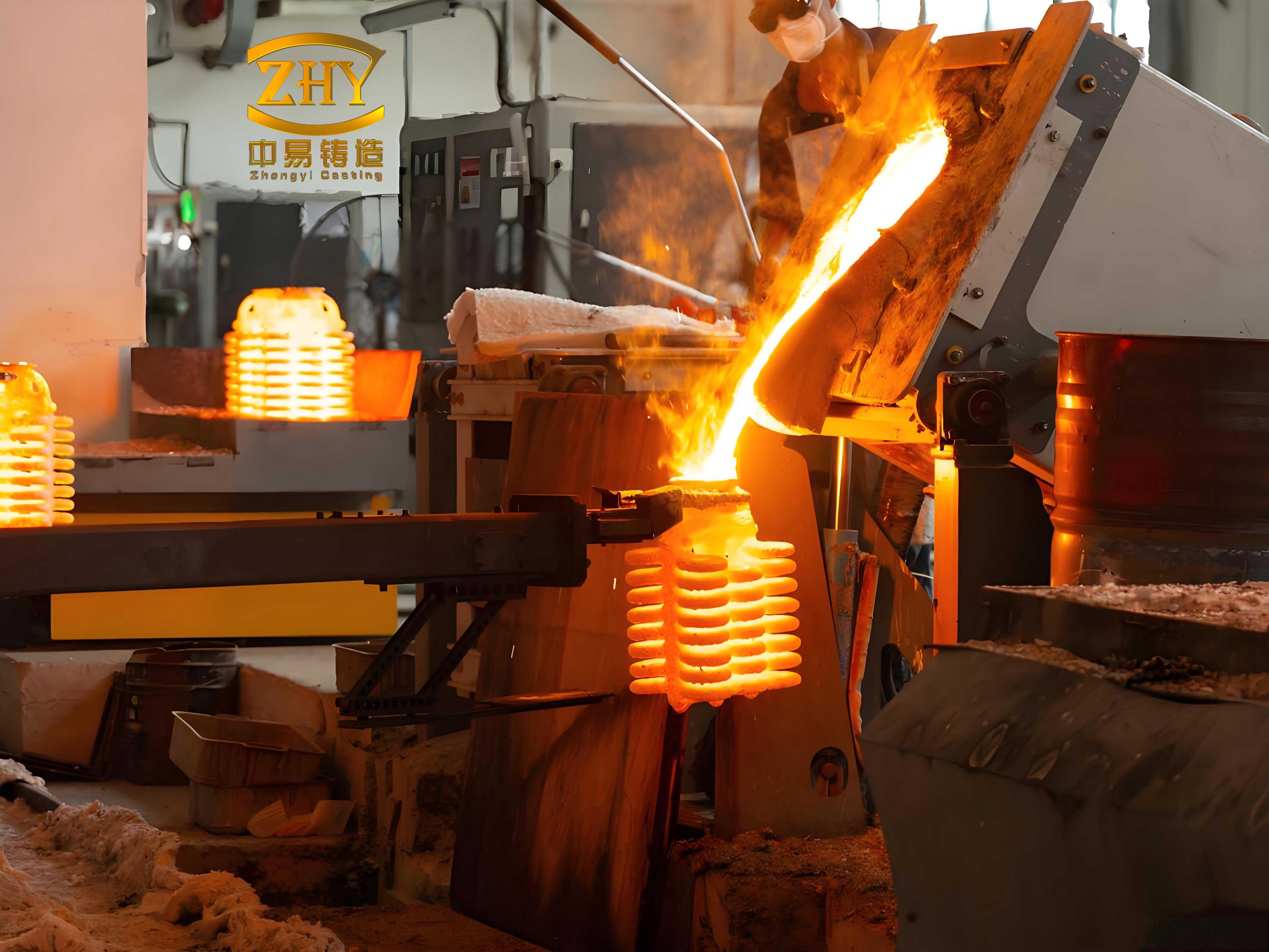
The experimental results reveal a strong dependence of filling behavior on mold preheating temperature. For both alloy systems, increasing the preheat temperature generally enhanced the filling rate across most feature types. This can be attributed to the reduced thermal gradient between the molten metal and the mold wall, which slows down the initial solidification rate at the metal-mold interface, thereby extending the time available for the metal to flow. The effect was particularly pronounced for thinner sections and features with abrupt geometry changes. Table 2 consolidates the filling rate data for plate (PI) and rib (Fo) elements of the TiAl alloy at different preheat temperatures, illustrating this trend clearly.
| Element Type & Thickness | Filling Rate at 400°C (%) | Filling Rate at 600°C (%) | Filling Rate at 800°C (%) |
|---|---|---|---|
| Plate (PI), 2 mm | 33.7 | 45.6 | Not measured |
| Plate (PI), 4 mm | 88.3 | 94.6 | 98.4 |
| Plate (PI), 6 mm | 98.2 | 98.2 | 98.2 |
| Rib (Fo), 4 mm | Significantly low | Marked increase | ~97.5 |
For the Ti2AlNb alloy, a similar positive correlation was observed. At 400°C, many features, especially thinner ones, exhibited incomplete filling. As the temperature rose to 600°C and 800°C, the filling rates improved dramatically, often reaching near-complete fill (above 99%) for features with thicker cross-sections like ribs and variable sections. This suggests that the investment casting process for Ti2AlNb, despite its higher melting point, can achieve excellent fill integrity with adequate mold preheating. The relationship between wall thickness ($t$) and filling rate can be conceptually modeled by considering the solidification time. A simplified thermal model suggests that the time for a section to solidify ($t_s$) is proportional to the square of its thickness (Chvorinov’s rule):
$$ t_s \propto \left( \frac{V}{A} \right)^n \approx k \cdot t^2 $$
where $V$ is volume, $A$ is surface area, and for a plate-like geometry, the ratio $V/A$ is approximately proportional to thickness $t$. A longer solidification time implies better feeding and filling. Therefore, increasing $t$ directly promotes higher filling rates, which aligns perfectly with our experimental observations for both alloys.
The dimensional stability, quantified by linear shrinkage rate, showed a more nuanced dependence on preheat temperature. For the TiAl alloy, the lengthwise shrinkage of various features was often highest at the lowest preheat temperature (400°C), sometimes exceeding 3% for features like sharp corners. At 600°C and 800°C, the shrinkage generally stabilized below 3%. In the thickness direction, the shrinkage was minimized at 600°C, indicating better dimensional accuracy. For the Ti2AlNb alloy, a noteworthy finding was that at the 600°C preheat level, the lengthwise linear shrinkage for most features was consistently below 1.5%, which was lower than the corresponding values for the TiAl alloy under similar conditions. This indicates potentially better dimensional predictability for Ti2AlNb in the investment casting process within this temperature window. The shrinkage behavior is governed by thermal contraction and possible phase transformation stresses. The total linear shrinkage $\epsilon_{total}$ can be considered as a sum of contributions:
$$ \epsilon_{total} = \alpha \cdot \Delta T + \epsilon_{phase} + \epsilon_{mechanical} $$
where $\alpha$ is the coefficient of thermal expansion, $\Delta T$ is the temperature drop from solidus to room temperature, $\epsilon_{phase}$ accounts for volumetric changes due to phase transformations, and $\epsilon_{mechanical}$ includes strain from mold constraint. A higher mold preheat temperature reduces $\Delta T$ during the initial cooling stage, potentially lowering thermal stress and distortion, which may explain the more favorable shrinkage at 600°C compared to 400°C.
| Characteristic Feature Type | TiAl Alloy Shrinkage (%) | Ti2AlNb Alloy Shrinkage (%) |
|---|---|---|
| Plate (4 mm) | ~2.1 | ~1.2 |
| Variable Section (8 mm) | ~1.8 | ~1.0 |
| Rib (4 mm) | ~2.5 | ~1.3 |
| Transition Arc (4 mm) | ~2.3 | ~1.1 |
Crack formation, a critical defect, was also investigated. Numerical simulation of residual stress using ProCAST software for a ring-shaped Ti2AlNb component at 600°C preheat revealed that stress concentration was highest at the junction between the ring and the gating system. The simulated von Mises stress ($\sigma_{vm}$) decreased with increasing ring wall thickness ($t_{ring}$): for $t_{ring}$ = 2 mm, $\sigma_{vm}$ ≈ 422 MPa; for $t_{ring}$ = 4 mm, $\sigma_{vm}$ ≈ 237 MPa; and for $t_{ring}$ = 6 mm, $\sigma_{vm}$ ≈ 145 MPa. This inverse relationship can be expressed as:
$$ \sigma_{vm} \propto \frac{1}{t_{ring}^m} $$
where $m$ is a positive exponent. Thicker sections cool slower and develop lower thermal gradients, thus reducing residual stress. In actual castings, TiAl alloy rings were more prone to cracking at these stress-concentrated junctions compared to Ti2AlNb rings, which generally achieved sounder integrity under the same investment casting process conditions. This difference may stem from the TiAl alloy’s lower ductility and different solidification contraction characteristics.
The interplay between mold preheat temperature ($T_{pre}$) and feature thickness ($t$) is paramount for optimizing the investment casting process. From a heat transfer perspective, the initial heat flux $q$ from the molten metal to the mold can be approximated by:
$$ q = h \cdot (T_{melt} – T_{pre}) $$
where $h$ is an effective heat transfer coefficient. A higher $T_{pre}$ reduces $q$, slowing the solidification front velocity. This is beneficial for filling but must be balanced against the risk of increased metal-mold interaction. Our findings indicate that 600°C represents a robust compromise for the investment casting process of these alloys, particularly for Ti2AlNb. At this temperature, the chemical reaction between the reactive Ti-Al melt and the ceramic shell is mitigated compared to 800°C, while the thermal conditions are sufficient to ensure high filling rates (often >95% for features thicker than 4 mm) and relatively low, predictable linear shrinkage (often <1.5% for Ti2AlNb in length direction). For the TiAl alloy, 600°C also yields good filling for moderate thicknesses and minimizes thickness-direction shrinkage.
Furthermore, the data allows us to propose a qualitative performance matrix for the investment casting process based on feature type. Features with gradual geometry changes (like variable sections) and thicker walls consistently exhibited superior filling and lower shrinkage sensitivity. In contrast, sharp corners and thin ribs required higher preheat temperatures to avoid mistuns. This knowledge is directly applicable to the design of gating systems and the placement of feeders in the investment casting process for complex Ti-Al alloy components. The bottom-gating system used here provided stable filling, but the final stress state is significantly influenced by the geometric connection to the gate, as highlighted by the ring component simulations.
In conclusion, this systematic investigation into the investment casting process for Ti-Al intermetallic alloys provides valuable empirical relationships between key process parameters and casting outcomes. The mold preheating temperature is a powerful lever: elevating it from 400°C to 600-800°C markedly improves the filling capability of both TiAl and Ti2AlNb alloys by enhancing melt fluidity through reduced thermal shock. However, a temperature of 600°C emerges as particularly advantageous, especially for Ti2AlNb alloy, as it balances fill integrity with dimensional accuracy and minimizes deleterious interfacial reactions. Component wall thickness is an equally critical design factor; increasing thickness promotes better filling and reduces residual stress, thereby lowering crack propensity. The derived formulas and performance trends offer a foundation for predictive modeling and optimization of the investment casting process. Future work could focus on integrating these findings with advanced simulation tools to create a comprehensive digital twin for the casting of aerospace-grade Ti-Al alloy components, further refining this vital manufacturing pathway.