
The investment casting process, often referred to as the lost-wax process, is a highly versatile and precise manufacturing method capable of producing complex, near-net-shape components with excellent surface finish and dimensional accuracy. This makes it indispensable for industries ranging from aerospace and power generation to medical and automotive. However, the very complexity of the investment casting process—comprising numerous sequential and interdependent steps—makes final casting quality susceptible to a wide array of deviations. Each stage, from pattern creation to final solidification, introduces potential variables that can manifest as defects in the finished stainless steel component. Based on extensive practical experience in foundry operations, this article provides a detailed, first-person analysis of common stainless steel investment casting defects, their root causes, and presents a structured framework for quality control, heavily utilizing tabular summaries and fundamental engineering principles to encapsulate the knowledge.
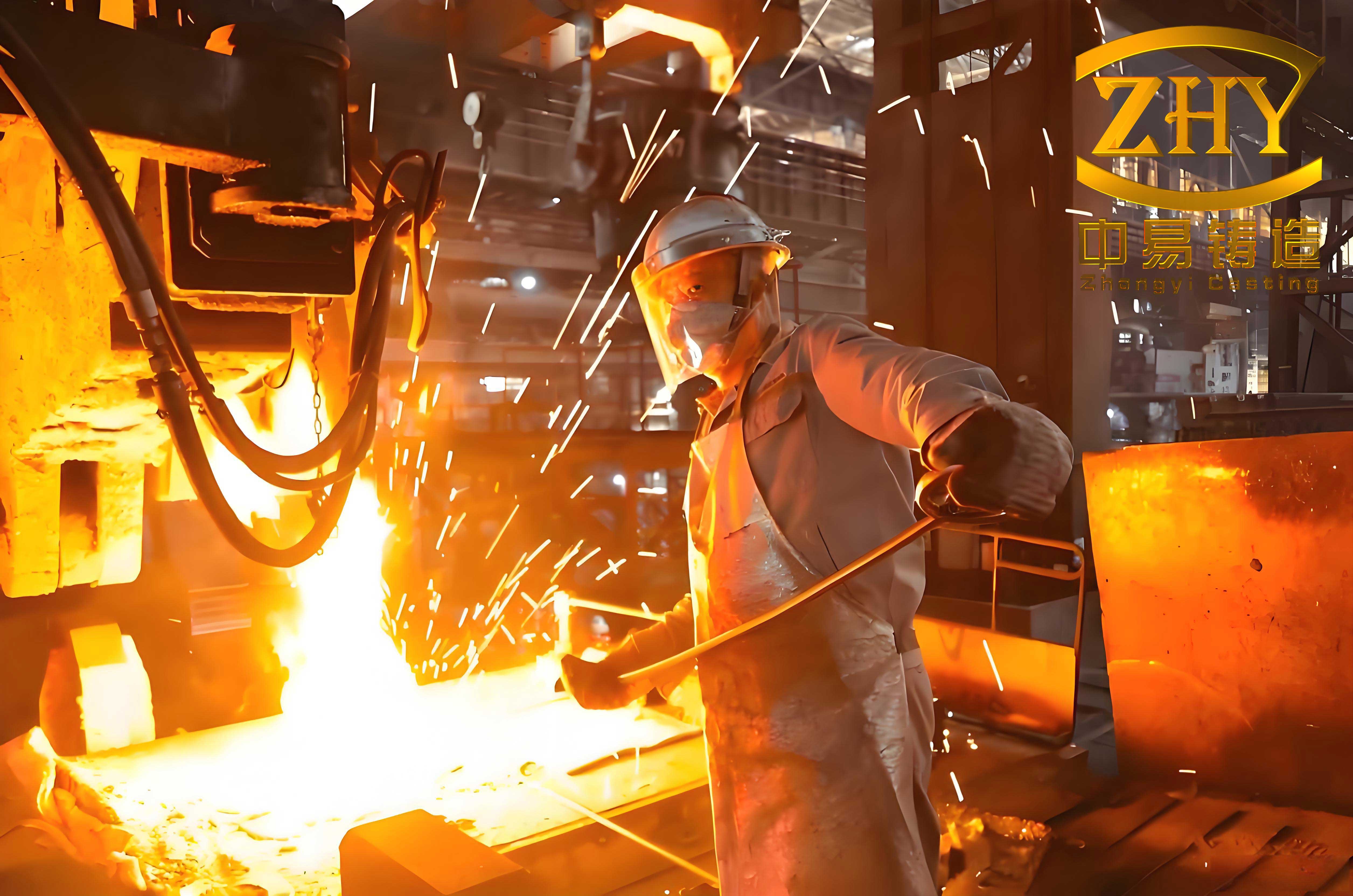
The core sequence of the investment casting process is well-known: pattern (wax) production, assembly, shell building (via successive slurry dipping and stuccoing), dewaxing, mold firing, melting/pouring, and final knockout/cleaning. Yet, within this framework lies immense complexity. For stainless steel alloys, which rely on a protective chromium oxide layer for corrosion resistance, surface integrity is paramount. Defects that compromise this surface, even if sub-surface, can severely impact performance, fatigue life, and aesthetic quality, leading to costly scrap. Therefore, implementing a robust, knowledge-based quality control system is not optional but essential for economic and technical success in the investment casting process.
Comprehensive Analysis of Typical Casting Defects
Defects in investment castings can originate from multiple sources: raw material inconsistencies, pattern issues, shell building deficiencies, improper thermal cycles (dewaxing, firing), melting and pouring errors, and solidification problems. The following analysis categorizes and details specific defects encountered in stainless steel production, moving from surface anomalies to more volumetric issues.
1. Surface Texture Defects
These defects primarily affect the visual and tactile surface quality and are often directly linked to the first layers of the ceramic shell.
Pockmarks (Regular Hemispherical Pits): These appear as uniform, small craters (0.3-0.8 mm diameter) clustered in localized areas. Energy-dispersive X-ray spectroscopy (EDS) consistently reveals traces of elements like Magnesium (Mg) and Calcium (Ca) at the defect site. The primary root cause is the degradation of the facecoat refractory material. Zircon flour/sand (ZrSiO₄) is the standard facecoat material due to its high refractoriness and thermal stability. However, its stability is highly dependent on purity. The presence of fluxing impurities like oxides of Na, K, Ca, or Mg drastically lowers its dissociation temperature. For instance, pure ZrSiO₄ dissociates around 1676°C, but with CaO/MgO impurities, this can drop to approximately 1300°C.
The dissociation reaction is:
$$ ZrSiO_4(s) \rightarrow ZrO_2(s) + SiO_2(l/g) $$
The liberated silica (SiO₂) is highly reactive in its amorphous form at high temperature. It can interact with alloying elements in the stainless steel melt, particularly Cr, Ti, Al, and Mn, forming low-melting-point silicates that etch the casting surface, resulting in pockmarks. The reaction can be generalized as:
$$ x[Me]_{steel} + ySiO_2 \rightarrow Me_xSi_yO_{2y} + \text{(other products)} $$
where [Me] represents a metal from the melt.
| Defect Name | Visual Description | Key EDS Findings | Primary Root Cause |
|---|---|---|---|
| Pockmarks | Regular hemispherical pits, clustered. | Mg, Ca, Si, O at pit. | Low-purity zircon facecoat dissociating, reacting with melt. |
| Scabs / Honeycomb Pits | Irregular, cellular surface depression. | C, O, (Ca, Mg). | Incomplete shell burnout; carbonaceous residues from binders/wax reacting. |
| Island-like Projections (“Toadskin”) | Localized, rough raised areas. | High Cr, C, O. | Localized oxidation/burning of alloy due to shell moisture or low-melt phases. |
| Veining or Fine Fins | Thin, network-like raised lines. | Shell composition (Si, Zr, Al). | Thermal cracking of shell due to thermal shock or silica phase transformation. |
2. Sub-surface and Inclusions-Related Defects
These defects are often revealed during machining or radiographic inspection and are related to foreign materials or reactions within the metal.
Black Spots (Spherical Inclusions): After machining or polishing, small, spherical, dark spots become visible. EDS analysis shows oxygen, silicon, manganese, and sometimes aluminum. These are classic non-metallic inclusions. They form from:
- Endogenous Formation: Deoxidation products within the melt (e.g., MnO, SiO₂, Al₂O₃ from FeMn, FeSi additions) that agglomerate but are not fully floated out.
- Exogenous Introduction: Erosion of the shell (SiO₂, Al₂O₃ from backup layers) or ladle lining during pouring.
These liquid or solid inclusions have high surface tension and do not wet the steel, forming spherical shapes. Their presence, especially near the surface, creates a machining defect and can act as a stress concentrator.
Oxide Scabs / Sand Inclusions: Patches of fused metal oxide and ceramic sand on the casting surface. This is a direct result of mold wall collapse or erosion during pouring. Turbulent metal flow, combined with a shell of insufficient hot strength or with poor inter-layer bonding, can cause grains of backup stucco (like silica sand) to dislodge and become entrapped in the solidifying metal.
| Defect Name | Visual Description | Key EDS Findings | Primary Root Cause |
|---|---|---|---|
| Black Spots | Spherical, sub-surface pits revealed after machining. | O, Si, Mn, Al (silicates, aluminates). | Non-metallic inclusions from deoxidation or slag entrapment. |
| Oxide Scabs | Surface crust/blemish, often removable. | High O, Fe, Cr, Si (from sand). | Shell erosion/collapse; turbulent filling. |
| Shrinkage Porosity (Micro) | Irregular, dark voids on radiograph or after machining. | None specific (vacancy). | Poor feeding in isolated thermal centers; high pouring temp. |
3. Dimensional and Form Defects
These defects alter the intended shape or dimensions of the casting and are often related to shell distortion, pattern issues, or solidification shrinkage.
Indentation / Depression: Broad, shallow, irregular surface recession. EDS may show shell materials (Zr, Si). This is typically a shell distortion defect, not a metal shrinkage defect. It occurs if the green (unfired) shell experiences non-uniform stresses during dewaxing. If the shell has low early-stage strength or if dewaxing is too rapid, steam pressure and wax expansion can cause local inward buckling of the shell facecoat, which then prints onto the metal surface. The hot strength of the shell can be approximated by considering its behavior under a differential pressure (ΔP) during dewaxing. Shell failure occurs when:
$$ \sigma_{shell} < \frac{\Delta P \cdot R}{t} $$
where \(\sigma_{shell}\) is the shell’s tensile strength at the dewaxing temperature, \(R\) is a characteristic radius of curvature, and \(t\) is the shell thickness. Low strength (\(\sigma_{shell}\)) promotes distortion.
Shrinkage Depression (Surface Draw): A localized, often smoother depression at a thermal hotspot (like a junction). This is a genuine solidification shrinkage defect where a surface meniscus forms due to lack of liquid metal feed. It is exacerbated by high pouring temperature (\(T_{pour}\)) and slow cooling in that region. The local solidification time (\(t_f\)) according to Chvorinov’s rule is key:
$$ t_f = B \cdot \left( \frac{V}{A} \right)^n $$
where \(V\) is volume, \(A\) is cooling surface area, \(B\) is a mold constant, and \(n\) is an exponent (~2 for sand molds). A high \((V/A)\) ratio (a hot spot) leads to long \(t_f\), increasing shrinkage tendency. If feed metal is unavailable, a surface depression forms.
Fins and Excessive Metal (Flash): Thin webs or projections of metal along parting lines or edges. These are caused by cracks in the ceramic shell through which metal penetrates. Cracks can form from:
- Mechanical damage during handling.
- Thermal stress cracks during dewaxing or pre-heat due to too-rapid heating.
- “Ant-holes” in the facecoat: microscopic pores created by poor wetting of the pattern, air entrapment in the slurry, or improper slurry viscosity and stucco grain size matching.
The pressure driving metal penetration (\(P_{pen}\)) is primarily metallostatic:
$$ P_{pen} = \rho g h $$
where \(\rho\) is metal density, \(g\) is gravity, and \(h\) is the height of the metal head above the crack. Even small cracks can lead to fins if the shell is sufficiently permeable.
| Defect Name | Visual Description | Key EDS / Feature | Primary Root Cause |
|---|---|---|---|
| Indentation | Broad, irregular surface depression. | Shell material transfer possible. | Inward shell distortion during dewaxing due to low green strength. |
| Shrinkage Depression | Localized sink at a thick section. | Visible grain structure, no foreign material. | Inadequate feeding in thermal center; high (V/A) ratio, high Tpour. |
| Fins/Flash | Thin metal projections on surfaces. | Follows shell crack paths. | Cracks in shell from thermal shock, handling, or “ant-holes” in coating. |
A Systematic Framework for Quality Control in the Investment Casting Process
Preventing the defects described above requires a proactive, controlled approach across the entire investment casting process. Quality must be built in at every step, not inspected in at the end. The control framework can be organized into three critical pillars: Input Material Control, Process Execution Control, and Thermal Cycle & Metal Processing Control.
Pillar 1: Input Material Control and Specification
Consistency starts with raw materials. Variations here propagate and amplify through the investment casting process.
- Facecoat Refractories: Specify and audit high-purity zircon (ZrSiO₄) flour and sand. Key control parameters are:
- ZrSiO₄ content: >99% is ideal, with strict limits on impurities (e.g., TiO₂ < 0.3%, (CaO+MgO) < 0.2%, (Na₂O+K₂O) < 0.15%).
- Particle Size Distribution (PSD): A controlled, bimodal distribution for flour ensures slurry stability and density. Sand PSD affects surface finish and permeability.
Use fixed, certified suppliers and perform periodic inbound chemical and PSD analysis.
- Binders (Silica Sol, Ethyl Silicate): Monitor critical parameters such as SiO₂ content, pH, viscosity, and colloidal particle size. For hydrolyzed ethyl silicate, the silica content and gelling time are paramount. Slurry life is directly related to binder stability.
- Alloy Charge Materials: Use clean, known-composition revert and primary metals. Minimize rust, oil, sand, and other contaminants. For critical alloys, use vacuum-melted master alloys. This is the first defense against exogenous inclusions.
- Pattern Wax: Control properties like softening point, ash content, and thermal expansion coefficient. Wax should be processed and maintained at specified temperatures to ensure consistent pattern dimensions and surface quality.
Pillar 2: Process Execution Control (Pattern to Shell Build)
This phase transforms specifications into a physical mold. Precision and consistency are critical.
Slurry Control: The heart of shell building. Parameters must be meticulously managed and logged for each slurry tank (prime, backup).
| Parameter | Control Method & Impact | Typical Target (Prime Coat) |
|---|---|---|
| Specific Gravity / Density | Daily measurement with pycnometer. Controls slurry pickup and shell thickness. | e.g., 2.7 – 2.9 g/cm³ |
| Viscosity | Rotational viscometer (cup). Affects coating thickness and penetration into fine features. | e.g., 15-25 sec (Zahn #4 cup) |
| Binder-to-Powder (B:P) Ratio | Calculated from density & component specs. Determines slurry rheology and green strength. | e.g., 0.25 – 0.30 (by weight) |
| Temperature | Constant monitoring. Affects viscosity and gelling kinetics. | e.g., 22 ± 2°C |
| pH | For silica sol systems, critical for sol stability. | e.g., 9.0 – 10.0 |
Shell Building Environment: Control temperature (20-24°C) and relative humidity (40-60%). Humidity affects drying kinetics. The drying of a slurry layer is a diffusion-controlled process. The drying rate can be influenced by the humidity gradient. Inadequate drying between coats leads to “soft shells,” high retained moisture, and potential for steam explosions during dewaxing or shell cracking during firing.
Dewaxing Process Control: The objective is to remove wax quickly without damaging the shell. The most common method is autoclave dewaxing with high-pressure steam. The key parameters are:
- Pressure Rise Time: A controlled, rapid pressure increase (e.g., to 6-8 bar in 10-15 seconds) is crucial. It rapidly heats the wax surface, melting a thin layer and creating a pressure seal before the core of the wax expands.
- Pressure Hold Time: Sufficient to ensure complete wax removal, typically 5-15 minutes depending on shell thickness and size.
The shell’s permeability (\(\kappa\)) is vital here. A higher permeability allows steam to penetrate and wax to drain more easily, reducing internal pressure. Darcy’s law gives the flow rate:
$$ Q = \frac{\kappa A \Delta P}{\mu L} $$
where \(Q\) is volumetric flow rate, \(A\) is area, \(\Delta P\) is pressure difference, \(\mu\) is viscosity, and \(L\) is thickness. Ensuring good shell permeability (from proper stuccoing) helps prevent shell cracking during dewaxing.
Pillar 3: Thermal Cycle & Metal Processing Control
The final stages where the mold and metal interact to define the casting’s metallurgical and surface quality.
Shell Firing (Pre-heat): This step serves multiple purposes: (1) Remove all volatile organics and residual carbon, (2) Develop final ceramic bonding via sintering, (3) Achieve a specified mold temperature for pouring. A critical control is the firing temperature profile. A sufficient “soak” time above 900°C (e.g., 1-2 hours at 1000-1100°C) is necessary to burn out carbonaceous residues. Incomplete burnout leads to carbon pickup and surface reactions (scabs, pockmarks). The mold pre-heat temperature (\(T_{mold}\)) significantly affects fluidity and solidification structure. It is chosen based on alloy and casting geometry:
$$ T_{mold} = f(T_{liquidus}, \text{section thickness}, \text{complexity}) $$
For thin-section stainless steels, a high \(T_{mold}\) (e.g., 950°C) may be used to ensure filling; for heavier sections, a lower \(T_{mold}\) (e.g., 750°C) promotes faster cooling and finer grains.
Melting, Deoxidation, and Pouring:
- Melting Atmosphere/Process: For high-integrity stainless steels, vacuum induction melting (VIM) or argon-oxygen decarburization (AOD) is preferred to minimize gas and inclusion content. Even in air melting, using basic slags helps absorb inclusions.
- Deoxidation Practice: This is a delicate balance. Insufficient deoxidation leads to oxide film defects. Excessive deoxidation generates abundant inclusion nuclei. For stainless steels, a combination deoxidation is often used (e.g., Fe-Mn followed by Fe-Si or Ca-Si). The aim is to form liquid, globular inclusions (like calcium aluminates) that easily float out. The sequence and timing of additions are critical.
- Pouring Temperature (\(T_{pour}\)): Arguably the most critical single parameter in the metal processing stage. It is a compromise:
$$ T_{pour} = T_{liquidus} + \Delta T_{superheat} $$
where \(\Delta T_{superheat}\) must be minimized to reduce shrinkage, grain size, and metal-mold reaction, but must be sufficient for fluidity. A typical target for many stainless grades is \(T_{liquidus} + 50°C\) to \(T_{liquidus} + 100°C\). This must be determined experimentally for each casting family. - Pouring Speed: Should be rapid enough to avoid mistun but controlled enough to prevent turbulent flow that erodes the shell. The gate system design should promote laminar fill.
Solidification Control: While largely determined by part geometry and mold temperature, the use of exothermic or insulating sleeves on feeders (risers) can significantly improve feeding efficiency in hot spots, directly combating shrinkage depression and porosity. Chvorinov’s rule guides feeder design: the feeder’s solidification time must be longer than that of the casting region it feeds.
$$ \left( \frac{V}{A} \right)_{feeder} > \left( \frac{V}{A} \right)_{casting} $$
Applying an exothermic sleeve effectively increases the feeder’s \((V/A)\) ratio by reducing heat loss from its surface.
Conclusion: An Integrated View of the Investment Casting Process
Quality in stainless steel investment casting is not the result of focusing on a single “magic” parameter. It is the outcome of a holistic, controlled, and deeply understood system. Defects such as pockmarks, black spots, indentations, shrinkage, and fins are symptomatic of specific breakdowns in this system—whether in material purity, slurry management, thermal cycle control, or metal treatment.
A successful quality control program hinges on three pillars: rigorous Input Material Control to ensure consistency at the start; precise Process Execution Control to translate specifications into a sound ceramic mold; and meticulous Thermal & Metal Processing Control to govern the final transformation of liquid metal into a solid component. This requires not only strict adherence to procedures but also a fundamental understanding of the underlying principles—the chemistry of refractory dissociation, the rheology of slurries, the physics of dewaxing and drying, the thermodynamics of deoxidation, and the kinetics of solidification.
By implementing such a structured, knowledge-driven approach, foundries can systematically reduce variability, suppress the root causes of defects, and achieve high, repeatable quality levels. The investment casting process, for all its complexity, becomes a predictable and reliable manufacturing pathway, capable of meeting the most demanding specifications for stainless steel components across advanced industries.