
The relentless demand for safer, more durable, and efficient railway transportation places immense pressure on critical components that ensure operational integrity. Among these, the railway coupler stands as a paramount safety-critical element, serving as the fundamental mechanical link between locomotives and carriages. Its primary function is to transmit formidable longitudinal forces—both tensile during acceleration and compressive during braking—throughout the train consist. The failure of this component can lead to catastrophic operational disruptions and severe safety hazards. Therefore, the manufacturing process employed for couplers must guarantee exceptional metallurgical quality, geometric precision, and structural integrity. This article delves deeply into the application and validation of the investment casting process for producing complex, high-strength locomotive couplers, focusing on a systematic approach that integrates material science, advanced finite element analysis (FEA), and fatigue life prediction to establish a robust framework for performance evaluation.
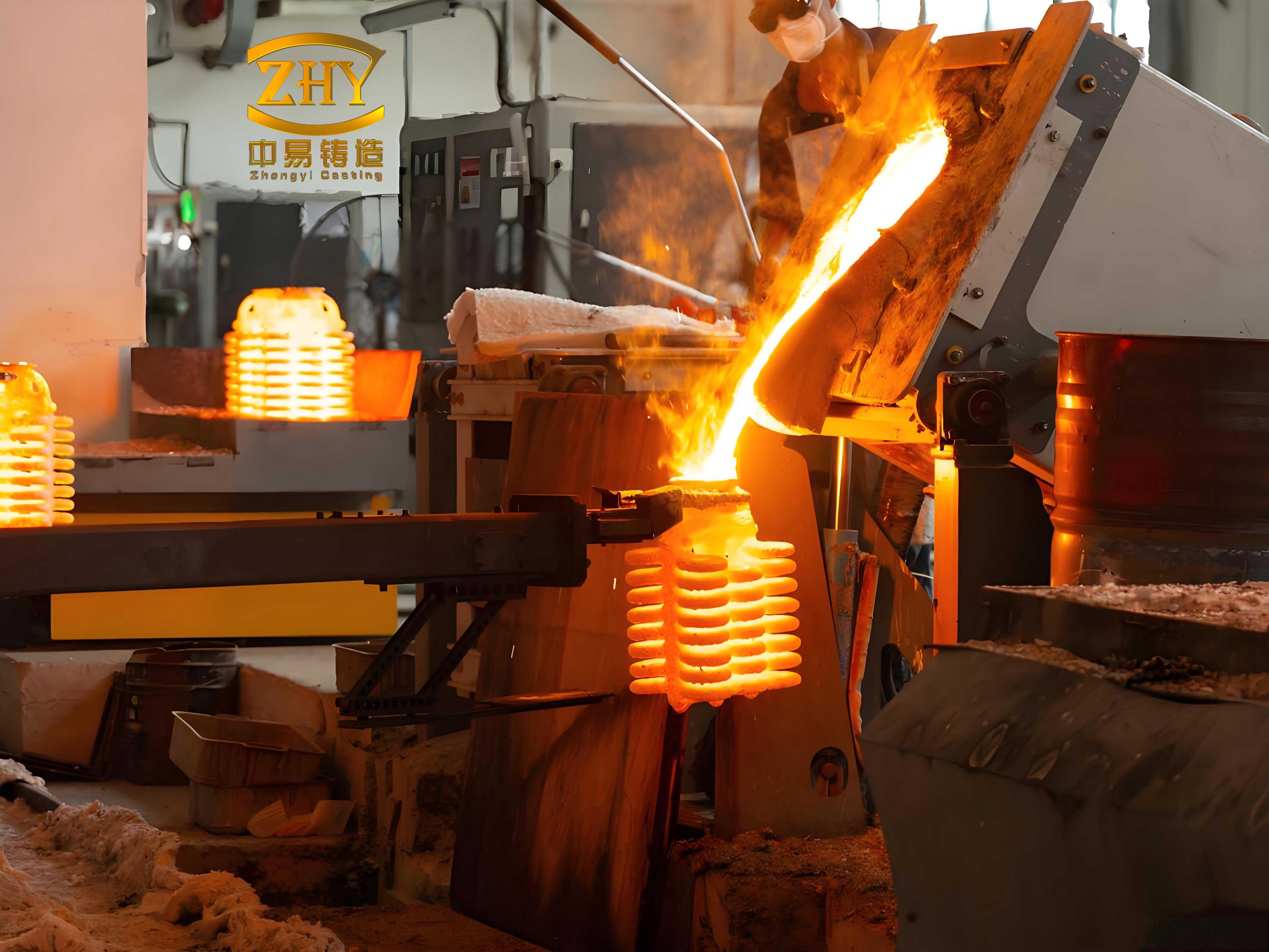
The investment casting process, also known as the lost-wax process, is uniquely suited for fabricating components like railway couplers. These parts typically feature intricate geometries, non-uniform wall thicknesses, and internal contours that are challenging or economically prohibitive to produce via conventional forging or machining. The process begins with the creation of a precise wax pattern, which is assembled into a cluster, coated with a refractory ceramic shell, and then de-waxed. The resulting hollow ceramic mold is fired to achieve strength and subsequently filled with molten metal. For high-performance applications such as railway couplers, the alloy of choice is often a high-strength cast steel, designated as E-grade steel (ZG25MnCrNiMo), known for its excellent combination of strength and toughness. The principal advantage of the investment casting process in this context is its ability to produce near-net-shape components with superior surface finish, dimensional accuracy, and the capacity to form complex internal features without the need for extensive secondary operations, thereby enhancing the structural reliability of the final product.
The core methodology adopted in this investigation is a synergistic combination of experimental material characterization and computational simulation. Material samples extracted from a prototype coupler produced via the investment casting process were subjected to rigorous microstructural analysis and tensile testing in both the as-cast and heat-treated conditions. The resulting mechanical property data forms the essential input for constructing a high-fidelity finite element model. Within the ANSYS Workbench environment, this model is employed to perform detailed static structural analysis under defined worst-case loading scenarios. Subsequently, employing the strain-life (E-N) approach and appropriate fatigue damage accumulation models, the model is used to predict the component’s service life under simulated operational load spectra. This integrated approach provides a comprehensive and efficient pathway for assessing the coupler’s performance, bypassing the need for extensive and costly physical prototyping and testing cycles.
Material Characterization of the Investment Cast E-Grade Steel
The foundational step in assessing any critical component is the thorough characterization of its constitutive material. The coupler examined here was manufactured using ZG25MnCrNiMo (E-grade) steel via the investment casting process. To evaluate the efficacy of the process and subsequent heat treatment, samples were analyzed in both their as-cast state and after a full heat treatment cycle consisting of normalization, quenching at 910°C, and tempering at 590°C for two hours.
Microstructural examination revealed a significant transformation. The as-cast structure comprised a coarse mixture of pearlite and ferrite, indicative of typical solidification structures. However, after the prescribed heat treatment, the microstructure was refined into a uniform and fine dispersion of tempered martensite, or tempered sorbite. This refined microstructure is critical as it directly governs the mechanical properties, enhancing both strength and, more importantly for fatigue resistance, toughness. The uniformity achieved is a testament to the controlled solidification and thermal processing possible with well-executed investment casting process followed by proper heat treatment.
Quantitative mechanical property data was obtained from standardized tensile tests. The results, averaged from multiple specimens, are summarized in the table below, comparing the as-cast properties to the heat-treated properties and the relevant industry specifications.
| Material Condition | Yield Strength (σs) [MPa] | Ultimate Tensile Strength (σb) [MPa] | Elongation (δ) [%] | Reduction in Area (ψ) [%] | Elastic Modulus (E) [GPa] |
|---|---|---|---|---|---|
| As-Cast (Investment Cast) | — | 626 | 2.1 | 3.9 | ~78 |
| Heat-Treated (Investment Cast) | 920 | 1020 | 14.5 | 34.5 | ~215 |
| Industry Standard (TB/T 2942) | ≥ 690 | ≥ 830 | ≥ 14 | ≥ 30 | ~174 |
The data conclusively demonstrates the dramatic improvement imparted by heat treatment. The heat-treated material far exceeds the minimum industry requirements for strength and ductility. The high elongation and reduction in area values are particularly promising for fatigue performance, as they indicate a high capacity for plastic strain accommodation and energy absorption before fracture. This enhanced property set provides the essential basis for the subsequent stress and fatigue life simulations, where parameters like the fatigue strength coefficient (σ’f) and fatigue ductility coefficient (ε’f) are derived from this tensile data and fundamental relationships.
Finite Element Modeling and Fatigue Analysis Methodology
To evaluate the structural response of the coupler under service loads, a detailed three-dimensional finite element model was constructed based on the exact geometry of the investment casting process-produced component. The model captures all critical geometric features, including the complex contours of the hook head, the draft gear interface, and areas of potential stress concentration. The mesh was meticulously refined, utilizing tetrahedral elements with a global size convergence study leading to a base size of 1.75 mm, followed by localized refinement in critical regions down to 0.5 mm, resulting in a model with over 1.9 million elements and 3.36 million nodes. This level of detail is crucial for accurately capturing stress gradients, especially in regions with complex geometry inherent to the investment casting process.
The boundary conditions and loads were applied to simulate real-world coupling and force transmission. The model simulates the connection between two couplers, where contact is established on the hook face and the curved pulling surfaces. For static analysis, three primary load cases derived from operational specifications were applied:
1. Steady-State Traction: A tensile load of 600 kN, representing normal running conditions.
2. Maximum Traction (Start-Up): A tensile load of 800 kN, simulating the maximum force during locomotive start-up.
3. Maximum Compression (Emergency Braking): A compressive load of 1000 kN, representing the worst-case scenario during emergency braking.
Fatigue life prediction requires a more nuanced approach. The methodology employed here is the strain-life (E-N) method, which is more accurate for situations involving localized plasticity, common at stress concentrators. The foundation of this method is the Manson-Coffin equation, which partitions the total strain amplitude into elastic and plastic components:
$$ \frac{\Delta \epsilon}{2} = \frac{\Delta \epsilon_e}{2} + \frac{\Delta \epsilon_p}{2} = \frac{\sigma_f’}{E}(2N_f)^b + \epsilon_f'(2N_f)^c $$
Where:
• $\Delta \epsilon / 2$ is the total strain amplitude.
• $\sigma_f’$ is the fatigue strength coefficient, related to the material’s tensile strength.
• $b$ is the fatigue strength exponent.
• $\epsilon_f’$ is the fatigue ductility coefficient, related to the material’s ductility.
• $c$ is the fatigue ductility exponent.
• $N_f$ is the number of cycles to failure.
For the E-grade steel from the investment casting process, the material constants derived from testing and handbook data are: $\sigma_f’ = 1051 \text{ MPa}$, $b = -0.05927$, $\epsilon_f’ = 13.2987$, and $c = -1.03023$. The elastic modulus $E$ is 210 GPa. Substituting these into the general equation gives the specific life prediction model for this material:
$$ \frac{\Delta \epsilon}{2} = \frac{1051}{210000}(2N_f)^{-0.05927} + 13.2987(2N_f)^{-1.03023} $$
Fatigue analysis was conducted under two distinct load spectrums to bracket operational scenarios:
1. Modified Daqin Line Spectrum: An 8-level block loading spectrum derived from measurements on a heavy-haul freight line, with peak loads truncated to 800 kN to better represent passenger/metro loading intensity.
2. Sinusoidal Metro Spectrum: A simplified spectrum representing a typical urban metro cycle (e.g., Chongqing Metro Line 3), modeled as a sinusoidal wave oscillating between 0 kN and a specified peak load (ranging from 580 kN to 1440 kN for sensitivity analysis). The Goodman mean stress correction was applied to account for the non-zero mean stress in this pulsating tension load case.
The FEA software (ANSYS nCode) calculates the local stress-strain history at every node, applies the chosen fatigue model and mean stress correction, and accumulates damage using Miner’s rule to predict life.
Static Strength and Stress Distribution Results
The static finite element analysis provides critical insight into the stress distribution and deformation of the coupler under extreme static loads, validating the structural adequacy of the design and the investment casting process. The results for the three key load cases are summarized below.
| Loading Scenario | Applied Load | Max. von Mises Stress [MPa] | Max. Total Deformation [mm] | Critical Stress Location |
|---|---|---|---|---|
| Steady-State Traction | 600 kN (Tension) | 362.0 | 2.41 | Base of the hook head |
| Start-Up (Max Traction) | 800 kN (Tension) | 482.7 | 3.21 | Base of the hook head |
| Emergency Braking | 1000 kN (Compression) | 603.4 | 4.01 | Interface between hook shank and tongue contact area |
The analysis reveals consistent and predictable behavior. Under tensile loads, the maximum stress consistently localizes at the root or base of the hook head. This is a classic area of geometric stress concentration where the cross-section transitions. Under compressive loads from braking, the load path shifts, and the highest stresses manifest at the interface where the hook tongue bears against the coupler body. Crucially, in all simulated extreme static cases, the maximum induced stress (603.4 MPa) remains significantly below the yield strength (920 MPa) and the ultimate tensile strength (1020 MPa) of the heat-treated investment casting process material. The safety factor against yield under the most severe emergency braking load is approximately 1.52. Furthermore, the maximum deformations are minimal (on the order of a few millimeters) compared to the component’s dimensions, ensuring functional integrity. These results confirm that the coupler possesses more than adequate static strength for its intended service loads.
Fatigue Life Assessment and Predictive Curves
The fatigue life assessment moves beyond static strength to evaluate long-term durability under cyclic loading, which is the predominant failure mode for such components. The analysis using the modified Daqin Line load spectrum, representative of severe but realistic variable amplitude loading, identified specific critical locations for fatigue initiation. These locations correlated exactly with the areas of highest stress identified in the static analysis: the root of the hook head and complex interfaces on the hook body. The predicted minimum fatigue life at these critical spots was **105.2 loading blocks**. Given that one block of this spectrum represents approximately 15,000 km of travel on a heavy-haul line, the predicted safe operational distance is calculated as:
$$ C = l \cdot n = 15,000 \text{ km/block} \times 10^{5.2} \text{ blocks} \approx 1.58 \times 10^6 \text{ km} $$
This immense distance underscores the inherent durability of the properly heat-treated investment casting process component even under demanding cyclical loads.
For the urban metro application, a more targeted analysis was performed using the sinusoidal load spectrum. By varying the amplitude of the load (Fpeak), a relationship between the applied load (and corresponding internal max stress, σmax) and the predicted fatigue life (Nf) was established. This allows for the construction of a practical design and inspection tool: a predictive fatigue life curve. The results are tabulated and can be expressed as a power-law relationship.
| Sinusoidal Load Peak (Fpeak) [kN] | Max. Internal Stress (σmax) [MPa] | Predicted Cycles to Failure (Nf) | Equivalent Service Life* [Years] |
|---|---|---|---|
| 1440 | 868.6 | 2.6 × 10⁴ | 0.26 |
| 800 | 482.7 | 7.9 × 10⁵ | 31.5 |
| 680 | 410.2 | 1.8 × 10⁷ | ~740 |
| 600 | 361.9 | 5.1 × 10⁷ | > 1000 |
| 580 | 349.9 | > 108 (Run-out) | Effectively Infinite |
*Based on a daily operational profile of 6 round trips on a 45-station metro line.
The data reveals several critical insights. First, the fatigue limit—the stress level below which fatigue failure is not expected—for this component under pulsating tension loading is approximately **350 MPa**. This is below the theoretical endurance limit (often ~0.5*UTS = 510 MPa) due to factors like surface finish (modeled as-cast), mean stress, and geometric stress concentrations. Second, at the specified maximum service load of 800 kN (σmax = 482.7 MPa), the predicted life of **31.5 years** comfortably exceeds the typical industry requirement of 30 years for metro vehicles. Third, under normal operating loads of 600-680 kN, the predicted fatigue life extends to several centuries, indicating a vast reserve. However, the curve also serves as a powerful warning: frequent overloading events significantly reduce the service life. For instance, sustained operation at 1440 kN would deplete the fatigue life in a matter of months. This predictive curve is an invaluable outcome of the simulation, directly linking the quality of the investment casting process and heat treatment to quantifiable, field-relevant durability metrics.
Conclusion
This comprehensive investigation successfully demonstrates a validated, integrated framework for the design and performance evaluation of critical railway components manufactured via the investment casting process. The study centered on a complex locomotive coupler made from E-grade steel (ZG25MnCrNiMo). The pathway involved rigorous material characterization of the cast alloy, confirming that a post-casting heat treatment cycle transforms the as-cast microstructure into a uniform tempered sorbite, yielding mechanical properties (UTS > 1000 MPa, elongation > 14%) that significantly surpass industry standards. These material properties formed the foundational input for advanced computational mechanics.
A high-fidelity finite element model was developed and subjected to both extreme static loads and variable-amplitude fatigue loading spectra. The static analysis confirmed that even under worst-case emergency braking loads (1000 kN compression), the maximum induced stress remains safely below the material’s yield strength, with identifiable and consistent stress concentration zones. The core of the predictive work utilized the strain-life fatigue methodology. Analysis under a modified heavy-haul load spectrum predicted an extremely long safe operating distance. More importantly, by simulating a typical urban metro cycle with a sinusoidal load, a practical and quantitative predictive fatigue curve was generated. This curve explicitly links operational load levels to predicted service life, highlighting a fatigue limit near 350 MPa and confirming that the coupler meets and exceeds a 30-year service life requirement under specified loads.
The synergy between the advanced investment casting process, which enables the production of highly complex and sound geometries, and this simulation-led validation approach provides a powerful, efficient, and cost-effective paradigm. It moves away from reliance solely on physical testing and enables rapid performance assessment, design optimization, and the establishment of science-based inspection and maintenance intervals. The methodology outlined herein, combining metallurgical analysis from the investment casting process with state-of-the-art FEA and fatigue simulation, offers a robust template for ensuring the reliability and safety of other high-integrity cast components across the transportation and heavy machinery sectors.