
In modern manufacturing, particularly within aerospace, automotive, and precision engineering sectors, the investment casting process stands as a pivotal near-net-shape manufacturing technology. Its ability to produce complex geometries with high dimensional accuracy and excellent surface finish, while minimizing material waste and secondary machining, makes it indispensable. As an engineer deeply involved in precision foundry operations, I have consistently focused on enhancing the quality and reliability of components produced via this method. The investment casting process, however, is a multi-stage procedure where each step—from pattern making to shell building, dewaxing, firing, and pouring—introduces potential variables that can affect the final dimensions of the casting. Controlling these variables is paramount to achieving the tight tolerances demanded by critical applications. This article delves into a detailed investigation of a recurring dimensional deviation issue encountered in a flange plate casting, utilizing systematic analytical tools like Fault Tree Analysis (FTA) and Fishbone Diagram (Ishikawa) analysis. The core objective is to elucidate how material selection, specifically the shift from medium-temperature wax to low-temperature wax in the pattern-making stage of the investment casting process, can significantly impact dimensional outcomes, and to provide a quantitative framework for such analysis.
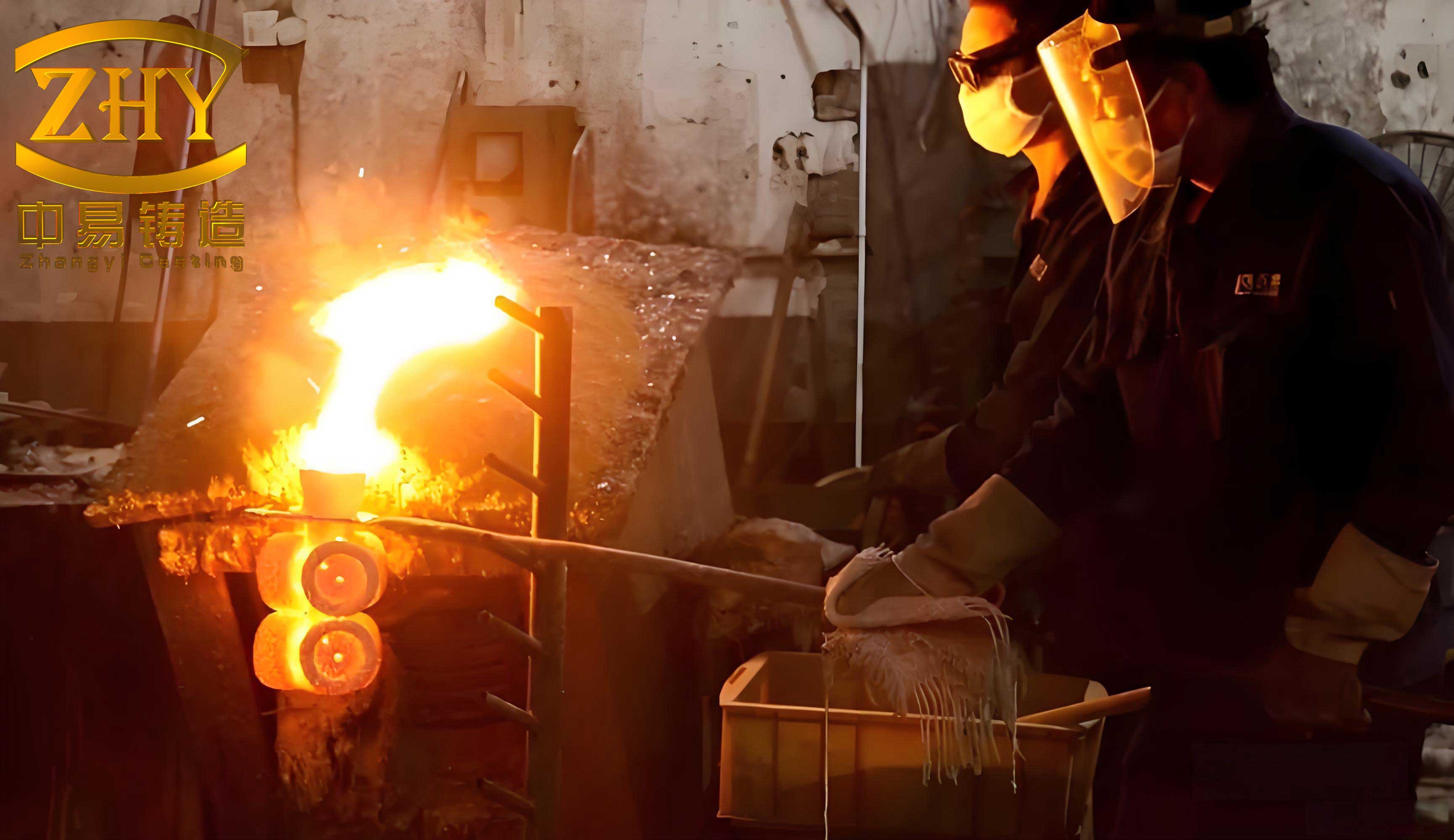
The fundamental sequence of the investment casting process begins with the creation of a precise disposable pattern, typically made from wax or a similar polymer. This pattern is an exact replica of the desired final part, including necessary allowances for subsequent shrinkage. Multiple such patterns are assembled onto a central gating system to form a pattern cluster or “tree.” This cluster is then repeatedly dipped into ceramic slurries and stuccoed with refractory sands to build a robust, multi-layered ceramic shell. Once the shell is sufficiently thick and cured, the internal wax pattern is removed via steam autoclave or flash dewaxing, leaving a precise ceramic mold cavity. This mold is then fired at high temperature to burn out any residual pattern material and to develop the final strength. Molten metal is poured into the preheated mold, and after solidification, the ceramic shell is broken away to reveal the metal casting. The criticality of each step cannot be overstated; deviations in pattern dimensions, shell properties, or thermal parameters propagate through the entire investment casting process, culminating in dimensional errors in the final component.
In our production facility, we encountered a persistent quality issue with a specific aluminum alloy (ZL101) flange plate casting. The component featured several critical diameters and a complex profile with spherical bosses. The specified dimensional requirements, particularly at two locations—Location A with a theoretical diameter of $$ \phi70 \pm 0.55 \text{ mm}$$ and Location B, an implied diameter derived from other features of $$ \phi96 \pm 0.55 \text{ mm}$$—were consistently being breached in a specific production batch. Measurements indicated actual values of $$ \phi70.8 \text{ to } \phi71.0 \text{ mm}$$ for Location A and $$ \phi97.8 \text{ to } \phi98.0 \text{ mm}$$ for Location B, representing a significant positive deviation beyond the acceptable tolerance band. This systematic oversizing threatened the component’s functionality and assembly fit. Given the sequential nature of the investment casting process, pinpointing the root cause required a structured approach to isolate the problematic stage among many interconnected variables.
Our first systematic tool was Fault Tree Analysis (FTA), a top-down, deductive failure analysis method. We defined the “top event” as “Flange Plate Casting Dimensions Exceed Tolerance.” From this, we branched out to intermediate events and basic causes. The primary branches considered were: “Wax Pattern Dimension Non-conformance,” “Ceramic Shell Dimensional Instability,” and “Metal Pouring & Solidification Issues.” Each of these was further decomposed. For instance, “Wax Pattern Dimension Non-conformance” could stem from “Incorrect Wax Material Properties,” “Faulty Pattern Die,” or “Improper Injection Parameters.” “Ceramic Shell Dimensional Instability” included nodes like “Change in Shell Material/Recipe” and “Shell Cracking or Distortion during Dewaxing.” The “Metal Pouring & Solidification” branch covered “Change in Alloy Composition,” “Incorrect Pouring Temperature,” and “Excessive Gate Removal (Grinding).” A logical AND/OR gate analysis of the fault tree, based on process records and initial inspections, systematically eliminated several potential causes. The shell build parameters—including slurry types, sand gradations (e.g., 80-100 mesh zircon for face coat, 30-50 mesh sand for backup coats), drying times, and environmental controls (temperature ~23-27°C, humidity ~40-60%)—were verified to be identical to previous successful batches. No incidents of shell cracking were reported during steam dewaxing. The alloy chemistry confirmed to ZL101 specifications, and the pouring temperature of 702°C was within the prescribed 695-705°C range. Furthermore, the gating was designed away from the problematic dimensions, ruling out gate removal errors. The analysis converged, pointing squarely at “Wax Pattern Dimension Non-conformance” as the most probable root cause within the investment casting process workflow.
To delve deeper into the causes of wax pattern non-conformance, we employed a Fishbone Diagram (Cause-and-Effect Diagram), categorizing potential influences under the classic headings of Man, Machine, Material, Method, Measurement, and Environment. This holistic brainstorming exercise yielded a list of “end factors,” which we then verified through investigation and data collection. The table below summarizes these end factors and our findings:
| Category | End Factor | Verification Method | Findings | Root Cause? |
|---|---|---|---|---|
| Man | Non-adherence to procedure | Review of work instructions & logs | Operators followed established protocols. | No |
| Incorrect measurement by inspector | Calibration check of gauges | All vernier calipers were within calibration validity. | No | |
| Machine | Faulty or worn pattern die | Die inspection and history review | Die was confirmed to drawing, no recent repair or wear. | No |
| Malfunctioning wax injection press | Equipment certification check | Press had valid calibration certificates. | No | |
| Material | Change in pattern wax material | Batch material records review | Previous batches used medium-temp wax; fault batch used low-temp wax. | Yes |
| Sub-standard wax quality | Review of material certificates | Certificates of conformity were available for both wax types. | No | |
| Method | Incorrect wax injection parameters | Comparison with process instructions | Parameters (pressure, temperature, time) were as per standard. | No |
| Lack of standard operating procedure | Documentation review | A detailed pattern-making SOP was in place. | No | |
| Ambiguity in manufacturing instruction | Instruction sheet review | The instruction for the ϕ96 mm dimension only specified a minimum, not a full tolerance range. | Yes | |
| Environment | Unsuitable ambient temperature | Environmental monitoring data | Pattern room temperature was stable at 22°C, as required. | No |
The Fishbone analysis conclusively identified two intertwined root causes: (1) a change in the pattern wax material from a medium-temperature formulation to a low-temperature one, and (2) an ambiguity in the manufacturing instruction that failed to provide a bilateral tolerance for a critical dimension, potentially allowing out-of-spec patterns to proceed. The material change was initially implemented to address issues like surface sink marks and flow lines on thick sections, and pattern warpage, which were more prevalent with the higher-viscosity medium-temperature wax. However, the impact of this change on the fundamental pattern dimensions within the investment casting process was not fully characterized beforehand.
To definitively isolate and quantify the effect of the wax material change, a controlled experiment was designed and executed. We produced a batch of eight flange plate wax patterns using the same metal pattern die. Five of these patterns were injected with the traditional medium-temperature wax (a resin-wax based compound), while the remaining three were injected with the new low-temperature wax (a 50/50 blend of fully refined paraffin wax and stearic acid). All other parameters—injection machine settings, operator, ambient conditions, and handling—were kept constant, isolating the wax material as the sole variable. After stabilization, critical dimensions of each wax pattern were meticulously measured. The data from this experiment is presented below.
| Theoretical Dimension (Dt) | Medium-Temperature Wax Patterns | Low-Temperature Wax Patterns | ||||||
|---|---|---|---|---|---|---|---|---|
| P1 | P2 | P3 | P4 | P5 | P6 | P7 | P8 | |
| ϕ154.0 (Major OD) | 155.8 | 155.8 | 155.7 | 155.7 | 155.7 | 156.5 | 156.5 | 156.5 |
| 9.0 (Wall Thickness) | 9.1 | 9.1 | 9.1 | 9.1 | 9.1 | 9.2 | 9.3 | 9.2 |
| ϕ70.0 (Location A) | 70.9 | 70.8 | 70.8 | 70.8 | 70.7 | 72.1 | 72.0 | 72.0 |
| ϕ96.0* (Location B) | 97.7 | 97.7 | 97.6 | 97.6 | 97.6 | 99.1 | 99.0 | 99.0 |
*Dimension derived from component geometry.
The data clearly indicates a systematic shift. To analyze this quantitatively, we define a dimensional scaling or expansion factor (k) for the wax pattern relative to the theoretical cavity size of the die. This factor accounts for the effective “shrinkage” allowance built into the die and the inherent contraction/expansion of the wax itself upon cooling and solidification. It can be expressed as:
$$ k = \frac{D_m}{D_t} $$
where \( D_m \) is the measured wax pattern dimension and \( D_t \) is the theoretical (final desired casting) dimension. A value of \( k > 1 \) indicates the wax pattern is larger than the theoretical part, which is typical as the die is engineered to compensate for subsequent contractions in the investment casting process (shell ceramic setting, metal shrinkage). The average scaling factor for each wax type across key dimensions is calculated and compared in the table below.
| Theoretical Dimension (mm) | Die Cavity Size (mm) (Estimated) | Avg. k (Medium-Temp Wax) | Avg. k (Low-Temp Wax) | Absolute Difference in k |
|---|---|---|---|---|
| ϕ70.0 | ϕ72.4 | 1.0114 | 1.0286 | 0.0172 |
| ϕ96.0 | ϕ99.8 | 1.0167 | 1.0313 | 0.0146 |
| ϕ154.0 | ϕ158.0 | 1.0113 | 1.0162 | 0.0049 |
| 9.0 (Wall) | 9.3 | 1.0111 | 1.0256 | 0.0145 |
The scaling factor \( k \) is essentially the inverse of the linear shrinkage traditionally considered in pattern making. If we define linear pattern shrinkage (\( S_p \)) as the contraction of the wax pattern relative to the die cavity, a relationship can be established: \( D_m = D_{die} \times (1 – S_p) \), and since \( D_{die} = D_t \times k_{die} \), where \( k_{die} \) is the die’s expansion factor, we have:
$$ D_m = D_t \times k_{die} \times (1 – S_p) $$
Therefore, the observed overall scaling factor from theoretical to wax pattern is \( k = k_{die} \times (1 – S_p) \). The experiment reveals that for the low-temperature wax, \( k \) is consistently higher across all features compared to the medium-temperature wax. This signifies that either the effective contraction \( S_p \) of the low-temperature wax is smaller, or its interaction with the die leads to less volumetric reduction. The absolute difference in \( k \) of approximately 0.015 to 0.017 for the critical diameters (ϕ70 and ϕ96 mm) directly translates to the observed dimensional overshoot. For a ϕ96 mm dimension, a \(\Delta k\) of 0.015 leads to an extra size increase of $$ \Delta D = D_t \times \Delta k = 96 \text{ mm} \times 0.015 = 1.44 \text{ mm} $$, which aligns with the approximate 1.8-2.0 mm total deviation found in the faulty castings when combined with other minor process variations.
This finding has profound implications for the investment casting process. The pattern is the first and most critical replica in the chain. Any deviation here is magnified through subsequent steps. The ceramic shell forms around the pattern, and its internal cavity dimension is directly determined by the pattern’s external dimension. Assuming the shell exhibits minimal dimensional change during firing (a controlled process), the molten metal then fills this cavity. The final casting shrinkage, characteristic of the metal alloy (e.g., ZL101 aluminum has a typical linear solidification shrinkage of ~1.3%), is the last contraction. The net final dimension can be modeled as:
$$ D_{casting} = D_{pattern} \times (1 – S_{shell}) \times (1 – S_{metal}) $$
Where \( S_{shell} \) and \( S_{metal} \) are the linear shrinkage factors of the shell (usually very small and negative, i.e., expansion, if fired properly) and metal, respectively. For simplicity, if we assume shell dimensional change is negligible, the equation simplifies to \( D_{casting} \approx D_{pattern} \times (1 – S_{metal}) \). Therefore, a larger initial wax pattern (\( D_{pattern} \)) directly results in a larger final casting. Our experiment conclusively proves that the low-temperature wax produces a larger pattern than the medium-temperature wax when using the same die. Hence, without adjusting the die dimensions or the process allowances, switching the wax material inevitably leads to castings that exceed the upper dimensional tolerance—a flaw that propagates linearly through the entire investment casting process.
Furthermore, the secondary root cause—the ambiguous instruction—exacerbated the problem. By not specifying a full tolerance band for the wax pattern inspection at the ϕ96 mm derived dimension, quality control might have passed patterns that were already at the edge of or beyond the allowable limit for the final casting, especially with the new wax. This highlights the need for comprehensive process validation and control plan updates whenever a key material in the investment casting process is changed.
In conclusion, this investigation underscores the exquisite sensitivity of the investment casting process to material properties at every stage. Through the structured application of Fault Tree Analysis and Fishbone Diagram analysis, we successfully traced a critical dimensional deviation to its root: an uncharacterized change in pattern wax material. The controlled experiment provided irrefutable quantitative evidence that low-temperature wax exhibits a significantly different effective scaling factor (lower inherent shrinkage) compared to medium-temperature wax when processed under identical conditions. This difference, quantified via the scaling factor \( k \), was sufficient to cause the flange plate castings to exceed their specified tolerances. The corrective actions are clear: first, for the existing die, the injection parameters for the low-temperature wax must be optimized, potentially including lower injection temperatures or pressures, to achieve a pattern size closer to the target. Ultimately, a full process validation is required. If the low-temperature wax is to be adopted permanently for its surface finish benefits, the die itself may need to be re-manufactured with a modified shrinkage allowance factor, \( k_{die,new} \), calculated to compensate for the wax’s specific behavior. The formula governing this modification would be:
$$ k_{die,new} = \frac{k_{target}}{(1 – S_{p,low-wax})} $$
where \( k_{target} \) is the desired overall scaling from theoretical to final casting, incorporating metal shrinkage. Secondly, all manufacturing instructions must be reviewed to ensure clear, bilateral tolerance limits are specified for in-process inspections at every critical stage of the investment casting process. This case study serves as a potent reminder that in precision investment casting, every material and parameter is a link in a chain of dimensional transformation, and each must be meticulously characterized and controlled to ensure the integrity of the final product.