
In recent years, the investment casting process has faced increasing challenges due to stringent environmental regulations and the need for higher production efficiency. As a key component of the investment casting process, the shell building stage is critical for achieving dimensional accuracy and surface quality in cast components. The traditional methods, such as those using water glass binders, often involve harmful chlorides and require prolonged drying times, posing sustainability risks. To address these issues, the national standard for rapid shell building with colloidal silica binder was developed, aiming to standardize practices and promote green manufacturing. In this article, I will provide a comprehensive interpretation of this standard, focusing on its implications for the investment casting process, including material requirements, technical specifications, and testing methods. I will incorporate tables and formulas to summarize key points, ensuring a detailed overview that enhances understanding and implementation in the industry.
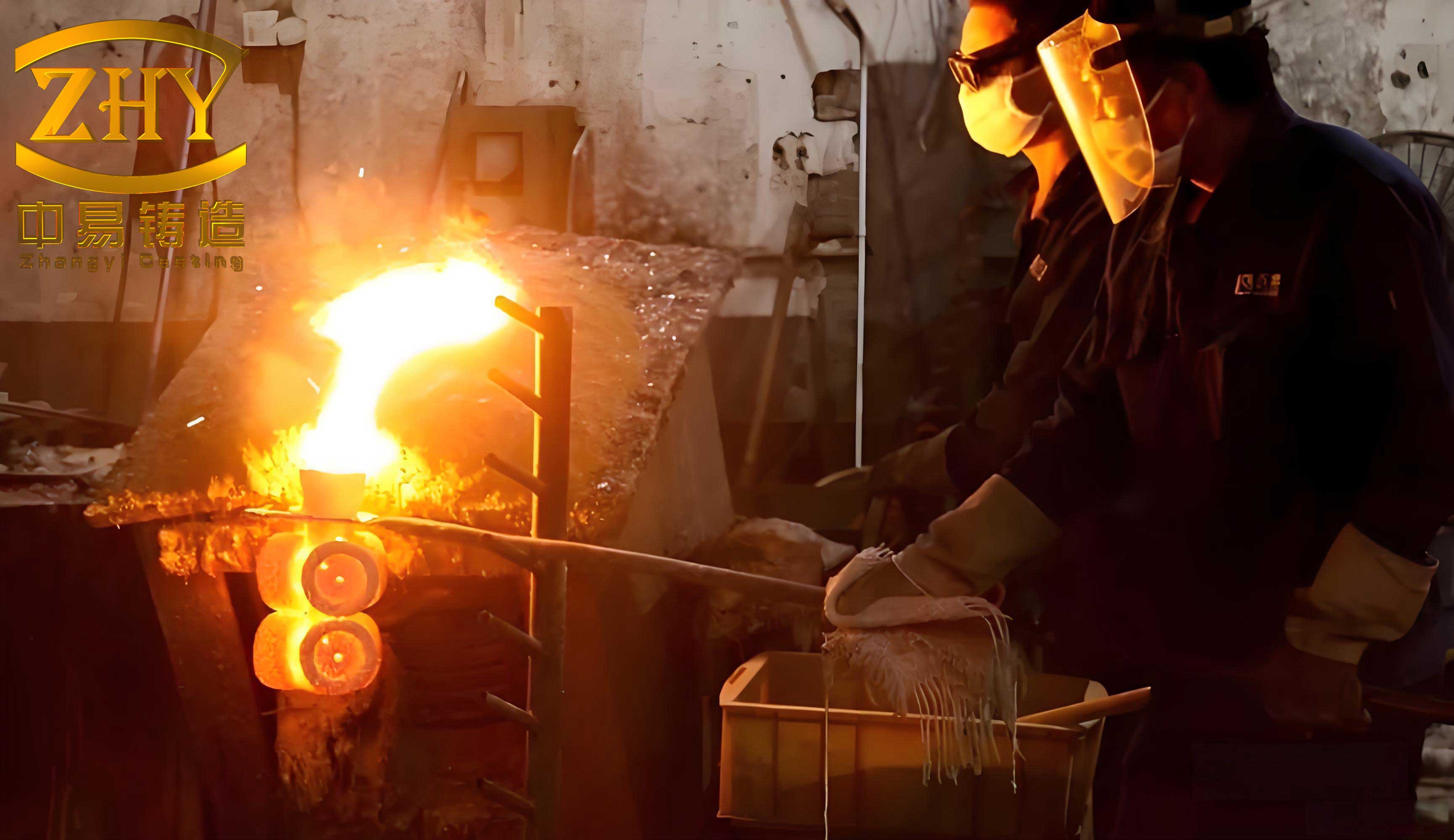
The investment casting process relies heavily on the shell building step, where a ceramic shell is formed around a wax pattern to create a mold for metal casting. With the push towards carbon neutrality and reduced environmental impact, the standard emphasizes the use of colloidal silica binders modified for rapid drying. This approach not only cuts down production cycles but also minimizes emissions of acidic compounds during hardening. Historically, the investment casting process has been limited by slow drying times, often exceeding 50 hours for multi-layer shells. By adopting rapid shell building techniques, the drying time can be reduced by more than half, significantly boosting productivity in the investment casting process. The standard, first implemented in 2022, provides a framework for material selection, process control, and quality assurance, ensuring consistency across different manufacturing settings. It is particularly relevant for general industrial applications, such as automotive and mechanical parts, where dimensional tolerances are less stringent than in aerospace. However, the principles can be adapted for high-precision requirements, making it a versatile tool in the investment casting process.
The scope of the standard covers various aspects of the investment casting process, from raw materials to final shell validation. It references existing standards for refractory materials, waxes, and colloidal silica, while also incorporating environmental guidelines to align with sustainability goals. A key focus is on terminology, where terms like “rapid shell building” are defined quantitatively. For instance, rapid shell building is characterized by a reduction in drying time by at least 50% compared to conventional methods. This is crucial for optimizing the investment casting process, as faster drying reduces energy consumption and workshop footprint. To illustrate, the drying times for different shell layers in the rapid investment casting process are summarized in Table 1 below.
| Layer | Drying Time Reduction Compared to Conventional | Absolute Drying Time (hours) |
|---|---|---|
| Face Layer | ≤ 50% | 3–5 |
| Transition Layer | ≤ 50% | 4–6 |
| Reinforcement Layer | ≤ 40% | 2–6 |
| Sealing Layer | ≤ 40% | 1–6 |
This table highlights the efficiency gains in the investment casting process, where each layer’s drying is accelerated through modified binders and controlled environments. The standard also defines other terms, such as “fast-drying silica sol,” which is a colloidal silica binder pre-mixed with additives to expedite drying. Understanding these terms is essential for proper implementation in the investment casting process, as they influence material handling and process parameters.
Raw materials play a pivotal role in the investment casting process, and the standard specifies requirements for wax patterns, binders, and refractories. For wax materials, whether filled or unfilled, properties like softening point and linear shrinkage must meet process needs to ensure pattern integrity during shell building. The binder, typically colloidal silica, must have controlled SiO₂ content and particle size. However, a critical aspect emphasized in the standard is the quality of refractory powders, which can adversely affect the investment casting process if contaminated. Powders with high levels of alkaline ions, such as sodium or potassium, can disrupt the colloidal stability of silica sol, leading to premature gelling. This is quantified through pH and electrolyte conductivity measurements, as shown in Table 2.
| Parameter | Acceptable Range |
|---|---|
| pH Value | 6.0–9.5 |
| Electrolyte Conductivity (µS/cm) | ≤ 200 |
In the investment casting process, maintaining these ranges is vital for consistent coating performance. The conductivity can be modeled using the formula for ionic concentration: $$ C = \kappa / \Lambda $$ where \( C \) is the concentration of ions, \( \kappa \) is the measured conductivity, and \( \Lambda \) is the molar conductivity. High conductivity, above 200 µS/cm, correlates with increased viscosity and gelling risk, which can be expressed as: $$ \eta = \eta_0 e^{\alpha \kappa} $$ Here, \( \eta \) is the coating viscosity, \( \eta_0 \) is the baseline viscosity, and \( \alpha \) is a constant dependent on the refractory material. This relationship underscores the importance of material purity in the investment casting process. Refractory materials, such as zircon sand or mullite, are specified by particle size distributions to ensure proper coating adhesion and shell strength. Table 3 provides common specifications used in the investment casting process.
| Material Type | Layer | Particle Size (mesh or mm) |
|---|---|---|
| Powder | Face, Transition, Reinforcement | 200–400 mesh (0.038–0.075 mm) |
| Face, Transition, Reinforcement | 270–325 mesh (0.045–0.053 mm) | |
| Face, Transition, Reinforcement | Custom based on material | |
| Sand | Face Layer | 40–120 mesh (0.125–0.425 mm) |
| Transition Layer | 30–80 mesh (0.180–0.600 mm) | |
| Reinforcement Layer | 8–30 mesh (0.600–2.360 mm) |
These specifications help standardize the investment casting process across different suppliers, ensuring compatibility with rapid-drying binders. The use of calcined refractory powders is recommended to minimize soluble ions, thereby enhancing the stability of the investment casting process.
Fast-drying agents are integral to modifying colloidal silica for rapid shell building in the investment casting process. These agents, such as polyacrylamides or polyvinyl alcohol, work by altering the water evaporation dynamics or increasing the binder’s film-forming ability. The standard outlines methods for incorporating these agents into the binder. For example, some require pre-dissolution in deionized water, while others are blended directly with refractory powders. The addition process must be carefully controlled to avoid destabilizing the silica sol, which could lead to coating failure in the investment casting process. The amount of fast-drying agent added can be optimized using a formula based on the desired drying time reduction: $$ \Delta t = k \cdot A $$ where \( \Delta t \) is the reduction in drying time, \( A \) is the concentration of fast-drying agent, and \( k \) is a constant dependent on environmental conditions. This optimization is crucial for balancing speed and quality in the investment casting process.
Coating preparation is a detailed step in the investment casting process, and the standard specifies mixing protocols to ensure homogeneity. The powder-to-liquid ratio, often denoted as \( R = \frac{m_{\text{powder}}}{V_{\text{binder}}} \), must be consistent across batches. Mixing times vary based on the layer and material type, as summarized in Table 4.
| Layer | Mixing Time for Zircon Powder (hours) | Mixing Time for Mullite Powder (hours) | Key Monitoring Parameters |
|---|---|---|---|
| Face Layer | ≥ 24 (new), ≥ 12 (replenished) | ≥ 20 (new), ≥ 10 (replenished) | Viscosity, coating thickness, density |
| Transition Layer | ≥ 16 (new), ≥ 8 (replenished) | ≥ 10 (new), ≥ 5 (replenished) | Viscosity, density |
| Reinforcement Layer | ≥ 12 (new), ≥ 6 (replenished) | ≥ 10 (new), ≥ 5 (replenished) | Viscosity, density |
In the investment casting process, viscosity is measured using flow cups, with acceptable variations within ±2 seconds. The coating density \( \rho \) can be calculated as: $$ \rho = \frac{m_{\text{coating}}}{V_{\text{coating}}} $$ where \( m_{\text{coating}} \) is the mass of the coating sample and \( V_{\text{coating}} \) is its volume. Maintaining these parameters ensures proper slurry behavior during shell building in the investment casting process. Additionally, coatings have a limited shelf life, typically 7 days, after which gelation tests are required. The gelation index \( G \) is defined as: $$ G = \frac{\eta_{\text{aged}} – \eta_{\text{fresh}}}{\eta_{\text{fresh}}} \times 100\% $$ If \( G \) exceeds 20%, the coating should be discarded to prevent defects in the investment casting process.
The shell building operation in the investment casting process involves sequential dipping, stuccoing, and drying steps. With rapid-drying binders, environmental controls are adjusted to maximize efficiency. The standard recommends specific temperature, humidity, and airflow conditions, as shown in Table 5.
| Layer | Temperature (°C) | Relative Humidity (%) | Air Velocity (m/s) |
|---|---|---|---|
| Face Layer | 25 ± 3 | 50–75 | 1.6–3.3 |
| Transition Layer | 25 ± 3 | 45–65 | 3.4–5.4 |
| Reinforcement Layer | 27 ± 5 | ≤ 60 | 5.5–7.9 |
| Sealing Layer | 27 ± 5 | ≤ 60 | 5.5–7.9 |
These parameters accelerate moisture evaporation without causing cracks, a common issue in the investment casting process. The drying time \( t_d \) for each layer can be estimated using a diffusion model: $$ t_d = \frac{\delta^2}{\pi^2 D} \ln \left( \frac{M_0 – M_e}{M_t – M_e} \right) $$ where \( \delta \) is the coating thickness, \( D \) is the effective diffusivity of water, \( M_0 \) is the initial moisture content, \( M_t \) is the moisture content at time \( t \), and \( M_e \) is the equilibrium moisture content. By optimizing these variables, the investment casting process achieves faster cycle times. Air velocity is measured near the pattern cluster, and infrared thermography can be used to monitor drying uniformity, ensuring quality in the investment casting process.
Quality control is essential in the investment casting process, and the standard includes appendices detailing test methods. For refractory powders, pH and conductivity are measured using standardized electrodes. Coating properties are assessed via viscosity cups, density bottles, and coating thickness gauges. The shell strength, a critical factor in the investment casting process, is evaluated through flexural tests. The flexural strength \( \sigma_f \) is calculated as: $$ \sigma_f = \frac{3F L}{2b h^2} $$ where \( F \) is the applied force, \( L \) is the span length, \( b \) is the sample width, and \( h \) is the sample thickness. This formula helps validate the shell’s ability to withstand handling and casting stresses in the investment casting process. Additionally, gelation tests involve monitoring viscosity changes over time to predict coating stability.
Environmental compliance is a key driver for adopting rapid shell building in the investment casting process. The standard references pollution control standards, ensuring that emissions during shell making, dewaxing, and firing are minimized. This aligns with global trends towards greener foundry practices in the investment casting process. By reducing drying times, energy consumption is lowered, contributing to carbon footprint reduction. Moreover, the elimination of chloride-based hardeners reduces acid emissions, making the investment casting process more sustainable. The standard encourages continuous improvement, with feedback mechanisms for updating technical parameters as new materials and technologies emerge.
In practice, implementing this standard in the investment casting process requires training and adaptation. For instance, small to medium-sized enterprises may need guidance on configuring mixing equipment or monitoring environmental controls. The use of fast-drying silica sols can simplify operations, but quality checks remain vital. Case studies from various applications, such as automotive component casting, demonstrate that the rapid investment casting process can reduce lead times by up to 40% while maintaining defect rates below 2%. This efficiency gain is quantified by the overall equipment effectiveness (OEE) metric: $$ \text{OEE} = \text{Avaliability} \times \text{Performance} \times \text{Quality} $$ where each factor improves with faster shell building in the investment casting process.
Looking ahead, advancements in the investment casting process may include nanotechnology-enhanced binders or automated monitoring systems. The standard provides a foundation for such innovations by establishing baseline requirements. Research into dynamic drying models could further optimize parameters, using equations like the Crank-Nicolson method for moisture transport simulations. Collaboration between industry and academia will drive evolution in the investment casting process, ensuring it remains competitive against alternative manufacturing methods.
In conclusion, the national standard for rapid shell building with colloidal silica binder represents a significant step forward for the investment casting process. By standardizing materials, processes, and tests, it enhances efficiency, consistency, and environmental performance. The investment casting process benefits from reduced drying times, improved material utilization, and lower emissions, aligning with circular economy principles. As the industry adopts this standard, continuous feedback and revision will ensure its relevance. Ultimately, the investment casting process is poised to become more agile and sustainable, meeting the demands of modern manufacturing while upholding quality and precision.