
In the contemporary landscape of industrial manufacturing, the pursuit of green development is not merely an environmental imperative but a cornerstone of sustainable economic growth. This is particularly true for regional industrial clusters specializing in precision manufacturing techniques, such as the investment casting process. My investigation focuses on the critical environmental challenge within this sector: the emission of Volatile Organic Compounds (VOCs). Through a detailed examination of operations analogous to those found in specialized regional hubs, this analysis aims to elucidate the nexus between raw material usage, VOC generation, and the efficacy of prevailing control measures. The investment casting process, while yielding high-precision components, involves stages inherently prone to organic emissions, making their effective management a pivotal factor for the industry’s ecological modernization and long-term viability.
The core of this analysis rests on a multi-methodological approach. I employed an analogical survey method to understand standard practices, coupled with a rigorous data analysis technique on operational datasets from representative facilities. This combined approach allows for a robust determination of VOC source strength—the quantifiable rate of pollutant generation—which is fundamental for designing effective abatement strategies. The subsequent sections will dissect the process, quantify emissions, evaluate control technologies, and discuss broader implications for sustainable practice within the investment casting industry.
The Investment Casting Process: A Stage-by-Stage Breakdown
The investment casting process, also known as the lost-wax process, is a sophisticated manufacturing method renowned for its ability to produce complex, near-net-shape metal parts with excellent surface finish and dimensional accuracy. The process is sequential, with several key stages directly implicated in the release of volatile organic compounds. A thorough understanding of this workflow is essential for pinpointing emission sources.
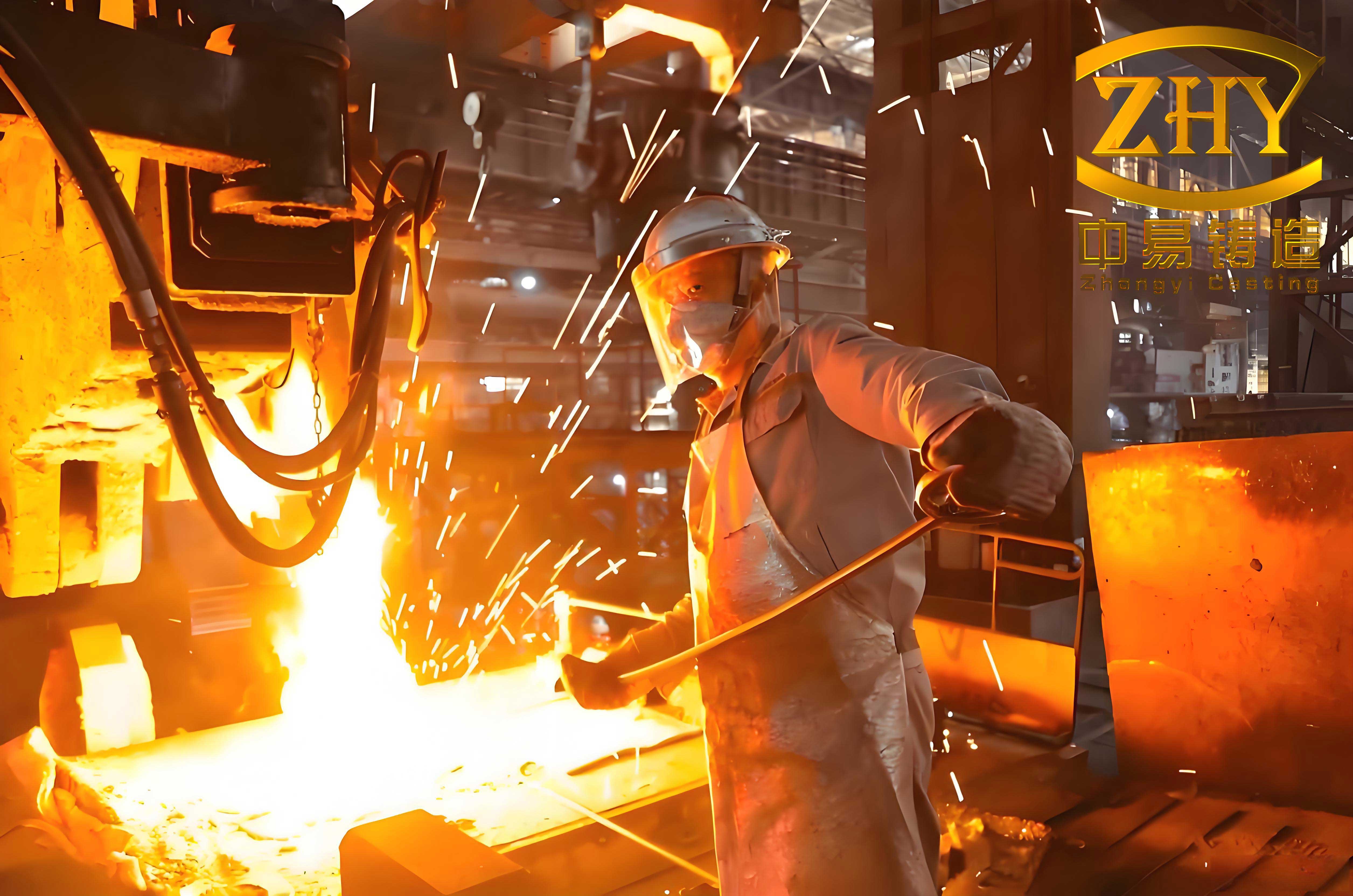
The primary VOC-bearing material in this operation is the pattern wax. Typically, a high-quality liquid or solid wax blend is used, characterized by a specific carbon chain length distribution to balance properties like malleability, melting point, and ash content. A representative chemical profile of a common pattern wax is summarized below:
| Property | Specification / Composition |
|---|---|
| Chemical Designation | Hydrocarbon Mixture (C18 – C30) |
| Major Components | Linear Alkanes (80% – 95%) |
| Minor Components | Branched Alkanes & Monocyclic Cycloalkanes (<20% combined) |
| Melting Point Range | 47°C – 64°C |
| Density | Approx. 1.44 g/cm³ |
| Key Characteristics | Chemical stability, moderate oil content, good plasticity |
The VOC emission points are integrated into the following key stages of the investment casting process:
- Pattern Injection (Wax Injection): The prepared wax is melted and injected under pressure into precise metal dies to form the replicas of the desired part, known as wax patterns. This hot-forming operation causes the initial release of volatile fractions from the wax blend.
- Pattern Assembly (Tree Assembly): Individual wax patterns are manually or robotically attached to a central wax sprue to form a cluster or “tree.” This assembly allows for the casting of multiple parts simultaneously. Minor emissions can occur from handling and the use of heated tools for joining.
- Shell Building (Investment): The pattern tree undergoes a series of dips in refractory slurry (e.g., a silica-based binder) and subsequent stuccoing with coarse ceramic grains. While the primary binders may be aqueous, solvent-based systems or the drying process can contribute to VOC emissions. This stage is critical in forming a robust ceramic mold around the wax assembly.
- Dewaxing (Autoclave or Flash De-wax): This is a primary high-intensity emission stage. The invested shell is subjected to rapid heating, typically using high-pressure steam in an autoclave or via flash firing. The wax melts and runs out of the shell, leaving a negative cavity. A significant portion of the VOC load is released here as the wax volatilizes and flows from the mold.
- Mold Firing (Calcination/Baking): The empty ceramic shell is fired at high temperatures (often exceeding 800°C) in an electric or gas-fired furnace to burn out any residual wax, strengthen the ceramic, and prepare it for metal pouring. Any remaining organic material from the wax or binders is oxidized and released, constituting a secondary but significant emission point.
The culmination of the investment casting process is the pouring of molten metal into the prepared cavity, followed by cooling, shell removal, and finishing of the cast parts. However, the metal pouring and subsequent steps are generally not direct contributors to VOC emissions.
Quantifying VOC Generation: Source Strength Determination
Effective pollution control mandates a precise understanding of the emission source strength. In the context of the investment casting process, this translates to establishing a relationship between the mass of consumable wax used and the mass of VOCs generated, typically measured as Non-Methane Total Hydrocarbons (NMHC). My analysis, based on aggregated data from production records, environmental impact assessments, and stack test reports from multiple facilities, reveals a consistent correlation.
The data from three representative operations, each consuming 30 metric tons of pattern wax, shows a remarkably stable output of VOC emissions. The results are tabulated below:
| Liquid Wax Consumption (t) | NMHC Emission (t) | Emission Factor (t NMHC / t Wax) |
|---|---|---|
| 30 | 2.16 | 0.072 |
| 30 | 2.28 | 0.076 |
| 30 | 2.20 | 0.073 |
Applying the sample mean method to this dataset yields a robust, generalized emission factor for the investment casting process:
$$ EF_{NMHC} = \frac{\sum_{i=1}^{n} (Emission\ Factor_i)}{n} = \frac{0.072 + 0.076 + 0.073}{3} $$
$$ EF_{NMHC} = 0.0737 \approx 0.074\ \text{t NMHC per t of pattern wax consumed} $$
This coefficient, $EF_{NMHC} = 0.074$, serves as a fundamental engineering parameter. It allows for the prediction of VOC load based on production planning and wax inventory. For instance, the annual VOC generation potential $G_{annual}$ for a foundry can be estimated as:
$$ G_{annual} = M_{wax} \times EF_{NMHC} $$
where $M_{wax}$ is the annual wax usage in tons.
Furthermore, a theoretical mass balance model can be conceptualized. Assuming the wax is a mixture of volatile ($f_v$) and non-volatile ($f_{nv}$) fractions, and that a certain capture efficiency ($\eta_{capture}$) is achieved at the source, the emitted mass $E$ can be described by:
$$ E = M_{wax} \times f_v \times (1 – \eta_{capture}) $$
The empirically derived $EF_{NMHC}$ of 0.074 essentially represents the product $f_v \times (1 – \eta_{capture})$ for the surveyed operations under their specific conditions, indicating that approximately 7.4% of the wax mass is volatilized and emitted as NMHC.
VOC Control Technologies: From Conventional to Advanced
Mitigating VOC emissions from the investment casting process requires a systems approach, encompassing containment, capture, and treatment. The prevalent and relatively simple control strategy observed involves capture through localized exhaust hoods followed by adsorption onto activated carbon, with final discharge through a regulated stack.
A typical schematic for this conventional approach is as follows:
Emission Points (Dewaxing, Baking) → Capture Hoods & Ducting → Cyclonic Cooler / Heat Exchanger → Particulate Filter (e.g., Baghouse) → Activated Carbon Adsorption Bed → Induced Draft Fan → 15m Exhaust Stack.
While activated carbon adsorption is a proven technology for dilute streams and can achieve compliance with common emission limits, it is a transfer method, not a destruction method. It generates spent carbon as a secondary waste, requiring costly regeneration or disposal. Therefore, evaluating the spectrum of available technologies is crucial for advancing green production. The table below compares key VOC control technologies applicable to the investment casting process:
| Technology | Principle | Pros for Investment Casting | Cons for Investment Casting | Suitability |
|---|---|---|---|---|
| Activated Carbon Adsorption | Physical adsorption of VOCs onto porous carbon surface. | Low capital cost, effective for low-concentration streams, simple operation. | Generates hazardous waste (spent carbon), high operating cost for replacement/regeneration, efficiency drops with humidity. | Small to medium-scale operations with intermittent flow. |
| Thermal Oxidizer (TO / RTO) | High-temperature combustion (760°C+) oxidizing VOCs to CO₂ and H₂O. | High destruction efficiency (>99%), handles varying load, Regenerative TO (RTO) offers high heat recovery (>95%). | High capital and fuel cost, best for continuous, high-concentration streams. May need pre-concentration for dilute streams. | Large, continuous production facilities. |
| Catalytic Oxidizer (CO) | Catalyst-aided oxidation at lower temperatures (300°C-450°C). | Lower fuel requirement than TO, high destruction efficiency. | Catalyst prone to poisoning (e.g., by silicone from shell binders), high catalyst replacement cost. | Streams with consistent composition, free of catalyst poisons. |
| Adsorption Concentration + Oxidation | VOCs adsorbed on rotor/concentrator, then desorbed into small, rich airstream for oxidation. | Dramatically reduces flow to oxidizer, making TO/CO economical for dilute streams, high overall efficiency. | Higher system complexity and capital cost than simple adsorption. | Ideal for large facilities with high air volume, low concentration emissions typical of investment casting. |
| Biofiltration | Microorganisms in a moist media break down VOCs. | Very low operating cost, environmentally benign, no secondary waste. | Requires large footprint, sensitive to operating conditions (pH, temp, load shocks), slower response, limited to biodegradable, water-soluble VOCs. | Low-concentration, steady-state emissions of alkanes in suitable climates. |
The selection of the optimal technology is an economic and technical optimization problem. A simplified total annual cost ($TAC$) model can be expressed as:
$$ TAC = C_{cap} \cdot CRF + C_{op} $$
where $C_{cap}$ is the capital cost, $CRF$ is the capital recovery factor (a function of interest rate and equipment life), and $C_{op}$ is the annual operating cost (energy, consumables, maintenance, disposal). For an adsorption system, $C_{op}$ is dominated by carbon replacement. For an RTO, it is dominated by auxiliary fuel cost, which depends on the VOC’s calorific value and the inlet concentration $C_{in}$. The fuel cost component can be approximated as being inversely proportional to $C_{in}$ when below the autothermal point (the concentration where the heat from combustion is sufficient to sustain the process):
$$ C_{fuel} \propto \frac{1}{C_{in}} \quad \text{(for } C_{in} < C_{autothermal} \text{)} $$
This relationship highlights why concentration technologies are often paired with oxidizers in the investment casting process, where $C_{in}$ from dispersed sources is typically low.
Towards a Greener Investment Casting Industry: Holistic Strategies
Beyond end-of-pipe treatment, a truly sustainable investment casting process demands a holistic view integrating pollution prevention, process optimization, and lifecycle thinking. The following strategies present avenues for significant environmental performance enhancement:
1. Source Reduction via Material Innovation:
The most effective strategy is to reduce VOC generation at the source. Research into alternative pattern materials is key. This includes:
- Water-Soluble or Low-VOC Waxes: Developing wax formulations with higher molecular weight fractions or polymers that reduce volatility during injection and dewaxing.
- Polymer Patterns (e.g., ABS, PS): Exploring patterns made from engineered thermoplastics for certain applications, though their removal (usually by thermal decomposition) must be carefully managed.
- Filler-Enhanced Waxes: Incorporating inert fillers to reduce the net volume of volatile hydrocarbon per pattern.
2. Process Optimization and Control:
Enhancing the efficiency of the core investment casting process steps can minimize waste and emissions.
- Optimized Dewaxing: Precise control of autoclave temperature, pressure, and cycle time can maximize wax recovery for reuse while minimizing thermal cracking and excessive volatilization. The recovered wax can be reprocessed and reused, directly reducing fresh wax consumption and its associated VOC footprint. The mass balance for a system with wax recovery becomes:
$$ M_{fresh\ wax} = M_{patterns} + M_{losses} – M_{recovered} $$
where minimizing $M_{losses}$ (which includes VOC emissions) is the goal.
- Advanced Shell Binders: Transitioning from ethyl silicate (which releases ethanol) or other solvent-based binders to fully colloidal silica or other aqueous-based binder systems eliminates a major VOC source from the shell-building stage.
- Efficient Mold Firing: Optimizing the furnace temperature profile and using recuperative heating can ensure complete combustion of residual organics while reducing natural gas consumption and associated NOx/CO₂ emissions.
3. Economic and Regulatory Drivers:
The adoption of advanced green technologies in the investment casting process is often driven by a combination of regulatory pressure, corporate sustainability goals, and long-term economics. Stricter emission limits make simple adsorption less viable due to disposal costs. Carbon pricing mechanisms increase the cost of direct fuel combustion. Conversely, incentives for energy recovery or waste reduction can improve the return on investment for technologies like RTOs or advanced material recycling systems. A comprehensive economic analysis must internalize these externalities.
Conclusion and Future Perspectives
This comprehensive analysis underscores that VOC emissions are an inherent and quantifiable byproduct of the conventional investment casting process, with a determined source strength coefficient of approximately 0.074 t of NMHC per tonne of pattern wax consumed. While traditional control methods like activated carbon adsorption can achieve regulatory compliance, they represent a transitional solution with limitations in sustainability due to secondary waste generation.
The path forward for a greener investment casting industry lies in a multi-pronged strategy:
- Precision in Planning: Utilizing the established emission factors for accurate environmental impact forecasting and control system sizing.
- Technology Transition: Moving towards destruction-based or recovery-based control technologies, such as concentrator-oxidizer systems, which offer superior long-term environmental and economic performance for larger facilities.
- Fundamental Innovation: Investing in research and development for low-VOC or alternative pattern materials and binder systems to tackle emissions at their source.
- System Integration: Viewing the foundry as an integrated system where waste heat from oxidizers is recovered, wax is efficiently recycled, and process parameters are digitally optimized for minimal resource intensity.
Future research should focus on dynamic, real-time emission monitoring to create more granular source models, the life-cycle assessment of alternative materials, and the development of cost-effective hybrid abatement systems tailored to the specific, often batch-wise, operation rhythm of investment casting foundries. By embracing these approaches, the investment casting process can solidify its position not only as a pillar of precision manufacturing but also as a leader in sustainable industrial practice.