
In my extensive career within the manufacturing sector, focusing particularly on high-performance materials for aerospace applications, I have consistently confronted two critical challenges: the prevention of cutting cracks in high-carbon steel plates and the repair of defects in aerospace castings. These issues, if left unaddressed, can compromise structural integrity, lead to significant material waste, and incur substantial costs. Through systematic experimentation and practical refinement, I have developed and implemented effective strategies that not only mitigate these problems but also enhance overall production efficiency. This article consolidates my firsthand experiences and technical insights, with a deliberate emphasis on aerospace castings, as their reliability is paramount in the aviation industry. The methodologies discussed herein revolve around a controlled thermal management technique for steel cutting and a specialized tungsten inert gas (TIG) welding process for aluminum alloy castings.
The initial challenge arose during the flame cutting of high-carbon tool steel plates, such as grades with carbon content typical of tool steels, with thicknesses around several millimeters. When cutting was performed in an open yard, irregular, penetrating cracks frequently developed perpendicular to the cut edge, ranging from a few to several tens of millimeters in length. These cracks were a direct consequence of the rapid, uneven heating and cooling cycles inherent in the oxy-fuel cutting process, which induced severe thermal stresses exceeding the material’s fracture toughness. The solution emerged in the form of a “water-cooled isothermal method,” a technique designed to control the temperature gradient in the heat-affected zone (HAZ) during cutting.
The setup for the water-cooled isothermal method is relatively straightforward but requires precise execution. As the cutting torch initiates a kerf approximately 50 to 100 mm in length, a water spray system is activated. This system features a nozzle with two symmetric orifices that direct water onto both sides of the cut, positioned about 20 mm behind the cutting torch and inclined at a 15° angle to the steel surface. The distance between the nozzle and the plate is maintained at around 200 mm. For manual cutting, an operator manually trails the torch with the spray nozzle; for automated cutting, the nozzle is rigidly mounted on the cutting machine. The core principle is to maintain a specific temperature range in the region immediately adjacent to the cut. For a steel like T10, the target surface temperature measured approximately 50 mm behind the water spray point should be maintained between 200°C and 250°C. For other high-carbon grades, a similar range of 150°C to 200°C is effective. This controlled cooling suppresses martensitic transformation and reduces thermal stress.
Quantifying this process is essential for reproducibility. The required water flow rate is adjusted based on plate thickness and cutting speed to achieve the target temperature. In the absence of precise instrumentation like surface pyrometers, an empirical method can be used: the area about 20 mm behind the cut should feel hot to the touch but allow one to mentally count a few seconds—indicating a temperature around 50°C to 70°C at that specific point, which correlates with the correct cooling rate upstream. The heat extraction can be modeled using fundamental heat transfer principles. The rate of heat removal by the water spray must balance the heat input from the cutting torch to maintain an isothermal condition in the critical zone. This can be approximated by:
$$ Q_{ ext{removed}} = \\dot{m}_w C_{p,w} (T_{out} – T_{in}) $$
where \( \\dot{m}_w \) is the mass flow rate of water, \( C_{p,w} \) is the specific heat capacity of water, and \( T_{in} \) and \( T_{out} \) are the inlet and outlet temperatures of the water spray, respectively. Simultaneously, the heat input from cutting is a function of the fuel gas energy and cutting speed. To prevent cracking, we aim for a condition where the cooling rate \( \\frac{dT}{dt} \) in the HAZ remains below a critical threshold \( R_c \), which for high-carbon steels is often related to avoiding the martensite start temperature \( M_s \). A simplified relationship for the temperature decay can be expressed as:
$$ T(x,t) = T_0 + (T_{cut} – T_0) \\exp\\left(-\\frac{x}{\\sqrt{\\alpha t}}\\right) – \\frac{q”}{k}\\sqrt{\\alpha t} \\, \\text{ierfc}\\left(\\frac{x}{2\\sqrt{\\alpha t}}\\right) $$
where \( T_{cut} \) is the cutting temperature, \( T_0 \) is the ambient temperature, \( \\alpha \) is the thermal diffusivity, \( k \) is thermal conductivity, \( q” \) is the heat flux from the water spray, and \( x \) is the distance from the cut. In practice, maintaining \( T \) in the 150-250°C range at a specific location ensures the cooling curve avoids the nose of the Time-Temperature-Transformation (TTT) diagram for brittle phase formation.
The effectiveness of this method is profound. After implementing the water-cooled isothermal technique, magnetic particle inspection of the cut plates revealed a complete absence of cutting cracks, leading to substantial savings in high-cost steel materials. This principle of precise thermal management is directly transferable to preprocessing steps for components used in aerospace castings, where base materials often require cutting before further processing. The following table summarizes the key operational parameters for the water-cooled isothermal cutting method applied to different steel grades relevant to tooling used in casting mold manufacture.
| Steel Grade (Example) | Plate Thickness (mm) | Target Surface Temp. Behind Spray (°C) | Approx. Water Flow Adjustment | Nozzle Distance from Torch (mm) |
|---|---|---|---|---|
| T10 / High-Carbon Tool Steel | 10 – 50 | 200 – 250 | Medium-High | 20 ± 5 |
| Other High-C Tool Steels (e.g., similar to Cr-W types) | 10 – 50 | 150 – 200 | Medium | 20 ± 5 |
| Medium-Carbon Steels (for fixtures) | 10 – 50 | 100 – 150 | Low-Medium | 20 ± 5 |
Transitioning from steel cutting to the repair of actual aerospace components, the focus shifts to aluminum alloy castings. Defects such as porosity, slag inclusions, shrinkage cavities, micro-shrinkage (shrinkage porosity), cracks, insufficient material, sand drop, and cold shuts are inevitable in the casting process of complex aerospace parts. Among these, cracks often associated with shrinkage defects are particularly detrimental, especially in large, intricate aerospace castings made from alloys with poor fluidity, such as those in the Al-Cu series. These defects critically impair the mechanical strength and fatigue life of the components, necessitating reliable repair techniques to salvage valuable aerospace castings.
The chosen repair method is Tungsten Inert Gas (TIG) welding, also known as Gas Tungsten Arc Welding (GTAW), due to its precision, cleanliness, and excellent control over heat input—a crucial factor for heat-treatable aluminum alloys. The process involves several meticulously controlled steps, from preparation to execution. Prior to welding, the defective area must undergo rigorous cleaning. The rough as-cast surface, especially within pits and grooves, often retains microscopic sand particles and a tenacious, high-melting-point oxide film (Al₂O₃). This layer must be completely removed by mechanical means, such as grinding or scraping, until bare metal光泽 is revealed. Similarly, the filler wire surface must be cleaned. For defects like cracks accompanied by subsurface shrinkage, it is imperative to completely excavate the entire affected zone, removing all hidden porosity and shrinkage cavities. Failure to do so can result in new weld cracks due to residual stress concentration during welding.
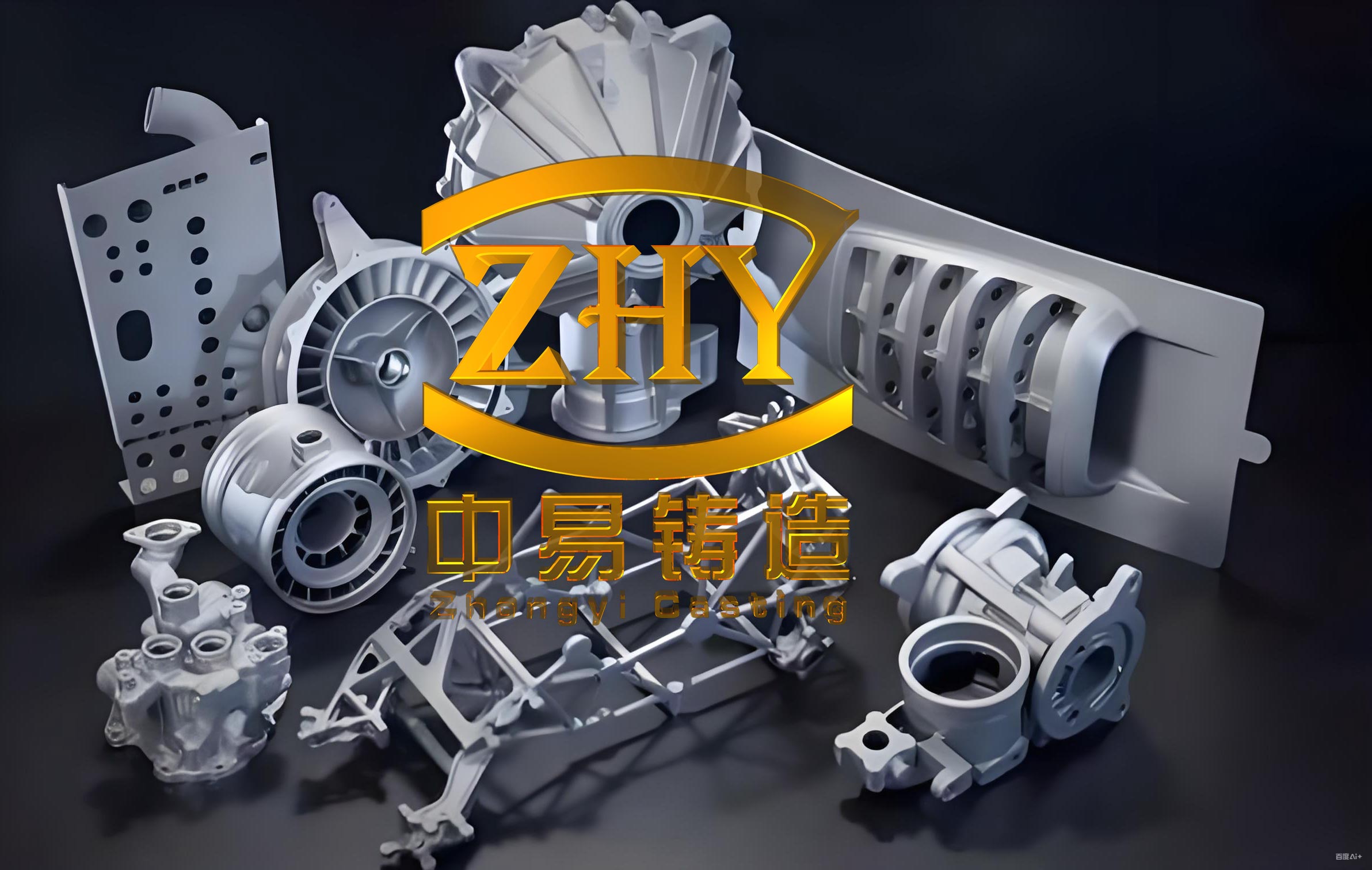
For through-thickness defects in thin-walled aerospace castings where double-sided welding is geometrically impossible, a backing support technique is employed. A dished backing plate, typically made from 1.5 to 3 mm thick stainless steel, is shaped to fit the contour of the repair area. Placed on the root side, it enables single-sided welding while achieving full penetration and acceptable backside formation, which is vital for maintaining the pressure integrity of aerospace castings. The selection of welding parameters is foundational to success. The primary variables are determined by the remaining wall thickness (the sound metal thickness after defect removal) and the area of the repair zone. The following table provides a consolidated summary of the TIG welding parameters used for repairing common aerospace aluminum casting alloys, such as those analogous to Al-Cu (2xxx series) and Al-Si-Mg (6xxx series) alloys.
| Parameter | Typical Value Range | Remarks / Dependency |
|---|---|---|
| Current (DCEN) | 80 – 180 A | Depends on remaining thickness & area |
| Tungsten Electrode Diameter | 2.4 – 4.0 mm | Ceriated or Thoriated Tungsten |
| Nozzle Diameter | 8 – 12 mm | Ensures adequate shielding gas coverage |
| Argon Flow Rate | 10 – 20 L/min | High purity (≥99.996%) |
| Filler Wire Diameter | 2.0 – 4.0 mm | Matching or compatible alloy (e.g., 4043, 5356) |
| Preheat / Interpass Temp. | 100 – 150 °C | For large repairs to avoid thermal shock |
The welding heat input \( Q \) is a critical parameter influencing the microstructure and residual stresses in the repaired aerospace casting. It is calculated as:
$$ Q = \\eta \\frac{V \\cdot I}{v} $$
where \( \\eta \) is the arc efficiency (approximately 0.6-0.8 for TIG on aluminum), \( V \) is arc voltage, \( I \) is welding current, and \( v \) is travel speed. For aluminum alloys, maintaining a low to moderate heat input is essential to minimize the size of the HAZ and prevent excessive grain growth or dissolution of strengthening precipitates in heat-treatable aerospace castings. The cooling time between 800°C and 500°C (\( t_{8/5} \)) is often controlled; for many aluminum aerospace castings, a rapid cool through this range is desirable to avoid deleterious phases. An empirical relation for the width of the HAZ \( W_{HAZ} \) can be derived from Rosenthal’s solutions for a moving point source:
$$ W_{HAZ} \\propto \\sqrt{\\frac{Q}{2\\pi k \\rho C_p (T_{crit} – T_0)}} $$
where \( \\rho \) is density, \( C_p \) is specific heat, \( k \) is thermal conductivity, and \( T_{crit} \) is a critical temperature (e.g., solvus temperature). Controlling \( Q \) via current, voltage, and speed directly manages \( W_{HAZ} \).
The actual welding technique varies with defect geometry. For blind holes (non-penetrating defects), welding starts by arcing on the base metal to form a molten pool. The arc is then lifted to 2-3 mm above the pool, and the torch is tilted to a 70-80° angle for filler wire addition. The repair is completed in a single pass, with the weld bead built up 1-2 mm above the surface to account for solidification shrinkage. The arc is terminated outside the repair zone to avoid crater cracks. For through-holes (penetrating defects), a more complex sequence is required, often combining leftward and rightward welding techniques. The arc is maneuvered from the edge of the hole along a curved path to the center and back, gradually filling the cavity. This demands significant skill to ensure consistent fusion and avoid collapse, especially since aluminum alloys have low viscosity at high temperatures. When the remaining thickness is less than 5 mm and the repair area exceeds 100 cm², it is often prudent to machine a blind hole into a through-hole for better access and stress distribution during repair of these sensitive aerospace castings.
Post-weld heat treatment (PWHT) is frequently necessary for heat-treatable aerospace aluminum castings to restore mechanical properties and relieve residual stresses. The parameters for PWHT must be carefully aligned with the original alloy’s specification. For instance, a typical solution treatment followed by artificial aging might be applied. The kinetics of precipitation hardening can be described by the Avrami equation:
$$ f = 1 – \\exp(-k t^n) $$
where \( f \) is the volume fraction of precipitates, \( k \) is a rate constant dependent on temperature, \( t \) is time, and \( n \) is the Avrami exponent. Ensuring the weld and HAZ undergo proper PWHT is crucial for homogenizing properties with the base metal of the aerospace casting.
In summary, the dual focus on preventing cutting cracks in high-carbon steel and repairing defects in aluminum aerospace castings underscores the importance of precise thermal management throughout the manufacturing and maintenance cycle. The water-cooled isothermal method provides a robust, low-cost solution for steel processing, directly benefiting the production of tools and fixtures used in casting operations. Meanwhile, the specialized TIG welding protocol, with its emphasis on meticulous preparation, parameter control, and tailored techniques for different defect morphologies, offers a reliable means to salvage high-value aerospace castings, ensuring they meet stringent safety and performance standards. The integration of these methodologies into a cohesive quality assurance framework significantly enhances the sustainability and cost-effectiveness of aerospace manufacturing. Future advancements may involve real-time thermal imaging for closed-loop control during cutting and adaptive welding systems with AI-driven parameter optimization, further pushing the boundaries of repair quality for critical aerospace castings. The relentless pursuit of such innovations is what drives excellence in the field of aerospace component fabrication and maintenance.