
As a seasoned professional in the metalcasting industry, I have witnessed firsthand the transformative power of advanced technologies in modern foundries. The integration of smart systems, such as those highlighted in recent educational initiatives, is reshaping how steel castings manufacturers operate, driving efficiency, reducing costs, and enhancing sustainability. In this article, I will delve into the core aspects of intelligent foundry practices, emphasizing their relevance to steel castings manufacturers, while incorporating analytical tools like tables and formulas to summarize key concepts. The goal is to provide a comprehensive overview that underscores the critical role of innovation in ensuring the competitiveness and environmental stewardship of steel castings manufacturers worldwide.
The advent of smart foundries represents a paradigm shift for steel castings manufacturers, moving from traditional, labor-intensive processes to automated, data-driven operations. These facilities leverage technologies like the Energy Performance Validation Scheme (ePVS), which offers real-time visibility into molding processes, enabling proactive problem-solving. For steel castings manufacturers, this means significant reductions in downtime and maintenance expenses, as well as improved product quality. Consider the following table comparing traditional and smart foundry approaches:
| Aspect | Traditional Foundry | Smart Foundry |
|---|---|---|
| Process Visibility | Limited, based on manual inspections | High, with real-time monitoring via ePVS |
| Downtime | Frequent due to reactive maintenance | Minimized through predictive analytics |
| Energy Efficiency | Variable, often suboptimal | Optimized using validation schemes |
| Skill Requirements | High reliance on experienced labor | Enhanced with digital tools for operators |
| Cost per Unit for Steel Castings | Higher due to inefficiencies | Lower through streamlined operations |
This transition is not merely technological but educational, as seen in collaborations between industry and academia. By exposing students to cutting-edge equipment, future steel castings manufacturers gain hands-on experience with systems like sand handling units, melting zones, and flaskless molding machines. These initiatives prepare a workforce capable of driving innovation, ensuring that steel castings manufacturers remain at the forefront of industrial advancement.
At the heart of smart foundries lies the ePVS platform, which provides a mathematical framework for validating energy performance. For steel castings manufacturers, understanding these formulas is crucial for optimizing processes. The energy efficiency of a molding cycle can be expressed as:
$$ \eta = \frac{E_{\text{useful}}}{E_{\text{total}}} \times 100\% $$
where \(\eta\) represents the efficiency percentage, \(E_{\text{useful}}\) is the energy utilized in producing defect-free steel castings, and \(E_{\text{total}}\) is the total energy input. In practice, ePVS tools monitor variables such as pressure, temperature, and cycle time, allowing steel castings manufacturers to identify deviations early. For instance, if a molding process exhibits abnormal energy consumption, the system triggers alerts based on thresholds defined by:
$$ \Delta E = E_{\text{measured}} – E_{\text{baseline}} $$
where \(\Delta E\) exceeds a predefined limit, indicating potential issues like sand compaction errors or metal flow irregularities. By addressing these in real-time, steel castings manufacturers can maintain consistent quality while reducing waste—a key advantage in competitive markets.
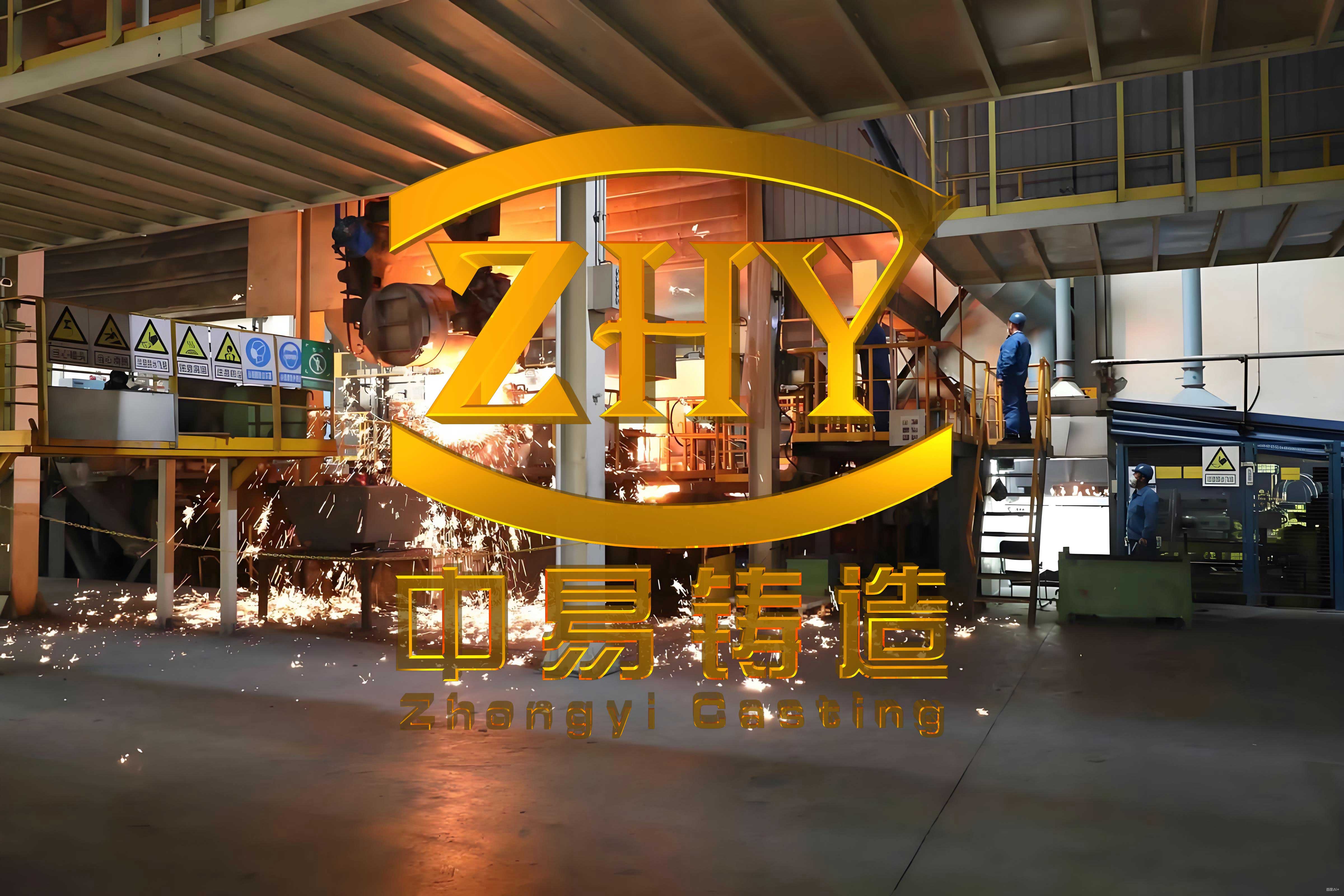
The image above illustrates a modern facility where steel castings manufacturers integrate smart technologies to enhance production. Such environments combine manual molding stations with automated systems, fostering a blend of craftsmanship and digital precision. For steel castings manufacturers, this synergy is vital, as it allows for customization in high-mix, low-volume scenarios while leveraging scalability for bulk orders. The data collected from these operations enable continuous improvement, with key performance indicators (KPIs) tracked through dashboards. Below is a table summarizing common KPIs for steel castings manufacturers:
| KPI | Description | Target for Steel Castings Manufacturers |
|---|---|---|
| Yield Rate | Percentage of defect-free castings | > 95% |
| Energy Consumption per Ton | Megajoules per ton of steel castings | |
| Cycle Time | Time per molding cycle | < 120 seconds |
| Maintenance Cost Ratio | Maintenance cost as percentage of revenue | < 5% |
| CO₂ Emissions | Kilograms of CO₂ per casting | Minimized via renewable fuels |
Beyond the foundry floor, the role of steel castings manufacturers extends to broader industrial ecosystems, particularly in automotive and heavy machinery. The debate around electrification versus internal combustion engines highlights the need for versatile manufacturing approaches. Steel castings manufacturers supply critical components for both paradigms, from engine blocks in traditional vehicles to structural parts in electric cars. This duality necessitates adaptive production strategies, where smart foundries enable rapid prototyping and material testing. For example, the mechanical properties of steel castings, such as tensile strength and ductility, are governed by alloy composition and cooling rates, which can be modeled using equations like:
$$ \sigma_t = \sigma_0 + k \cdot \sqrt{d^{-1}} $$
where \(\sigma_t\) is the tensile strength, \(\sigma_0\) is a material constant, \(k\) is a strengthening coefficient, and \(d\) is the grain size. By optimizing these parameters through controlled melting and pouring, steel castings manufacturers meet diverse specifications, whether for high-stress internal combustion parts or lightweight electric vehicle frames.
The integration of renewable fuels, such as synthetic alternatives, further underscores the evolving landscape for steel castings manufacturers. As industries seek to reduce carbon footprints, foundries must align with sustainability goals. The combustion efficiency of synthetic fuels in engines can be analyzed through stoichiometric ratios, relevant for steel castings manufacturers producing fuel system components. The ideal air-fuel ratio is given by:
$$ AFR_{\text{stoich}} = \frac{m_{\text{air}}}{m_{\text{fuel}}} $$
where \(AFR_{\text{stoich}}\) varies based on fuel composition. Steel castings manufacturers involved in this supply chain must ensure their products withstand corrosive or high-temperature environments, necessitating advanced metallurgical formulas. For instance, the corrosion resistance of stainless steel castings can be estimated using the Pitting Resistance Equivalent Number (PREN):
$$ \text{PREN} = \%Cr + 3.3 \times \%Mo + 16 \times \%N $$
Higher PREN values indicate better performance, guiding steel castings manufacturers in material selection for sustainable energy applications.
In educational contexts, partnerships with universities foster innovation, equipping the next generation of steel castings manufacturers with skills in data analytics and process control. These collaborations mirror real-world challenges, such as minimizing scrap rates or optimizing energy use. A typical problem might involve calculating the economic break-even point for adopting smart sensors in a foundry. The cost-benefit analysis can be expressed as:
$$ C_{\text{sensor}} \times N = S \times (R_{\text{old}} – R_{\text{new}}) \times T $$
where \(C_{\text{sensor}}\) is the cost per sensor, \(N\) is the number of sensors, \(S\) is the savings per reduced defect, \(R_{\text{old}}\) and \(R_{\text{new}}\) are scrap rates before and after implementation, and \(T\) is the production time. For steel castings manufacturers, such calculations justify investments in digitalization, driving long-term profitability.
Looking ahead, the convergence of IoT, AI, and advanced materials will redefine steel castings manufacturers’ operations. Predictive maintenance algorithms, for instance, use historical data to forecast equipment failures, reducing unplanned stops. The reliability of a molding machine can be modeled with Weibull distribution:
$$ F(t) = 1 – e^{-(t/\lambda)^k} $$
where \(F(t)\) is the failure probability over time \(t\), \(\lambda\) is the scale parameter, and \(k\) is the shape parameter. Steel castings manufacturers leveraging such models can schedule maintenance proactively, enhancing overall equipment effectiveness (OEE). This is critical in high-volume production, where even minor improvements yield significant gains.
Furthermore, global trends like circular economy principles urge steel castings manufacturers to adopt recycling-friendly practices. The remelting of scrap steel reduces raw material costs and emissions, with energy savings calculable via:
$$ E_{\text{saved}} = M_{\text{scrap}} \times (H_{\text{virgin}} – H_{\text{recycle}}) $$
where \(E_{\text{saved}}\) is the energy saved, \(M_{\text{scrap}}\) is the mass of scrap used, and \(H_{\text{virgin}}\) and \(H_{\text{recycle}}\) are the enthalpies of virgin and recycled steel production, respectively. By incorporating such metrics, steel castings manufacturers contribute to environmental targets while maintaining economic viability.
In conclusion, the journey toward smart foundries is indispensable for steel castings manufacturers aiming to thrive in a competitive, eco-conscious world. Through technologies like ePVS, robust KPIs, and sustainable fuels, these manufacturers can achieve unprecedented levels of efficiency and quality. The ongoing dialogue between education, industry, and research will continue to propel innovation, ensuring that steel castings manufacturers remain pivotal to global manufacturing. As we embrace this revolution, the focus must remain on pragmatic solutions that balance technological adoption with practical realities, securing a resilient future for all stakeholders involved.