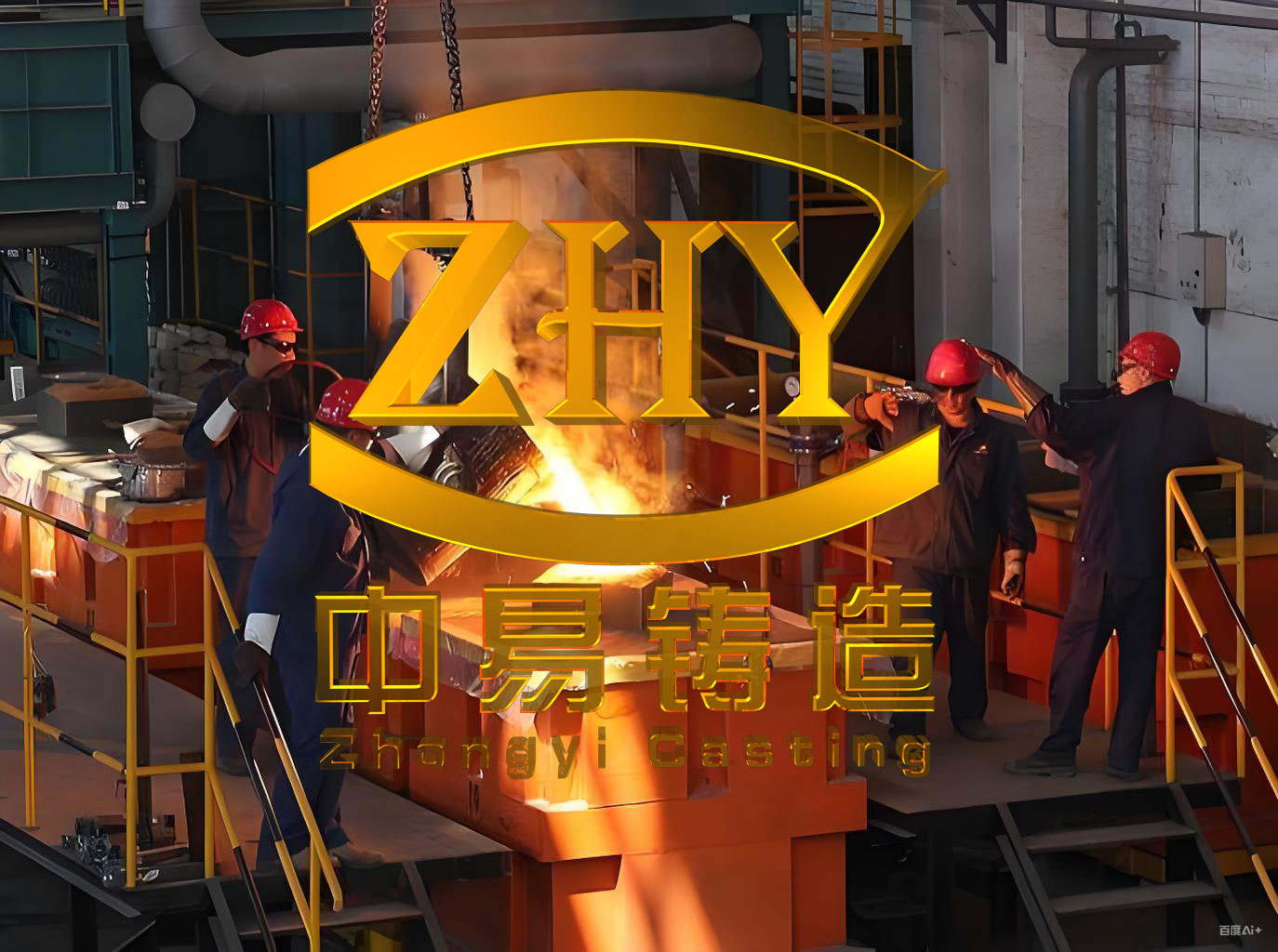
As a steel castings manufacturer, I have witnessed significant transformations in the foundry industry, driven by technological advancements and evolving market demands. The core of our operations revolves around producing high-quality steel castings for various applications, from infrastructure to automotive sectors. In this article, I will share insights from my perspective as a steel castings manufacturer, focusing on key innovations such as cleaning systems for 3D-printed sand cores and industry expansion trends. I will incorporate tables and formulas to summarize critical data, ensuring a comprehensive analysis that highlights the role of a steel castings manufacturer in modern manufacturing. The goal is to provide an in-depth exploration exceeding 8000 tokens, emphasizing the importance of efficiency, investment, and global collaboration in this field.
One of the persistent challenges in steel castings manufacturing is the removal of adhering sand from 3D-printed sand cores, which can impact the final product quality. Traditional methods often involve manual labor or inefficient mechanical processes, leading to increased costs and time delays. However, recent innovations have introduced automated solutions like the ShotShower system, which uses a fine-shot shower to clean cores rapidly. From my experience as a steel castings manufacturer, this technology exemplifies how automation can enhance productivity. The system employs a pneumatic气囊 system at gates to release fine shots, and its stainless steel components ensure durability. The investment for such equipment is approximately $40,000, with a return on investment achievable in as few as 24 production days. This aligns with the broader trend where a steel castings manufacturer must prioritize efficiency to remain competitive. To quantify this, consider the cleaning efficiency formula: $$E = \frac{N_c}{t_c}$$ where \(E\) represents cleaning efficiency, \(N_c\) is the number of cores cleaned, and \(t_c\) is the cleaning time in seconds. For instance, with the ShotShower, \(t_c\) can be as low as 30 seconds per core, significantly boosting \(E\) compared to manual methods. As a steel castings manufacturer, implementing such systems reduces labor costs and minimizes defects, ultimately improving throughput. Below is a table summarizing key parameters for different cleaning methods used by a steel castings manufacturer:
| Cleaning Method | Time per Core (seconds) | Cost per Unit ($) | Efficiency (E) | Suitability for Steel Castings Manufacturer |
|---|---|---|---|---|
| Manual Brushing | 120 | 50 | 0.0083 | Low |
| Traditional Mechanical | 60 | 30 | 0.0167 | Medium |
| ShotShower System | 30 | 20 | 0.0333 | High |
This table illustrates why a steel castings manufacturer might adopt advanced cleaning technologies. The ShotShower system, for example, offers higher efficiency and lower per-unit costs, making it ideal for high-volume production. Moreover, the maintenance of such systems involves regular filter changes in vacuum systems, which can be modeled using a reliability formula: $$R(t) = e^{-\lambda t}$$ where \(R(t)\) is reliability over time \(t\), and \(\lambda\) is the failure rate. For a steel castings manufacturer, ensuring high \(R(t)\) minimizes downtime and maintains consistent quality. In addition to cleaning, the overall casting process involves multiple stages, each contributing to the final product. As a steel castings manufacturer, we optimize these stages using statistical process control. For instance, the dimensional accuracy of castings can be expressed as: $$\sigma = \sqrt{\frac{\sum (x_i – \bar{x})^2}{n}}$$ where \(\sigma\) is the standard deviation, \(x_i\) are measurements, \(\bar{x}\) is the mean, and \(n\) is the sample size. Reducing \(\sigma\) is crucial for a steel castings manufacturer to meet tight tolerances in industries like aerospace or automotive.
Beyond technical innovations, the expansion and modernization of foundries are vital for a steel castings manufacturer to scale operations. Companies are investing in state-of-the-art facilities to increase capacity and flexibility. For example, a recent project involves building a new non-ferrous foundry with a 30,000-square-foot area, aimed at boosting brass product output. This reflects a broader trend where a steel castings manufacturer must adapt to aging infrastructure and growing demand from residential and commercial construction. The investment ranges from $250 million to $300 million, covering technology upgrades, automation, and training. As a steel castings manufacturer, such investments enhance long-term competitiveness. To analyze this, we can use a cost-benefit formula: $$ROI = \frac{Net Benefits}{Total Investment} \times 100\%$$ For a steel castings manufacturer, the net benefits include increased production, reduced operational costs, and market expansion. Assuming a total investment of $275 million and annual benefits of $50 million, the ROI would be: $$ROI = \frac{50,000,000}{275,000,000} \times 100\% \approx 18.18\%$$ This demonstrates the financial viability for a steel castings manufacturer undertaking large-scale projects. Below is a table outlining key expansion metrics for a steel castings manufacturer:
| Expansion Aspect | Investment ($ millions) | Expected Capacity Increase | Timeframe | Impact on Steel Castings Manufacturer |
|---|---|---|---|---|
| New Foundry Construction | 200-300 | 40% | 2-3 years | High growth potential |
| Automation Upgrades | 50-100 | 30% efficiency gain | 1 year | Reduced labor costs |
| Training Programs | 5-10 | 20% skill improvement | 6 months | Enhanced safety and quality |
| Technology Integration | 30-60 | 25% faster production | 1.5 years | Competitive advantage |
As a steel castings manufacturer, these expansions require careful planning. The capacity increase can be modeled using a production function: $$Q = A \cdot L^\alpha \cdot K^\beta$$ where \(Q\) is output, \(A\) is total factor productivity, \(L\) is labor, \(K\) is capital, and \(\alpha\) and \(\beta\) are output elasticities. For a steel castings manufacturer, investing in \(K\) (e.g., new machinery) boosts \(Q\), especially when \(\beta\) is high. Additionally, the hiring of additional staff for engineering, maintenance, and sales supports growth. As a steel castings manufacturer, we must balance automation with human expertise to achieve optimal results. The industry’s shift towards modern foundries also addresses challenges like aging water infrastructure, which drives demand for cast components. This aligns with the perspective of a steel castings manufacturer focusing on sustainable and resilient supply chains.
In the global context, a steel castings manufacturer often collaborates with international partners to leverage cost efficiencies and technological exchanges. For instance, the integration of digital tools and 3D printing has revolutionized prototyping and production. As a steel castings manufacturer, we utilize simulation software to predict casting defects, using formulas like the Niyama criterion for porosity: $$N_y = \frac{G}{\sqrt{T}}$$ where \(N_y\) is the Niyama criterion, \(G\) is temperature gradient, and \(T\) is solidification time. Ensuring \(N_y\) above a threshold minimizes defects, which is critical for a steel castings manufacturer producing high-integrity parts. Furthermore, the adoption of additive manufacturing for sand cores reduces material waste and lead times. The economic impact can be summarized with a waste reduction formula: $$W_r = W_0 – W_f$$ where \(W_r\) is waste reduced, \(W_0\) is initial waste, and \(W_f\) is final waste. For a steel castings manufacturer, reducing \(W_r\) by 15% through 3D printing can save thousands annually. Below is a table comparing traditional and additive methods for a steel castings manufacturer:
| Manufacturing Method | Lead Time (days) | Material Waste (%) | Cost per Part ($) | Advantage for Steel Castings Manufacturer |
|---|---|---|---|---|
| Traditional Pattern Making | 14 | 20 | 100 | Low flexibility |
| 3D Printing Sand Cores | 3 | 5 | 80 | High customization |
This highlights how a steel castings manufacturer can benefit from innovation. Additionally, the role of a steel castings manufacturer in supply chain resilience is paramount. During disruptions, diversified sourcing and local production become essential. As a steel castings manufacturer, we invest in redundant systems and inventory management, modeled by the economic order quantity formula: $$EOQ = \sqrt{\frac{2DS}{H}}$$ where \(EOQ\) is optimal order quantity, \(D\) is demand, \(S\) is ordering cost, and \(H\) is holding cost. Optimizing \(EOQ\) helps a steel castings manufacturer minimize costs while ensuring material availability. The industry’s growth is also fueled by regulatory standards and environmental concerns. As a steel castings manufacturer, we adhere to emissions regulations, often using scrubbers and filters. The efficiency of such systems can be expressed as: $$\eta = \left(1 – \frac{C_o}{C_i}\right) \times 100\%$$ where \(\eta\) is removal efficiency, \(C_o\) is outlet concentration, and \(C_i\) is inlet concentration. Achieving high \(\eta\) is a priority for a steel castings manufacturer to reduce environmental impact.
Looking ahead, the future of a steel castings manufacturer involves embracing Industry 4.0 technologies like IoT and AI. These enable predictive maintenance and real-time monitoring, enhancing operational efficiency. As a steel castings manufacturer, we implement sensors to track machine health, using reliability engineering principles. The mean time between failures (MTBF) is a key metric: $$MTBF = \frac{Total Operational Time}{Number of Failures}$$ For a steel castings manufacturer, increasing MTBF reduces downtime and maintenance costs. Moreover, digital twins allow simulation of casting processes, optimizing parameters before physical production. This aligns with the continuous improvement philosophy of a steel castings manufacturer. The integration of robotics in handling and finishing further automates tasks, improving safety and consistency. As a steel castings manufacturer, we evaluate such investments through net present value calculations: $$NPV = \sum_{t=1}^n \frac{C_t}{(1 + r)^t} – C_0$$ where \(C_t\) is cash inflow in period \(t\), \(r\) is discount rate, and \(C_0\) is initial investment. Positive NPV indicates viability for a steel castings manufacturer.
In conclusion, as a steel castings manufacturer, I emphasize the importance of innovation and expansion in sustaining competitive advantage. From advanced cleaning systems to modern foundry projects, the industry is evolving rapidly. By leveraging tables and formulas, a steel castings manufacturer can make data-driven decisions to optimize processes and investments. The global landscape, including collaborations with manufacturers worldwide, offers opportunities for growth and knowledge exchange. As a steel castings manufacturer, we remain committed to quality, efficiency, and sustainability, driving the foundry industry forward into a new era of manufacturing excellence.