
As a dedicated steel castings manufacturer, our operations have long been defined by the inherent energy intensity of the casting process. This industry, globally, is often marked by high capital investment, substantial resource consumption, elevated operational costs, and comparatively lower output efficiency. Factors such as fragmented economic scale, limited specialization, outdated production processes and technical equipment, suboptimal process design, a historical lack of scientific management, and poorly configured, underutilized machinery have traditionally been the primary drivers of excessive energy expenditure. For any progressive steel castings manufacturer, confronting these challenges is not merely a cost-saving imperative but a cornerstone of sustainable competitiveness and environmental stewardship. In recent years, concurrent with strategic product portfolio adjustments, our enterprise has embarked on a comprehensive journey to overhaul our energy footprint. By fortifying energy governance structures, aggressively deploying novel technologies and equipment, and executing targeted energy conservation retrofits, we have realized marked economic gains and significantly enhanced our operational sustainability. This narrative details our multifaceted approach, blending meticulous management with technological innovation, a blueprint we believe is essential for any modern steel castings manufacturer.
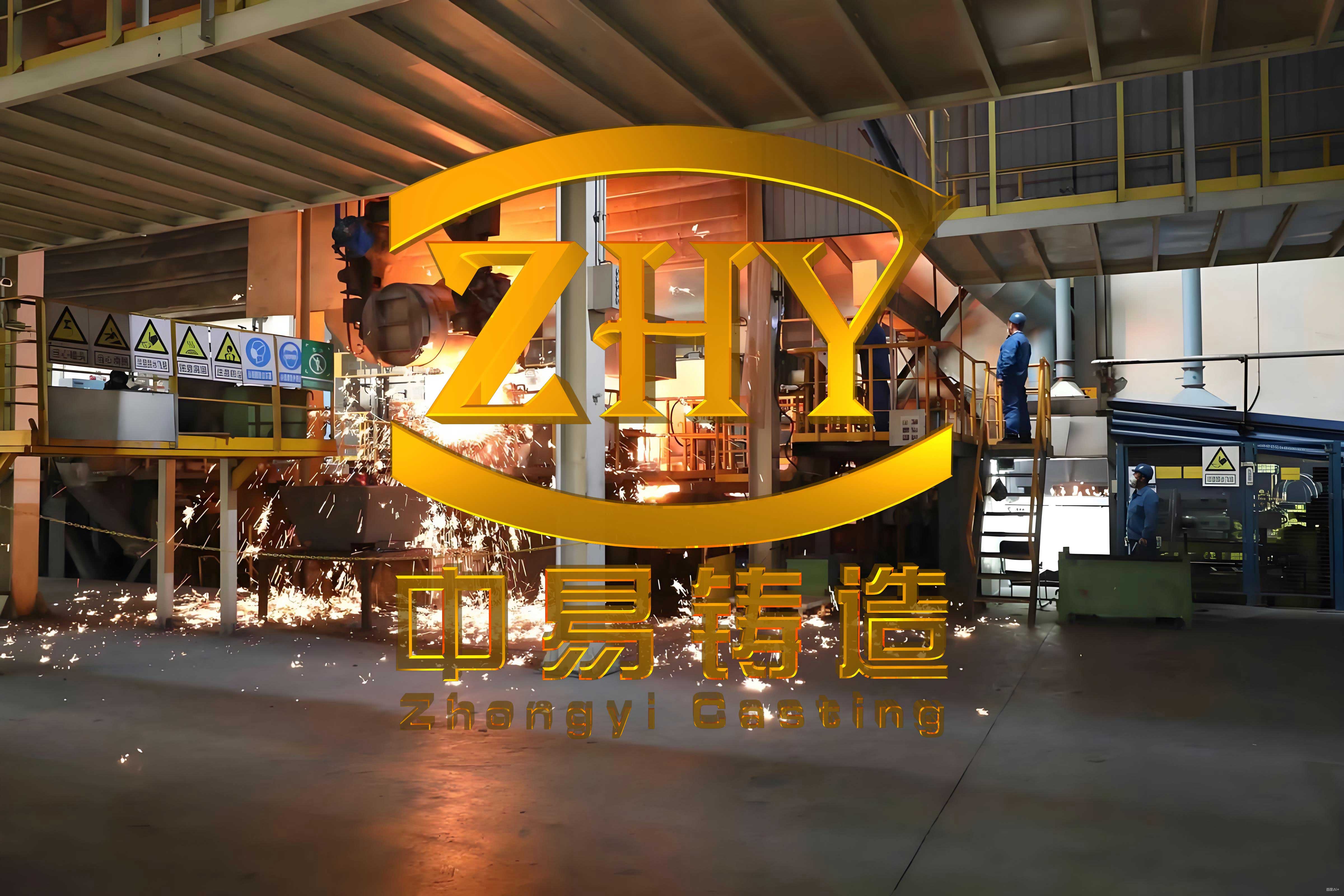
The journey for a steel castings manufacturer begins with establishing a robust foundation for energy control. Historically, our energy management was fragmented, lacking a cohesive system. Data was incomplete, the metering network had gaps—particularly at the granular workshop and equipment level—making accurate, product-line-specific energy analysis impossible. When energy budgets were exceeded, diagnosing the root cause was largely speculative. To transition from this crude, reactive state to a proactive,精细化管理 (fine management) paradigm, we focused our energy management efforts on several interconnected pillars, crucial for any steel castings manufacturer seeking operational excellence.
First, we prioritized the construction of a formal Energy Management System (EnMS). Aligning with international best practices and national directives, we established a clear organizational structure and accountability matrix. A three-tiered “Factory–Workshop–Team” energy management network was instituted, ensuring policy deployment and feedback at every operational level. This was complemented by stringent energy conservation regulations and a motivational incentive scheme to foster continuous improvement initiatives among all employees. The systemic approach ensures that energy efficiency is not a sporadic campaign but an ingrained operational discipline for the steel castings manufacturer.
| Management Tier | Primary Role & Responsibility | Key Performance Indicators (KPIs) |
|---|---|---|
| Factory-Level Energy Committee | Set strategic energy policy, annual conservation targets, and approve major investment. | Total energy cost reduction (%),万元产值综合能耗 (Comprehensive Energy Consumption per 10k CNY Output). |
| Department/Workshop Managers | Implement conservation measures, monitor daily consumption, and lead local projects. | Departmental energy budget adherence, specific energy consumption (e.g., kWh/ton of molten metal). |
| Shift Supervisors & Teams | Execute standard operating procedures, identify waste (leaks, idling), and suggest improvements. | Equipment efficiency during shift, reporting of energy incidents, participation in improvement activities. |
Second, we revolutionized our energy measurement and monitoring capabilities. A steel castings manufacturer’s metabolic rate is its energy flow, and you cannot manage what you do not measure. We embarked on a program to achieve 100% coverage for primary and secondary metering and significantly enhance tertiary metering at key process equipment. This created a comprehensive energy计量网络 (metering network). Furthermore, we deployed a real-time energy monitoring and data acquisition system. This system, feeding into a central dashboard, allows for全方位分析 (all-round analysis) of energy status, moving beyond delayed manual log sheets to instantaneous insights. Energy managers now actively analyze data streams, correlating consumption with production parameters to unearth inefficiencies. The fundamental data collection process was standardized, creating a reliable historical database for trend analysis and benchmarking—a critical asset for any data-driven steel castings manufacturer.
Third, we established an internal energy management audit and evaluation standard. Drawing from national standards, we developed a diagnostic framework assessing six core areas: EnMS maturity, foundational energy administration, consumption rate management, rational energy use, on-site energy practices, and progress in energy-saving technology adoption. This framework is used for periodic internal audits of both the factory and individual workshops, providing a quantifiable scorecard for continuous improvement. Target management is reinforced through daily tracking, weekly analysis sessions, and monthly review meetings where performance is evaluated, and accountability is assigned. The linkage between targets and responsibility is clear, creating a powerful mechanism for controlling energy consumption across all units of the steel castings manufacturer.
Fourth, our strategy emphasizes focusing resources where the impact is greatest. As a steel castings manufacturer, a significant portion of energy is consumed by a few key processes and pieces of equipment. We instituted a program of intensified spot-checks and audits for major energy-consuming workshops, with zero tolerance for observable waste like steam leaks, compressed air drips, or inadequate furnace insulation. Special attention is paid to core units like the melting department and to high-demand equipment such as induction furnaces and large motors. This focus on the consumption process itself, rather than just outcomes, allows for pre-emptive correction. The energy flow for a steel castings manufacturer can be visualized and managed using fundamental thermodynamic and electrical principles. For instance, the heat loss through furnace walls can be approximated by:
$$ Q = U \times A \times (T_{\text{inside}} – T_{\text{ambient}}) $$
where \( Q \) is the heat loss rate (W), \( U \) is the overall heat transfer coefficient (W/m²·K), \( A \) is the surface area (m²), and \( T \) represents temperatures. Minimizing \( U \) (better insulation) and \( A \) (optimal design) is a direct target of our focused management.
Fifth, we integrated energy conservation deeply into our Total Productive Maintenance (TPM) philosophy. For a steel castings manufacturer, equipment reliability and efficiency are directly tied to energy use. TPM activities, driven by cross-functional teams including operators, aim to maximize Overall Equipment Effectiveness (OEE). A key component is eliminating the six big losses, among which idle and minor stoppages often lead to energy waste from equipment running without productive output. Production planners now consciously strive to increase equipment load factors, schedule batch production during low-volume periods to avoid frequent start-ups, and, crucially, leverage off-peak electricity tariffs by organizing energy-intensive operations during谷电时间 (valley hours). The economic benefit is direct, as electricity cost for an industrial steel castings manufacturer can be modeled as:
$$ \text{Total Electricity Cost} = \sum_{i=\text{peak, flat, valley}} (P_i \times t_i \times C_i) $$
where \( P_i \) is power demand during rate period \( i \), \( t_i \) is the duration, and \( C_i \) is the corresponding tariff. Shifting load from peak (\( C_{\text{peak}} \)) to valley (\( C_{\text{valley}} \)) periods, where \( C_{\text{peak}} \gg C_{\text{valley}} \), yields substantial savings.
Sixth, we invested heavily in awareness and capability building. The success of any steel castings manufacturer’s energy program ultimately rests on its people. We launched sustained campaigns using internal media, workshops, seminars, and visual workplace tools to educate every employee on the critical importance of energy conservation. Specialized training was provided to key personnel, such as melting furnace operators, focusing on optimal operational practices that reduce specific energy consumption. An annual energy conservation成果发表会 (achievement presentation conference) celebrates successful projects, recognizing contributors and disseminating best practices. This cultural shift ensures that energy mindfulness becomes second nature, making management-led initiatives more effective and spawning grassroots innovations.
While management provides the framework, technological innovation delivers the tangible leaps in efficiency for a forward-thinking steel castings manufacturer. Technological energy conservation represents a direct, impactful lever to reduce consumption per unit of output. Our commitment to applying “new technologies, processes, materials, and equipment” has been systematic and results-oriented.
Since the early 2000s, our steel castings manufacturer has implemented a series of retrofit projects, each with a clear payback. Major initiatives include:
| Project Area | Technology/Intervention | Key Mechanism & Impact |
|---|---|---|
| Thermal Energy System | Heating network return water system optimization. | Reduced pumping energy and heat losses in return lines, improving overall boiler plant efficiency. |
| Compressed Air | Centralized control system for the air supply network. | Dynamic pressure regulation and leak detection, reducing compressor run-time and parasitic losses. Savings estimated at 15-20% of compressed air energy. |
| Coal-fired Boilers | Retrofit with stratified combustion technology. | Enhanced air-fuel mixing and more complete combustion, increasing thermal efficiency and reducing coal consumption per ton of steam. |
| Lighting | Plant-wide green lighting project using LEDs and high-efficiency fixtures. | Direct reduction in lighting power demand (often 50-70%) with improved illumination quality and longer lifespan. |
| Water Conservation | Installation of water-saving devices (faucets, showers, cooling tower controls). | Reduced fresh water intake and wastewater generation, lowering water procurement and treatment costs. |
| Power Quality | Application of reactive power compensation (capacitor banks) in Sand Preparation department. | Corrected low power factor, reducing apparent power draw and eliminating utility penalties. |
| Motor Drives | Widespread use of Variable Frequency Drives (VFDs) on fans, pumps, and dust collectors. | Matching motor speed to actual process demand, following the affinity laws where power consumption is proportional to the cube of speed: $$ P \propto \omega^3 $$. This yields dramatic savings at partial loads. |
The impact of these technologies is quantifiable. Take the reactive power compensation project in the Sand Plant. Monitoring revealed a poor power factor (PF), typically between 0.65 and 0.78. For a steel castings manufacturer, a low PF means the electrical system draws more current than necessary for the same real work, leading to higher losses and utility charges. We installed automatic capacitor banks for就地补偿 (local compensation). The improved PF ranged from 0.91 to 0.94. The financial saving comes from reduced demand charges and avoiding power factor penalties. The annual saving was approximately 130,000 CNY. This can be understood through the power factor correction formula. The reactive power (Q) required from compensation is:
$$ Q_c = P \times (\tan(\cos^{-1}\text{PF}_{\text{old}}) – \tan(\cos^{-1}\text{PF}_{\text{new}})) $$
where \( P \) is the average active power load. By reducing the reactive component, the apparent power \( S = \sqrt{P^2 + Q^2} \) decreases, lowering system losses and costs.
Furthermore, as our product mix evolved, we conducted a thorough review of our power infrastructure. Many transformers and electrical circuits were sized for legacy production volumes that no longer applied. By meticulously calculating present and projected loads, we executed a transformer rationalization program. We decommissioned and recycled 10 under-loaded transformers, reducing total installed transformer capacity by 22,000 kVA. This alone results in annual savings of over 5.8 million CNY by eliminating no-load losses (core losses) and reducing load losses. The no-load loss \( P_0 \) is relatively constant, while the load loss \( P_k \) varies with the square of the loading:
$$ P_{\text{transformer loss}} = P_0 + P_k \times \left(\frac{I_{\text{load}}}{I_{\text{rated}}}\right)^2 $$
Removing unnecessary transformers directly cuts \( P_0 \). Such strategic infrastructure adjustments are vital for a lean steel castings manufacturer.
For a steel castings manufacturer, the melting department is invariably the heart of energy consumption, often accounting for 70-80% of total plant energy use. It is also a major source of quality-related scrap. Therefore, a holistic approach targeting melting—encompassing process innovation, equipment modernization, and precision management—yields the highest return on investment.
Firstly, we championed the adoption of as-cast (铸态) ductile iron production technology. Traditionally, many ductile iron castings required a subsequent heat treatment (annealing or normalizing) to achieve desired microstructures and mechanical properties. The as-cast process, through careful control of alloy composition, inoculation, and cooling, achieves the required properties directly from the mold, eliminating the entire heat treatment cycle. This bypasses the substantial energy consumption of reheating furnaces and avoids associated defects like distortion and scaling. As a steel castings manufacturer focused on efficiency, we elevated our technical capability in this area, achieving a consistent as-cast production rate exceeding 95%. Consequently, we permanently shut down 4 annealing furnaces and their dedicated transformers. Just the elimination of transformer losses from these units saves over 1.9 million CNY annually. The energy saved per ton of casting is substantial, as the energy for heat treatment \( E_{\text{HT}} \) is avoided:
$$ E_{\text{saved per ton}} = \frac{m \times c_p \times \Delta T}{\eta_{\text{furnace}}} $$
where \( m \) is mass, \( c_p \) is specific heat, \( \Delta T \) is the temperature rise required for treatment, and \( \eta_{\text{furnace}} \) is the furnace thermal efficiency.
Secondly, we undertook a significant capital investment to modernize our melting equipment. Between 2001 and subsequent years, we invested nearly 30 million CNY to replace outdated, polluting, and inefficient arc furnaces and line-frequency coreless induction furnaces with modern medium-frequency induction furnaces (3-ton and 6-ton capacities). The advantages for a steel castings manufacturer are profound: higher power density leading to faster melting, superior thermal efficiency (as eddy current generation is more focused), and excellent control over molten metal quality and temperature uniformity. This transition not only reduced specific energy consumption (kWh/ton) but also dramatically improved the working environment. Additionally, we upgraded supporting systems like charge weighing, molten metal weighing, and temperature measurement devices. Accurate charge calculation minimizes re-melts and off-spec chemistry, while precise temperature control prevents overheating waste. The relationship between superheat temperature and energy input is critical:
$$ E_{\text{melt}} \approx m \left[ c_s \Delta T_s + H_f + c_l \Delta T_l \right] / \eta_{\text{furnace}} $$
where \( c_s \) and \( c_l \) are specific heats of solid and liquid, \( \Delta T_s \) is solid heating, \( H_f \) is latent heat of fusion, and \( \Delta T_l \) is liquid superheat. Minimizing unnecessary \( \Delta T_l \) is a direct energy saving.
Thirdly, we implemented a sophisticated, data-driven management system for melting electricity usage. For a steel castings manufacturer, managing the melting department’s energy in real-time is complex. We developed an in-house重点耗能设备监控系统 (Key Energy-Consuming Equipment Monitoring System). This system continuously monitors 21 critical assets: 10 line-frequency furnaces, 8 medium-frequency furnaces, 3 annealing furnaces, and the load profiles of 17 power transformers. It collects real-time data on electrical parameters—active power (kW), reactive power (kVAR), voltage (V), current (A), energy consumption (kWh), and power factor—while also tracking the operational status of eight automated casting lines and manual production input of melt weights.
The data is processed by a central server, generating dynamic graphs, trend curves, and detailed reports accessible via the plant intranet to production, maintenance, energy, and technical staff. The objectives and benefits for a steel castings manufacturer are multifaceted and can be expressed through derived metrics:
| System Capability | Technical & Managerial Application | Quantitative Formula/Output |
|---|---|---|
| Time-of-Use Analysis | Identify most economical production schedules to shift load to off-peak periods (Load Shifting). | Calculate cost per melt: $$ C_{\text{melt}} = \int_{\text{melt start}}^{\text{melt end}} P(t) \cdot \text{Tariff}(t) \, dt $$ Compare across shifts. |
| Specific Energy Consumption (SEC) Benchmarking | Compare SEC between furnaces, shifts, and batches to identify outliers and best practices. | $$ \text{SEC} = \frac{\text{Total Energy Consumed (kWh)}}{\text{Net Melt Output (tons)}} $$ Trend analysis and Pareto charts. |
| Transformer Load Management | Provide data for right-sizing electrical infrastructure and planning upgrades/consolidation. | Monitor load factor: $$ \text{Load Factor} = \frac{\text{Average Load (kW)}}{\text{Rated Capacity (kW)}} \times 100\% $$ Target optimal range (e.g., 60-80%). |
| Production-Energy Correlation | Understand how automatic line stoppages affect energy intensity in real-time. | Correlate line status signal with furnace power draw to quantify idle energy waste. |
| Grid Stability &预警 (Early Warning) | Monitor total plant or feeder load to prevent overload trips and unplanned downtime. | Set alarm thresholds based on historical max demand and contractual limits. |
| Granular Performance考核 (Appraisal) | Enable fair, data-based energy KPI考核 for workshops, teams, and even single furnaces. | Define考核 metrics: e.g., $$ \text{Target SEC} \leq \text{Baseline} \times (1 – \text{Annual Reduction Target}) $$. |
| Automated Meter Reading | Eliminate manual logs, ensure data accuracy, and speed up management reporting cycles. | Automated daily/weekly consumption reports by cost center. |
The synergistic effect of these management and technological initiatives has been transformative for our steel castings manufacturer. Over a three-year period, while our casting output increased by 6%, our total absolute energy consumption decreased. The specific energy consumption per ton of saleable casting fell by 5.8%. Even more impressively, our comprehensive energy consumption per 10,000 CNY of output value, expressed in standard coal equivalent, dropped by 13.5%. Water consumption has also followed a consistent downward trajectory. These metrics confirm that our energy and resource utilization has entered a virtuous cycle of decoupling growth from resource input, comfortably exceeding the annual 4% reduction target often mandated for industrial enterprises. This performance underscores the competitive advantage achievable by a dedicated steel castings manufacturer through systematic effort.
In conclusion, the energy challenge for the casting industry is monumental, yet it presents a clear pathway to innovation and resilience. For a steel castings manufacturer, energy costs constitute a significant and volatile portion of operating expenses, directly impacting profitability. Moreover, a company’s energy intensity reflects the advanced nature of its products, processes, and overall innovative capacity—it is a core component of competitiveness in an increasingly sustainability-conscious market. The journey we have undertaken demonstrates that effective energy governance is not an insurmountable obstacle. By building a robust energy management system tailored to the unique, high-heat-process nature of our work, and by relentlessly pursuing technological upgrades—especially in the critical melting domain—a steel castings manufacturer can achieve substantial economic and environmental benefits. The integration of real-time data analytics into daily management has been a game-changer, enabling precision control and continuous improvement. The path forward for any steel castings manufacturer is clear: embrace energy efficiency as a strategic imperative, invest in both human capital and technology, and persistently innovate. By doing so, the industry can shed its historical label of being “high input, high consumption” and transition towards a future of sustainable, high-value manufacturing. Our experience proves that with determined focus, the energy management practices of a steel castings manufacturer can indeed ascend to a new level of excellence and responsibility.