
The manufacturing sector is the cornerstone of a nation’s economic strength. Building a powerful manufacturing industry is an inevitable choice for enhancing comprehensive national power and safeguarding national security. The future trajectory of manufacturing is fundamentally anchored in revolutionary breakthroughs in information technology, reflecting the overarching trends of digitization, informatization, intelligentization, and networking within the industrial economy. The core of this evolution lies in the integration of “Internet + Manufacturing,” focusing on constructing smart factories to realize intelligent manufacturing.
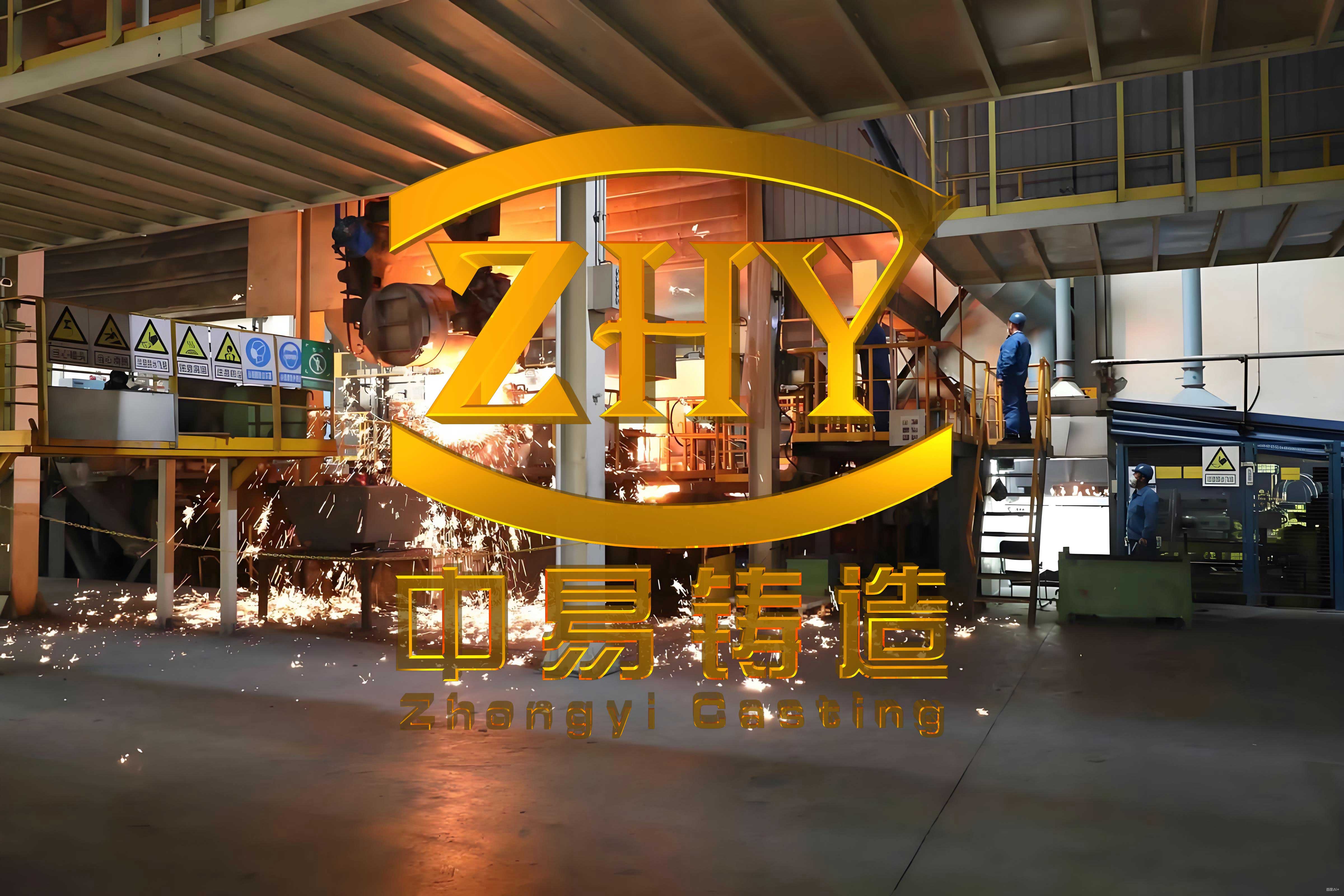
For a modern steel castings manufacturer, embracing this transformation is not optional but essential for survival and competitiveness in a globalized market. The principles of intelligent manufacturing offer a pathway to unprecedented levels of efficiency, quality, and flexibility.
The Concept of the Intelligent Manufacturing Factory
An Intelligent Manufacturing Factory represents the pinnacle of production system evolution. It is characterized by a deep integration of physical assets with digital data streams, creating a responsive, self-optimizing production environment. At its heart, it fulfills several critical requirements: digitization of manufacturing equipment, automated collection of production information, identifiable production materials, a visualized production floor, digitalized process design, interconnected industrial networks, comprehensive integration of related information, and robust industrial information security. This system is typically integrated with a Manufacturing Execution System (MES) or other production management information systems to orchestrate the entire value stream.
It is crucial to distinguish between related but distinct concepts: Digital Factory, Smart Factory, and Intelligent Manufacturing Factory.
| Concept | Core Definition | Primary Function |
|---|---|---|
| Digital Factory | A comprehensive network constituted by digital models, methods, and tools; a product combining modern digital manufacturing technology with computer simulation. | Serves as a bridge between product design and product manufacturing, enabling virtual planning and validation. |
| Smart Factory | Built upon the Digital Factory, utilizing IoT technologies and monitoring to enhance information management services. | Increases production process controllability, reduces manual intervention on the line, and enables intelligent production scheduling. |
| Intelligent Manufacturing | An advanced state of Human-Machine integration where the system can independently undertake analysis, judgment, and decision-making tasks. | Highlights the central role of humans within the manufacturing system, allowing them to better utilize their potential with the support of intelligent machines. The Intelligent Manufacturing Factory is the physical embodiment of this principle. |
The ultimate goal for a forward-thinking steel castings manufacturer is to evolve into an Intelligent Manufacturing Factory, where human expertise guides a largely autonomous, data-driven production ecosystem.
V-Method Casting: A Primer for the Intelligent Era
The V-Method, or Vacuum Molding Process, is a distinctive and environmentally friendly casting process. It is particularly suitable for a steel castings manufacturer producing large, relatively flat castings with good surface finish. The process involves creating a mold by placing a thin plastic film over a pattern, applying a vacuum to draw the film tightly onto the pattern, surrounding it with unbonded dry sand, and then sealing the top with another plastic film before pouring the metal. The vacuum is maintained throughout the pouring and solidification process.
The appeal for a modern steel castings manufacturer lies in its green credentials: no binders are used in the sand, leading to minimal emissions and highly recyclable sand. However, to harness its full potential within an intelligent framework, the process must be re-engineered with digitization and data acquisition at its core.
Selecting V-Method Equipment for an Intelligent Manufacturing Factory
For a steel castings manufacturer aiming to build or upgrade a V-Method foundry, equipment selection is the most critical step in the journey toward intelligence. The choice of machinery directly determines the data granularity, interconnectivity potential, and ultimately, the level of smart factory integration achievable.
1. Foundational Planning: The 80% Rule
Thorough upfront planning cannot be overstated. This phase influences 70-80% of the total project investment and success. A steel castings manufacturer must begin with a clear market analysis, product mix definition, and overall plant design. Selecting experienced equipment suppliers who understand both the V-Method process and the principles of Industry 4.0 is paramount.
2. Choosing the Right Production Line Configuration
The selection of the V-Method line type depends on product characteristics, required capacity, investment budget, and the desired level of automation. For a steel castings manufacturer, understanding these options is key.
| Line Type | Key Characteristics | Typical Efficiency | Best Suited For |
|---|---|---|---|
| Shuttle-Type Line | Lowest investment, high flexibility. A mobile vibrating table shuttles the pattern between stations (film heating, coating, sand filling, etc.). | 4 – 6 molds/hour | Low to medium volume, high-mix production. |
| Rotary Table Line | Compact footprint, higher efficiency. The pattern rotates on a turntable through stationary workstations (2, 4, 6, or 8 stations). | 6 – 12 molds/hour (depends on stations) | Medium volume production with better process segregation. |
| Combination-Type (Linear Automated) Line | High investment, maximum automation and reliability. Features separate loops for cope/drag molding, core setting, pouring/cooling, and sand reclamation. | Up to 20 molds/hour | High-volume, dedicated production of a stable product family. |
The choice directly impacts the data flow architecture. A linear automated line, for instance, naturally lends itself to segmented, high-frequency data collection at each dedicated station, a boon for any steel castings manufacturer targeting true intelligence.
3. Enabling Data Acquisition at the Equipment Level
The essence of an Intelligent Manufacturing Factory is data. Every piece of equipment must be a data node. For a V-Method steel castings manufacturer, this means instrumenting each process step. The following tables outline critical data points to be collected from the core molding equipment.
3.1 Molding Department Data Points
| Process Station | Key Data Parameters to Acquire | Sensor/Action |
|---|---|---|
| Film Heating & Drapping | Heater power (kW), Film surface temperature (°C), Heating cycle time (s), Vacuum level under film (mbar), Vertical/Horizontal actuator position (mm). | Thermocouples, Power meters, Vacuum transducers, Encoders on cylinders/actuators. |
| Coating Application (Robotic) | Coating batch ID, Specific gravity (Baumé), Spraying time per zone (s), Robot path program ID (scanned from pattern), Atomizing air pressure (bar). | Density meter, Robot controller I/O, Barcode/RFID reader, Pressure sensor. |
| Coating Drying | Drying oven temperature profile (°C), Air flow rate (m³/s), Drying time (s), Moisture content at exit (%). | Oven PLC, Flow meters, Moisture sensor. |
| Sand Filling & Compaction | Sand fill time (s), Sand flow rate (kg/s), Vibration frequency (Hz) & amplitude (mm), Vibration time (s), Achieved mold hardness. | Load cells on hopper, Vibration motor frequency drives, Timer, Hardness tester. |
| Back Film Application | Film roll consumption (m), Cutting time (s), Vacuum seal integrity check (mbar/sec leak rate). | Encoder on film unwind, Vacuum decay test routine. |
| Mold Stripping & Closing | Stripping force profile (kN), Lift/carry speeds (mm/s), Mold mismatch detection (mm), Vacuum transfer timing (s). | Force sensors on lifters, Vision system for alignment, Proximity sensors. |
The energy input during sand compaction can be modeled. A simplified representation of the compaction energy $E_c$ imparted to the sand mass $m_s$ could be:
$$ E_c \propto \int_{0}^{t_v} A_v(t) \cdot \omega_v(t) \, dt $$
where $t_v$ is vibration time, $A_v(t)$ is the time-dependent amplitude, and $\omega_v(t)$ is the angular frequency.
3.2 Ancillary Systems Data Points
The supporting systems are equally vital data sources for the steel castings manufacturer‘s intelligence platform.
| System | Critical Data for Intelligence |
|---|---|
| Sand Reclamation & Cooling | Sand temperature in/out (°C), Throughput (t/h), LOI (Loss on Ignition) content (%), Magnetic separator efficiency (%), Fines content (%). |
| Dust Collection | Differential pressure across filters (mbar), Baghouse pulse cycle time, Outlet emission concentration (mg/m³), Fan motor power consumption (kWh). |
| Vacuum System | Pump power & speed, Total system flow (m³/h), Pressure at main header (mbar), Water seal temperature (°C), Pump specific energy consumption (kWh/m³). |
| Tooling (Patterns & Flasks) | Pattern ID (RFID), Flask ID (RFID), Flask alignment pin wear (mm), Flask vacuum flow resistance (mbar per m³/h). |
The vacuum system is the heart of the V-process. Its sizing and efficiency are paramount. The required pump capacity $Q_{req}$ for a system with $n$ simultaneous molds can be estimated by:
$$ Q_{req} = n \cdot (L_{leak} + Q_{sand}) + Q_{reserve} $$
where $L_{leak}$ is the inherent leak rate of a sealed mold, $Q_{sand}$ is the flow rate to fluidize sand during filling, and $Q_{reserve}$ is a system safety factor. An intelligent system monitors actual $Q_{actual}$ vs. $Q_{req}$ and uses variable frequency drives (VFDs) to match pump output in real-time, yielding significant energy savings for the steel castings manufacturer.
3.3 The Control System: The Nervous System
A modular, networked PLC control system (e.g., Siemens S7 series with PROFINET) forms the hardware backbone. Each machine is an intelligent node on the Industrial Internet of Things (IIoT) network. The system must feature:
- Standardized communication interfaces (OPC UA, MQTT) for vertical integration with MES/ERP.
- Secure remote access capability for diagnostics and support.
- A local SCADA/HMI providing real-time visualization and control.
- Edge computing capability for preliminary data processing and latency-critical control loops.
The Pathway to a V-Method Intelligent Manufacturing Factory
1. Establishing the Digital Foundation
This involves creating a “digital twin” for every physical entity. For the steel castings manufacturer, this means:
Digital Assets: Every machine must have a digital profile containing its communication protocols, maintenance history, and performance models.
Resource Identification: All production resources—patterns, flasks, ladles, cores—are tagged with RFID or QR codes. A scan at any station instantly tells the system “what, where, and when.”
Process Digitalization: Moving from 2D drawings to 3D CAD models for patterns, using CAE for solidification and stress simulation, and employing digital work instructions (CAPP) that are pushed directly to station HMIs.
Integrating this foundational data creates the virtual factory—a dynamic digital replica that synchronizes with the physical world, allowing for simulation, optimization, and proactive decision-making.
2. Enabling Information Interaction and Integration
The isolated data islands must connect into a continent. This requires:
A Robust Industrial Network: A converged IT/OT network using industrial Ethernet and secure wireless for mobility, connecting shop floor devices to the factory data center.
A Unified Data Platform: A centralized data lake or historian that ingests structured and unstructured data from all sources—machine PLCs, QC instruments, RFID readers, energy meters. It must handle time-series data at high speed and provide a unified data model.
Semantic Interoperability: A comprehensive “data dictionary” is non-negotiable. It defines every data point (e.g., “Mold_234_Hardness”), its source, units, and meaning, ensuring all systems speak the same language.
3. Implementing Intelligent Manufacturing Operations Management
This is where intelligence manifests. The collected data fuels advanced platforms:
MES Integration: The real-time equipment data feeds the MES, enabling detailed track-and-trace, dynamic scheduling based on actual machine state, and paperless quality data collection.
Predictive Analytics & AI: Machine learning models analyze historical and real-time data to predict failures (e.g., vacuum pump bearing wear), optimize process parameters (e.g., ideal vibration time for a given sand temperature), and recommend actions.
Energy Management Platform: Monitors and optimizes the energy consumption of the entire foundry, from melting to dust collection, a significant cost factor for any steel castings manufacturer.
Closed-Loop Quality: Inspection results (e.g., from a 3D scanner) are fed back to the process model. The system can automatically adjust parameters (like pouring temperature) for the next similar casting to continuously improve quality.
The ultimate expression is a cyber-physical production system (CPPS). Here, the physical molding line and its digital twin are in constant dialogue. A change in the virtual model (e.g., a new gating design simulated to improve yield) can generate instructions that automatically reconfigure the robotic coating path and adjust the pouring parameters on the real line.
The Core Principle: Integration of Informatization and Industrialization
The journey of the steel castings manufacturer towards an Intelligent Manufacturing Factory is, in essence, the deep-seated integration of informatization and industrialization (“Two-fold Integration”). It is not merely adding computers to an old process. It is a fundamental re-thinking where:
$$ \text{Intelligent Manufacturing} = f(\text{Advanced Process Knowledge}, \text{Smart Equipment}, \text{Integrated Data}) $$
The process knowledge of V-Method (the “industrialization”) is encoded into algorithms and models. The smart equipment (with its sensors and actuators) provides the physical execution and data feedback. The integrated data layer is the synapse that connects everything, enabling awareness, analysis, and autonomous action.
The human role evolves from manual operator to supervisor, strategist, and innovator. The intelligent system handles repetitive tasks, complex calculations, and real-time adjustments, freeing human experts to focus on process innovation, exception management, and strategic planning. For the ambitious steel castings manufacturer, this is the sustainable development model—achieving superior quality, agility, and efficiency while minimizing waste and environmental impact. The intelligent V-Method foundry is no longer a vision; it is a tangible, achievable, and necessary destination for the future of competitive casting production.