
As a professional involved in the foundry industry for decades, I have witnessed firsthand the critical importance of maintaining a clean and safe working environment. The production of steel castings, a core activity for any reputable steel castings manufacturer, inherently generates significant amounts of dust, fumes, and heat. This is an unavoidable byproduct of processes like sand handling, shakeout, melting, and finishing. For a modern steel castings manufacturer aiming for excellence, implementing an advanced, scientifically designed ventilation and dust removal system is not optional—it is fundamental to achieving superior product quality, ensuring worker health, and meeting stringent environmental standards. This article delves into the technical intricacies of process design and calculation for these vital systems, drawing from practical experience and engineering principles.
The operational environment in a foundry, particularly for a steel castings manufacturer, is characterized by high concentrations of particulate matter. The primary sources are the sand preparation department, shakeout stations, and melting furnaces. Secondary but significant contributors include molding, core making, pouring, and cleaning operations, which release dust, thermal currents, and gaseous pollutants. Without effective control, these contaminants diffuse, degrading air quality and posing serious health risks, such as silicosis from free silica (SiO₂). Therefore, the strategic design of local exhaust ventilation (LEV) and dust collection systems is paramount to capture pollutants at the source before they disperse into the general workshop atmosphere.
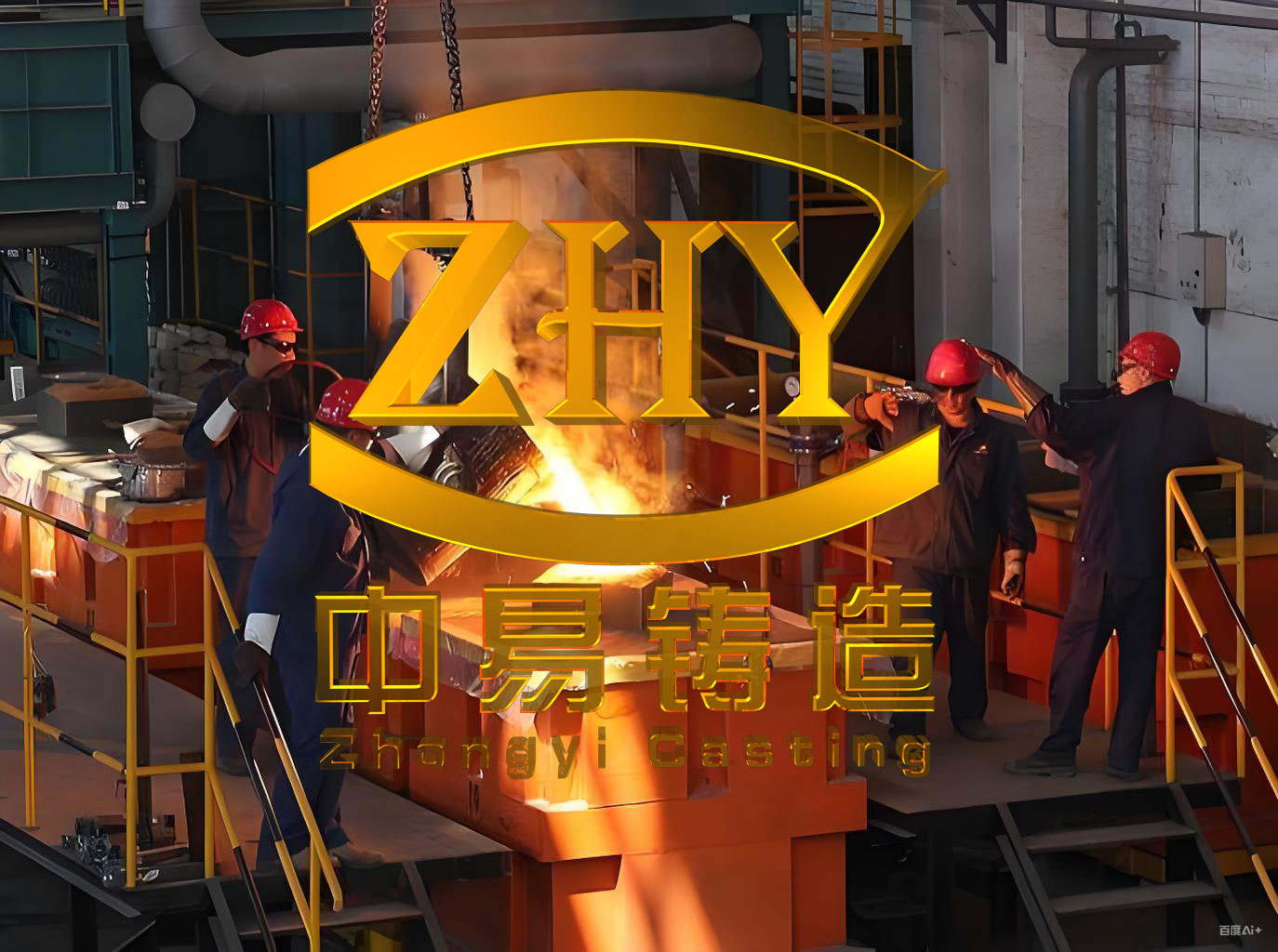
To build a world-class facility, a steel castings manufacturer must first understand the nature of the dust generated. Foundry dust can be broadly classified by origin and by its inherent properties.
| Classification Basis | Category | Typical Sources & Components |
|---|---|---|
| By Origin | Inorganic Dust | New sand, old sand, clay, graphite, coal dust, red mud (from molding materials); pig iron, scrap steel, coke, returns, limestone, iron ore (from charge materials). |
| Organic Dust | Resins, silicate binders, hardeners, core oils, mineral oil residues; fumes and soot from drying furnaces, melting furnaces, and pouring. | |
| By Inherent Properties | Physical Properties | Density, dispersity (size distribution), electrical resistivity, combustibility, explosivity, wettability, adhesiveness. |
| Chemical Properties | Chemical composition, notably free or combined silica (SiO₂) content, which is a major health hazard. Organic binders like furan resins may release harmful vapors (e.g., dimethylamine). |
The generation mechanism is twofold: mechanical and physicochemical. Mechanical processes include crushing, screening, drying, conveying, and mechanical handling of raw materials and molds. Physicochemical processes primarily occur during melting in cupolas, electric arc furnaces, or induction furnaces, where high temperatures generate fume and fine particulate matter. For a steel castings manufacturer, the melting department is often the most challenging area regarding fume control.
Dust dispersion is a two-stage phenomenon. First, primary dust generation creates a localized dust-laden air zone through inertial forces (e.g., from grinding wheels) or chaotic air currents from material drop or vibration. Second, secondary air currents—caused by equipment operation, thermal updrafts, drafts, or compressed air—carry this localized contamination into the wider workspace. Controlling this dispersion is the central challenge.
Fundamentals of Dust Source Control
The most effective strategy is to capture dust at its source. This involves creating a negative pressure zone at the point of generation to prevent the escape of contaminated air. For enclosed equipment, this means designing tight-fitting hoods or enclosures connected to an exhaust system. The required exhaust volume (Q) for a hood can be estimated based on the capture velocity needed to overcome disturbing air currents and the area of the hood opening. A fundamental principle for any steel castings manufacturer is to integrate source control into the machine design phase itself.
For open processes like shakeout or furnace tapping, where full enclosure is impractical, external capture hoods or “push-pull” systems using air curtains are employed. An air curtain creates a plane of controlled air flow to contain and direct fumes towards an exhaust hood. The effectiveness of such a system depends on precise aerodynamic design.
Wet suppression is another valuable tool, especially for dust generated during material transfer. By increasing the moisture content of materials, the adhesion between particles increases, reducing their tendency to become airborne. However, a steel castings manufacturer must be cautious, as excess moisture can interfere with molding sand properties and create sludge that requires separate treatment. The efficiency of wet suppression can be related to the water droplet size and dust particle size. A simple representation of the collision efficiency can be considered, though the actual dynamics are complex.
$$ \eta_{collision} \propto \frac{d_d^2}{d_w^2} $$
Where \(d_d\) is the dust particle diameter and \(d_w\) is the water droplet diameter. Optimal suppression occurs when droplet and particle sizes are comparable.
Ventilation Principles: Natural and Mechanical
A holistic environmental strategy for a steel castings manufacturer must leverage natural ventilation wherever possible, as it is energy-efficient and sustainable. Natural ventilation relies on thermal buoyancy (stack effect) and wind pressure. The design should orient the main building facade to prevailing summer winds (at 60°-90°) and incorporate ample roof ventilators or louvers.
The driving force for thermal buoyancy is the pressure difference (\(\Delta P\)) created by the temperature gradient between indoor and outdoor air:
$$ \Delta P = h \cdot g \cdot (\rho_o – \rho_i) $$
Where:
\(h\) = height difference between inlet and outlet openings (m),
\(g\) = acceleration due to gravity (9.81 m/s²),
\(\rho_o\) = density of outside air (kg/m³),
\(\rho_i\) = density of inside air (kg/m³).
The air density is a function of temperature: \(\rho = \frac{P}{R \cdot T}\), where \(P\) is pressure, \(R\) is the specific gas constant, and \(T\) is absolute temperature. For quick estimates, the volumetric flow rate (\(Q\)) due to stack effect can be approximated by:
$$ Q = C_D \cdot A \cdot \sqrt{2gh \frac{(T_i – T_o)}{T_o}} $$
Where:
\(C_D\) = discharge coefficient (typically ~0.65),
\(A\) = effective area of the opening (m²),
\(T_i, T_o\) = indoor and outdoor absolute temperatures (K).
When natural ventilation is insufficient to remove process heat and contaminants, mechanical ventilation is mandatory. Local exhaust systems are preferred for point sources, while general dilution ventilation may be needed for area-wide heating or diffuse emissions. A key rule is to never combine exhaust from dust-laden air with general ventilation intake streams to prevent cross-contamination.
Dust Removal Equipment Selection
Selecting the right dust collector is critical for efficiency and operational cost. The choice depends on dust loading, particle size distribution, temperature, moisture, and chemical nature. For a steel castings manufacturer, a multi-stage approach is often wise, especially in sand systems where large, abrasive particles are present.
| Equipment Type | Working Principle | Typical Efficiency | Best For / Notes |
|---|---|---|---|
| Gravity Settling Chamber | Reduces gas velocity to let particles settle by gravity. | Low (<50% for >40-60 µm) | Pre-cleaning of very large, heavy particles; very low pressure drop. |
| Cyclone Separator | Centrifugal force throws particles to the wall where they slide down. | Moderate to High (80-95% for >10-20 µm) | Medium-to-coarse dust; low maintenance; often used as a pre-cleaner before bag filters. Pressure drop typically 500-1500 Pa. |
| Bag Filter (Fabric Dust Collector) | Surface and depth filtration through fabric media. Cleaning by pulse-jet, reverse air, or shaking. | Very High (>99.5% for sub-micron particles) | Fine dust; the workhorse of foundry dust collection. Critical to keep gas temperature above dew point to prevent condensation and bag blinding. |
| Cartridge Filter | Similar to bag filters but using pleated media packs, offering higher surface area in a compact space. | Very High (>99.9%) | Fine dust; space-efficient; often used for lower dust loadings or specific applications like fume extraction. |
| Wet Scrubber | Impacts dust particles onto water droplets or wetted surfaces. | High (90-99% depending on type) | Hot, humid, or sticky dusts; also cools the gas. Generates wastewater requiring treatment. Not suitable for water-reactive dusts. |
The efficiency of a cyclone is governed by the cut-size diameter (\(d_{50}\)), the particle size for which the collection efficiency is 50%. It can be estimated using the Theodore-Deutsch equation or similar models:
$$ d_{50} = \sqrt{\frac{9 \mu W_c}{\pi N_e V_i (\rho_p – \rho_g)}} $$
Where:
\(\mu\) = gas viscosity,
\(W_c\) = cyclone inlet width,
\(N_e\) = effective number of gas turns in the cyclone,
\(V_i\) = inlet gas velocity,
\(\rho_p, \rho_g\) = particle and gas density.
For bag filters, the key design parameter is the air-to-cloth ratio (filtration velocity):
$$ v_f = \frac{Q}{A_f} $$
Where \(v_f\) is the filtration velocity (m/min or ft/min), \(Q\) is the volumetric flow rate, and \(A_f\) is the total filter media area. For foundry dust, a conservative \(v_f\) of 1.0 to 1.5 m/min is typical to ensure good cleaning and long bag life. A leading steel castings manufacturer will opt for high-quality, surface-treated filter media (e.g., PTFE-coated or hydrophobic polyester) to enhance dust release and resist moisture.
System Process Design and Hydraulic Calculation
Designing the entire ductwork and system is a systematic process. The goal is to ensure balanced suction at all pick-up points with minimal energy consumption and risk of duct clogging. For a comprehensive foundry system serving multiple stations like molding lines, sand systems, and melting, careful planning is essential.
Step 1: Determine Exhaust Air Volumes for Each Hood. This is based on the hood design, capture velocity, and the nature of the operation. Standards like ACGIH’s Industrial Ventilation Manual provide guidelines. For instance, a hood for a vibrating shakeout might require a capture velocity of 1.0 to 1.5 m/s across its open face. The required flow rate is \(Q = A \times V_c\), where \(A\) is the hood face area and \(V_c\) is the capture velocity.
Step 2: Layout the Ductwork System. Draw a schematic diagram showing all hoods, ducts, fittings (elbows, branches, transitions), the collector, and the fan. Main ducts should be sized for velocities between 15-20 m/s to prevent settling of dust, while branch ducts can be slightly lower. Use circular ducts where possible for strength and lower friction. Minimize sharp bends; use long-radius elbows (R/D > 1.5).
Step 3: Calculate System Pressure Loss. This is the sum of friction losses in straight ducts and local losses in fittings. The total pressure loss (\(\Delta P_{total}\)) determines the fan pressure requirement.
a) Friction Loss in Straight Duct: Calculated using the Darcy-Weisbach equation or more practically, from friction charts (like the Moody chart) for standard air. A common form is:
$$ \Delta P_f = f \cdot \frac{L}{D_h} \cdot \frac{\rho v^2}{2} $$
Where:
\(f\) = friction factor (dependent on Reynolds number and duct roughness),
\(L\) = duct length (m),
\(D_h\) = hydraulic diameter (for circular ducts, \(D_h\) = diameter D),
\(\rho\) = air density (approx. 1.2 kg/m³ for standard air),
\(v\) = air velocity in duct (m/s).
For quick estimation in smooth ducts, the following empirical formula can be used where \(v\) is in m/s and \(D\) is in meters:
$$ \Delta P_f \ (Pa/m) \approx \frac{0.602 \cdot v^{1.852}}{D^{1.269}} $$
b) Local Loss (Dynamic Loss): Due to fittings. It’s expressed as:
$$ \Delta P_l = \zeta \cdot \frac{\rho v^2}{2} $$
Where \(\zeta\) is the local loss coefficient. Values for \(\zeta\) are tabulated for standard fittings (e.g., 90° elbow: \(\zeta\) ~ 0.2-0.3; tee branch: \(\zeta\) ~ 0.5-1.5 depending on flow split).
Step 4: Balance the Branches. The system must be designed so that the total pressure loss from the fan to each hood inlet is roughly equal. This is achieved by adjusting duct diameters or adding dampers. The pressure loss from a hood (H) to the fan through a branch “j” is:
$$ \Delta P_{branch,j} = \Delta P_{hood,j} + \sum \Delta P_{f,ducts} + \sum \Delta P_{l,fittings} $$
The design aim is \(\Delta P_{branch,1} \approx \Delta P_{branch,2} \approx … \approx \Delta P_{branch,n}\).
Step 5: Select Fan and Motor. The fan must deliver the total system flow rate (\(Q_{total}\)) against the total system pressure loss (\(\Delta P_{total}\)), plus any additional losses. Safety factors are applied:
$$ Q_{fan} = \alpha_1 \cdot \alpha_2 \cdot Q_{total} $$
$$ P_{fan} = \beta \cdot (\Delta P_{ductwork} + \Delta P_{collector} + \Delta P_{other}) $$
Where:
\(\alpha_1\) = duct leakage factor (typically 1.1),
\(\alpha_2\) = collector leakage factor (for bag filters, ~1.05-1.1),
\(\beta\) = pressure safety factor (typically 1.1 to 1.15).
\(\Delta P_{collector}\) is obtained from the manufacturer’s data (e.g., a pulse-jet baghouse may have a clean pressure drop of 1000-1500 Pa).
The fan power (shaft power) can be estimated by:
$$ P_{shaft} (kW) = \frac{Q_{fan} \cdot P_{fan}}{1000 \cdot \eta_{fan}} $$
Where \(Q_{fan}\) is in m³/s, \(P_{fan}\) is in Pa, and \(\eta_{fan}\) is the fan static efficiency (typically 0.6-0.75). Motor power will be higher, accounting for drive losses.
Step 6: Consider Special Conditions for a Steel Castings Manufacturer. Melting operations (EAF, induction furnaces) produce very fine fume often requiring high-efficiency bag filters or even cartridge filters. The gas temperature and moisture must be carefully managed. For instance, tapping and pouring zones may need canopy hoods with high exhaust rates to capture rising thermal plumes. The exhaust volume for a canopy hood over a pouring line can be estimated by considering the convective heat rise and the hood’s height above the source.
Another critical aspect is the handling of return sand, which is often hot and humid. If this sand is directly connected to a bag filter, the warm, moisture-laden air can cause condensation inside the filter, leading to bag blinding and system failure. Therefore, a steel castings manufacturer should consider installing a primary cooling stage (like a fluidized bed cooler) or a pre-conditioning cyclone that allows some moisture to condense and drop out before the air reaches the bag filter.
System Optimization and Advanced Considerations
Modern computational fluid dynamics (CFD) software is an invaluable tool for optimizing hood design and predicting airflow patterns in complex foundry spaces. It can model thermal plumes, the effectiveness of air curtains, and potential short-circuiting in ventilation layouts.
Energy recovery is becoming increasingly important. The hot exhaust air from melting or cooling processes can be passed through heat exchangers to preheat incoming makeup air or process water, significantly reducing the energy footprint of the facility. For a large-scale steel castings manufacturer, this can translate to substantial cost savings.
Continuous monitoring is key. Installing pressure transducers across the filter (differential pressure gauges) indicates when cleaning is needed. Particle counters or opacity monitors on the stack ensure compliance with emission regulations. The data can be integrated into a central control system for predictive maintenance.
In summary, the journey towards an environmentally superior foundry is grounded in meticulous process design. From initial hood selection and duct sizing to final fan specification, every calculation matters. By embracing these engineering principles—prioritizing source capture, selecting robust equipment, and designing balanced systems—a steel castings manufacturer can achieve the dual goals of operational excellence and environmental stewardship. The result is not just compliance, but a competitive advantage through a healthier workforce, reduced material loss, and a sustainable production model. The technical depth provided here serves as a foundation; applying it requires adaptation to the specific processes, layout, and scale of each unique foundry operation.