
As a dedicated steel castings manufacturer, we recognize that the foundry industry is at a crossroads, where environmental stewardship and operational efficiency are no longer optional but essential for long-term viability. The journey toward sustainability is multifaceted, involving rigorous commitment to reducing carbon footprints, optimizing resource use, and pioneering recycling technologies. In this article, we delve into the core practices that define modern steel castings manufacturing, emphasizing how sustainability awards and innovative sand recycling methods are shaping the future. We will explore these concepts through detailed tables and mathematical models to provide a comprehensive overview, all from the perspective of a forward-thinking steel castings manufacturer.
The pursuit of sustainability in steel castings manufacturing has gained significant momentum in recent decades, driven by both regulatory pressures and customer demands for greener supply chains. A steel castings manufacturer must balance production efficiency with environmental responsibility, often implementing systemic changes that span energy management, emissions reduction, and waste recycling. Awards from industry bodies serve as validation for these efforts, highlighting best practices that others can emulate. For instance, achieving recognition for sustainability reports and green initiatives underscores a steel castings manufacturer’s commitment to transparency and continuous improvement. Below, we summarize key milestones in sustainable practices adopted by leading steel castings manufacturers, using a table to illustrate the progression.
| Year | Initiative | Impact on Steel Castings Manufacturer |
|---|---|---|
| 2001 | Implementation of ISO 14001 standard | Established a framework for environmental management systems, reducing waste and improving compliance. |
| 2009 | Joining energy efficiency programs | Committed to reducing energy intensity by 25% over a decade, lowering operational costs for the steel castings manufacturer. |
| 2014 | Adoption of Greenhouse Gas (GHG) accounting | Enabled precise measurement of carbon emissions, aiding in setting reduction targets for the steel castings manufacturer. |
| 2016 | ISO 50001 certification for energy management | Systematically decreased energy consumption, enhancing profitability for the steel castings manufacturer. |
| 2022 | Green foundry awards for dehumidification systems | Recognized innovations that cut energy use, reinforcing the steel castings manufacturer’s leadership in sustainability. |
These milestones demonstrate how a steel castings manufacturer can integrate sustainability into core operations. The benefits extend beyond environmental gains; they include cost savings, improved market reputation, and stronger customer relationships. For example, a steel castings manufacturer that prioritizes energy efficiency often sees reduced utility bills, which can be modeled using energy intensity formulas. Consider the energy intensity reduction goal of 25% over ten years: if a steel castings manufacturer starts with an annual energy consumption \(E_0\), the target consumption after ten years \(E_{10}\) can be expressed as:
$$ E_{10} = E_0 \times (1 – 0.25) = 0.75E_0 $$
This linear reduction implies cumulative energy savings, which for a steel castings manufacturer translate directly into lower greenhouse gas emissions. Moreover, the steel castings manufacturer’s role in a circular economy is critical, particularly in managing foundry sand—a key resource in casting processes. Sand is often perceived as abundant, but for a steel castings manufacturer, it represents a significant cost and logistical challenge. The choice of sand for molding and core-making affects both product quality and environmental impact, making efficient recycling paramount.
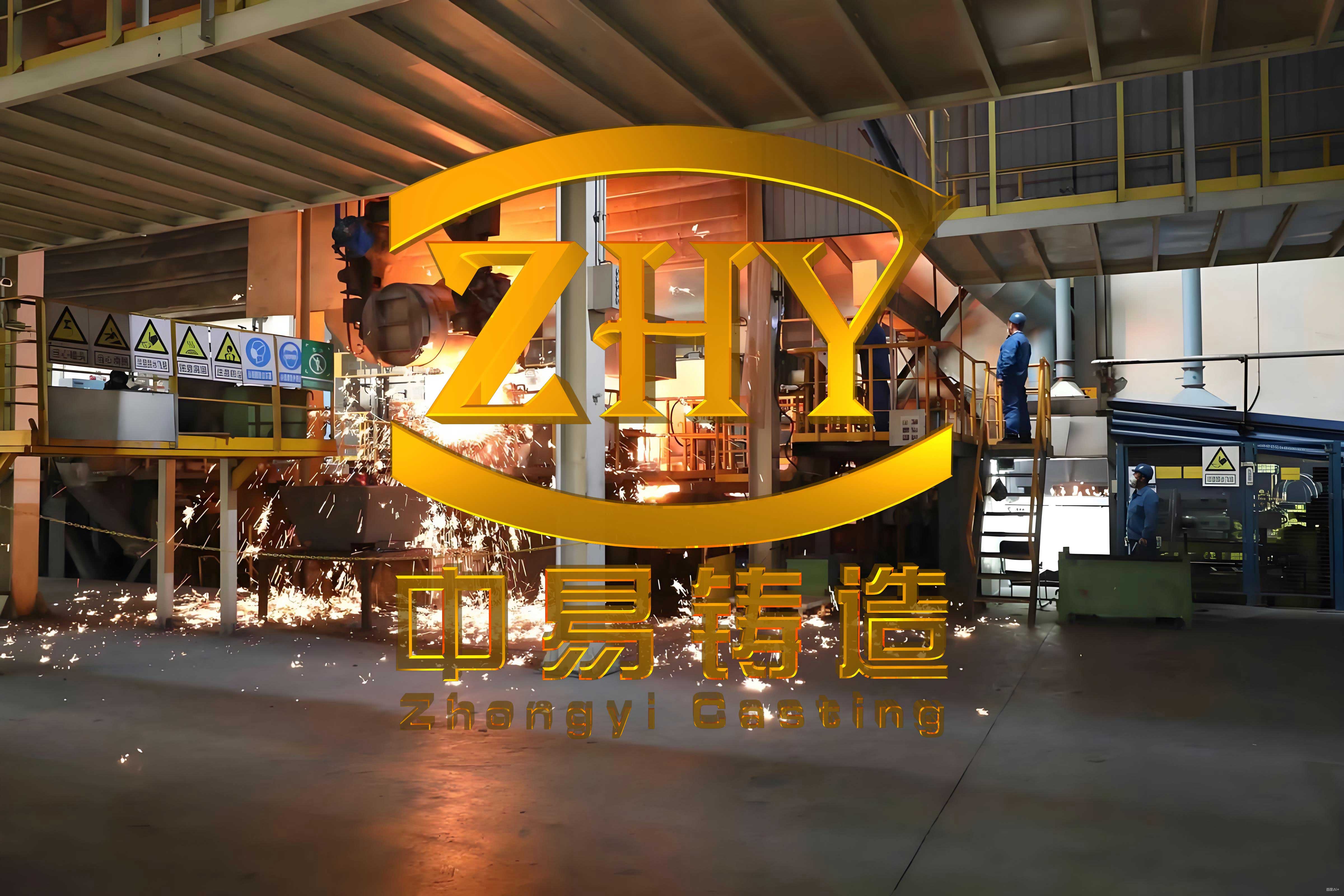
The image above illustrates the advanced facilities of a modern steel castings manufacturer, where sustainability and technology converge. As a steel castings manufacturer, we invest in such infrastructure to minimize our ecological footprint while maintaining high production standards. This visual underscores the integration of green practices in daily operations, from energy-efficient machinery to sand recycling systems. Moving forward, we explore the innovative wet reclamation process for foundry sand, a breakthrough that exemplifies how a steel castings manufacturer can address resource scarcity and waste management.
Foundry sand recycling is a pressing issue for any steel castings manufacturer, as sand constitutes a major expense and environmental burden after use. Traditional methods like dry reclamation or thermal recycling can be energy-intensive and may degrade sand quality. However, the wet reclamation process offers a promising alternative, characterized by high energy efficiency and near-carbon-neutral operations. For a steel castings manufacturer, this means not only cost savings but also alignment with sustainability goals. The process involves using water to remove binders from spent sand, with energy recovery mechanisms that minimize freshwater usage. Below, we detail the steps and efficiencies using mathematical models.
The wet reclamation system operates on a closed-loop water cycle, significantly reducing waste. For every metric ton of sand processed, only 12 liters of wastewater are generated, which is treated and reused. The energy recovery efficiency is remarkable: 95% of the energy required for evaporation is recaptured from condensation. This can be represented by the efficiency formula \(\eta\), where \(E_{recovered}\) is the energy recovered and \(E_{input}\) is the total energy input:
$$ \eta = \frac{E_{recovered}}{E_{input}} \times 100\% = 95\% $$
Such high efficiency makes this process ideal for a steel castings manufacturer aiming to reduce its carbon footprint. Additionally, the removal of contaminants reaches 98%, ensuring that reclaimed sand has mechanical properties nearly identical to new sand. For a steel castings manufacturer, this translates to covering up to 95% of new sand requirements with recycled material, as reported in industry studies. The table below compares wet reclamation with other methods, highlighting its advantages for a steel castings manufacturer.
| Method | Energy Efficiency | Contaminant Removal Rate | Impact on Sand Quality | Suitability for Steel Castings Manufacturer |
|---|---|---|---|---|
| Wet Reclamation | 95% energy recovery | 98% | Minimal grain damage; fines <0.3% | High: reduces new sand demand by 95% |
| Thermal Reclamation | 60-70% energy recovery | 90-95% | May cause thermal shock and fines generation | Moderate: limited by energy costs |
| Mechanical Reclamation | Low energy use | 80-85% | Can increase fines and reduce flowability | Low: often requires blending with new sand |
As a steel castings manufacturer, adopting wet reclamation aligns with broader sustainability targets, such as those outlined in greenhouse gas reduction commitments. For instance, if a steel castings manufacturer joins initiatives to cut GHG emissions by 25% by 2030, sand recycling contributes significantly by reducing the need for virgin sand extraction and transportation. The carbon savings can be estimated using emission factors. Let \(C_{new}\) be the carbon footprint of producing and transporting one ton of new sand, and \(C_{reclaimed}\) be the footprint for reclaiming one ton of spent sand. For a steel castings manufacturer using reclaimed sand for 95% of needs, the total carbon reduction \(\Delta C\) over annual sand usage \(S\) is:
$$ \Delta C = S \times 0.95 \times (C_{new} – C_{reclaimed}) $$
This equation underscores how a steel castings manufacturer can quantify environmental benefits, integrating them into sustainability reports. Beyond sand, energy management remains a cornerstone for a steel castings manufacturer. Programs like “Better Plants” and “Better Climate Challenge” have enabled steel castings manufacturers to set audacious goals, such as doubling energy productivity by 2030. Energy productivity, defined as economic output per unit of energy consumed, can be enhanced through technologies like smart ventilation controls and dehumidification systems. For a steel castings manufacturer, improving energy productivity not only reduces emissions but also boosts competitiveness.
Consider the energy productivity goal: to double it from a 2010 baseline by 2030. If a steel castings manufacturer has an initial energy productivity \(P_0\) in 2010, the target \(P_{2030}\) is \(2P_0\). Assuming linear growth, the annual improvement rate \(r\) can be derived from:
$$ P_{2030} = P_0 \times (1 + r)^{20} $$
Solving for \(r\), we get \(r \approx 0.035\) or 3.5% per year. This steady progress requires continuous innovation, which a steel castings manufacturer achieves through cross-functional teams and substantive assessments. The integration of environmental, social, and governance (ESG) reporting further solidifies accountability, as seen in awards from suppliers recognizing excellence in corporate social responsibility. For a steel castings manufacturer, such accolades validate the holistic approach to sustainability, encompassing everything from energy audits to community engagement.
The role of a steel castings manufacturer in a sustainable supply chain cannot be overstated. Customers increasingly prioritize partners who help meet their own decarbonization targets, creating a ripple effect of positive change. As a steel castings manufacturer, we have observed that green initiatives—from using 85% recycled iron in castings to implementing ISO 50001—directly support client goals. This synergy is captured in the concept of shared value, where environmental and economic benefits intersect. For instance, reducing energy intensity lowers production costs for the steel castings manufacturer while enabling clients to report lower Scope 3 emissions. The table below summarizes key performance indicators (KPIs) that a steel castings manufacturer might track to demonstrate sustainability progress.
| KPI Category | Specific Metric | Target for Steel Castings Manufacturer | Measurement Method |
|---|---|---|---|
| Energy Efficiency | Energy intensity (kWh per ton of castings) | Reduce by 25% every decade | Monthly utility data analysis |
| Emissions Reduction | Greenhouse gas emissions (tons CO2e) | Cut by 25% by 2030 from baseline | GHG accounting protocols |
| Resource Recycling | Percentage of sand reclaimed | Achieve 95% reclamation rate | Mass balance calculations |
| Waste Management | Non-hazardous waste diverted from landfill | Increase to 90% diversion rate | Waste tracking systems |
These KPIs guide a steel castings manufacturer in setting actionable goals, much like the sustainability benchmarks established in 2013 by industry leaders. Moreover, the steel castings manufacturer’s commitment extends to innovative projects, such as dehumidification systems that reduce energy use in cupola operations. The energy savings from such projects can be modeled using thermodynamic principles. For example, removing moisture from air reduces the latent heat load, leading to lower energy consumption in heating processes. If \(Q\) is the heat energy saved, it relates to the mass of water removed \(m_w\) and the latent heat of vaporization \(L_v\):
$$ Q = m_w \times L_v $$
For a steel castings manufacturer, this translates to tangible reductions in fuel or electricity use, contributing to both cost savings and emission targets. The cumulative impact of these efforts is why a steel castings manufacturer often receives multiple awards, reinforcing its reputation as a sustainability pioneer. Beyond operational tweaks, strategic planning is vital. A steel castings manufacturer might develop a roadmap that includes phased investments in renewable energy, such as solar panels or waste-heat recovery systems. These investments pay off over time, as shown by the net present value (NPV) analysis, where cash flows from energy savings offset initial costs.
Let \(I_0\) be the initial investment, \(S_t\) the annual savings in year \(t\), \(r\) the discount rate, and \(n\) the project lifespan. The NPV for a steel castings manufacturer is:
$$ NPV = -I_0 + \sum_{t=1}^{n} \frac{S_t}{(1+r)^t} $$
A positive NPV indicates that the sustainability project is economically viable for the steel castings manufacturer, aligning environmental and financial objectives. This calculus is essential for justifying large-scale initiatives, like the wet reclamation plants discussed earlier. As a steel castings manufacturer scales such technologies, the industry-wide adoption can lead to systemic change, reducing the environmental impact of metal casting globally.
In conclusion, the journey of a steel castings manufacturer toward sustainability is marked by continuous improvement, innovation, and recognition. From winning green awards to pioneering sand recycling methods, a steel castings manufacturer plays a pivotal role in advancing circular economy principles. The integration of tables and formulas in this article highlights how data-driven approaches enable a steel castings manufacturer to measure progress, optimize processes, and communicate value to stakeholders. As we look ahead, the steel castings manufacturer must embrace emerging technologies—such as AI for energy management or advanced binders for sand—to stay at the forefront of sustainability. Ultimately, the steel castings manufacturer that prioritizes green practices not only secures its own future but also contributes to a healthier planet, proving that industrial excellence and environmental stewardship can go hand in hand.
The narrative of a steel castings manufacturer is thus one of transformation, where every kilowatt-hour saved and every ton of sand reclaimed adds up to significant impact. By sharing these insights, we hope to inspire other steel castings manufacturers to embark on similar paths, fostering a collective movement toward a more sustainable foundry industry. The steel castings manufacturer, as a key player in manufacturing supply chains, has the power to drive change, making sustainability not just a goal but a standard practice for generations to come.