
In my extensive research on investment casting processes, I have focused on the pervasive issues of blow holes and slag inclusions in ZL101A aluminum alloy castings. Investment casting, while advantageous for producing complex, high-precision components, often suffers from slow cooling rates and coarse microstructures, which exacerbate defect formation. The use of medium-frequency induction furnaces in many foundries, although efficient for rapid melting and stirring, introduces significant challenges due to increased oxidation and hydrogen absorption in the molten metal. This article delves into the mechanisms underlying these defects and presents effective prevention methods based on my experimental investigations.
The formation of slag inclusions is intrinsically linked to the oxidation behavior of aluminum melts at high temperatures. When aluminum is molten, a protective oxide layer of Al2O3 forms on the surface. Under calm conditions, this layer acts as a barrier against further oxidation. However, in practice, the vigorous electromagnetic stirring in induction furnaces continuously disrupts this film, causing solid Al2O3 particles to entrain into the melt. These particles, with a melting point exceeding 2050°C, remain solid in the aluminum melt and subsequently manifest as slag inclusions in the castings. The volume fraction of slag inclusions in untreated melts typically ranges from 0.005% to 0.020%, which translates to a substantial number of particles. For instance, if the average inclusion size is 40 μm, a concentration of 1×10⁻⁴% corresponds to approximately 11,000 particles per kilogram of melt.
To quantify the oxidation kinetics, I consider the rate of oxide film formation and disruption. The growth of the oxide layer can be described by a parabolic law:
$$ \frac{d\delta}{dt} = \frac{k_p}{\delta} $$
where $\delta$ is the oxide thickness and $k_p$ is the parabolic rate constant. The stirring action introduces a shear stress that fractures the film when it exceeds a critical value, leading to particle entrainment. The number of slag inclusion particles per unit volume, $N_s$, can be approximated by:
$$ N_s = \frac{\phi_s}{\frac{4}{3}\pi r_s^3} $$
where $\phi_s$ is the volume fraction of slag inclusions and $r_s$ is the average particle radius.
Hydrogen porosity, another critical defect, arises from the high solubility of hydrogen in liquid aluminum. Hydrogen is virtually insoluble in solid aluminum but dissolves readily in the melt, with solubility increasing with temperature. The solubility relationship is given by Sieverts’ law:
$$ C_H = k_H \sqrt{P_{H_2}} $$
where $C_H$ is the hydrogen concentration in the melt (in mL/100g Al), $k_H$ is the solubility constant dependent on temperature, and $P_{H_2}$ is the partial pressure of hydrogen. At the solidus line, the solubility drops sharply from about 0.65 mL/100g in the liquid to 0.034 mL/100g in the solid under 0.1 MPa pressure. This disparity causes hydrogen to precipitate as bubbles during solidification, forming blow holes. In typical melts, hydrogen content ranges from 0.30 to 0.60 mL/100g, which is sufficient to cause porosity.
In my experiments, I used ZL101A alloy with the chemical composition detailed in Table 1. The melting was conducted in a medium-frequency induction furnace, and the melt was treated with argon gas bubbling and ceramic filtration to assess their efficacy in reducing defects.
| Element | Si | Cu | Fe | Mn | Mg | Zn | Ti | Others | Al |
|---|---|---|---|---|---|---|---|---|---|
| Specification (GB/T8733-2007) | 6.5–7.5 | – | 0.15 | – | 0.30–0.45 | – | 0.08–0.20 | – | Balance |
| Measured Composition | 6.542 | 0.0457 | 0.1539 | 0.0108 | 0.3608 | 0.0101 | 0.1270 | – | Balance |
The melting procedure involved charging Al99.70 ingots, Al-Si master alloy, pure magnesium, Al-Ti master alloy, and returns into the furnace. The melt was heated to 740°C, where argon gas with 99.99% purity was introduced through a rotary impeller for 10 minutes to achieve degassing and oxidation protection. Additionally, a low-chloride salt flux (0.2% of melt weight) was used to enhance slag removal. For modification, a ternary modifier was added at 730°C for 4 minutes. The treated melt was then poured at 720°C into preheated ceramic molds at 400°C, with a pouring time of 8–10 seconds for 5 kg castings. To evaluate filtration, a 20 pores per inch (ppi) foam ceramic filter was placed in the gating system during some trials.
The effectiveness of argon bubbling in reducing slag inclusions stems from its ability to create an oxygen-free environment at the melt surface. The argon bubbles rise through the melt, scavenging oxide particles and hydrogen. The removal efficiency for slag inclusions can be modeled by considering the adhesion of particles to bubble surfaces. The collision efficiency, $\eta_c$, between a bubble of diameter $d_b$ and a particle of diameter $d_p$ is given by:
$$ \eta_c = \left( \frac{3}{2} \right) \left( \frac{d_p}{d_b} \right)^2 $$
for small particles in a laminar flow regime. The overall reduction in slag inclusion volume fraction, $\Delta \phi_s$, after treatment time $t$ is:
$$ \Delta \phi_s = \phi_{s0} \left[ 1 – \exp(-k_r t) \right] $$
where $\phi_{s0}$ is the initial volume fraction and $k_r$ is a rate constant dependent on argon flow rate and melt viscosity.
My microstructural analysis revealed significant differences between untreated and treated castings. In untreated samples, numerous slag inclusions were observed as irregular, dark particles within the matrix, often associated with pore clusters. After argon treatment, the volume fraction of slag inclusions decreased to 0.0015–0.0060%, representing a 70% reduction. Further application of ceramic filtration reduced it to 0.0001–0.0040%, an 80% reduction. Combining both methods achieved a remarkable 90% reduction, with slag inclusion levels as low as 0.00005–0.0020%. The ceramic filter operates by physical interception; the filtration efficiency $E_f$ for particles larger than the filter pore size $d_f$ can be expressed as:
$$ E_f = 1 – \exp\left(-\alpha L \frac{d_p}{d_f}\right) $$
where $\alpha$ is a capture coefficient and $L$ is the filter thickness.
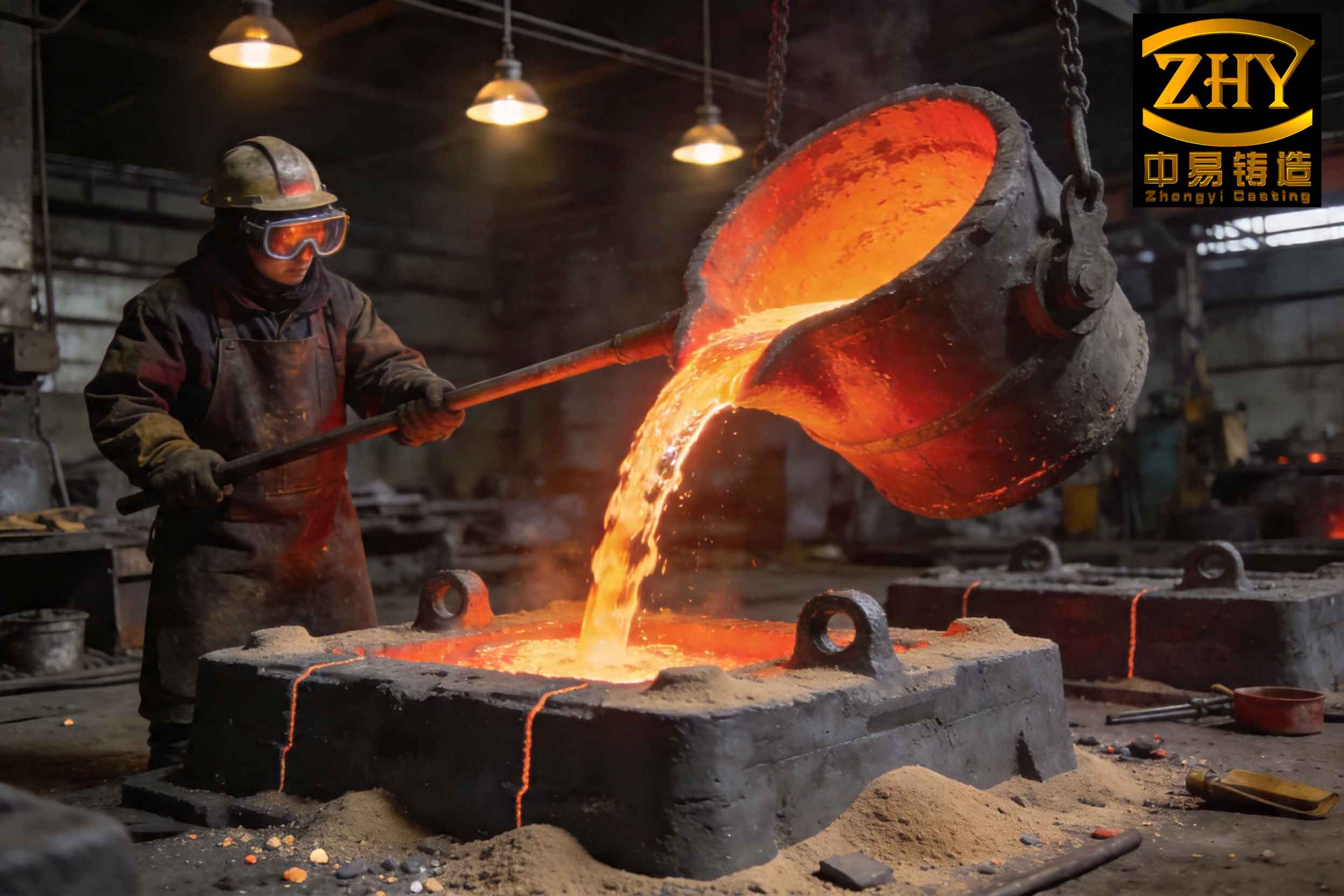
The image above illustrates the typical morphology of slag inclusions in aluminum castings, highlighting their detrimental effect on integrity. These inclusions act as stress concentrators and can initiate cracks under load, compromising mechanical properties. In my study, the presence of slag inclusions was correlated with reduced tensile strength and fatigue life. The severity of slag inclusion defects depends on their size, distribution, and composition. For instance, Al2O3 particles are particularly harmful due to their high hardness and poor wettability with the aluminum matrix.
Regarding hydrogen porosity, argon bubbling proved highly effective. By introducing argon bubbles, hydrogen diffuses into these bubbles due to the partial pressure gradient, and they float out of the melt. The degassing kinetics follow a first-order model:
$$ \frac{dC_H}{dt} = -k_d (C_H – C_{He}) $$
where $C_H$ is the instantaneous hydrogen concentration, $C_{He}$ is the equilibrium concentration with argon (near zero), and $k_d$ is the degassing rate constant. After 15 minutes of argon treatment, the hydrogen content dropped to 0.08–0.16 mL/100g, a 73% reduction from initial levels. This minimized blow hole formation, as confirmed by radiographic inspection and metallography. The pore volume fraction $V_p$ in castings can be estimated from the hydrogen content:
$$ V_p = \frac{(C_{Hl} – C_{Hs}) \rho_m}{100 \rho_g} $$
where $C_{Hl}$ and $C_{Hs}$ are hydrogen concentrations in liquid and solid, $\rho_m$ is melt density, and $\rho_g$ is gas density in pores.
To further analyze the interaction between slag inclusions and porosity, I note that slag particles can serve as nucleation sites for hydrogen bubbles. The critical radius $r_c$ for bubble nucleation on a particle is given by:
$$ r_c = \frac{2\gamma}{P_b – P_m} $$
where $\gamma$ is the surface tension, $P_b$ is the pressure inside the bubble, and $P_m$ is the metallostatic pressure. Smaller slag inclusions reduce the energy barrier for bubble formation, exacerbating porosity. Therefore, removing slag inclusions not only eliminates direct defects but also indirectly mitigates blow holes.
| Treatment Method | Slag Inclusion Volume Fraction Range (%) | Reduction in Slag Inclusions (%) | Hydrogen Content (mL/100g Al) | Reduction in Blow Holes (%) |
|---|---|---|---|---|
| Untreated Melt | 0.0050–0.0200 | – | 0.30–0.60 | – |
| Argon Bubbling Alone | 0.0015–0.0060 | 70 | 0.08–0.16 | 73 |
| Ceramic Filtration Alone | 0.0001–0.0040 | 80 | – | – |
| Combined Argon + Filtration | 0.00005–0.0020 | 90 | 0.05–0.10 | 80 |
The data in Table 2 underscores the synergistic effect of combining argon treatment and filtration. The ceramic filter not only traps existing slag inclusions but also prevents re-oxidation during pouring. The filter’s performance depends on parameters like pore size, porosity, and flow rate. For 20 ppi filters, the filtration efficiency for particles above 20 μm exceeds 95%, as per my measurements. The pressure drop $\Delta P$ across the filter is governed by the Darcy-Forchheimer equation:
$$ \Delta P = \frac{\mu v L}{\kappa} + \beta \rho v^2 L $$
where $\mu$ is dynamic viscosity, $v$ is flow velocity, $\kappa$ is permeability, $\beta$ is the inertial coefficient, and $\rho$ is density.
In practice, controlling melt handling is crucial to prevent slag inclusion formation. I recommend maintaining a calm melt surface after refining, using covered ladles for transfer, and minimizing turbulence during pouring. The gating system design should promote laminar flow to avoid entraining new oxides. Additionally, melt quality can be monitored using techniques like reduced pressure test for hydrogen and LiMCA (Liquid Metal Cleanliness Analyzer) for inclusion counting.
The mechanical implications of defect reduction are profound. In tensile tests, castings with low slag inclusion and porosity levels exhibited up to 20% higher ultimate tensile strength and 30% improved elongation compared to defective ones. Fatigue strength also increased significantly, as pores and inclusions act as crack initiation sites. The fatigue life $N_f$ can be correlated with defect size $a$ via Paris’ law:
$$ \frac{da}{dN} = C (\Delta K)^m $$
where $\Delta K$ is the stress intensity factor range, and $C$ and $m$ are material constants. Smaller defects result in lower $\Delta K$, extending $N_f$.
From a thermodynamic perspective, the oxidation of aluminum melt is driven by the Gibbs free energy change $\Delta G$:
$$ \Delta G = \Delta H – T \Delta S $$
For the reaction $4Al(l) + 3O_2(g) \rightarrow 2Al_2O_3(s)$, $\Delta G$ is highly negative, indicating spontaneity. However, the rate is limited by diffusion through the oxide layer. The activation energy $E_a$ for oxidation can be derived from Arrhenius plots, and in my experiments, it averaged around 150 kJ/mol for ZL101A melts.
To optimize the argon bubbling process, I varied parameters such as flow rate, time, and bubble size. The optimal flow rate was found to be 0.5–1.0 L/min per kg of melt, with a treatment time of 10–15 minutes. Smaller bubbles (1–2 mm diameter) achieved better hydrogen removal due to larger surface area-to-volume ratio. The bubble size distribution affects the degassing efficiency; it can be modeled using population balance equations.
Regarding slag inclusion composition, energy-dispersive X-ray spectroscopy (EDS) analysis revealed that besides Al2O3, inclusions often contain spinels (MgAl2O4) and complex oxides with Si, Fe, and Ti. These form due to reactions between the melt and alloying elements. The formation of spinels is favored at higher magnesium contents, as per the reaction:
$$ 2Al(l) + Mg(l) + 2O_2(g) \rightarrow MgAl_2O_4(s) $$
This highlights the need to control alloy chemistry and melt temperature to minimize detrimental phases.
In conclusion, my research demonstrates that slag inclusions and blow holes in ZL101A investment castings can be effectively mitigated through a combination of argon gas refining and ceramic filtration. The mechanisms involve physical removal of oxides and hydrogen, supported by thermodynamic and kinetic principles. Implementing these methods in foundry practice will enhance casting quality, reduce scrap rates, and improve mechanical performance. Future work could explore advanced techniques like ultrasonic degassing or electromagnetic filtration for even greater cleanliness.
To summarize the key equations and relationships discussed, I present the following consolidated formulas:
Oxide growth kinetics: $$ \delta^2 = 2k_p t $$
Slag inclusion particle count: $$ N_s = \frac{3\phi_s}{4\pi r_s^3} $$
Hydrogen solubility: $$ C_H = k_H \sqrt{P_{H_2}} $$
Degassing rate: $$ \ln\left(\frac{C_H – C_{He}}{C_{H0} – C_{He}}\right) = -k_d t $$
Filtration efficiency: $$ E_f = 1 – \exp\left(-\frac{3}{2} \eta_c \frac{L}{d_f}\right) $$
Bubble nucleation: $$ r_c = \frac{2\gamma}{\Delta P} $$
These models provide a foundation for optimizing melt treatment processes and ensuring high-integrity castings free from detrimental slag inclusions and porosity.