
In the manufacturing of large-scale wind turbines, bearing blocks serve as critical components, typically operating under harsh conditions such as corrosion, sand erosion, humidity, and low temperatures. These castings are subjected to complex loading scenarios and are challenging to install and maintain, necessitating exceptionally high quality standards. Specifically, they must exhibit high fatigue strength and low susceptibility to brittle fracture while ensuring safe and reliable operation over a lifespan of 20 years. However, during mass production, a severe issue emerged: the presence of slag inclusion defects, leading to the scrapping of hundreds of tons of castings and direct economic losses exceeding one million currency units. This problem underscores the critical need to address slag inclusion defects in ductile iron castings, which significantly compromise mechanical properties like toughness and yield strength.
From a theoretical perspective, the process from iron melt smelting to casting pouring is complex and irreversible. At high temperatures, it is nearly impossible to completely eliminate oxidized slag and prevent its entry into the mold cavity. Therefore, effective prevention of primary slag inclusion defects requires multifaceted approaches, including increasing pouring temperature, controlling melt quality, reducing residual magnesium content, thorough slag removal, and—most importantly—designing an optimal gating system. While our company has established mature manufacturing processes and operational techniques for high-quality ductile iron melt smelting, this study focuses on designing experimental schemes tailored to a specific wind turbine bearing block project. The goal is to develop a gating system that synergizes with melting processes, leveraging its slag avoidance and blocking functions to prevent slag inclusion defects in castings.
Slag inclusion defects in castings refer to the presence of solid slag or metal oxides within or on the surface of the casting, severely degrading mechanical performance. The formation mechanisms of slag inclusion in ductile iron involve both exogenous (primary) and endogenous (secondary) sources. Exogenous slag inclusions originate from contaminants and impurities introduced during smelting, tapping, spheroidization, inoculation, slag skimming, and pouring, which form secondary oxidation products entrained in the melt. Endogenous slag inclusions primarily result from reaction products during desulfurization and spheroidization. The process is governed by complex physico-chemical reactions, and in practice, defect analysis relies on operational experience, defect location, and morphology.
Macroscopically, slag inclusion defects appear as irregular, clustered formations with boundaries slightly darker than the base metal, often featuring gray-black pores or loose structures at the center. Microscopic examination via scanning electron microscopy (SEM) reveals rough, porous surfaces with partial detachment, leaving irregular cavities or cracks. Elemental composition analysis using energy-dispersive X-ray spectroscopy (EDS) indicates elevated levels of carbon (C), oxygen (O), aluminum (Al), and silicon (Si), confirming the presence of metal oxides like SiO2, MgO, and Al2O3. These findings align with the characteristics of primary slag inclusion defects, where slag particles are carried into the mold cavity with the pouring melt due to insufficient removal beforehand.
To quantify the impact of gating system design on slag inclusion prevention, we conducted a series of experiments with the gating system as the sole variable, while keeping all other casting and melting parameters constant. The bearing block castings, made of QT400-18AL (EN-GJS-400-18U-LT), had dimensions ranging from 2000 mm × 1240 mm × 500 mm to 3000 mm × 1800 mm × 500 mm and weights between 2200 kg and 4200 kg. The high dynamic load zones, critical for ultrasonic and magnetic particle testing (Grade II or higher), were located at intersections of 60 mm ribs and 350 mm flanges, presenting complex fluid flow challenges during filling. The casting’s upper surfaces, including important bearing mounting faces, were non-machined, making slag inclusion removal impossible through processing and heightening sensitivity to gating system performance.
We designed three distinct gating system schemes to evaluate their slag avoidance efficacy, as summarized in Table 1. Each scheme was applied to three castings, totaling nine experimental units. The schemes varied in gating type, pouring cup design, and the use of filters, with the aim of minimizing slag inclusion defects.
| Scheme No. | Gating System Type | Pouring Cup Type | Filter Usage | Castings No. | Key Features |
|---|---|---|---|---|---|
| 1 | Slit-type ingate | Transfer ladle + funnel | No | 1-3 | Traditional design with direct flow |
| 2 | Circular ceramic tube ingate | Transfer ladle + funnel | No | 4-6 | Open system with bottom gating |
| 3 | Circular ceramic tube ingate | Basin-shaped cup | Yes | 7-9 | Combined filter and basin cup |
The experiments were carried out under standard production conditions. For Scheme 1 (slit-type ingate), castings 1-3 exhibited severe slag inclusion defects on the upper surfaces, with dense distributions visible to the naked eye. Ultrasonic testing confirmed slag presence within 0-40 mm of the surface. This outcome highlights the limitations of slit-type gating: if the slag trapping area is inadequate or pouring time deviates from design, slag particles in the runner may be “sucked” into the mold cavity before floating up. Prolonged pouring times to compensate can cause sand erosion at the ingate, leading to additional sand-related slag inclusion defects.
In Scheme 2 (circular ceramic tube ingate without filter), castings 4-6 showed minor, scattered slag inclusion defects on the upper surfaces, limited to 0-15 mm depth. The open gating system, with larger cross-sectional areas in the runner and ingate, promotes slow, steady melt flow, reducing turbulence and secondary oxidation. This minimizes the formation of secondary slag inclusions. Although debates exist regarding the slag-blocking efficiency of closed versus open systems, our practical validation demonstrates that a well-designed open bottom-gating system can effectively mitigate slag inclusion in large ductile iron castings.
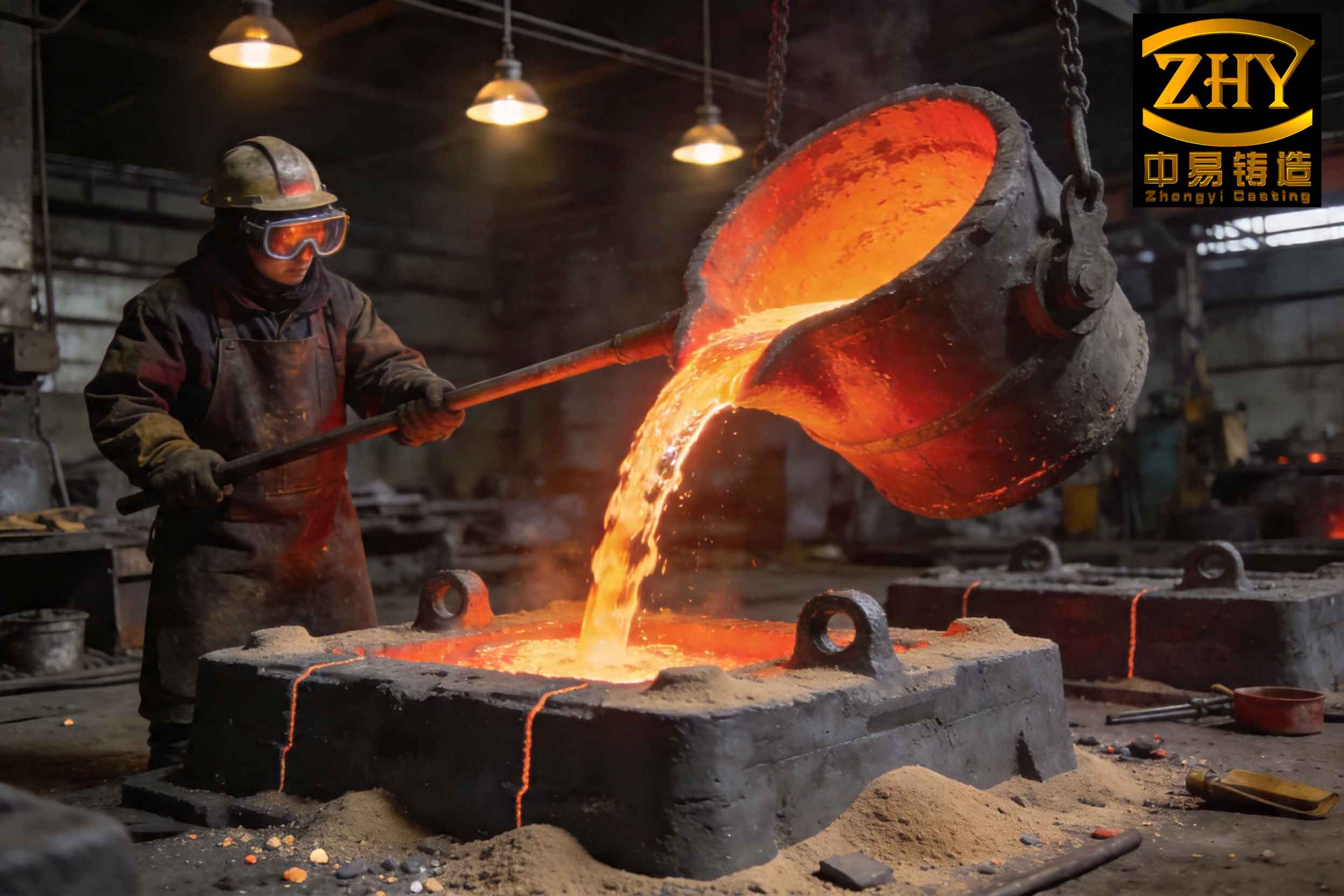
Scheme 3 (circular ceramic tube ingate with basin-shaped cup and filter) produced castings 7-9 with no visible slag inclusion defects, resulting in smooth surfaces after shot blasting and no超标 defects upon ultrasonic inspection. The basin-shaped pouring cup features a dam at the bottom, regulating flow velocity and creating a deep liquid pool that inhibits horizontal vortices and promotes vertical ones, enhancing slag separation. The melt then enters a filter chamber equipped with a foam ceramic filter (150 mm × 150 mm × 25 mm, 10 PPI pore size), which withstands temperatures up to 1500°C. This filter effectively removes slag particles and controls flow rate, reducing turbulence. The design includes a slag collection bag in the runner to prevent direct冲刷 of the filter and ensure uniform melt passage. This “filter + open bottom-gating” approach fully meets slag avoidance requirements.
The effectiveness of these schemes can be analyzed through fluid dynamics principles. The upward flotation velocity of slag particles in the melt can be estimated using Stokes’ law:
$$ v = \frac{2g(\rho_f – \rho_s)r^2}{9\eta} $$
where \( v \) is the terminal velocity (m/s), \( g \) is gravitational acceleration (9.81 m/s²), \( \rho_f \) is the density of iron melt (approximately 7000 kg/m³ for ductile iron), \( \rho_s \) is the density of slag particles (around 3000 kg/m³ for oxides like SiO2), \( r \) is the particle radius (m), and \( \eta \) is the dynamic viscosity of the melt (about 0.005 Pa·s at 1300°C). For typical slag particles with \( r = 0.0001 \, \text{m} \) (100 μm), the flotation velocity is:
$$ v = \frac{2 \times 9.81 \times (7000 – 3000) \times (0.0001)^2}{9 \times 0.005} \approx 0.00174 \, \text{m/s} $$
This slow velocity underscores the importance of providing sufficient time for slag flotation in the gating system. The pouring time \( t \) can be calculated based on casting weight and gating parameters:
$$ t = \frac{W}{\rho_f A v_g} $$
where \( W \) is the casting weight (kg), \( A \) is the total cross-sectional area of the ingates (m²), and \( v_g \) is the flow velocity in the ingates (m/s). For a 4000 kg casting with \( A = 0.002 \, \text{m}^2 \) and \( v_g = 1 \, \text{m/s} \), the pouring time is approximately 285 seconds. Longer times in open systems allow better slag separation, but must balance against thermal losses.
The composition of slag inclusion defects, as analyzed from samples, is detailed in Table 2. The high oxygen and oxide-forming element content confirms the predominance of primary slag inclusions, emphasizing the need for effective gating design to prevent such defects.
| Element | C | O | Mg | Al | Si | Ca | Mn | Fe | Others |
|---|---|---|---|---|---|---|---|---|---|
| Wt.% | 7.00 | 29.45 | 0.52 | 18.92 | 10.61 | 1.17 | 1.59 | 28.63 | 2.11 |
To further optimize the gating system, we consider the Reynolds number \( Re \) to assess flow regime:
$$ Re = \frac{\rho_f v D_h}{\eta} $$
where \( D_h \) is the hydraulic diameter of the runner (m). Laminar flow (\( Re < 2000 \)) minimizes turbulence and slag entrainment. For a runner with \( D_h = 0.05 \, \text{m} \) and \( v = 0.5 \, \text{m/s} \), \( Re \approx 35000 \), indicating turbulent flow. However, open systems with expanded cross-sections reduce \( v \), lowering \( Re \) and promoting smoother flow. The inclusion of filters also disrupts turbulence, as the pressure drop across the filter \( \Delta P \) can be modeled using the Darcy-Forchheimer equation:
$$ \Delta P = \frac{\mu}{K} v_f L + \beta \rho_f v_f^2 L $$
where \( \mu \) is the viscosity, \( K \) is the permeability of the filter (m²), \( v_f \) is the velocity through the filter (m/s), \( L \) is the filter thickness (m), and \( \beta \) is the inertial coefficient. This pressure drop helps stabilize flow and trap slag particles.
Based on the experimental results, we implemented the optimized gating system (Scheme 3) in mass production, manufacturing over 200 bearing blocks without a single rejection due to slag inclusion defects. This success validates the effectiveness of the “filter + slag collection + open bottom-gating + basin-shaped cup” design in preventing slag inclusion. The key factors contributing to this outcome include enhanced slag flotation time, reduced turbulence, and physical filtration of contaminants. Future work could involve computational fluid dynamics (CFD) simulations to refine gating geometries and predict slag inclusion risks under varying conditions.
In conclusion, slag inclusion defects in wind turbine bearing block castings primarily stem from exogenous slag particles entrained during pouring. Through systematic experimentation and analysis, we have demonstrated that an optimized gating system combining filtration, open bottom-gating, and basin-shaped pouring cups can effectively eliminate these defects. The integration of fluid dynamics principles and practical design considerations ensures reliable production of high-quality castings, supporting the demanding performance requirements of wind energy applications. Continuous attention to slag inclusion prevention remains essential for advancing casting technology and reducing economic losses in heavy industry.