
In my extensive experience with investment casting, particularly for valve and flange components, the presence of slag inclusions has been a persistent challenge that severely compromises sealing integrity. These slag inclusions, often manifesting as surface or subsurface defects, can lead to leakage under pressure, reduced mechanical properties such as impact toughness and yield strength, and premature failure in critical applications. Through systematic process optimization and control measures, I have developed effective strategies to minimize or eliminate these detrimental slag inclusions. This article delves into the root causes of slag inclusions and outlines comprehensive, first-person insights into practical solutions, supported by tables and formulas to encapsulate key data and principles. The goal is to provide a detailed guide for foundries aiming to enhance casting quality and reliability.
Slag inclusions in investment castings typically arise from various sources, including wax impurities, shell material detachment, and oxidation products during melting. These slag inclusions can be categorized based on their origin, and understanding these sources is crucial for implementing targeted countermeasures. Below is a table summarizing the primary causes of slag inclusions, which I have compiled from my observations and analyses.
| Source Category | Specific Causes | Impact on Slag Inclusions |
|---|---|---|
| Wax and Shell Process | Residual wax impurities in recycled wax; foreign particles falling into mold cavity after dewaxing; inadequate shell baking. | Introduces non-metallic inclusions that embed in casting surface or interior. |
| Melting and Oxidation | Use of damp or rusty charge materials; improper deoxidation practice; secondary oxidation of molten steel. | Generates oxide slags (e.g., SiO₂, MnO) that may not float out, leading to internal slag inclusions. |
| Pouring Parameters | Low pouring temperature; turbulent filling; unsuitable gating design. | Prevents slag from rising to the surface, trapping slag inclusions within the casting. |
| Shell Material Interaction | Reaction between molten steel and shell facecoat materials (e.g., free SiO₂). | Forms chemical compounds like silicates that adhere to casting surface as slag inclusions. |
To address these issues, I have focused on process design and production controls. One key aspect is the tree assembly design, which dictates how slag accumulates during pouring. In my practice, I always avoid positioning sealing surfaces of castings upward as floatation surfaces for slag. When unavoidable, I implement solutions such as adding machining allowances or incorporating slag traps. For instance, on valve discs or flanges, I design extended sections on the top diameter to act as slag collectors, ensuring that slag inclusions are concentrated in areas later removed by machining. This approach significantly reduces the risk of slag inclusions on critical sealing faces.
Another critical area is wax reclamation. Slag inclusions can originate from wax impurities, so I emphasize minimizing contaminants during wax recycling. The process involves steps like dewaxing, evaporation, stirring, homogenization, and skimming to purify wax. Additionally, after dewaxing, I ensure mold cavities are protected from foreign particles by covering cup entrances with disposable caps or plastic wraps during storage and handling. This simple practice prevents inadvertent introduction of slag inclusions from environmental debris.
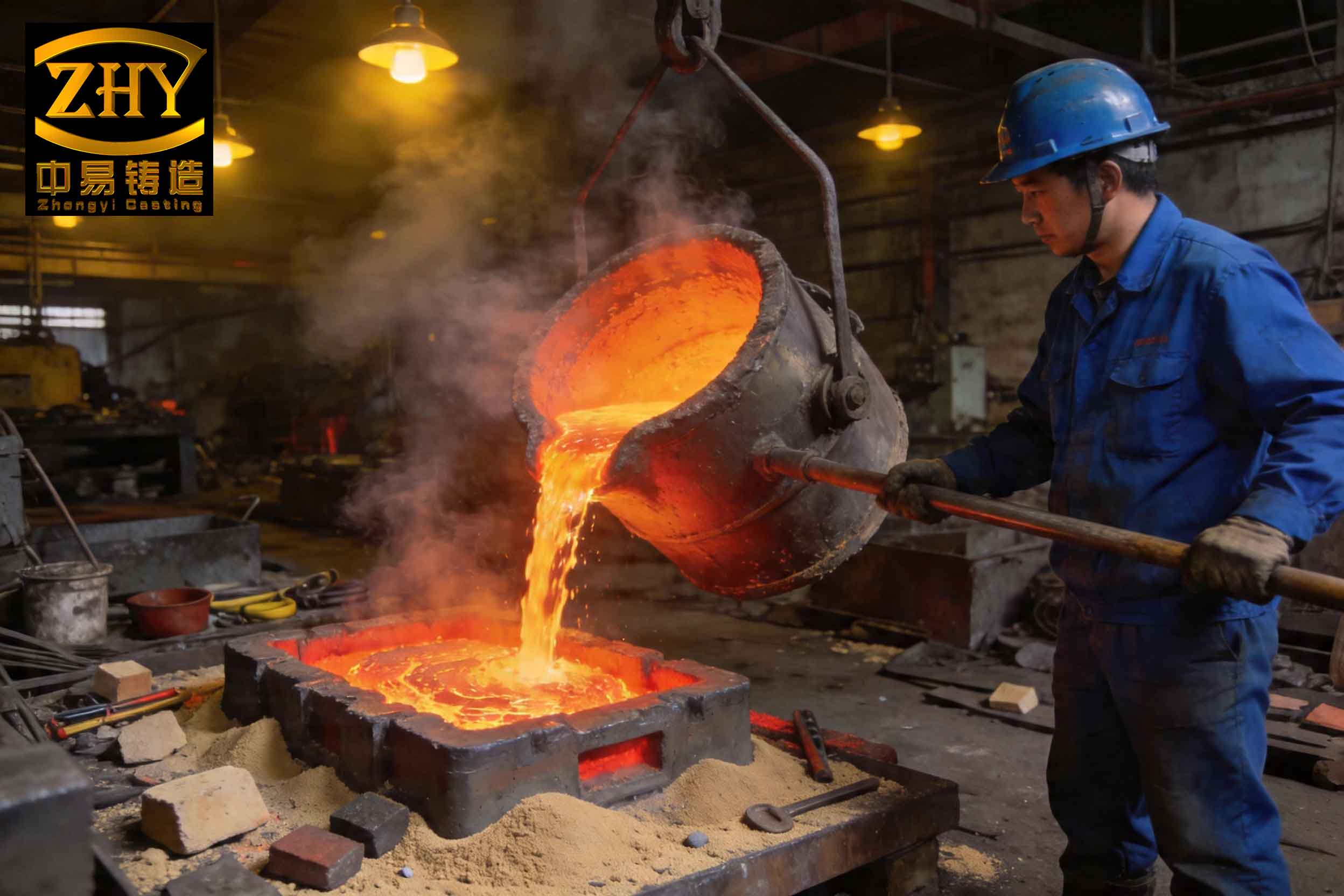
Charge material selection plays a vital role in controlling slag inclusions. In my trials, I compared bundled scrap versus plate stock for melting. Bundled scrap, composed of compressed remnants, has a larger surface area exposed to air at red-hot temperatures, leading to severe oxidation and more slag inclusions. Conversely, plate stock with smaller relative surface area exhibits milder oxidation. The table below presents experimental data from casting 304 stainless steel valve bodies, showing the effect of charge type on slag inclusion occurrence.
| Charge Material Type | Melting Time (min) | Pouring Temperature (°C) | Observation on Flange Surface |
|---|---|---|---|
| Bundled Scrap | 46 | 1541 | Severe slag inclusions present |
| Plate Stock | 48 | 1545 | No visible slag inclusions |
This demonstrates that using bulkier, less-oxidized charge materials effectively reduces slag inclusions. For high-sealing-demand castings, I now prefer plate or similar low-surface-area stock to minimize oxide formation.
Deoxidation practice is perhaps the most technical aspect of mitigating slag inclusions. During melting, I employ a sequenced deoxidation approach to ensure thorough removal of oxygen from the molten steel. The principles involve using weak deoxidizers first, followed by stronger ones, to form low-melting-point slag compounds that easily float out. For example, in carbon steels, I start with ferromanganese for pre-deoxidation, as it reacts with oxygen to form manganese oxide (MnO). Then, I add ferrosilicon to combine with MnO, producing manganese silicate (MnO·SiO₂), which has a lower melting point and is readily removable. Finally, I use silicon-calcium-manganese composite deoxidizers for diffusion deoxidation and aluminum wire for final killing. The chemical reactions can be expressed using LaTeX formulas:
Pre-deoxidation with manganese: $$[Mn] + [O] = MnO$$
Subsequent deoxidation with silicon: $$[Si] + 2[O] = SiO_2$$
Combination to form manganese silicate: $$MnO + SiO_2 = MnO \cdot SiO_2$$
This sequence is crucial because if silicon is added first, SiO₂ forms with a high melting point (~1720°C), making it difficult to remove and leading to persistent slag inclusions. The table below summarizes my deoxidation protocols for different steel grades, based on extensive experimentation.
| Steel Type | Deoxidizers and Addition Rates | Deoxidation Procedure |
|---|---|---|
| Carbon/Alloy Steels (C: 0.20–0.40%) | Ferromanganese (upper limit of spec); Si-Ca-Mn deoxidizer (0.13%); Aluminum wire (0.08%) | Add ferromanganese at 80% melt; after full melt at 1500–1550°C, add Si-Ca-Mn under reduced power; skim slag; insert Al wire before tapping. |
| Carbon/Alloy Steels (C < 0.20%) | Ferromanganese (upper limit); Si-Ca-Mn deoxidizer (0.15%); Aluminum wire (0.10%) | Similar to above, with adjusted addition rates for lower carbon content to enhance deoxidation. |
| Stainless Steels (304, 316) | Electrolytic manganese (upper limit); Si-Ca-Mn deoxidizer (0.3%) | Add electrolytic manganese at 80% melt; after full melt at 1550–1580°C, perform two-stage diffusion deoxidation with Si-Ca-Mn, skimming slag between additions. |
Pouring temperature is another parameter I optimize to combat slag inclusions. Higher temperatures improve fluidity and slag floatation, allowing oxide particles to rise to the surface where they can be trapped in slag collectors or removed later. In my tests with valve bodies, increasing the pouring temperature from 1564°C to 1643°C resulted in a dramatic reduction of slag inclusions on flange surfaces. This relationship can be modeled empirically: the likelihood of internal slag inclusions decreases exponentially with temperature, assuming other factors constant. A simplified formula I use for estimation is:
$$P_{slag} = k \cdot e^{-\frac{T – T_0}{\tau}}$$
where \(P_{slag}\) is the probability of slag inclusion occurrence, \(T\) is the pouring temperature, \(T_0\) is a reference temperature, and \(k\) and \(\tau\) are material-specific constants. While this is a heuristic, it underscores the importance of temperature control. For critical castings, I now set pouring temperatures at the upper end of the allowable range to promote slag removal.
Shell facecoat material selection is often overlooked but can significantly influence slag inclusions, especially for low-alloy steels. In my work with martensitic steels (e.g., grade 1.4008), I initially used zircon-based facecoats (zircon flour/sand), which contain free silica (SiO₂). At high temperatures, this silica can react with molten steel oxides, forming complex silicates that adhere to the casting as slag inclusions. Spectroscopic analysis of defect sites showed increased silicon and decreased manganese, indicating reactions like:
$$FeO + SiO_2 = FeSiO_3$$
$$MnO + SiO_2 = MnSiO_3$$
To mitigate this, I switched to high-purity white alumina (Al₂O₃) for facecoats, as it lacks free silica and is chemically inert. Comparative trials with both materials, casting identical parts in the same heat, revealed that white alumina facecoats produced castings with markedly fewer surface slag inclusions. The table below contrasts the two materials based on my observations.
| Facecoat Material | Primary Composition | Effect on Casting Surface | Suitability for Low-Alloy Steels |
|---|---|---|---|
| Zircon Flour/Sand | ZrO₂ + SiO₂ (≥66% ZrO₂, ≤33.5% SiO₂) | Promotes slag inclusion formation via chemical reactions; leaves流纹 defects. | Poor – high risk of slag inclusions. |
| White Alumina | Al₂O₃ (≥99% purity) | Minimal reaction; smooth surface; reduced slag inclusions. | Excellent – minimizes slag inclusions. |
This shift not only reduced slag inclusions but also improved surface finish, further enhancing sealing potential. For carbon steels like WCB, white alumina also mitigated flow line defects associated with zircon reactions.
Beyond these measures, I have integrated comprehensive process controls into daily operations. For tree assembly, I standardized side-gating designs to keep sealing surfaces oriented downward. When upward orientation is unavoidable, I calculate additional machining allowances using a formula based on casting geometry and expected slag accumulation. For a cylindrical section, the added thickness \(\Delta t\) can be estimated as:
$$\Delta t = \alpha \cdot \sqrt{V_{cast}} + \beta$$
where \(V_{cast}\) is the casting volume, and \(\alpha\) and \(\beta\) are empirical constants derived from historical data on slag inclusion depth. Typically, \(\alpha\) ranges from 0.1 to 0.3 mm/cm³/², and \(\beta\) is 1–2 mm for safety. This ensures that any slag inclusions in the floatation zone are removed during machining.
For slag trap design, I incorporate small extensions or risers on non-critical areas, such as the top periphery of flanges. The dimensions of these traps are optimized through simulation software to capture slag effectively. A rule of thumb I follow is to make the trap volume \(V_{trap}\) at least 5% of the casting volume \(V_{cast}\):
$$V_{trap} \geq 0.05 \cdot V_{cast}$$
This guarantees sufficient capacity for slag collection without excessive material waste.
In melting operations, I monitor oxygen potential using sensors when available, and adjust deoxidizer additions dynamically. The effectiveness of deoxidation can be quantified by the final oxygen content \([O]_{final}\), which should be minimized. For aluminum-killed steels, I aim for \([O]_{final} < 20\) ppm to prevent slag inclusions. The relationship between deoxidizer addition and oxygen removal follows stoichiometry, but practical factors like stirring and slag viscosity play roles. I often use the following efficiency equation for aluminum deoxidation:
$$\eta_{Al} = \frac{[O]_{initial} – [O]_{final}}{[O]_{initial}} \times 100\%$$
where \(\eta_{Al}\) is the deoxidation efficiency, typically 70–90% with proper practice. Higher efficiency correlates with fewer slag inclusions.
To summarize the interplay of factors, I developed a holistic model for slag inclusion risk assessment. The overall risk score \(R\) can be expressed as a weighted sum of contributions from various parameters:
$$R = w_1 \cdot I_{wax} + w_2 \cdot I_{shell} + w_3 \cdot I_{charge} + w_4 \cdot I_{deox} + w_5 \cdot I_{temp} + w_6 \cdot I_{material}$$
Here, \(I\) terms represent indices for wax purity, shell quality, charge type, deoxidation practice, pouring temperature, and shell material reactivity, respectively, normalized from 0 (best) to 1 (worst). The weights \(w\) are derived from regression analysis of defect data. In my foundry, we maintain \(R < 0.3\) for seal-critical castings, ensuring minimal slag inclusions.
Implementing these strategies has yielded consistent results. Over multiple production runs, the incidence of slag inclusions on valve and flange castings dropped by over 80%, directly improving sealing performance in pressure tests. Leakage rates decreased from 5% to below 0.5% for components like gate valves and butterfly valve discs. This enhancement is attributable not to any single change but to the integrated approach covering design, material selection, and process control.
In conclusion, avoiding slag inclusions in precision investment castings requires a multifaceted strategy rooted in both theoretical understanding and practical adjustments. From my first-hand experience, key takeaways include: designing tree assemblies to avoid sealing surfaces as floatation zones, using high-purity charge materials and inert shell facecoats, implementing sequenced deoxidation, and optimizing pouring temperatures. Regular monitoring and standardization of these practices are essential for sustained quality. By rigorously applying these principles, foundries can significantly reduce slag inclusions, thereby enhancing the sealing performance and reliability of critical cast components in demanding applications.