
In the high-pressure die-casting industry, the pursuit of components with superior strength and wear resistance has led to the widespread adoption of hypereutectic aluminum-silicon alloys, such as the AlSi13CuMgNiFe variant. This material is particularly favored for demanding applications like high-speed automotive rotors due to its enhanced mechanical properties. However, a persistent and costly challenge in its production is the formation of hard, dense inclusions within the melt, which manifest as severe defects in the final castings. During a routine production campaign, I encountered a significant issue where a holding furnace used for melting AlSi13CuMgNiFe ingots developed extensive sludge accumulation at the bottom. Over time, this sludge agglomerated into large, hard masses. Components produced from this contaminated melt exhibited catastrophic tool wear, tool breakage during machining, and an unacceptable rate of cracking in finished parts. This investigation details my systematic approach to characterizing these deleterious slag inclusions, uncovering their root causes, and formulating effective countermeasures to ensure product integrity.
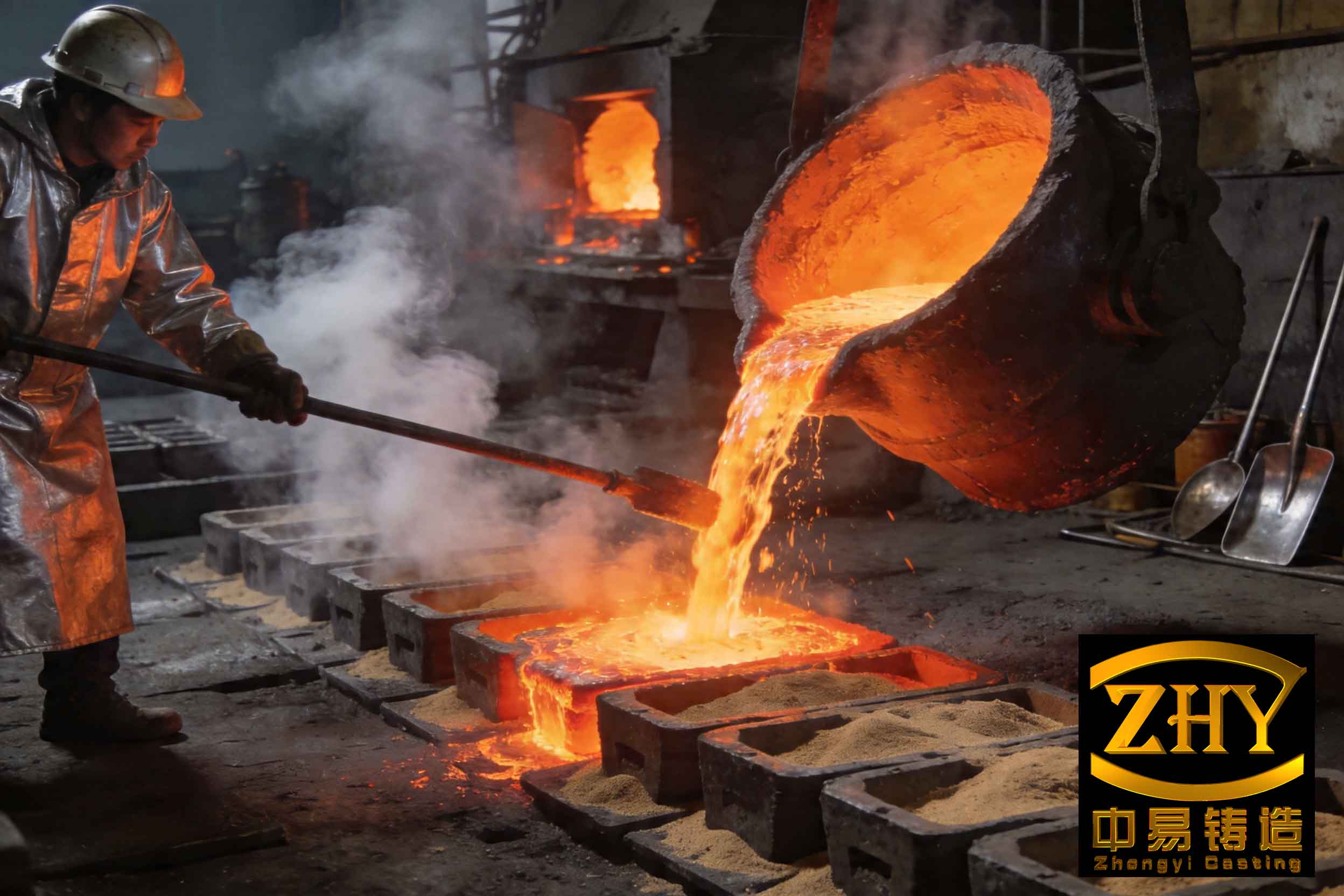
The initial observation revealed a clear progression of the defect formation within the furnace bath. The phenomenon was not instantaneous but rather a cumulative process. Samples were extracted at different intervals to capture this evolution. The first sample, taken after approximately 24 hours of furnace operation, consisted of a viscous, sludge-like material adhering to the furnace bottom. A second sample, retrieved after 48 hours, had transformed into irregular, bulky blocks. These blocks were notably dense, with an estimated density between 3.1 and 3.9 g/cm³, and exhibited extreme hardness. A final sample, representing 72 hours of accumulation, showed a furnace bottom nearly covered with large, crystalline-structured agglomerates that severely impeded heat transfer and were exceptionally difficult to remove. This progression pointed towards a continuous segregation and growth mechanism for the slag inclusions.
Comprehensive Characterization of the Sludge Inclusions
To understand the nature of these problematic masses, a multi-technique analytical protocol was employed, focusing on chemical composition, microstructure, and phase identification.
1. Chemical Composition Analysis
The chemical makeup of the sludge block was the first critical clue. Optical Emission Spectroscopy (OES) was performed, and the results were compared against the standard specification for the AlSi13CuMgNiFe alloy. The data, summarized in Table 1, revealed a dramatic deviation.
| Element | Si | Fe | Cu | Mn | Mg | Cr | Ni | Pb |
|---|---|---|---|---|---|---|---|---|
| Sludge (wt.%) | 10.34 | 12.00 | 1.15 | 5.48 | 0.46 | 0.35 | 0.22 | 1.15 |
| Alloy Spec (Max wt.%) | 13.5 | <1.0 | 1.5 | <0.5 | 1.0 | <0.1 | 0.5 | <0.1 |
The concentrations of iron (Fe), manganese (Mn), chromium (Cr), and lead (Pb) were orders of magnitude higher than the acceptable limits for the melt. The extreme enrichment of Fe, Mn, and Cr immediately suggested the formation of dense intermetallic phases, primarily based on the Al-Fe-Mn-Cr system. The presence of Pb, a high-density element, indicated gravitational settling of heavy metals over the prolonged holding period.
2. Metallographic and Microstructural Examination
A sample from the hard block was mounted, polished, and examined using optical microscopy. The microstructure, as shown in the analysis, was distinctly biphasic. A large fraction of the area appeared as a featureless, light-etched region. The remaining area exhibited a darker, complex structure reminiscent of a hypereutectic Al-Si alloy, containing α-Al dendrites, eutectic silicon, and numerous fine, needle-like precipitates suspected to be iron-rich intermetallics. This initial observation confirmed that the sludge was not a simple oxide film but a complex conglomerate of multiple phases.
3. Scanning Electron Microscopy (SEM) and Energy Dispersive X-ray Spectroscopy (EDS)
To obtain nanoscale morphological and compositional details, the sample was analyzed using SEM/EDS. The fracture surface of the sludge revealed two distinct morphologies: large, relatively smooth facets and smaller regions with micro-voids. EDS point analysis on multiple spots consistently showed high counts for Al, Fe, Mn, and Cr, as detailed in Table 2.
| Spectrum | Al (at.%) | Fe (at.%) | Mn (at.%) | Cr (at.%) | Si (at.%) |
|---|---|---|---|---|---|
| 1 | 93.43 | 3.32 | 2.01 | 1.24 | – |
| 2 | 77.18 | 2.86 | 1.68 | 1.05 | 17.23 |
| 3 | 93.42 | 3.29 | 1.98 | 1.31 | – |
| … | … | … | … | … | … |
| Avg (Fe-rich areas) | ~93.5 | ~3.3 | ~2.0 | ~1.2 | – |
Further analysis on a polished cross-section using EDS area mapping confirmed the phase segregation. The light-etching regions in the optical micrograph were overwhelmingly composed of an Al matrix saturated with Fe, Mn, and Cr. The darker areas corresponded to Al-Si eutectic pools and occasional lead-rich particles. The primary constituent of the inclusion was conclusively identified as a complex quaternary intermetallic phase rich in Al, Fe, Mn, and Cr, often denoted as α-Al(Fe,Mn,Cr)Si. The formation and settling of this phase are the direct cause of the hard slag inclusions.
Root Cause Analysis and Theoretical Framework
The formation of these detrimental slag inclusions is not an isolated event but a consequence of systemic issues in alloy design, raw material quality, and process control. The primary driver is the precipitation and sedimentation of dense intermetallic compounds, governed by thermodynamics and kinetics.
1. The Role of Alloy Chemistry and the “Sludge Factor”
The core problem lies in the imbalance of iron, manganese, and chromium. In Al-Si alloys, iron has very low solubility in solid aluminum and tends to form intermetallic compounds. While β-Al5FeSi (plate-like) is common and detrimental to ductility, the presence of Mn and Cr promotes the formation of the more compact, Chinese-script or polyhedral α-Al15(Fe,Mn,Cr)3Si2 phase. Although the α-phase is less harmful to mechanical properties than the β-phase, it has a significantly higher density (≈3.9 g/cm³) than the molten aluminum (≈2.4 g/cm³). This density differential is the fundamental reason for gravitational settling.
A critical metric in foundry practice is the “Sludge Factor” (SF) or “Sludge Index,” which predicts the propensity for intermetallic sedimentation. It is empirically defined as:
$$ SF = 1 \times wt.\%Fe + 2 \times wt.\%Mn + 3 \times wt.\%Cr $$
When the SF exceeds a threshold value (typically between 1.8 and 2.2, depending on temperature and holding time), the alloy becomes highly susceptible to sludge formation. In the analyzed case, using the sludge composition:
$$ SF_{sludge} = (1 \times 12.00) + (2 \times 5.48) + (3 \times 0.35) = 12.00 + 10.96 + 1.05 = 24.01 $$
This extraordinarily high SF value explains the rapid and severe sedimentation observed. The source of this imbalance was traced back to the primary ingot supplier, who used a high proportion of diverse scrap and dross with uncontrolled tramp elements to reduce costs, resulting in an alloy chemistry prone to generating slag inclusions.
2. The Influence of Process Parameters: Temperature and Time
The settling velocity of a particle in a melt can be approximated by Stokes’ law:
$$ v = \frac{2 g r^2 (\rho_p – \rho_m)}{9 \eta} $$
where \( v \) is the settling velocity, \( g \) is gravity, \( r \) is the particle radius, \( \rho_p \) and \( \rho_m \) are the densities of the particle and melt, respectively, and \( \eta \) is the melt viscosity. This equation highlights two key process factors:
- Temperature: A lower melt temperature increases the melt viscosity (\( \eta \)), but more importantly, it drastically increases the liquidus temperature of the sludge-forming intermetallics. This means they nucleate and grow more readily at lower holding temperatures (e.g., 640-660°C), creating larger particles (increasing \( r \)) that settle faster.
- Time: The settling distance is proportional to time. Prolonged holding in a furnace or a low-circulation area allows even small particles to settle to the bottom, where they sinter and agglomerate into the large blocks found.
The standard practice of holding the melt at 640°C for casting was, in this case, exacerbating the problem by being within the optimal precipitation range for the α-Al(Fe,Mn,Cr)Si phase.
3. The Impact of Melt Treatment and Refining
Inadequate melt treatment at the ingot production stage was a major contributor. Effective degassing and flux refining are essential to remove dissolved hydrogen and non-metallic inclusions. If the primary ingots are produced with insufficient refining, they already contain nuclei for future slag inclusions. Furthermore, the use of grain refiners and modifiers (e.g., Sr) can inadvertently influence intermetallic formation. While Sr effectively modifies eutectic silicon, research suggests it may also promote the transformation of β-Fe to α-Fe phases. This transformation, while beneficial for mechanical properties, can accelerate the growth and sedimentation of the α-phase intermetallics, thereby increasing the risk of hard slag inclusions.
A Systematic Mitigation Strategy
Based on the root cause analysis, a multi-pronged strategy was implemented to eliminate the formation of these damaging slag inclusions.
1. Source Control and Alloy Specification
- Supplier Qualification: Switching to reputable primary or secondary alloy producers with robust quality management systems, including strict control over scrap intake and advanced melt refining practices (rotary degassing, efficient fluxing, and filtration).
- Enhanced Chemical Specification: Revising the alloy purchasing specification to include not only individual element limits but also a maximum allowable Sludge Factor. For typical holding temperatures around 640°C, the SF was mandated to be below 1.7.
Control Parameter Old Practice New Standard Rationale Fe (max) 1.0% 0.8% Reduce SF to ≤1.7, minimizing α-phase precipitation tendency. Mn (max) 0.5% 0.3% SF (max) @640°C Uncontrolled 1.7
2. Process Optimization
- Temperature Management: The holding temperature before casting was strategically increased. Referring to the Al-Si phase diagram, for a hypereutectic alloy like AlSi13, the liquidus temperature decreases with increasing Si content on the hypoeutectic side but increases on the hypereutectic side. A careful balance was struck. The temperature was raised to 680-700°C during extended holding periods to keep the α-Al(Fe,Mn,Cr)Si phase in solution. Before casting, the temperature was lowered to the optimal pouring range. This reduced the time available for intermetallic nucleation and growth in the holding furnace.
- Furnace Management Protocol: Implementing a strict schedule for furnace bottom cleaning, especially after prolonged campaigns or when switching alloy types. Regular monitoring for sludge buildup became a standard operating procedure.
3. Advanced Manufacturing Philosophy: Liquid Metal Delivery
The most effective long-term solution adopted was transitioning from melting solid ingots to using liquid metal delivery from a central melting facility. This paradigm shift offers multiple advantages that directly combat the formation of slag inclusions:
| Aspect | Traditional Ingot Melting | Liquid Metal Delivery | Benefit for Inclusion Control |
|---|---|---|---|
| Melt History | Re-melted multiple times | Single, controlled melt | Eliminates re-nucleation of intermetallics from repeated thermal cycling. |
| Refining | Often limited in holding furnace | Performed optimally in dedicated furnaces with advanced systems | Ensures low hydrogen and inclusion content before delivery. |
| Holding Time | Long, variable | Short, controlled | Minimizes time for sedimentation of any formed particles. |
| Temperature Control | Often sub-optimal | Precise and consistent | Allows holding at temperatures that suppress sludge formation. |
The economic and quality benefits extended beyond defect reduction, lowering overall operating costs significantly.
4. Strategic Use of Melt Modifiers
The need for strontium (Sr) modification was re-evaluated on a component-by-component basis. For parts where ultimate ductility was less critical than machinability and freedom from hard spots, the use of un-modified alloy was specified. This eliminated the potential for modifier-enhanced intermetallic growth, further reducing the risk of slag inclusions.
Conclusion
The investigation into the severe tool wear and cracking failures traced the root cause to the formation and sedimentation of hard, dense α-Al(Fe,Mn,Cr)Si intermetallic phases within the melt, resulting in macroscopic slag inclusions in the final castings. This phenomenon was driven by a combination of poor alloy design (excess Fe, Mn, Cr leading to a high Sludge Factor), substandard raw material quality from uncontrolled scrap usage, and a process temperature that actively promoted intermetallic precipitation. The implemented mitigation strategy—centered on strict source control with SF limits, optimized thermal management, adoption of liquid metal delivery, and judicious use of modifiers—proved highly effective. This systematic approach not only eliminated the specific slag inclusion problem but also established a robust framework for producing high-integrity hypereutectic Al-Si castings, ensuring reliable performance in demanding applications like automotive rotor production.