
In my extensive experience within the high-pressure die casting industry, the persistent occurrence of defects such as slag inclusion and gas porosity within the gate system, particularly at the ingate, represents a significant technical and economic challenge. These defects, often referred to collectively as the ‘slag inclusion defect’, compromise the structural integrity of castings, lead to high scrap rates, and adversely affect production efficiency by reducing the effective cross-sectional area for metal flow. This article provides a comprehensive, first-person examination of the root causes and presents detailed, actionable solutions grounded in process control and metallurgical principles. My aim is to elaborate on these concepts to a degree that provides both foundational understanding and advanced insights for process engineers.
The fundamental process of die casting involves the injection of molten alloy through a shot sleeve, runners, and finally the ingate into the die cavity. Theoretically, the metal at the ingate should be the most pristine, having traveled through the system. However, it is frequently at this critical juncture that slag inclusion defects and gas pores manifest. The presence of these defects is not merely incidental; it is a systemic issue stemming from interactions between fluid dynamics, thermal management, and material purity.
To understand the genesis of the slag inclusion defect, we must first dissect the two primary causative mechanisms as I have observed them in practice.
Mechanism I: Premature Solidification at the Ingate
The ingate is typically the thinnest section in the metal delivery system. During the slow shot phase—designed to minimize turbulence and air entrapment—the molten metal advances and pools. Upon reaching the constricted ingate, the metal experiences a rapid heat loss due to the high surface-area-to-volume ratio. This can cause the leading edge of the metal stream to begin crystallizing and solidifying prematurely. This solidified skin or block effectively plugs the ingate. Subsequent metal, driven by intensification pressure, must then rupture through this obstructive layer. The rupture is seldom uniform across the entire ingate width; it occurs at localized weak points. The metal jetting through these points then proceeds to fill the cavity, inevitably trapping air behind the unruptured solidified metal block. This trapped air forms a gas pore that often extends deep into the casting body. The process is a direct consequence of inadequate thermal energy at the ingate during the initial stages of filling.
This phenomenon can be modeled by considering the heat transfer at the ingate. The rate of heat loss can be approximated by Newton’s law of cooling, but a more relevant metric is the thermal gradient. The susceptibility to premature freezing is a function of ingate thickness (δ), metal superheat (ΔT), and the local heat transfer coefficient (h). We can define a critical solidification time, \( t_s \), for the metal at the ingate:
$$ t_s = \frac{\rho L_f \delta^2}{2k (T_m – T_d)} $$
where \( \rho \) is the alloy density, \( L_f \) is the latent heat of fusion, \( k \) is the thermal conductivity of the die steel, \( T_m \) is the melting temperature of the alloy, and \( T_d \) is the die temperature. If the time for the metal front to be superseded by fresh, hot metal during the slow shot phase exceeds \( t_s \), blockage is likely. This highlights why a poorly timed transition to fast shot is a primary contributor to this form of the slag inclusion defect.
Mechanism II: Impurity-Induced Flow Obstruction
The second prevalent cause is inherently tied to the quality of the molten alloy. If the melt contains excessive oxides, dross, or other non-metallic inclusions—collectively termed ‘slag’—its fluidity is severely compromised. This contaminated melt becomes a viscous, semi-solid slurry. When this impure flow arrives at the ingate, the combined effect of constriction and impurities accelerates the drop in temperature and effective viscosity, leading to rapid stagnation and blockage. Similar to the first mechanism, the slag block remains lodged at the ingate, and the subsequent metal flow detours around it, creating air pockets and porosity behind the blockage. Furthermore, the slag inclusion defect physically reduces the ingate’s functional cross-section, impairing fill profile and increasing flow velocity turbulence elsewhere. Examination of a fractured ingate often reveals clear evidence of these oxides and inclusions within the pore structure.
The relationship between impurity content and effective viscosity (\( \eta_{eff} \)) can be described by a modified Einstein-type equation for suspensions:
$$ \eta_{eff} = \eta_0 (1 + 2.5\phi + k_H\phi^2) $$
where \( \eta_0 \) is the viscosity of the pure molten alloy, \( \phi \) is the volume fraction of solid inclusions (slag), and \( k_H \) is a constant accounting for particle interactions. A high \( \phi \) drastically increases \( \eta_{eff} \), making the metal prone to freezing in thin sections and directly promoting the formation of a slag inclusion defect.
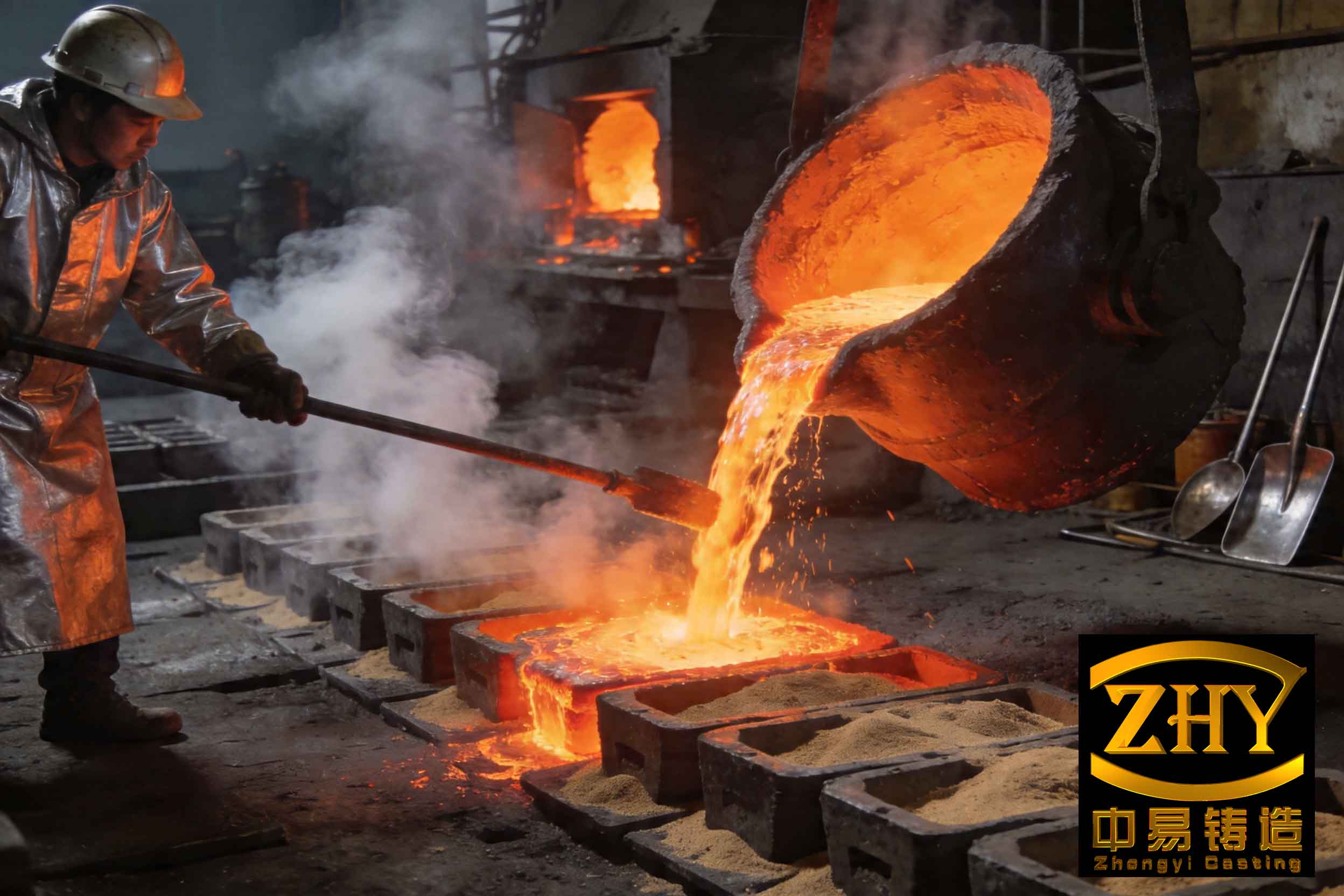
The visual representation above is crucial for understanding the typical morphology of a slag inclusion defect. It often appears as a dark, irregular discontinuity associated with surrounding porosity, indicative of the combined blockage and gas entrapment process described.
Having established the root causes, the solution set revolves around two pillars: ensuring molten metal cleanliness and optimizing the shot profile to maintain thermal integrity. These are not independent; they are synergistic strategies for eliminating the slag inclusion defect.
Pillar I: Comprehensive Molten Metal Cleanliness Protocol
This is the frontline defense against the slag inclusion defect. A multi-step, disciplined approach is non-negotiable.
| Stage | Action | Key Parameters & Rationale | Control Metrics |
|---|---|---|---|
| 1. Melting & Refining | Thorough degassing and deslagging within the melting furnace. | Use of rotary degassers with inert gas (Ar/N2). Deslagging agent must be added at ≥720°C for optimal reactivity and separation efficiency. In-furnace processing ensures temperature control. | Reduced Pressure Test (RPT) density ≥ 2.60 g/cm³ for Al alloys. Slag layer thickness after treatment. |
| 2. Holding Furnace Management | Regular, scheduled removal of dross and settled sludge. | Especially critical for closed, energy-efficient furnaces where slag accumulation is rapid. Sludge settles due to density difference (e.g., Fe-rich phases in Al). | Desludging frequency: Every 40-80 hours of operation, or based on metal quality monitoring. Can be as frequent as weekly for poor-quality feedstock. |
| 3. Ladling Practice | Programmed robot ladle trajectory and optimized ladle design. | Trajectory must avoid skimming dross into the ladle. Ladle should have a full, continuous lip—not a pouring notch—to allow oxide skin on the ladle’s metal surface to flow back into the furnace during pouring. | Visual inspection of ladle stream for oxide films. Automated path programming verification. |
| 4. Shot Sleeve Lubrication | Use of high-temperature stable, low-residue plunger lubricants. | Poor lubricants burn or decompose, creating carbonaceous or other residues that are injected into the melt as inclusions. | Analysis of inclusion types; shift to lubricants with ash content < 0.5%. |
| 5. Ingate Design | Avoid excessively thin and small ingate cross-sections. | While thin gates aid in separation and minimize heat loss to the runner, an overly thin gate sacrifices thermal mass, leading to rapid cooling. A balance must be struck. | Ingate thickness as a percentage of part wall thickness: Typically 50-70%. Use thermal simulation to validate. |
Each step in this protocol directly targets a potential source of the slag inclusion defect. For instance, the emphasis on in-furnace deslagging at the correct temperature is paramount. The efficiency of a deslagging agent (η_d) can be modeled as a function of temperature (T):
$$ \eta_d = A \cdot e^{-E_a / (R T)} $$
where \( A \) is a pre-exponential factor, \( E_a \) is the activation energy for the slag-agglomeration reaction, and \( R \) is the gas constant. Operating below 720°C often means \( \eta_d \) is too low for effective slag removal, directly feeding the slag inclusion defect pipeline.
Pillar II: Precise Shot Profile Optimization
The timing of the transition from slow shot to fast shot is arguably the most critical machine parameter for preventing the slag inclusion defect caused by premature solidification. The goal is to ensure the metal front does not dwell in the ingate area during the slow shot phase.
The key is to accurately calculate the fast shot start position, or the fast shot stroke length (L). This is the distance from the end of the shot sleeve to the point where the plunger should switch to high velocity, ensuring the metal wave just reaches the ingate at that moment.
The calculation is based on the volume of metal required to fill the entire die system up to the ingate just before cavity fill. This volume (V) includes the casting(s), overflows (vents and biscuits), and the runner system up to the ingate. Let:
- \( Q \) = total mass of the casting(s) and overflows (g).
- \( \rho \) = liquid density of the alloy (for A380 Al alloy, \( \rho \approx 2.4 \, \text{g/cm}^3 \)).
- \( F \) = cross-sectional area of the shot sleeve (cm²).
The volume of solidifying metal is \( V = \frac{Q}{\rho} \). However, this is the volume of the final solidified parts. The liquid metal volume is slightly larger due to thermal contraction, but for this calculation, the solid volume is standard. The fast shot stroke L is then:
$$ L = \frac{V}{F} = \frac{Q}{\rho F} $$
In practice, an empirical safety factor is added to ensure the metal is positively at the ingate. A common adjustment, as noted in practice, is to add a small constant to account for the metal in the runner before the ingate. A more generalized formula I use is:
$$ L = \frac{Q}{\rho F} + C $$
where \( C \) is an empirically determined constant (often 1.5 to 3.0 cm) representing the volume of the runner between the plunger position at the end of slow shot and the ingate. Therefore, the working formula becomes:
$$ L = \frac{Q}{2.4 F} + 1.5 \quad \text{(for Al alloys, with L, Q/F in consistent units)} $$
Misalignment of this switch point is a direct catalyst for the slag inclusion defect. If the switch occurs too early, the metal hits the ingate with low velocity, increasing dwell time and risk of freezing. If too late, air entrapment and turbulence occur.
To further elaborate, the shot profile can be broken down into phases, and their interaction with defect formation is summarized below:
| Phase | Purpose | Key Parameter | Risk if Improperly Set | Optimal Setting Strategy |
|---|---|---|---|---|
| Phase 1: Slow Shot (Plunger Advance) | To push metal without turbulence, allowing air to escape rearward. | Slow shot velocity (v_s). | Too fast → air entrainment; Too slow → excessive heat loss, premature freezing at ingate → slag inclusion defect. | Set to 0.2-0.5 m/s. Use CFD to visualize wave front. |
| Phase 2: Fast Shot (Cavity Fill) | To fill the cavity completely before significant solidification. | Fast shot velocity (v_f) and switch position (L). | Switch too early → metal dwells at ingate → freezing & slag inclusion defect. Switch too late → misting, porosity. | Calculate L as \( \frac{Q}{\rho F} + C \). Validate with short shots. |
| Phase 3: Intensification | To feed shrinkage porosity after cavity fill. | Intensification pressure (P_int) and timing. | Cannot remedy slag inclusion defect once formed, but can compress gas pores. | Apply immediately after fill, pressure > 80 MPa. |
The interdependence of these parameters necessitates a systems approach. For example, the ideal slow shot velocity (v_s) can be derived from the condition that the Reynolds number (Re) in the shot sleeve remains below the critical value for turbulent flow:
$$ Re = \frac{\rho v_s D}{\mu} < 2000 $$
where \( D \) is the shot sleeve diameter and \( \mu \) is the dynamic viscosity of the molten alloy. Solving for \( v_s \) provides a scientific upper bound.
Advanced Modeling and Continuous Monitoring
Beyond these fundamental pillars, advanced techniques are essential for robust prevention of the slag inclusion defect. Computer simulation of the filling and solidification process is invaluable. These simulations solve the Navier-Stokes equations for fluid flow coupled with the energy equation for heat transfer:
$$ \rho \left( \frac{\partial \mathbf{v}}{\partial t} + \mathbf{v} \cdot \nabla \mathbf{v} \right) = -\nabla p + \mu \nabla^2 \mathbf{v} + \rho \mathbf{g} $$
$$ \rho C_p \left( \frac{\partial T}{\partial t} + \mathbf{v} \cdot \nabla T \right) = \nabla \cdot (k \nabla T) + \dot{Q} $$
where \( \mathbf{v} \) is velocity, \( p \) is pressure, \( \mathbf{g} \) is gravity, \( C_p \) is specific heat, and \( \dot{Q} \) is a heat source term (e.g., latent heat). Simulation allows visualization of potential cold shut areas and slag accumulation zones before tooling is built.
Furthermore, real-time monitoring of shot curves is critical. Each shot’s plunger displacement, velocity, and pressure should be plotted against a validated master curve. Deviations in the position or shape of the curve can indicate issues that may lead to a slag inclusion defect. For instance, a slower-than-expected rise in pressure during fast shot might indicate a partial blockage at the ingate—a direct sign of an incipient slag inclusion defect.
Material-Specific Considerations and Extended Discussions
The propensity for slag inclusion defect formation varies with alloy type. Aluminum alloys, particularly those with high silicon content, are prone to oxide formation (Al2O3). Magnesium alloys present an even greater challenge due to their extreme reactivity. For each alloy, the cleaning protocol must be adapted. The following table compares key factors:
| Alloy Family | Primary Slag Type | Critical Cleaning Step | Typical Liquid Density (ρ) g/cm³ | Relative Risk of Slag Inclusion Defect |
|---|---|---|---|---|
| Al-Si (e.g., A380) | Al2O3, Spinels (MgO·Al2O3) | Inert gas degassing, efficient dross removal. | 2.3 – 2.5 | High |
| Al-Mg (e.g., AZ91D) | MgO | Use of protective cover gas (SO2, SF6 blends) during holding. | 1.75 – 1.80 | Very High |
| Zinc (e.g., ZA-8) | ZnO, Fe-rich dross | Temperature control to minimize oxidation; frequent dross skimming. | 6.6 – 6.7 | Moderate |
| Brass (Cu-Zn) | ZnO, complex oxides | Fluxing and careful temperature management. | 7.8 – 8.2 | Moderate to High |
Another extended area of discussion is the role of the biscuit and overflow design. Overflows are not merely vents; they are strategic reservoirs designed to capture cold, contaminated metal that would otherwise become a slag inclusion defect in the casting. The volume of overflows (V_overflow) as a percentage of casting volume (V_cast) is a critical design parameter, often ranging from 25% to 75%. This can be expressed as:
$$ \text{Overflow Ratio} = \frac{V_{overflow}}{V_{cast}} \times 100\% $$
A higher ratio can be effective in capturing slag-laden metal, but at the cost of yield and energy. Optimization through simulation is key.
Furthermore, the physics of slag entrapment can be described by the Weber number (We), which balances inertial forces against surface tension forces that hold slag particles at the metal surface:
$$ We = \frac{\rho v^2 l}{\sigma} $$
where \( v \) is metal velocity, \( l \) is a characteristic length (e.g., ingate thickness), and \( \sigma \) is the surface tension between the metal and the slag. A high We (>10) indicates that inertial forces are sufficient to break up and entrain slag layers, directly feeding the slag inclusion defect. Therefore, controlling metal velocity, especially in runners and gates, is paramount.
Systematic Troubleshooting and Quality Assurance
When a slag inclusion defect is detected, a structured troubleshooting methodology is essential. The following flow, based on my experience, isolates the root cause:
- Defect Location Analysis: Is the defect consistently at or near the ingate? If yes, focus on shot profile and local thermal conditions.
- Fracture Surface Examination: Does the defect contain visible oxides/colored films? If yes, the issue is primarily metal cleanliness (Pillar I). Is it a shiny gas pore adjacent to a solidified metal plug? If yes, the issue is premature solidification (Pillar II, shot timing).
- Process Data Review: Compare the actual shot curve to the master. Is the fast shot switch position (L) consistent? Has slow shot velocity drifted?
- Metal Quality Check: Perform a Reduced Pressure Test on melt samples from the holding furnace. Low density indicates high gas content, which exacerbates porosity associated with the slag inclusion defect.
Implementing Statistical Process Control (SPC) charts for key parameters like metal temperature, slow shot time, and intensification pressure is a powerful proactive measure. Any trend outside control limits signals a potential increase in the risk of producing a slag inclusion defect.
Conclusion
In conclusion, the scourge of the slag inclusion defect and associated gas porosity at the die casting ingate is a multifaceted problem demanding a holistic and disciplined response. Through my detailed exploration, it is evident that the defect arises from a confluence of factors: inadequate thermal management leading to premature metal freezing, and insufficient molten metal cleanliness allowing impurities to obstruct flow. The solutions are equally comprehensive, revolving around a rigorous metal cleaning protocol—encompassing melting, holding, ladling, and lubrication practices—and the precise calculation and control of the shot profile, particularly the fast shot transition point. Employing advanced modeling, real-time monitoring, and alloy-specific strategies further fortifies the process against this defect. By adhering to these principles, foundries can systematically eliminate the slag inclusion defect, achieving higher quality castings, reduced scrap, and improved operational efficiency. The continuous pursuit of understanding and controlling every variable in the die casting process is the most effective weapon against the persistent challenge of the slag inclusion defect.