
The relentless pursuit of lightweighting and energy efficiency across the aerospace, automotive, and marine transportation sectors has propelled aluminum alloys to the forefront of material selection. This trend is particularly pronounced in the automotive industry, where reducing vehicle mass is a primary pathway to lowering fuel consumption and emissions. Among various manufacturing processes, die casting stands out for its ability to produce aluminum components with excellent material properties, complex geometries, and superior dimensional accuracy, making it the dominant method for producing non-ferrous alloy castings. Contemporary aluminum die castings are evolving towards larger, more intricate, thinner-walled, and highly integrated designs. However, this evolution is persistently challenged by internal defects, with porosity in casting being one of the most prevalent and detrimental.
Porosity in casting refers to cavity-type defects characterized by smooth, often spherical, internal surfaces. These voids are primarily formed when gases trapped within the molten metal fail to escape before the solidification front advances. In aluminum alloys, the predominant gas is hydrogen. The high solubility of hydrogen in molten aluminum, compared to its near-zero solubility in the solid state, is the fundamental reason for pore formation. During solidification, as hydrogen’s solubility plummets, it precipitates out of solution. If the nucleation and growth of hydrogen bubbles outpace their buoyant rise to the surface, they become entrapped within the solidifying structure. This results in finely dispersed pinhole porosity in casting, frequently observed in thicker sections and areas of slower cooling rates. Additionally, gases can be mechanically entrapped from the shot sleeve and die cavity during the turbulent filling stage, contributing to larger, irregular pores.
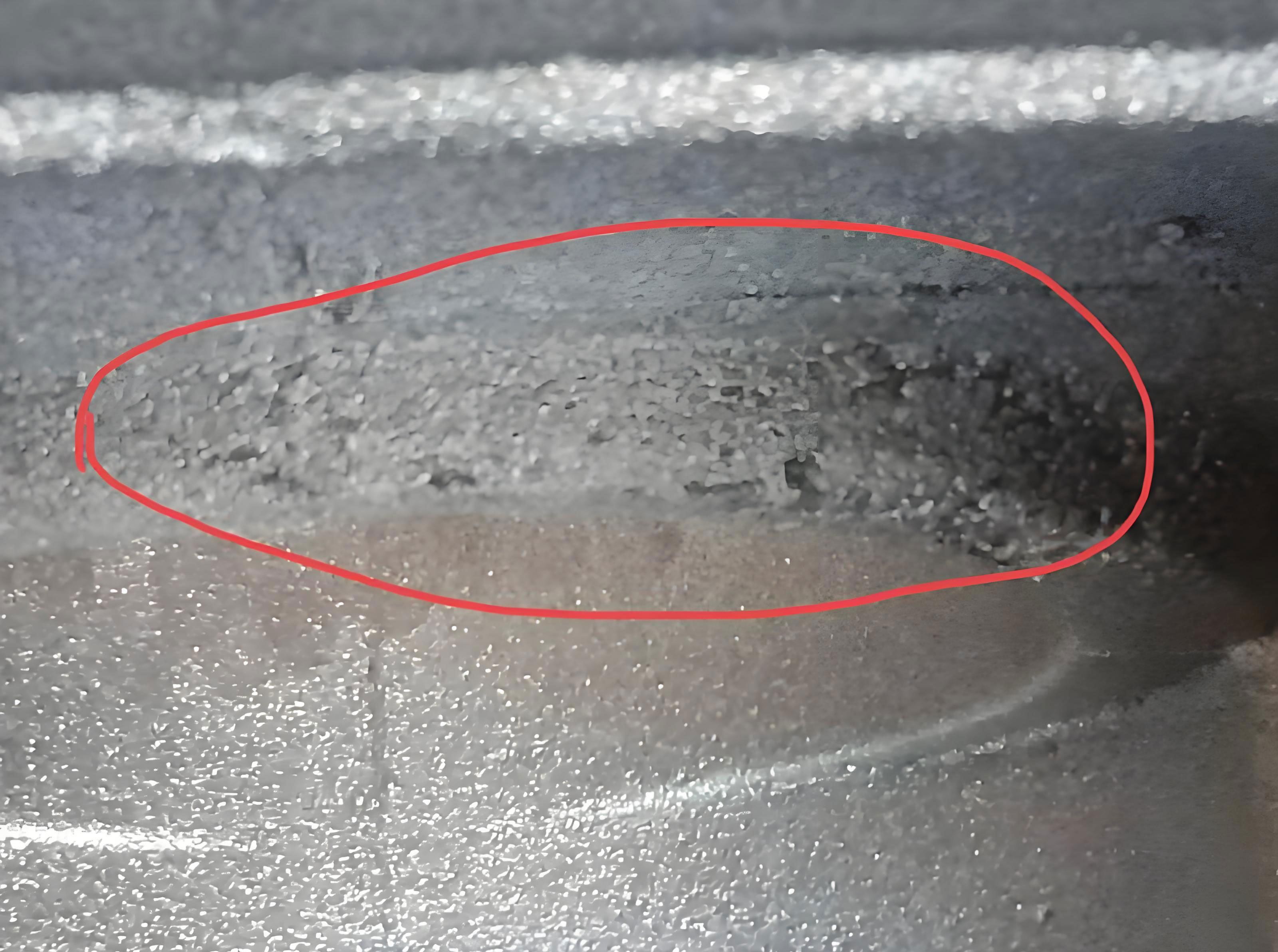
The morphology of porosity in casting is clearly revealed through metallographic examination, showing smooth-walled, rounded, or elongated cavities distributed non-uniformly within the matrix. This defect severely compromises the mechanical integrity, pressure tightness, and machinability of components, leading to scrap and reliability concerns. Therefore, comprehensive strategies to mitigate porosity in casting are critical for producing high-integrity structural parts.
1. Fundamental Mechanisms of Gas Porosity Formation
The genesis of porosity in casting is intrinsically linked to gas generation, dissolution, and precipitation. The primary reactions leading to hydrogen pick-up in aluminum melts are:
$$ 2Al_{(l)} + 3H_2O_{(g/v)} \rightarrow Al_2O_{3(s)} + 6[H] $$
$$ 2Al_{(l)} + Al(OH)_{3(s)} \rightarrow Al_2O_{3(s)} + 3[H] $$
Here, [H] denotes atomic hydrogen dissolved in the melt. The solubility of hydrogen in aluminum is governed by Sieverts’ Law, which states that the concentration of a diatomic gas dissolved in a metal is proportional to the square root of its partial pressure above the melt:
$$ C = K_H \sqrt{P_{H_2}} $$
Where \( C \) is the dissolved hydrogen concentration (e.g., in mL/100g Al), \( K_H \) is the equilibrium constant (solubility constant) which is strongly temperature-dependent, and \( P_{H_2} \) is the partial pressure of hydrogen. The dramatic change in solubility at the solidification point is the key driver. The theoretical solubility ratio between liquid and solid aluminum at the melting point is approximately:
$$ \frac{C_L}{C_S} \approx \frac{0.65 \text{ mL/100g}}{0.034 \text{ mL/100g}} \approx 19.1 $$
This 19-fold decrease forces the excess hydrogen to nucleate as bubbles. The pressure inside a nucleated bubble must overcome the sum of atmospheric pressure, metallostatic pressure, and the pressure due to surface tension for the bubble to grow and potentially escape. The critical radius for bubble nucleation \( r_c \) is given by:
$$ r_c = \frac{2\gamma}{\Delta P} $$
Where \( \gamma \) is the surface tension of the melt and \( \Delta P \) is the pressure difference driving nucleation (related to supersaturation of hydrogen). In fast-cooling die casting, bubbles often lack sufficient time to grow and float out, leading to the characteristic pinhole porosity in casting.
| Gas Source | Chemical Reaction | Impact on Porosity |
|---|---|---|
| Atmospheric Moisture | Al + H₂O → Al₂O₃ + [H] | Primary source of dissolved hydrogen. |
| Hydrated Oxides on Charge | Al + Al(OH)₃ → Al₂O₃ + [H] | Significant source from contaminated scrap/piglets. |
| Organic Contaminants | CₓHᵧ + Heat → C + [H] | Decomposition of lubricants, painting, etc. |
| Die Lubricant (Water) | H₂O(l) → H₂O(g) + [H] | Instant vaporization causing surface blows/pores. |
2. Advanced Melt Purification and Degassing Technologies
The most fundamental approach to reducing porosity in casting is to minimize the initial gas content in the melt. Without high-quality molten metal with low hydrogen levels, subsequent process optimizations are severely limited. A two-stage degassing strategy has proven highly effective.
Stage 1: Chemical Fluxing. This involves injecting a chemically active, environmentally friendly flux (often chloride-free salts) into the melt. The flux promotes the coalescence of non-metallic inclusions and facilitates the removal of hydrogen through chemical reactions and physical adsorption at the flux bubble interface.
Stage 2: Physical Rotary Degassing (SNIF/Spinning Nozzle Inert Flotation). This is a cornerstone technology for achieving ultralow hydrogen levels. Inert gas, typically nitrogen or argon, is introduced into the melt through a rotating graphite shaft and rotor. The high shear created by the rotor breaks the gas into a fine dispersion of micro-bubbles, vastly increasing the surface area for hydrogen diffusion. The process efficiency can be modeled by considering the mass transfer of hydrogen from the melt to the bubble. The rate of hydrogen removal often follows a first-order decay:
$$ C_t = C_0 \cdot e^{-kt} $$
Where \( C_t \) is the hydrogen concentration at time \( t \), \( C_0 \) is the initial concentration, and \( k \) is a rate constant dependent on gas flow rate, rotor speed, melt temperature, and bubble size distribution. Through extensive experimentation, the target hydrogen level for producing high-integrity, complex die castings has been established at 0.10 – 0.14 mL/100g Al. The rotary degassing process can achieve this in a short cycle time of 4-5 minutes, minimizing re-gassing from prolonged agitation and exposure.
| Degassing Method | Mechanism | Typical [H] Reduction | Advantages/Limitations |
|---|---|---|---|
| Tablet Fluxing | Chemical reaction & flotation | ~30-50% | Simple, low cost; less effective, slag generation. |
| Lance Injection (N₂/Ar) | Physical flotation | ~40-60% | Better than tablets; coarse bubbles limit efficiency. |
| Rotary Impeller Degassing | Micro-bubble flotation | ~60-80% | High efficiency, good inclusion removal. Standard for quality casting. |
| SNIF / Multi-Chamber Rotary | Micro-bubble flotation in controlled atmosphere | >80% (to <0.10 mL/100g) | Highest efficiency, minimal re-gassing. Capital intensive. |
3. Dual-Channel High Vacuum Die Casting Technology
While melt treatment addresses gas from the metal source, a major contributor to porosity in casting is air entrapment during die filling. High Vacuum Die Casting (HVDC) is a transformative technology designed to evacuate air from the die cavity and shot sleeve before and during metal injection.
Dual-System Evacuation: Advanced systems employ two independent vacuum circuits—one for the shot sleeve and one for the die cavity. This configuration prevents cross-contamination and ensures the shot sleeve reservoir is at the lowest possible pressure when the cavity evacuation sequence initiates, maximizing overall evacuation efficiency. The system aims to achieve cavity pressures of ≤ 80 mbar (absolute) or lower, creating a near-vacuum environment that drastically reduces the volume of gas available for entrapment.
The physics of evacuation follows the ideal gas law under transient conditions. The rate of pressure drop in the cavity is crucial and depends on valve conductance, pipe diameter, and vacuum pump capacity. The goal is to achieve the target vacuum level before the molten metal reaches the gate. The use of hydraulically or pneumatically actuated vacuum valves, which seal based on melt position signals, is critical for HVDC. These valves close precisely before metal enters the vacuum lines, preventing melt ingestion.
The timing of vacuum start and stop is parameterized by the shot stroke position (\( S \)):
- Vacuum Start (Sstart): Typically triggered just after the shot plunger passes the pour hole in the shot sleeve, sealing the system. If \( S_{start} \) is too early, the system is not sealed; if too late, evacuation time is insufficient.
- Cavity Vacuum Stop (Sstop_cav): Activated just before high-speed injection begins, to prevent metal draw into the valve.
- Sleeve Vacuum Stop (Sstop_sleeve): May continue slightly longer but must seal before metal reaches the sleeve outlet.
The impact on porosity in casting is profound. By reducing the partial pressure of gases in the cavity (\( P_{cavity} \)), the driving force for gas dissolution into the incoming melt is diminished (per Sieverts’ Law). Furthermore, any hydrogen precipitating from the melt finds a lower opposing pressure, allowing bubbles to expand more readily and escape into the vacuum channels rather than being compressed into the casting. This significantly increases casting density and mechanical properties.
| Vacuum Level (mbar, abs.) | Cavity Gas Mass (Relative to Atm.) | Typical Porosity Reduction | Expected UTS Increase |
|---|---|---|---|
| 1013 (Atmospheric) | 100% | Baseline | Baseline |
| 300 | ~30% | 30-40% | 5-10% |
| 100 | ~10% | 60-70% | 10-20% |
| ≤ 80 (HVDC) | ≤ 8% | >80% | 15-30% |
| ≤ 50 (Ultra-HVDC) | ≤ 5% | >90% | 20-40% |
4. Optimization of Die Lubrication (Spray) Process
Die lubricant, while essential for release and cooling, is a direct source of gas that causes surface and subsurface porosity in casting. Water-based lubricants instantly vaporize upon contact with the hot die (~200-300°C). If the vapor is trapped, it forms blisters or pinholes. Optimization focuses on minimizing residual liquid lubricant in the cavity.
Key Spray Parameters: The spray process is defined by dwell time (\( t_{spray} \)), air blow time (\( t_{blow} \)), robot trajectory, and nozzle type. Excessive spray in deep cavities or on large cores leads to pooling. The Marangoni effect, driven by surface tension gradients from temperature variations, can draw lubricant from hot to cold regions, causing non-uniform film thickness and localized excess.
The thermal interaction can be simplified. The heat removed by a water-based spray \( Q_{spray} \) is related to the mass of water \( m_w \) and its latent heat of vaporization \( L_v \), plus sensible heat gain:
$$ Q_{spray} \approx m_w (L_v + c_p \Delta T) $$
Where \( c_p \) is the specific heat of steam and \( \Delta T \) is the temperature rise. The objective is to apply the minimum \( m_w \) necessary for lubrication and controlled cooling, followed by a sufficient \( t_{blow} \) to ensure complete evaporation and removal of vapor. For problematic areas (e.g., deep pockets, bottom of vertical dies), strategies include:
– Reducing \( t_{spray} \) for specific die segments.
– Increasing \( t_{blow} \) significantly to ensure dry surfaces.
– Optimizing nozzle angle to avoid direct impingement into pockets.
– Using more volatile lubricant carriers or dry lubricant techniques for critical areas.
5. Precision Adjustment of Die Casting Process Parameters
The shot profile controls the melt flow dynamics and is pivotal in managing air entrapment. The key parameters are slow shot speed (\( v_{slow} \)), fast shot speed (\( v_{fast} \)), and the switching positions between phases (\( S_{switch} \)).
Slow Shot Phase: The plunger moves forward to fill the shot sleeve without turbulence. The goal is to push the melt in a laminar wave to just fill the sleeve neck, minimizing air entrapment in the sleeve. The ideal slow shot velocity can be estimated by ensuring the melt front does not overrun the air, which is related to the sleeve diameter \( D \) and fill fraction:
$$ v_{slow} \leq \sqrt{\frac{g D}{2}} \cdot f(\text{fill ratio}) $$
A poorly set slow shot can fold air into the melt, which is then injected into the die.
Fast Shot Phase & Switching Point (\( S_{switch} \)): This is the most critical setting for minimizing porosity in casting. \( S_{switch} \) defines when the plunger accelerates to its maximum speed to fill the cavity. If \( S_{switch} \) is too early (plunger too far from the die), the melt “sloshes” in the sleeve, entrapping air. If \( S_{switch} \) is too late (plunger too close to the die), the cavity fills too slowly, leading to mist runs and cold shuts, and the air in the sleeve has less chance to escape backward. The optimal \( S_{switch} \) ensures the sleeve is completely filled with molten metal just before the cavity gates, forcing the air in the sleeve out through the vent or vacuum channel rather than into the casting.
Intensification Pressure (\( P_{int} \)): Applied immediately after filling, intensification compresses any remaining dissolved and entrapped gases, reducing their volume and potentially forcing them into solution, thereby decreasing the size and volume fraction of porosity in casting. The effectiveness depends on the solidification time and the pressure transmission through the feeding system.
| Process Parameter | Primary Influence on Porosity | Optimization Principle | Typical Adjustment Direction to Reduce Porosity |
|---|---|---|---|
| Slow Shot Velocity (\( v_{slow} \)) | Air entrapment in shot sleeve. | Laminar filling of sleeve. | Increase until wave is stable, but avoid turbulence. |
| Fast Shot Velocity (\( v_{fast} \)) | Turbulent entrapment in cavity; misting. | Fill cavity before skin solidifies. | Increase to reduce fill time, but balance with venting. |
| Slow-to-Fast Switch Point (\( S_{switch} \)) | Single biggest factor for sleeve air injection. | Ensure sleeve is metal-full at switch. | Delay switch (increase stroke value) to allow sleeve air escape. |
| Intensification Pressure (\( P_{int} \)) & Start | Compresses gas pores, feeds shrinkage. | Apply high pressure before skin solidifies at gate. | Maximize within machine/die capability; ensure timely start. |
| Melt Temperature (\( T_{melt} \)) | Hydrogen solubility, fluidity, solidification time. | Minimize within filling/flow limits. | Lower temperature reduces gas solubility and shrinkage. |
6. Gating, Overflow, and Venting System Design Optimization
The design of the melt delivery and gas escape paths is a foundational method to control porosity in casting.
Gating System: The gate area (\( A_g \)), velocity (\( v_g \)), and location dictate the melt entry condition. A high \( v_g \) causes jetting and turbulence, entrapping air. The goal is to achieve a flow that is as quiescent as possible, often through the use of fan gates or multiple gates to distribute flow. The fill time (\( t_{fill} \)) is related to the gate velocity and area:
$$ t_{fill} \approx \frac{V_{cavity}}{A_g \cdot v_g} $$
Optimizing involves balancing a sufficiently short \( t_{fill} \) to prevent premature freezing with a low enough \( v_g \) to avoid turbulent break-up.
Overflow and Vent Design: Overflows are sacrificial cavities connected to the last regions to fill. They serve two primary functions: 1) To collect cold, contaminated metal (cold flow fronts), and 2) To provide a channel for entrapped air to escape. The volume and location of overflows are critical. They must be placed at the end of fill paths and be of sufficient volume (often 20-50% of part volume in total) to create a thermal gradient that draws porosity into themselves. Vents are thin (0.10-0.25 mm) channels at the die parting line or on ejector pins that allow air to escape but block molten metal. The total vent area should be sufficient to allow air egress at the fill rate.
Enhanced Venting via Ejector Pins/Slides: In areas prone to porosity in casting, such as deep pockets or isolated thick sections, standard overflows may be ineffective. Strategically placing ejector pins or shaped ejector blades with intentional clearance (e.g., 0.08-0.15 mm per side) can provide additional micro-venting paths. This allows air trapped in these areas to escape into the ejector plate housing during filling, significantly reducing local gas pressure and pore formation.
7. Conclusion and Integrated Approach
Mitigating porosity in casting in aluminum alloy die castings is not achievable through a single silver-bullet solution. It requires a systematic, multi-faceted engineering approach that addresses the defect at every stage of the process:
- At the Source (Melt): Implement rigorous melt treatment using advanced rotary degassing to achieve hydrogen levels below 0.14 mL/100g Al, eliminating the internal gas source.
- At the Environment (Die Cavity): Employ Dual-Channel High Vacuum Die Casting technology to evacuate air from both the shot sleeve and cavity, creating a near-vacuum filling environment that minimizes mechanical entrapment.
- At the Interface (Die Surface): Optimize the spray process with precise timing, trajectory, and blow-off to eliminate residual water-based lubricant that can cause instant vaporization and surface porosity.
- Through Process Dynamics (Shot Control): Meticulously tune the shot profile, particularly the slow-to-fast shot switch point and intensification parameters, to control melt front stability and minimize air injection.
- Through System Design (Gating & Venting): Design gating for non-turbulent filling and employ generous, strategically placed overflows combined with effective venting (including micro-venting via ejectors) to actively lure and evacuate gas and cold metal away from the final part.
The formation and control of porosity in casting can be quantitatively framed through the interplay of gas laws, fluid dynamics, and heat transfer. The most successful production strategies involve the integration of these technological pillars—purification, vacuum, process control, and design optimization. Future advancements will likely focus on real-time monitoring of melt hydrogen, dynamic vacuum control synchronized with melt flow sensors, and AI-driven optimization of shot profiles and thermal management, pushing the boundaries of integrity for lightweight, high-performance aluminum die castings.