
In the high-volume production of intricate castings, particularly those characterized by thin walls and complex internal cores, achieving consistent quality presents a significant challenge. A recurring and costly issue encountered in such manufacturing is the appearance of fine, needle-shaped gas pores on the internal surfaces of the castings. These defects, while sometimes small, compromise the structural integrity, pressure tightness, and aesthetic finish of the component. This article details a first-person, in-depth investigation into the root causes and effective countermeasures for this specific defect, drawing upon systematic analysis and controlled experimentation. The focus is squarely on gray cast iron components, where the interplay between molten metal and molding materials is critical.
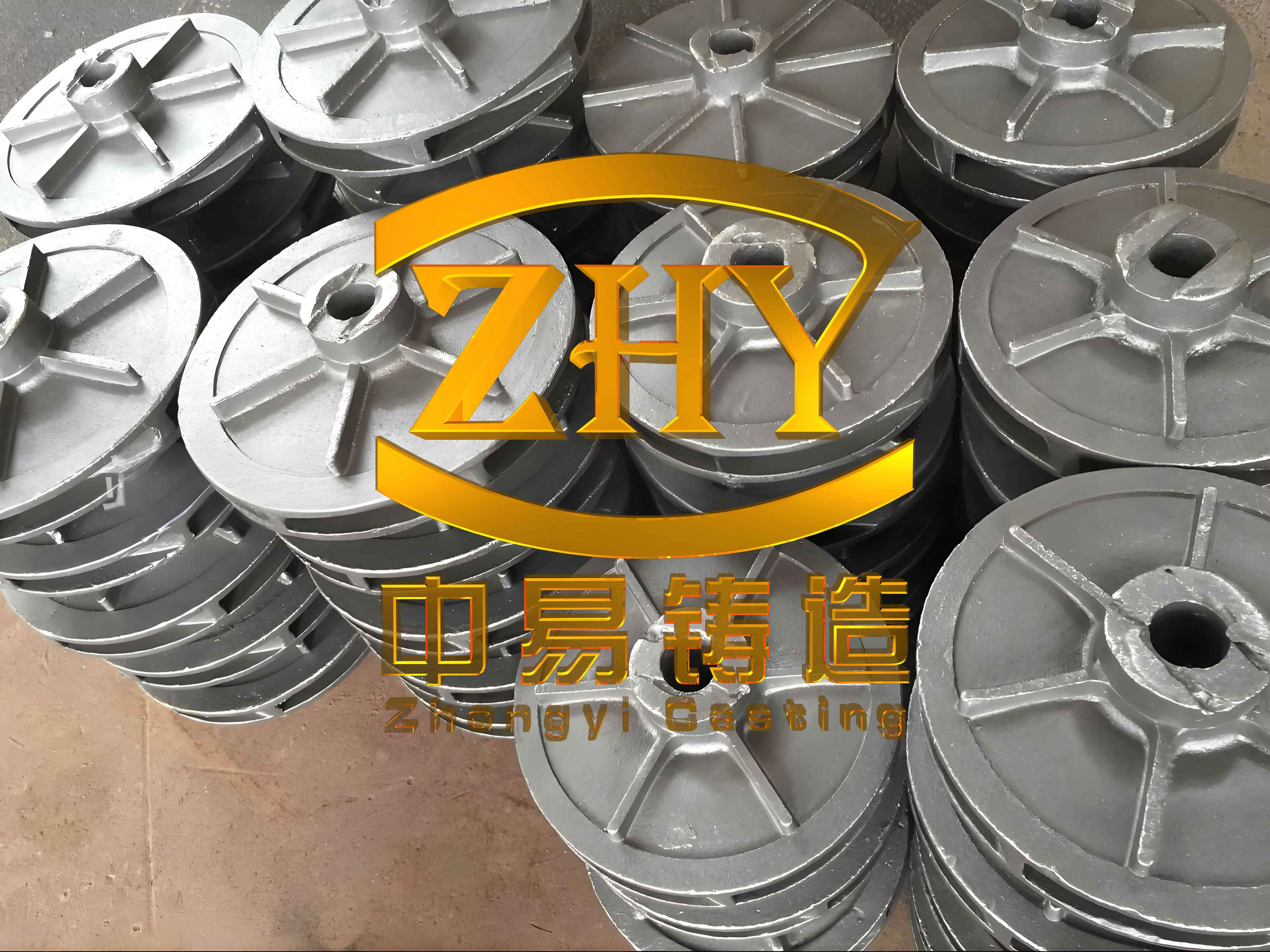
The specific manifestation of the problem involved a thin-walled gray cast iron component with a multi-core design. The production process utilized medium-frequency induction melting, high-pressure green sand molding (via a KW squeeze line), and resin-bonded sand cores (both cold-box and hot-box). Following standard procedures of finishing and painting, a dense population of pinhole-like porosity was revealed on the internal cavity surfaces. This necessitated extensive rework—grinding, re-cleaning, and repainting—leading to delayed deliveries, increased labor costs, and overall reduced productivity. The economic impact made it imperative to conduct a fundamental analysis of the defect’s origin.
Fundamental Mechanisms of Surface Pinhole Formation
Needle-shaped surface pores are classified as reaction-type gas defects. They originate primarily from interfacial reactions between the advancing molten gray cast iron front and gases generated from the mold or core surfaces. The gases involved are predominantly hydrogen (H₂), carbon monoxide (CO), and, to a lesser extent, carbon dioxide (CO₂).
The generation pathways are twofold:
- Water Vapor Decomposition: Under the intense heat of the molten gray cast iron, free or combined moisture in the sand molds and cores vaporizes instantly. This steam can react with certain elements in the iron melt, particularly at the metal-mold interface, releasing atomic hydrogen [H] which can then dissolve into the metal or form molecular H₂ gas at nucleation sites.
- Organic Material Pyrolysis: Additives like coal dust or the organic binders within the core sand undergo thermal decomposition and combustion in the reducing atmosphere near the metal surface, producing volumes of CO and CO₂ gas.
The nucleation and growth of these pores at the solidifying metal surface are governed by the balance of pressures and surface energy. The classical condition for homogeneous nucleation of a spherical gas pore within a liquid is given by:
$$P_g \ge P_a + P_h + \frac{2\sigma}{r}$$
Where:
$P_g$ = Pressure of the gas inside the bubble
$P_a$ = Ambient atmospheric pressure
$P_h$ = Hydrostatic pressure of the liquid metal at that depth
$\sigma$ = Surface tension of the liquid gray cast iron
$r$ = Radius of the nucleated bubble
This equation implies that a very high internal gas pressure is required to overcome the sum of external pressure and the significant restraining force of surface tension, especially for a very small bubble (where $2\sigma/r$ is large). Therefore, homogeneous nucleation is statistically unlikely in practice. The formation is greatly assisted by heterogeneous nucleation. Microscopic crevices on the mold/core coating, existing gas pockets, or non-metallic inclusions at the interface provide ready-made sites that drastically reduce the energy barrier for pore initiation. Once nucleated, these pores grow by diffusion of gases from the supersaturated metal or by continued gas generation from the mold-metal reaction, often elongating into the characteristic “needle” shape as the solidification front advances.
Systematic Root Cause Analysis and Experimental Investigation
To pinpoint the exact source of the problem, a structured investigation was undertaken, sequentially examining and ruling out potential contributing factors related to molten metal composition, molding sand, and finally, core properties.
1. Control of Molten Metal Chemistry
Literature and prior experience indicate that trace elements like Aluminum (Al) and Titanium (Ti) can severely promote pinhole formation in gray cast iron. These elements act as strong oxide formers and can catalyze the dissociation of water vapor, increasing the hydrogen pickup at the interface. The reactions are:
$$2\text{Al} + 3\text{H}_2\text{O} \rightarrow \text{Al}_2\text{O}_3 + 6[\text{H}]$$
$$\text{Ti} + 2\text{H}_2\text{O} \rightarrow \text{TiO}_2 + 4[\text{H}]$$
The atomic hydrogen [H] generated can dissolve into the iron. Upon solidification, as hydrogen solubility drops sharply, it precipitates out, contributing to pore formation. Critical thresholds are often cited at $w(\text{Al}) > 0.015\%$ and $w(\text{Ti}) > 0.084\%$.
Action Taken: A strict metal chemistry control protocol was implemented:
- Sourcing pig iron with lower residual impurity levels.
- Switching to a specialized inoculant with a guaranteed low Aluminum content.
- Implementing rigorous slag-off practices before pouring and ensuring ladles were completely emptied between heats to avoid contaminant buildup.
The target was to maintain $w(\text{Al}) < 0.015\%$ and $w(\text{Ti}) < 0.084\%$. Multiple production trials were conducted under this controlled chemistry regime.
Result: Despite achieving the target chemistry, the incidence of surface pinholes on the thin-walled gray cast iron castings showed no measurable reduction. This led to the conclusion that, for this specific defect scenario, Al and Ti content were not the primary drivers.
2. Control of Green Sand Mold Moisture
High-pressure green sand molding lines require precise moisture control. Excess water leads to violent steam generation, creating a risk of general blowholes and surface defects. The typical acceptable range for moisture content in such systems is between 3.0% and 4.0%.
To assess this factor, historical data on the molding sand’s moisture content was compiled and analyzed. The monthly average values over an extended period are presented below:
| Month/Year | Average Moisture Content (%) | Observation Period Status |
|---|---|---|
| Aug 2012 | 3.8 | Period of consistent pinhole defects reported. |
| Sep 2012 | 3.7 | |
| Oct 2012 | 3.5 | |
| Nov 2012 | 3.4 | |
| Dec 2012 | 3.4 | |
| … (Intervening months) … | … | |
| Jul 2013 | 3.4 | Defects persisted. |
| Aug 2013 | 3.3 | |
| Sep 2013 | 3.3 |
Analysis: The data clearly shows that the average moisture content was consistently maintained within the recommended operational band of 3.3% to 3.8% throughout the period when the pinhole defects were actively occurring. Consequently, it was reasoned that the moisture level in the green sand mold was not the root cause of the localized internal surface pinholes.
3. Control of Sand Core Moisture: The Critical Factor
With metal chemistry and mold sand ruled out, focus shifted decisively to the resin-bonded sand cores. These complex cores, which form the internal cavities of the gray cast iron casting, are subjected to direct and prolonged contact with the molten metal on all sides. The cores in question were produced using a amine-cured cold-box process and were subsequently coated with a water-based refractory coating. The final, critical step before use is the drying of this applied coating in a drying oven.
The hypothesis was that inadequate drying was leaving residual moisture trapped within the core coating or the core’s surface layer. When the core is enveloped by molten gray cast iron, this moisture flashes into steam. Being trapped within the core and unable to escape readily through the dense mold sand, the steam pressure builds and forces its way into the solidifying metal skin, creating the observed needle-shaped pores.
Furthermore, excessive core moisture is known to have deleterious secondary effects:
- It can react with the polyisocyanate resin component, consuming the binder and reducing the core’s tensile strength.
- It degrades the flowability of the core sand during shooting, potentially leading to poor core density.
Industry wisdom suggests that a core moisture content exceeding 0.25% significantly elevates the risk of gas-related casting defects in gray cast iron.
Experimental Action: A direct experiment was designed. Cores from the standard production batch, which underwent the conventional single-pass drying cycle, were sampled, and their moisture content was measured. Subsequently, a batch of identical cores was subjected to an extended, double-pass drying cycle in the same oven. The moisture content was measured again after this second drying. The results were striking and are summarized below:
| Core Drying Process | Measured Moisture Content (%) | Observation on Castings |
|---|---|---|
| Standard Single Drying Cycle | 0.46 | Pronounced needle-shaped porosity on internal surfaces. |
| Extended Double Drying Cycle | 0.14 | Internal surfaces were completely free of the needle-shaped porosity. |
The correlation was unequivocal. Cores with a moisture level of 0.46%—far above the 0.25% threshold—produced defective castings. Reducing the moisture to 0.14% through more thorough drying completely eliminated the defect. The mechanism aligns perfectly with the theory: the drastic reduction in available water vapor at the core-metal interface removed the primary source of gas for pore nucleation and growth.
Key Findings and Concluding Recommendations
The investigation yielded clear and actionable conclusions:
- Primary Root Cause: For thin-walled, multi-core gray cast iron castings, excessive moisture content within resin-bonded sand cores is the predominant cause of needle-shaped surface porosity on internal cavities. The defect is a direct result of steam generation at the core-metal interface.
- Holistic Problem-Solving Approach: Defect analysis in gray cast iron foundries must be systematic. While trace elements like Al and Ti are known generic risks, and mold sand parameters are always vital, the specific process context (in this case, complex internal cores) demands that core quality parameters be scrutinized with equal rigor. A one-factor-at-a-time approach is essential for accurate diagnosis.
- Effective and Economical Solution: Implementing a controlled, extended drying cycle for coated sand cores to drive the moisture content below 0.20% (and ideally closer to 0.10-0.15%) is a highly effective countermeasure. This process adjustment is low-cost but yields high returns by virtually eliminating the defect, thereby:
- Eliminating costly rework (grinding, repainting).
- Reducing production lead times and improving on-time delivery.
- Lowering overall manufacturing costs and scrap rates.
- Enhancing product quality and customer satisfaction.
This case underscores a fundamental principle in gray cast iron casting: the quality of the internal cores is as critical as the quality of the molten metal or the main mold. For thin-section castings where the solidifying skin freezes rapidly, the casting’s surface is essentially a “record” of the immediate gaseous environment at the core interface. Therefore, rigorous control over core drying processes is not merely a supplementary step but a cornerstone of quality assurance for complex gray cast iron components.