
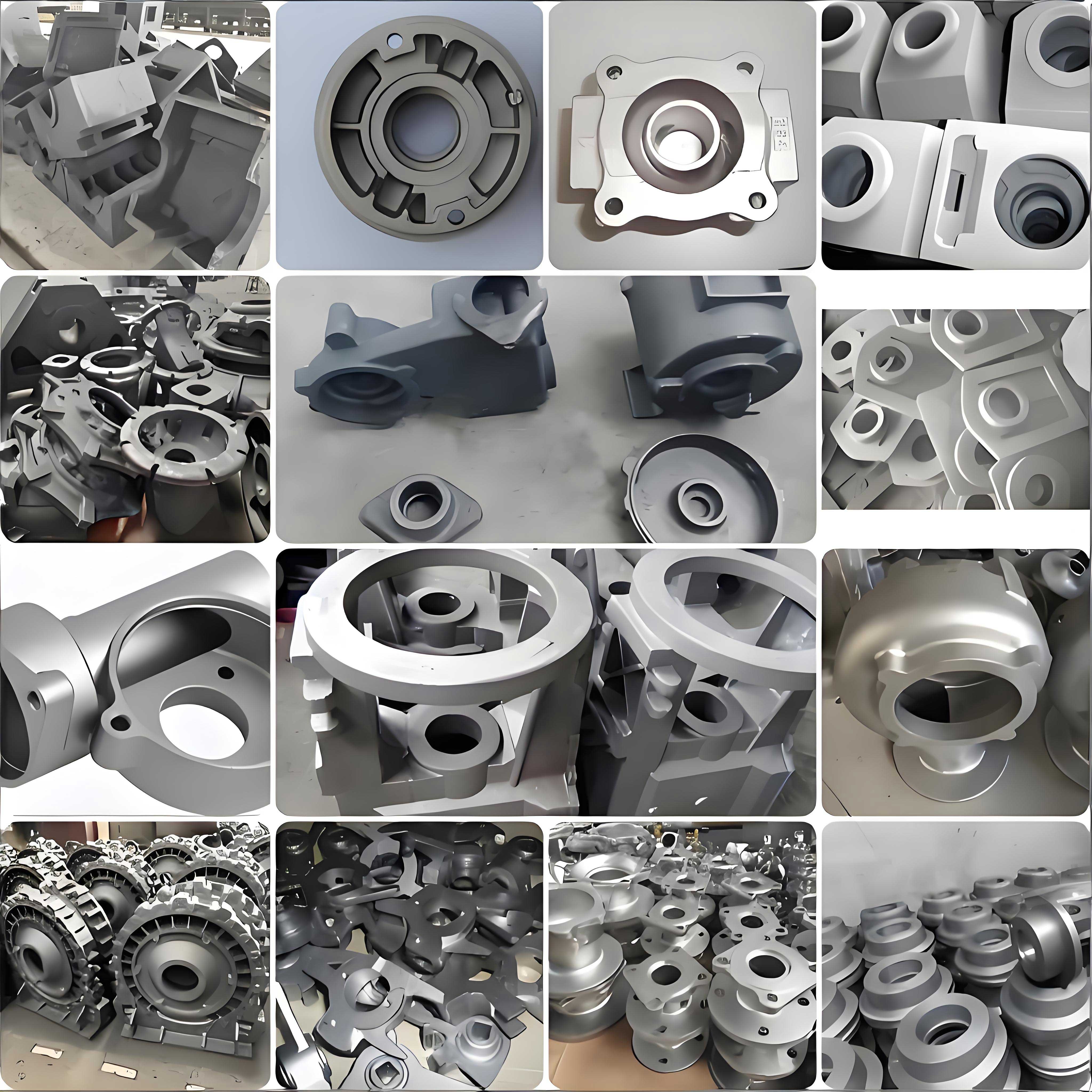
The exceptional mechanical properties of nodular cast iron, stemming from its unique microstructure of spherical graphite nodules embedded within a metallic matrix, have cemented its status as a critical material in modern heavy-duty manufacturing. Its applications span crucial components such as wind turbine hubs, bearing housings, and gearbox casings, where reliability under diverse operating conditions is paramount. A key performance metric for these components, especially in cold climates or cryogenic applications, is the material’s resistance to brittle fracture, quantified by its low-temperature impact toughness. While the superior ductility and toughness of ferritic nodular cast iron are well-established at room temperature, its behavior under sub-zero conditions requires detailed scrutiny. The fracture surface of an impact specimen serves as a direct physical record of the failure process, encoding vital information about the micromechanisms operating during crack initiation and propagation. By meticulously analyzing these fracture surfaces, we can decipher the transition from ductile to brittle behavior and identify the microstructural features that govern this transition.
Extensive prior research has established that the impact performance of nodular cast iron is not governed by a single factor but is instead a complex interplay of multiple microstructural characteristics. The morphology of the graphite phase—specifically, the nodularity, size distribution, and count of the graphite spheres—plays a foundational role. A high degree of nodularity and a fine, uniformly distributed graphite structure are generally associated with enhanced mechanical properties. The matrix composition is equally critical; a fully ferritic matrix offers maximum ductility, while the presence of hard, brittle phases like pearlite or carbides can severely detract from toughness, particularly at low temperatures. Furthermore, casting defects such as shrinkage porosity, slag inclusions, and intergranular precipitates act as potent stress concentrators, often serving as preferential sites for crack initiation and facilitating unstable crack growth. This study systematically investigates the low-temperature impact behavior of a fully ferritic grade of nodular cast iron, QT400-18L, at -40°C. By correlating quantitative impact energy data with comprehensive microstructural and fractographic analyses, we aim to elucidate the dominant failure mechanisms and identify the key microstructural parameters controlling low-temperature toughness in this class of materials.
The experimental material was a ferritic nodular cast iron, conforming to the grade QT400-18L. Charpy V-notch impact specimens were machined according to the standard dimensions specified in GB/T 229-2020. Testing was conducted at a temperature of -40°C to evaluate the low-temperature impact toughness. The resulting impact absorbed energy values (KV) for the tested specimens formed the basis for our comparative analysis. Following impact testing, each fractured specimen was carefully sectioned. One half of the fracture surface was reserved for direct examination via Scanning Electron Microscopy (SEM) to study the topographic features of the fracture. The other half was mounted, ground, polished, and etched with a 4% nital solution to prepare a standard metallographic specimen. Microstructural analysis was performed using optical microscopy according to GB/T 9441-2021 to quantify parameters such as nodularity, graphite size, graphite nodule count, and matrix constituency. Energy Dispersive X-ray Spectroscopy (EDS) attached to the SEM was utilized for chemical analysis of specific features on the fracture surface and within the microstructure. The specimens were grouped based on their measured impact energy, as detailed in the table below.
| Group | Impact Energy (J) | Fractography Sample ID | Metallography Sample ID |
|---|---|---|---|
| 1 | 13 | 1-1#, 2-1#, 3-1# | 1-2#, 2-2#, 3-2# |
| 2 | 11 | 4-1#, 5-1#, 6-1# | 4-2#, 5-2#, 6-2# |
| 3 | 9 | 7-1#, 8-1#, 9-1# | 7-2#, 8-2#, 9-2# |
| 4 | 7 | 10-1#, 11-1#, 12-1# | 10-2#, 11-2#, 12-2# |
Macroscopic examination of the fracture surfaces revealed a clear and consistent trend. Specimens from Group 1 (highest impact energy, ~13 J) exhibited a predominantly dull, grey, and fibrous appearance indicative of substantial plastic deformation prior to fracture. In contrast, specimens from Group 4 (lowest impact energy, ~7 J) displayed much brighter, shiny, and granular surfaces, characteristic of brittle failure with minimal plasticity. Groups 2 and 3 showed intermediate characteristics, with a mixed appearance of dull and bright regions. This visual evolution directly correlates with the proportion of ductile micro-mechanisms (dimple formation) versus brittle mechanisms (cleavage) operating during fracture. The macroscopic zones—fibrous zone, radial zone, and shear lips—were identifiable, with the relative size of the fibrous zone decreasing significantly as the impact energy dropped.
The transition observed macroscopically was dramatically confirmed at the microscopic level via SEM. The fractographs of high-impact-energy specimens (Group 1) were dominated by a dense, uniform population of well-defined, equiaxed dimples. Within these dimples, spherical graphite nodules were frequently visible, confirming that the primary failure mechanism involved the nucleation, growth, and coalescence of microvoids around the graphite-matrix interfaces. This process absorbs a significant amount of energy through plastic deformation of the surrounding ferritic matrix. The relationship between the area fraction of ductile dimples and impact energy can be conceptually described as a primary driver of toughness:
$$ f_d \propto KV $$
where $f_d$ is the area fraction of dimpled region and $KV$ is the impact absorbed energy.
Conversely, the fracture surfaces of low-impact-energy specimens (Group 4) were characterized by large, flat facets exhibiting classic brittle fracture features. These included cleavage planes with distinct “river patterns” marking the progression of the crack front through individual ferrite grains. The presence of dimples was sparse and limited. To quantify this observation, we can define a cleavage area fraction, $f_c$. The data suggests an inverse relationship between $f_c$ and $KV$:
$$ f_c = a – b \cdot KV $$
where $a$ and $b$ are positive constants. The estimated trend is summarized below:
| Impact Energy Group (J) | Estimated Cleavage Area Fraction, $f_c$ | Predominant Fracture Mode |
|---|---|---|
| 13 | ~0.1 – 0.2 | Ductile (Dimple) |
| 11 | ~0.3 – 0.4 | Mixed |
| 9 | ~0.5 – 0.6 | Mixed |
| 7 | ~0.8 – 0.9 | Brittle (Cleavage) |
Metallographic analysis of all specimens confirmed a predominantly ferritic matrix (typically >95%) with a nodularity grade consistently above 90%. The graphite size was primarily between 5 and 7 (according to the standard chart). However, detailed quantification revealed subtle but important variations that correlated with impact performance. A key parameter is the graphite nodule count per unit area, $N_g$. Statistical analysis of the metallographic data showed a general, though not perfectly linear, trend: specimens with higher impact energy tended to possess a higher number of graphite nodules per unit area. This relationship can be expressed as:
$$ KV \approx \gamma_0 + \gamma_1 \cdot N_g $$
where $\gamma_0$ and $\gamma_1$ are constants. A higher nodule count implies a smaller mean free path between obstacles (graphite spheres) in the ferritic matrix, which can hinder crack propagation and promote a more uniform distribution of stress, thereby enhancing toughness. The following table compiles key microstructural data from representative samples across the energy groups.
| Sample ID (Group) | Nodularity (%) | Graphite Size Grade | Ferrite (%) | Pearlite (%) | Graphite Nodule Count, $N_g$ (nodules/mm²) |
|---|---|---|---|---|---|
| 2-2# (Group 1) | 95 | 6-7 | >95 | <5 | 191.4 |
| 4-2# (Group 2) | 90 | 6-5 | >95 | <5 | 141.9 |
| 8-2# (Group 3) | 90 | 6-5 | >95 | <5 | 134.4 |
| 12-2# (Group 4) | 90 | 6-5 | >95 | <5 | 106.7 |
The influence of the matrix was also evident. While all groups were primarily ferritic, specimens in Groups 3 and 4 occasionally showed marginally higher pearlite content (up to ~10-15% in one case). Pearlite, being a harder and more brittle constituent compared to ferrite, provides an easier path for crack propagation due to its lamellar structure. The presence of even modest amounts of pearlite can lower the overall toughness, especially at low temperatures where the ferrite matrix itself is more prone to cleavage. The effective toughness of the composite matrix, $K_{matrix}$, can be modeled using a rule of mixtures, though its simplicity often belies the complexity of local stress states:
$$ K_{matrix} \approx V_{\alpha} \cdot K_{\alpha} + V_{p} \cdot K_{p} $$
where $V_{\alpha}$ and $K_{\alpha}$ are the volume fraction and toughness of ferrite, and $V_{p}$ and $K_{p}$ are the volume fraction and toughness of pearlite, with $K_{p} << K_{\alpha}$ at -40°C.
Beyond the graphite and matrix, the role of microstructural defects was critically important. SEM-EDS analysis identified small, non-metallic inclusions, often rich in Si, Mg, and O, located at ferrite grain boundaries. These inclusions, likely complex oxides or silicates, act as potent stress raisers. During impact loading, decohesion at the inclusion-matrix interface or fracture of the inclusion itself can create microvoids prematurely. The proximity of these defects to grain boundaries, which are already susceptible to segregation and embrittlement, exacerbates their detrimental effect. The probability of fracture initiation at an inclusion, $P_i$, can be related to its size and distance from a critical stress field:
$$ P_i \propto \int_{A} \frac{\sigma_{local}(r)}{\sigma_{crit}} dA $$
where $\sigma_{local}$ is the local stress amplified by the inclusion, $\sigma_{crit}$ is the critical stress for interface decohesion, and the integral is over the interface area.
Furthermore, shrinkage porosity was observed in several specimens, with its severity varying. This defect is particularly damaging because it represents a macroscopic cavity that drastically reduces the load-bearing cross-section and creates a severe three-dimensional stress concentration. The stress intensity factor, $K_I$, near a pore can be significantly elevated compared to the nominal applied stress, $\sigma_n$:
$$ K_I \approx Y \cdot \sigma_n \sqrt{\pi \cdot a} $$
where $Y$ is a geometric factor (>>1 for pores) and $a$ is a characteristic defect dimension. Specimens with more pronounced shrinkage porosity consistently ranked in the lower impact energy groups. To synthesize the effect of defects, a qualitative scoring system was applied, assigning points for the presence and severity of inclusions and porosity. The cumulative defect score showed a strong inverse correlation with the average impact energy of the group, underscoring that in high-quality nodular cast iron with good nodularity and matrix structure, defects often become the limiting factor for achieving peak low-temperature toughness.
| Group (Avg. KV) | Avg. Defect Score (Inclusions + Porosity) | Trend |
|---|---|---|
| Group 1 (~13 J) | 2.33 | Increasing defect score correlates with decreasing impact energy. |
| Group 2 (~11 J) | 2.67 | |
| Group 3 (~9 J) | 2.67 | |
| Group 4 (~7 J) | 3.00 |
In conclusion, this comprehensive investigation into the low-temperature impact performance of ferritic nodular cast iron reveals a multifaceted interplay of microstructural factors governing toughness at -40°C. The transition in fracture mode from ductile dimple rupture to brittle cleavage is the fundamental reason for the drop in impact absorbed energy. This transition is not dictated by a single variable but is sensitively controlled by a combination of parameters. While a fully ferritic matrix is essential, the characteristics of the graphite phase—specifically a high nodule count and fine size—are critical for optimizing low-temperature toughness in nodular cast iron. These features promote a more homogeneous strain distribution and impede crack propagation. However, the study unequivocally demonstrates that the beneficial effects of an excellent graphite structure and matrix can be severely compromised by the presence of casting defects. Shrinkage porosity and grain boundary inclusions act as potent initiators for catastrophic brittle fracture, often outweighing the influence of subtle variations in graphite morphology. Therefore, for critical applications of nodular cast iron in low-temperature environments, the engineering focus must extend beyond achieving high nodularity and ferrite content. It must rigorously encompass melt quality and solidification process control to minimize the formation of such defects, ensuring that the inherent toughness potential of the ferritic nodular cast iron microstructure is fully realized.