
In the pursuit of durable materials for demanding industrial applications, our research focuses on the development and evaluation of high-chromium molybdenum white cast iron. This class of white cast iron is particularly valued for components subjected to severe impact-abrasive wear, such as grinding balls and liners in ball mills. The primary requirement is not merely hardness but sufficient toughness to resist catastrophic fracture under repeated high-energy impacts. In this work, we have systematically investigated the influence of chemical composition, specifically the chromium-to-carbon (Cr/C) ratio and molybdenum addition, and resultant microstructure on the impact fracture resistance of high-chromium white cast iron. A specialized vertical drop-weight test was employed to simulate service conditions, providing critical insights into the dynamic failure behavior of these alloys.
The first patent for chromium-alloyed white cast iron was granted nearly a century ago, but the development of high-chromium grades, especially those modified with molybdenum, has gained significant momentum in recent decades. The selection of this specific high-chromium molybdenum white cast iron for our study is driven by its targeted use in ore-processing equipment. In such applications, the material must withstand the combined assault of high-stress abrasion and the repetitive impact loads generated by the tumbling charge. Failure often occurs not from gradual wear but from premature cracking or spalling. Therefore, optimizing the balance between hardness (wear resistance) and toughness (impact fracture resistance) is paramount. The base microstructure of this white cast iron typically consists of hard eutectic carbides embedded in a metallic matrix. The nature of this matrix—whether pearlitic, austenitic, or martensitic—profoundly influences the overall mechanical performance.
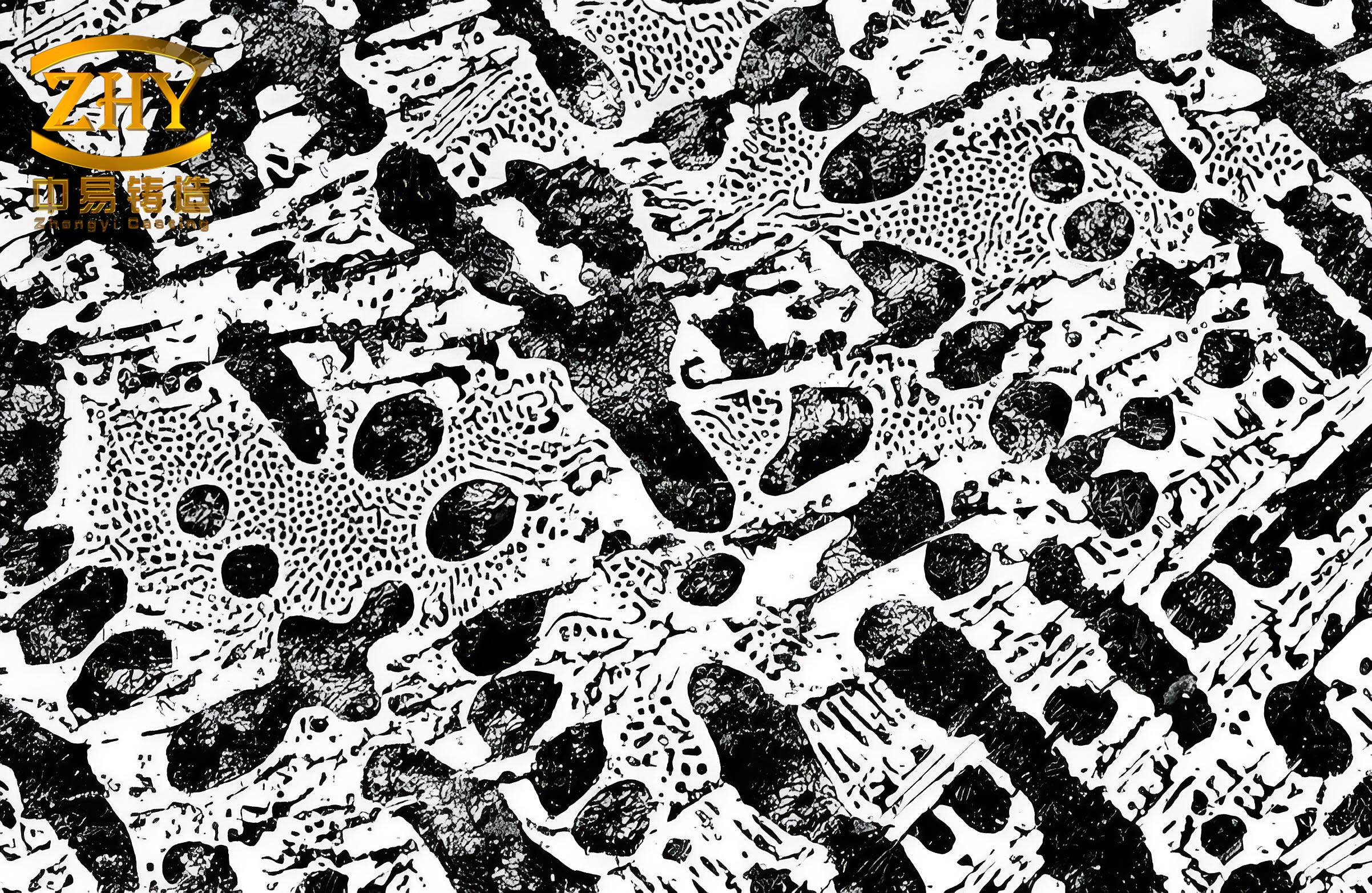
Alloying elements like chromium and molybdenum play crucial roles. Chromium primarily promotes the formation of (Cr,Fe)7C3 carbides, which are harder and less continuous than the cementite found in unalloyed white cast iron, thereby improving both wear resistance and toughness. Molybdenum is a potent hardenability agent; it suppresses the transformation of austenite to pearlite during cooling, allowing for the retention of austenite in the as-cast state or enabling the formation of martensite upon heat treatment. A common industrial practice is a destabilization heat treatment, where the castings are held at an elevated temperature (e.g., 950-1050°C) to precipitate secondary carbides from the supersaturated austenite. This reduces the carbon and alloy content in the matrix, lowering its stability so that it transforms to martensite upon subsequent air cooling. However, this transformation is often incomplete, leaving a significant fraction of retained austenite. The interplay between these microstructural constituents defines the final properties of the white cast iron.
Experimental Procedure
A series of high-chromium molybdenum white cast iron alloys were designed with the objective of maintaining a constant volume fraction of primary carbides at approximately 30%, a level cited in literature for optimal wear and fracture resistance. The key variable was the Cr/C ratio, which was systematically varied to produce different as-cast matrix structures. Molybdenum content was fixed at a level known to provide adequate hardenability for section sizes of interest. The nominal target compositions are summarized conceptually below, where C is carbon content and Cr is chromium content:
$$V_f_{carbide} \approx 30\% = f(C, Cr)$$
$$ \text{Cr/C Ratio} = \frac{\%Cr}{\%C} \quad \text{(Varied from low to high)}$$
$$ \%Mo \approx \text{Constant} $$
The alloys were melted in a basic-lined induction furnace. Each heat was tapped and poured into green sand molds to produce cylindrical castings of a standard diameter suitable for machining test specimens. A riser with an exothermic topping compound was used to improve feeding and minimize shrinkage porosity in the test section. Chemical analysis was performed on drill shavings from each heat using vacuum emission spectroscopy to determine the actual composition.
Specimens from selected conditions were subjected to a destabilization heat treatment. This involved austenitizing at 980°C for 4 hours, followed by air cooling. This cycle is intended to precipitate secondary carbides and promote the formation of a martensitic matrix upon cooling.
Microstructural characterization was conducted using standard metallographic techniques. To identify the type of carbides present, alloy chips were dissolved in a HCl-based solution to extract the carbide phase, which was then analyzed by X-ray diffraction (XRD). Macro-hardness was measured using the Rockwell C scale (HRC).
The core of the evaluation was the impact fracture resistance test. Both static and dynamic indentation methods were used. For static testing, a Brinell-type ball indenter was used on a hydraulic machine. Load was applied, released, and the indentation diameter measured. This cycle was repeated with increasing load increments until radial cracks propagated to the outer surface of the cylindrical specimen, defining the failure point.
For dynamic testing, a custom vertical drop-weight apparatus was designed and built. A hammer with a mass of 10 kg was fitted with a sintered tungsten carbide (WC) ball indenter (diameter 25.4 mm) brazed into a socket. The hammer was dropped from varying heights (0.25 m to 1.5 m) to deliver controlled impact energies (Eimp) calculated as:
$$E_{imp} = m \cdot g \cdot h$$
where \( m = 10 \, \text{kg} \), \( g = 9.81 \, \text{m/s}^2 \), and \( h \) is the drop height in meters. The maximum achievable impact energy was approximately 150 J. The test specimen was a cylindrical section. The test procedure involved subjecting a specimen to repeated impacts at a fixed energy level. The number of impacts (Nf) required to cause a crack to propagate from the indentation site to the specimen’s outer diameter was recorded as the measure of impact fracture resistance. A “critical energy” was identified as the maximum impact energy at which the specimen could withstand at least 20 impacts without failure.
Results and Analysis
Chemical Composition and Microstructure
The actual chemical compositions of the experimental white cast iron heats are presented in Table 1. The heats are coded to indicate Cr/C ratio and condition (A for as-cast, H for heat-treated).
| Heat ID | Cr/C Ratio | C (wt%) | Cr (wt%) | Mo (wt%) | Si (wt%) | Mn (wt%) |
|---|---|---|---|---|---|---|
| 1-A (Low) | ~4 | 3.2 | 12.8 | 1.5 | 0.6 | 0.6 |
| 2-A (Med) | ~6 | 2.8 | 16.8 | 1.5 | 0.6 | 0.6 |
| 3-A (High) | ~8 | 2.5 | 20.0 | 1.5 | 0.6 | 0.6 |
| 1-H | ~4 | 3.2 | 12.8 | 1.5 | 0.6 | 0.6 |
| 2-H | ~6 | 2.8 | 16.8 | 1.5 | 0.6 | 0.6 |
| 3-H | ~8 | 2.5 | 20.0 | 1.5 | 0.6 | 0.6 |
Microstructural analysis confirmed the strong dependence of the as-cast matrix on Cr/C ratio. The low Cr/C ratio white cast iron (Heat 1-A) exhibited a pearlitic matrix surrounding the eutectic carbides. The medium ratio white cast iron (Heat 2-A) showed a mixture of pearlite and bainite, with the bainite formation attributed to the molybdenum addition. The high Cr/C ratio white cast iron (Heat 3-A) displayed a primarily austenitic matrix, both in the primary dendrites and in the eutectic regions, demonstrating the increased stability of austenite with higher alloy content.
Destabilization heat treatment successfully altered the matrix microstructure. For the heat-treated white cast irons (Heats 1-H, 2-H, 3-H), the microstructure consisted of the original eutectic carbides, newly precipitated secondary carbides, martensite, and some retained austenite. The extent of martensite formation was most complete in the medium and high Cr/C ratio alloys. The low Cr/C ratio alloy, due to its higher carbon content and potentially slower effective cooling rate to avoid cracking, formed a mixture of ferrite and carbides rather than fully hardened martensite.
Hardness
The Rockwell C hardness values for both as-cast and heat-treated conditions are summarized in Table 2. The hardness of the white cast iron is a combined effect of the hard carbides and the matrix.
| Condition | Low Cr/C (Heat 1) | Medium Cr/C (Heat 2) | High Cr/C (Heat 3) |
|---|---|---|---|
| As-Cast | 52 HRC (Pearlite) | 58 HRC (Pearlite/Bainite) | 42 HRC (Austenite) |
| Heat-Treated | 45 HRC (Ferrite+Carbides) | 64 HRC (Martensite) | 62 HRC (Martensite) |
The as-cast austenitic white cast iron (Heat 3-A) showed the lowest hardness. The heat-treated martensitic white cast irons (Heats 2-H, 3-H) achieved the highest hardness, confirming the effectiveness of the treatment in strengthening the matrix.
Impact Fracture Resistance
The static indentation tests on the low and high Cr/C ratio as-cast white cast irons revealed a consistent failure mechanism. The indentation diameter increased with load until a critical diameter (approximately one-third of the specimen diameter) was reached, at which point radial cracks propagated to the surface causing failure. This is illustrated conceptually for two alloys in Figure 1.
$$ \text{Critical Indentation Diameter, } d_{crit} \approx \frac{D_{specimen}}{3} $$
The dynamic drop-weight tests provided the most relevant data for impact service simulation. The relationship between impact energy and the number of impacts to failure (Nf) was established for each alloy condition. Figure 2, 3, and 4 conceptually represent the trends for low, medium, and high Cr/C ratio groups, respectively.
A key finding was the definition of a “critical energy” (Ecrit) – the highest impact energy at which the specimen survived 20 impacts without fracture. The data is summarized in Table 3.
| Condition | Matrix Type | Critical Energy, Ecrit (J) | Relative Performance |
|---|---|---|---|
| Low Cr/C, As-Cast | Pearlitic | ~25 | Low |
| Medium Cr/C, As-Cast | Pearlitic/Bainitic | ~35 | Medium |
| High Cr/C, As-Cast | Austenitic | ~30 | Medium-Low |
| Low Cr/C, Heat-Treated | Ferritic+Carbides | ~40 | Medium |
| Medium Cr/C, Heat-Treated | Martensitic | ~70 | High |
| High Cr/C, Heat-Treated | Martensitic | ~65 | High |
The results clearly demonstrate that the heat-treated martensitic white cast irons possess superior impact fracture resistance, with a critical energy approximately double that of their as-cast counterparts. The as-cast austenitic white cast iron, despite its reputation for higher toughness in single-blow tests, performed poorly under repeated impact, with failure occurring at relatively low energy levels.
Discussion
The vertical drop-weight test proved to be an excellent discriminator for the impact fracture resistance of different white cast iron microstructures. The failure mechanism observed is consistent with a model of plastic deformation under a spherical indenter. Upon impact, a wedge-shaped “dead metal” zone forms under the indenter, displacing material radially outward and upward. This outward flow induces circumferential tensile stresses around the plastic zone, leading to the initiation of radial cracks. These cracks propagate, often linking pre-existing defects like micro-shrinkage or carbide clusters, until they reach the free surface, resulting in final fracture.
The superior performance of the heat-treated martensitic white cast iron can be attributed to the high strength of its matrix. The strong martensitic matrix more effectively constrains the plastic deformation zone under the indenter, limiting its size. This is evidenced by the smaller and more stable indentation diameters observed during testing of heat-treated specimens compared to as-cast ones. A smaller plastic zone results in lower driving forces for crack initiation and propagation. The relationship between matrix yield strength (\(\sigma_y\)), indentation diameter (d), and applied load (P) can be conceptually related through indentation mechanics:
$$ P \propto \sigma_y \cdot d^2 $$
For a given impact energy (related to P), a higher \(\sigma_y\) leads to a smaller d, delaying crack initiation.
Furthermore, the martensitic matrix, while less ductile than austenite, provides a more homogeneous and crack-resistant barrier. In the as-cast austenitic white cast iron, the softer matrix allows for greater plastic flow, leading to a larger deformation zone and higher local stresses. Additionally, under repeated impacts, the metastable austenite may undergo strain-induced transformation or work hardening, creating localized stress concentrations that facilitate crack propagation along the carbide-matrix interfaces.
Fractography studies confirmed that cracks predominantly initiated at micro-shrinkage pores or large carbide clusters. Once initiated, cracks preferentially propagated along the brittle carbide-matrix interfaces. The volume fraction and morphology of carbides are thus critical; a continuous carbide network provides an easy path for crack growth. The design goal of ~30% carbide volume fraction in this white cast iron appears to be a compromise, offering good wear resistance without creating an excessively brittle network.
The role of molybdenum in this white cast iron is twofold. First, it enhances hardenability, ensuring the formation of martensite upon air cooling after destabilization, even in moderately sized sections. Second, by promoting bainite formation in the as-cast state and refining the final martensitic structure after heat treatment, it contributes to a tougher overall microstructure compared to a plain high-chromium white cast iron.
Conclusions
Based on our comprehensive investigation into the impact fracture resistance of high-chromium molybdenum white cast iron, the following conclusions are drawn:
- The custom vertical drop-weight impact test is an effective method for evaluating and differentiating the dynamic fracture resistance of white cast iron with different matrix microstructures, closely simulating severe service conditions.
- The impact failure process in this white cast iron involves plastic deformation under the indenter, leading to circumferential tensile stresses and the initiation of radial cracks. Failure occurs when these cracks propagate to the specimen surface, which consistently happens when the indentation diameter reaches about one-third of the specimen diameter.
- Crack initiation sites are predominantly intrinsic casting defects such as micro-shrinkage pores and non-metallic inclusions. Propagation occurs preferentially along the interfaces of the hard, brittle eutectic carbides with the matrix.
- The matrix microstructure has a profound influence on performance. Heat-treated martensitic white cast iron, obtained through a destabilization treatment at 980°C followed by air cooling, exhibits significantly superior impact fracture resistance compared to as-cast pearlitic or austenitic white cast iron. The high strength of the martensitic matrix effectively constrains plastic deformation and retards crack propagation.
- For applications involving repeated high-energy impacts, such as in grinding media, specifying a heat-treated martensitic high-chromium molybdenum white cast iron is strongly recommended over the as-cast conditions to ensure adequate service life and prevent catastrophic fracture.
This study underscores the critical importance of microstructure control in engineering white cast iron for demanding applications. The optimal performance is achieved not by maximizing hardness alone but by developing a composite microstructure comprising hard carbides within a strong, crack-resistant martensitic matrix, a balance successfully achieved in the heat-treated high-chromium molybdenum white cast iron grades evaluated here.