
In the manufacturing of machine tool castings, the presence of rust and scale on cast surfaces poses significant challenges to quality, productivity, and worker safety. These machine tool castings, often complex in geometry and requiring precise dimensional stability, are susceptible to corrosion during extended production cycles, especially after aging treatments. Traditional methods, such as manual grinding and abrasive blasting, are not only labor-intensive but also fail to thoroughly remove rust from intricate surfaces, adversely affecting paint adhesion and overall finish. Moreover, the increasing scale of production exacerbates these issues, leading to bottlenecks. To address this, an acid pickling process was developed and implemented, revolutionizing the treatment of machine tool castings.
The initiative began with a suggestion from workshop personnel, leading to the formation of a collaborative team to explore acidic derusting. Initial trials conducted at a metal products facility demonstrated excellent rust removal efficacy. Subsequently, tailored equipment was designed and built in-house to suit specific production needs. This marked a pivotal shift in handling machine tool castings, moving from manual to chemical-based processes.
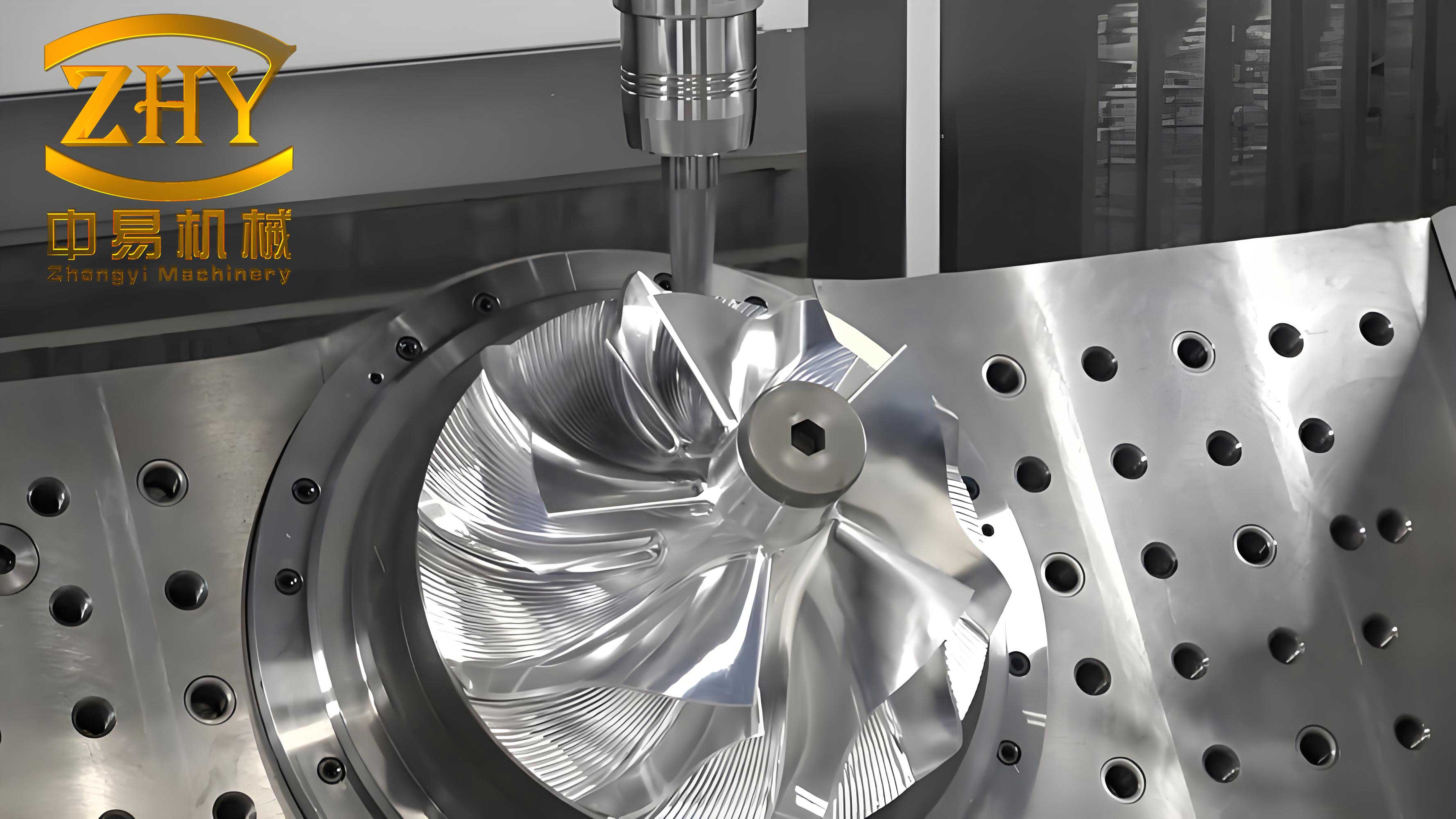
The acid pickling system comprises several integrated components, each serving a critical function in the treatment of machine tool castings. Below is a summary of the equipment setup:
| Component | Material/Design | Function |
|---|---|---|
| Pickling Tank | Polyvinyl chloride (PVC) plastic sheets welded with a plastic spray gun, lined internally with gaps filled with gypsum | Holds hydrochloric acid solution for immersing machine tool castings |
| Rinsing Water Tank | Cement tank with PVC lining, equipped with tap and compressed air agitation | Removes residual acid from machine tool castings using flowing water and air搅拌 |
| Alkali Tank | Cement tank containing industrial sodium bicarbonate solution | Neutralizes any remaining acid on machine tool castings |
| Hot Water Tank | Heated via boiler or steam circulation, maintaining 80–90°C | Cleans off alkali residues and promotes rapid drying of machine tool castings |
The process flow for treating machine tool castings involves sequential stages to ensure complete derusting and surface preparation. Each stage is controlled by specific parameters to optimize outcomes for these critical components.
Pickling Stage: Hydrochloric acid (HCl) is employed as the pickling agent. Unlike sulfuric acid, which requires elevated temperatures (60–80°C) for effective action, HCl operates effectively at ambient temperatures, simplifying the setup for machine tool castings. The concentration of HCl is meticulously controlled to regulate derusting speed. The relationship between HCl concentration and derusting time can be approximated by an empirical formula. For typical machine tool castings, the effective HCl concentration range is 8–12% by weight. If industrial-grade HCl with 31% concentration is used, the dilution ratio is determined as follows:
Let \( C_{\text{target}} \) be the target HCl concentration (e.g., 10%), \( C_{\text{stock}} \) the stock HCl concentration (31%), and \( V_{\text{stock}} \) the volume of stock HCl added to a total volume \( V_{\text{total}} \). Then:
$$ C_{\text{target}} = \frac{C_{\text{stock}} \cdot V_{\text{stock}}}{V_{\text{total}}} $$
Rearranging, the required stock volume for a given total volume is:
$$ V_{\text{stock}} = \frac{C_{\text{target}} \cdot V_{\text{total}}}{C_{\text{stock}}} $$
In practice, for machine tool castings, the stock HCl addition is 25–30% of the total volume, with the remainder being water. The derusting capability as a function of HCl concentration exhibits a nonlinear trend, which can be modeled for optimization. Experimental data indicate that the time \( t \) required for complete rust removal on machine tool castings correlates with HCl concentration \( C \) (in %) approximately as:
$$ t = \frac{k}{C – C_0} $$
where \( k \) is a constant dependent on casting geometry and rust severity, and \( C_0 \) is a threshold concentration (around 5% for typical machine tool castings). Below is a table summarizing typical immersion times for various machine tool castings at different HCl concentrations:
| Type of Machine Tool Casting | HCl Concentration (%) | Immersion Time (minutes) | Notes |
|---|---|---|---|
| Small brackets and housings | 8–10 | 5–10 | Uniform rust removal |
| Medium-sized gearbox bodies | 10–12 | 15–30 | Complex internal passages require adequate time |
| Large bed and column castings | 10–12 | 30–60 | May extend to 2 hours for severe corrosion |
Rinsing Stage: After pickling, machine tool castings are transferred to the rinsing tank. Compressed air is introduced to enhance turbulence, ensuring thorough removal of acid and loosened oxides. The rinsing time \( t_r \) is typically 10–15 minutes, governed by the surface area \( A \) of the casting and the flow rate \( Q \) of water. A simplified relation is:
$$ t_r \propto \frac{A}{Q} $$
For efficient processing of multiple machine tool castings, batch rinsing is employed.
Alkali Neutralization Stage: Residual acid on machine tool castings is neutralized using a sodium bicarbonate (NaHCO₃) solution at a concentration of 5%. The neutralization reaction is:
$$ \text{HCl} + \text{NaHCO}_3 \rightarrow \text{NaCl} + \text{H}_2\text{O} + \text{CO}_2 \uparrow $$
The endpoint is signaled by the absence of “white frost” (salt deposits) on the surface of machine tool castings. The required alkali volume \( V_{\text{alkali}} \) can be estimated based on acid carryover, approximated by the surface film thickness \( \delta \) (typically 0.1–0.5 mm for machine tool castings). If the acid concentration is \( C_{\text{acid}} \), then:
$$ V_{\text{alkali}} \approx \frac{A \cdot \delta \cdot C_{\text{acid}}}{C_{\text{alkali}}} $$
where \( C_{\text{alkali}} \) is the alkali concentration.
Hot Water Cleaning Stage: Machine tool castings are immersed in hot water at 80–90°C for 5–10 minutes. This removes alkali traces and accelerates drying via evaporation. The drying time \( t_d \) post-immersion is roughly 10–15 minutes under ambient conditions, thanks to the latent heat. The temperature \( T \) and time \( t_h \) ensure complete cleansing, with the relation:
$$ t_h = \frac{m \cdot c \cdot \Delta T}{P} $$
where \( m \) is the mass of the casting, \( c \) the specific heat capacity of iron (≈0.46 kJ/kg·K for machine tool castings), \( \Delta T \) the temperature rise, and \( P \) the heating power input. In practice, the hot water is refreshed weekly to maintain purity.
The implementation of acid pickling for machine tool castings has yielded transformative results across multiple dimensions. Below is a comprehensive table comparing traditional manual methods with the acid pickling process for various machine tool castings:
| Aspect | Traditional Manual Grinding | Acid Pickling Process | Improvement Factor |
|---|---|---|---|
| Labor Hours per Casting (e.g., bed casting) | 24–48 hours | 30–60 minutes (including all stages) | ~50x faster |
| Tool Consumption | High (abrasive discs, brushes) | Negligible (chemicals only) | Significant cost reduction |
| Dust and Fume Generation | High silica dust, poor air quality | Minimal dust; acid fumes controllable | Major environmental and health benefit |
| Surface Cleanliness | Incomplete rust removal, especially in recesses | Uniform, thorough derusting over entire surface | Enhanced paint adhesion and coating life |
| Consistency and Repeatability | Operator-dependent, variable quality | Process-controlled, highly repeatable for machine tool castings | Improved quality assurance |
Regarding mechanical properties, tests on representative machine tool castings (composition: C 3.2–3.5%, Si 1.8–2.2%, Mn 0.6–0.9%, P ≤0.2%, S ≤0.12%) showed no detrimental effects. Tensile strength before and after pickling remained within specification: pre-pickling average \( \sigma_b = 18 \, \text{kg/mm}^2 \), post-pickling \( \sigma_b = 18.5 \, \text{kg/mm}^2 \), confirming structural integrity preservation for machine tool castings.
The economic impact is substantial. For instance, derusting a medium-sized gear hobber bed previously required 48 labor-hours; acid pickling reduces this to about 60 minutes. Similarly, a tool holder body needing 8 hours manually now takes merely 10 minutes in a batch of six. The cost savings per ton of machine tool castings can be approximated by:
$$ \text{Savings} = (L_t \cdot R_t) – (L_p \cdot R_p + C_c) $$
where \( L_t \) and \( L_p \) are labor hours for traditional and pickling methods, \( R_t \) and \( R_p \) are labor rates, and \( C_c \) is the chemical cost per casting. Assuming \( L_t = 40 \, \text{h} \), \( L_p = 1 \, \text{h} \), \( R_t = R_p = \$20/\text{h} \), and \( C_c = \$5 \) per machine tool casting, savings approximate \( \$795 \) per casting, highlighting efficiency gains.
Beyond acid pickling, another critical process for machine tool castings is wet shakeout or wet opening of molds, which addresses the dusty and arduous task of mold breaking after casting. In this method, water is introduced during shakeout to suppress dust, significantly reducing airborne particulate matter, especially silica, which is hazardous. The effectiveness of dust suppression can be quantified by the reduction ratio \( R_d \):
$$ R_d = \frac{D_{\text{dry}} – D_{\text{wet}}}{D_{\text{dry}}} \times 100\% $$
where \( D_{\text{dry}} \) and \( D_{\text{wet}} \) are dust concentrations in dry and wet shakeout, respectively. For machine tool castings, typical \( R_d \) values exceed 90%, drastically improving workplace conditions. The water application rate \( W \) (in liters per ton of casting) is optimized based on mold material and casting size:
$$ W = \alpha \cdot M^{0.5} $$
where \( \alpha \) is an empirical coefficient (≈10 for silica sand molds used for machine tool castings) and \( M \) is the casting mass in kg. This integration of wet processing aligns with the broader trend toward cleaner, safer handling of machine tool castings throughout their lifecycle.
Despite successes, ongoing refinements are necessary for acid pickling of machine tool castings. Residual acid or alkali can potentially affect long-term paint adhesion or promote subsurface corrosion if not fully removed. Further studies are needed to model the diffusion of ions in the porous surface layer of machine tool castings. The diffusion coefficient \( D \) of chloride ions in cast iron at room temperature is approximately \( 10^{-12} \, \text{m}^2/\text{s} \), and the penetration depth \( x \) over time \( t \) is given by:
$$ x = \sqrt{2 D t} $$
For \( t = 1 \, \text{year} \), \( x \approx 0.25 \, \text{mm} \), underscoring the importance of thorough rinsing. Additionally, acid mist emission during pickling of machine tool castings necessitates installation of fume extraction systems. The required ventilation rate \( Q_v \) (in m³/h) can be estimated based on tank area \( A_t \) and acid volatility:
$$ Q_v = k_v \cdot A_t $$
where \( k_v \) is a factor typically 1000–2000 for HCl solutions handling machine tool castings. Implementing such measures will further enhance worker safety and environmental compliance.
In conclusion, the adoption of acid pickling for machine tool castings represents a significant advancement in manufacturing technology. By replacing labor-intensive manual methods with a controlled chemical process, it achieves superior surface preparation, dramatic productivity gains, cost reductions, and improved working conditions. The integration of wet shakeout further complements this by mitigating dust hazards during initial casting retrieval. Future work should focus on optimizing process parameters through statistical design of experiments, developing real-time monitoring for acid concentration and contamination, and exploring eco-friendly alternatives for derusting machine tool castings. As production scales and quality demands rise, such innovations ensure that machine tool castings meet stringent standards efficiently and sustainably, reinforcing their critical role in precision machinery.