
In the high-volume production of automotive components, particularly those for critical systems like power steering, the occurrence of shrinkage defects presents a significant challenge to quality, yield, and cost-effectiveness. My extensive experience in casting process design and quality control has consistently shown that shrinkage in casting is rarely a random phenomenon; it is a direct consequence of the interplay between component geometry, process design, and solidification dynamics. This article synthesizes learnings from resolving persistent shrinkage in casting issues in complex, safety-critical parts, using specific examples to derive universal principles for defect prevention. The focus will be on a systematic, first-principles approach rather than isolated fixes.
The典型案例 involved steering gear side covers and valve bodies, typically produced on high-productivity vertical molding lines. These ductile iron castings, while relatively small in mass (1.5-3.0 kg), featured challenging geometries with significant variation in wall thickness. The primary defect was isolated, yet severe, shrinkage in casting manifesting as subsurface porosity. This porosity led to leakage during pressure testing, rendering the parts unacceptable. The defects were not randomly scattered; they consistently appeared in specific, high-risk zones:
- In the side cover, the defect clustered within or adjacent to weight-reduction pockets on the flange.
- In the valve body, the shrinkage in casting was found within the high-pressure oil channels and leakage ports, areas that are fundamentally critical to the component’s function.
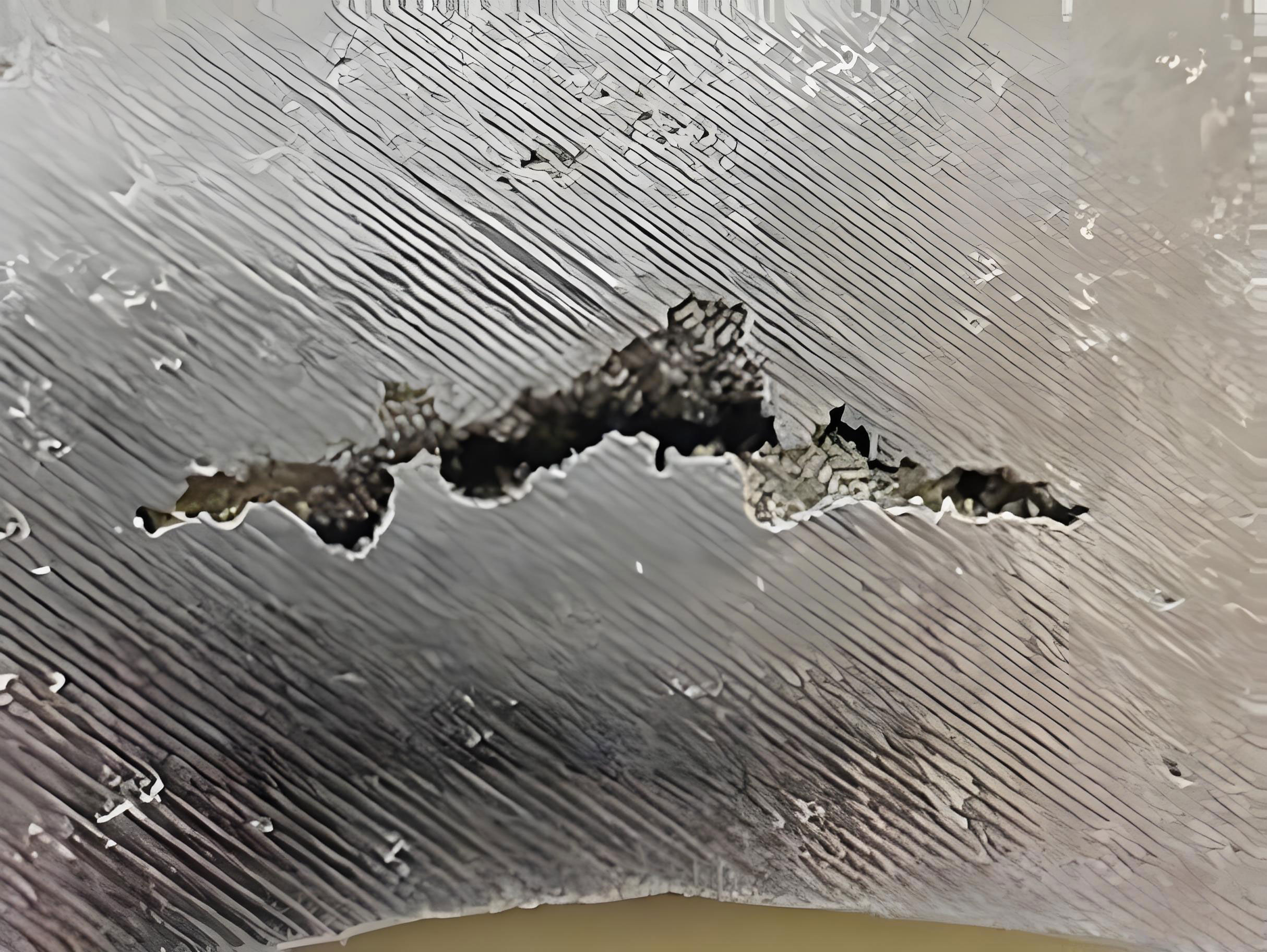
The consistency of the defect location is the first and most crucial clue. It immediately directs analysis away from random factors like slag or gas and toward systematic issues related to heat accumulation and feed metal accessibility.
Root Cause Analysis: A Multifactorial Problem
A thorough investigation revealed that the shrinkage in casting was not due to a single error but a combination of design and process limitations that collectively prevented sound solidification. The following table summarizes the primary contributing factors identified for both components:
| Contributing Factor | Mechanism Leading to Shrinkage | Applicable Component |
|---|---|---|
| Inadequate Riser Volume | The riser solidified before the thermal center of the casting hotspot, ceasing feeding prematurely. The liquid metal reserve was simply insufficient to compensate for the volumetric contraction of the isolated heavy section. | Side Cover & Valve Body |
| Restricted Feeding Channel (Riser Neck) | Even with sufficient riser liquid, the connection (neck) between the riser and the casting was too small and froze early. This created a “blocked artery,” preventing the feed metal from ever reaching the shrinking region, a classic cause of isolated shrinkage in casting. | Side Cover & Valve Body |
| Unfavorable Geometrical Features (Hot Spots) | Weight-reduction pockets and intersecting thick sections created isolated volumes of metal with high thermal mass. The surrounding thin walls solidified rapidly, isolating these hot spots which then shrank independently with no source of feed metal. | Side Cover (Pockets) |
| Sand “Hot Spots” and Poor Heat Extraction | Sharp internal corners in the mold (e.g., in weight-reduction pockets) lead to sand overheating, reducing the cooling rate of the adjacent metal. This extends the local solidification time, exacerbating the risk of shrinkage in casting. | Side Cover |
| Lack of Directed Solidification Gradient | The solidification sequence was not controlled to proceed systematically from the farthest point of the casting back toward the riser. Thick sections solidified in isolation rather than as part of a fed pathway. | Valve Body (Oil Galleries) |
The underlying physics can be framed using the fundamental requirement for sound casting: the feeding path must remain open and fluid until the section it is intended to feed has fully solidified. This can be conceptually modeled by comparing solidification times. The well-known Chvorinov’s rule states that solidification time $t_s$ is proportional to the square of the volume-to-surface area ratio (modulus, $M$):
$$ t_s = k \cdot M^n = k \cdot \left( \frac{V}{A} \right)^n $$
where $k$ is the mold constant and $n$ is typically ~2. For effective feeding, the riser must have a longer solidification time than the region it feeds:
$$ t_{s\_riser} > t_{s\_casting\_section} $$
This implies the riser modulus must be larger: $M_{riser} > M_{casting\_section}$. In our initial design, this criterion was not met for the isolated hot spots. Furthermore, the condition for the feeding channel (neck) is even more stringent: it must remain open longer than the hot spot and the riser must still contain liquid. The neck modulus $M_{neck}$ must satisfy:
$$ M_{riser} > M_{neck} > M_{hotspot} $$
The initial failure was a violation of this modulus hierarchy, directly resulting in the observed shrinkage in casting.
Systematic Solutions and Validated Results
The correction strategy was multifaceted, targeting each root cause. The goal was to redesign the thermal and geometrical system to establish a controlled, directional solidification pattern ending at a fully functional riser.
1. Riser System Redesign: The first step was to increase the thermal capacity of the riser. For the valve body, the riser was changed from a cylindrical to a spherical shape and its diameter increased. The spherical shape offers a better volume-to-surface area ratio (a higher modulus) for the same amount of metal, making it more efficient. The increased size ensured $M_{riser}$ was sufficiently greater than $M_{hotspot}$.
2. Creating and Enhancing Feeding Channels: This was the most critical intervention. Merely having a large, hot riser is useless if the path to the shrinking area is blocked.
- For the side cover, the connection between the riser neck and the casting flange was significantly thickened. This increased the modulus of the neck ($M_{neck}$), delaying its solidification and keeping the “feed artery” open long enough for the riser metal to reach the solidifying hot spot.
- For the valve body, “wall pads” or feed aids were added beneath the oil galleries. These are local, controlled thickenings of the casting wall that create a thermal channel back to the riser. They are machined off in post-casting operations. This technique is governed by ensuring the modulus increases progressively along the feed path. If the hotspot has modulus $M_h$, the pad should have $M_{pad} > M_h$, and the neck should have $M_{neck} > M_{pad}$.
3. Modifying Casting Geometry (in Collaboration with the Customer): To address the issues of sand hot spots and isolated thermal masses, the component design was optimized for producibility.
- The radii of internal corners (both in the part cavity and on external features like flanges) were increased. This serves two purposes: it eliminates sharp sand corners that overheat, improving heat dissipation, and it reduces stress concentration in the casting. The change from a small radius (e.g., R3 mm) to a larger one (R5-R8 mm) significantly improves sand durability and cooling.
- The dimensions of weight-reduction pockets were increased where possible. While counterintuitive, a larger pocket often reduces the local thermal mass more effectively than a smaller, deeper one, and it further eliminates problematic sand geometries. The new design promotes more uniform cooling.
The effectiveness of these combined measures was dramatic and quantitatively verified:
| Corrective Action | Component | Result (Reduction in Shrinkage-Related Scrap) |
|---|---|---|
| Increased Riser Size & Modulated Neck | Side Cover | Scrap reduced from ~9% to <1% |
| Added Feed Pads & Optimized Riser | Valve Body | Scrap reduced from ~11% to ~1% |
| Increased Radii & Pocket Modification | Both | Eliminated localized hot spots, improved moldability and cooling. |
Non-destructive testing (X-ray and dye penetrant) confirmed the complete elimination of shrinkage in casting defects in the previously problematic zones. More importantly, field performance from customers indicated zero leaks or failures related to porosity.
Generalized Principles for Preventing Shrinkage in Casting
The lessons from these specific cases can be distilled into a general methodology for preventing shrinkage in casting in complex components.
A. The Primacy of Thermal Modulus Analysis: Every casting section and the feeding system should be analyzed in terms of its geometric modulus $M = V/A$. The design must obey the solidification gradient rule. Software simulation is invaluable for this, but the fundamental principle can be applied manually during initial design review. Identify the sections with the highest $M$—these are the potential sites for shrinkage in casting.
B. Designing the Feeding Pathway, Not Just the Riser: The riser is only the reservoir. The channel system (riser neck, feed pads, controlled thickness gradients) that connects this reservoir to the thermal hotspots is what determines success or failure. This pathway must be designed to solidify in a controlled sequence. A useful design check is to ensure the solidification time gradient exists along the intended feed path. The local solidification time $t_s$ at any point $x$ along the path to the riser should increase toward the riser:
$$ \frac{dt_s}{dx} > 0 \quad \text{(from casting end toward riser)} $$
C. Proactive Collaboration on Component Design: Foundries must engage early with design engineers to implement “casting-friendly” features. Key proposals should include:
- Avoiding isolated heavy sections. If unavoidable, design in feed pads or consider internal chills.
- Specifying generous radii on all corners (both internal and external). A minimum radius rule, such as $R_{min} \geq 0.3 \times \text{wall thickness}$, can be highly effective.
- Evaluating weight-reduction features not just for mass savings but for their effect on creating thermal bottlenecks.
D. Quantifying the Risk: A Shrinkage Tendency Index
For a quick assessment of a feature’s risk, one can define a simplified shrinkage in casting tendency index $I_s$ for an isolated section:
$$ I_s = \frac{M_{section}}{M_{available\_feed\_path}} \cdot \frac{1}{f_{cooling}} $$
where $M_{section}$ is the modulus of the suspect section, $M_{available\_feed\_path}$ is the modulus of the most constricted part of the connection to the riser, and $f_{cooling}$ is a factor accounting for local cooling conditions (e.g., $f_{cooling} < 1$ for a sand hot spot, $f_{cooling} > 1$ if a chill is used). If $I_s > 1$, the section is at high risk for shrinkage and the design must be modified (increase feed path modulus, add cooling, or reduce section modulus).
Conclusion
Resolving shrinkage in casting defects, particularly in safety-critical automotive components, requires moving beyond trial-and-error. It demands a fundamental understanding of solidification principles and a systematic approach to design review. The core of the solution lies in recognizing that shrinkage is a feeding problem. Success is achieved by ensuring a hierarchy of thermal masses that directs solidification along a planned pathway toward an adequately sized and properly connected feeder. This involves a combination of optimizing the foundry process (riser design) and proactively influencing the component geometry to eliminate thermal isolation and promote uniform cooling. By applying the modulus-based analysis and principles of directional solidification, foundries can transform the fight against shrinkage in casting from a reactive quality control issue into a proactive, predictable element of process design, significantly enhancing yield, reliability, and customer satisfaction.