
In the realm of high-precision machine tool manufacturing, the intrinsic quality of the structural machine tool casting serves as the foundational pillar for achieving and maintaining exceptional accuracy. Among the various microstructural features, the morphology of graphite flakes exerts a paramount influence on the final properties of the cast iron component. Extensive research and practical experience have demonstrated that a predominantly Type A graphite structure, characterized by its uniform, randomly oriented, and non-directional flake distribution, is instrumental in enhancing the performance homogeneity, stability, and overall integrity of a machine tool casting. The pursuit of superior strength, high rigidity, minimal residual stress, and excellent hardness uniformity—all critical demands for high-precision machine beds and slides—is intrinsically linked to the successful control of this graphite morphology. Therefore, the technological challenge of reliably producing a high-quality machine tool casting with a sufficient proportion of Type A graphite is a crucial factor in elevating the machine’s precision and its long-term precision retention capabilities.
Historically, conventional foundry practices for producing high-strength grades like HT300 often relied on reducing the carbon equivalent (CE) to promote a larger fraction of pearlitic matrix, thereby increasing tensile strength. The carbon equivalent is a key parameter, commonly calculated as:
$$CE = C + \frac{Si}{3}$$
While effective for strength, this low-CE approach introduces significant drawbacks for complex machine tool castings. The reduced carbon content impairs the fluidity of the molten iron, necessitating higher pouring temperatures. This, in turn, increases the risk of shrinkage porosity and macro-shrinkage defects in heavy sections, such as guideways. Concurrently, the diminished graphite content coupled with rapid cooling in thin-walled sections promotes the formation of undercooled graphite types (D and E). These undesirable morphologies increase the section sensitivity of the casting, making intricate structures with large variations in wall thickness highly prone to hot tearing and crack formation. Furthermore, a low carbon equivalent inherently leads to higher casting stresses and greater distortion during cooling. As the performance requirements for host machines escalate, it becomes increasingly difficult to reduce these locked-in stresses to an acceptable minimum through subsequent aging treatments alone, ultimately compromising the geometric accuracy and stability of the finished machine tool casting.
A case in point from earlier production experiences involved a turning bed machine tool casting with a weight of approximately 2500 kg and complex internal ribbing. Produced to a HT300 specification via traditional low-CE practice, this component exhibited recurring crack defects in specific, high-stress locations. The chemical composition and charge mix for this problematic batch are summarized in Table 1.
| Pig Iron | Steel Scrap | Returns | CE | C | Si | Mn | P | S |
|---|---|---|---|---|---|---|---|---|
| 20 | 50 | 30 | ~3.55 | 3.00 | 1.66 | 0.84 | 0.040 | 0.063 |
As evident, the carbon equivalent was maintained at a relatively low level of about 3.55%. Residual stress measurements on these castings revealed a maximum principal stress exceeding 100 MPa. Metallographic examination of the crack initiation sites confirmed the presence of a significant amount of directional, intercellular Type E graphite. This undesirable morphology, resulting from the combined effect of low CE and rapid cooling in thin sections (15mm ribs), created localized weaknesses and acted as stress concentrators, leading to crack initiation and propagation. This experience underscored the limitations of the traditional strength-centric approach for a high-integrity machine tool casting.
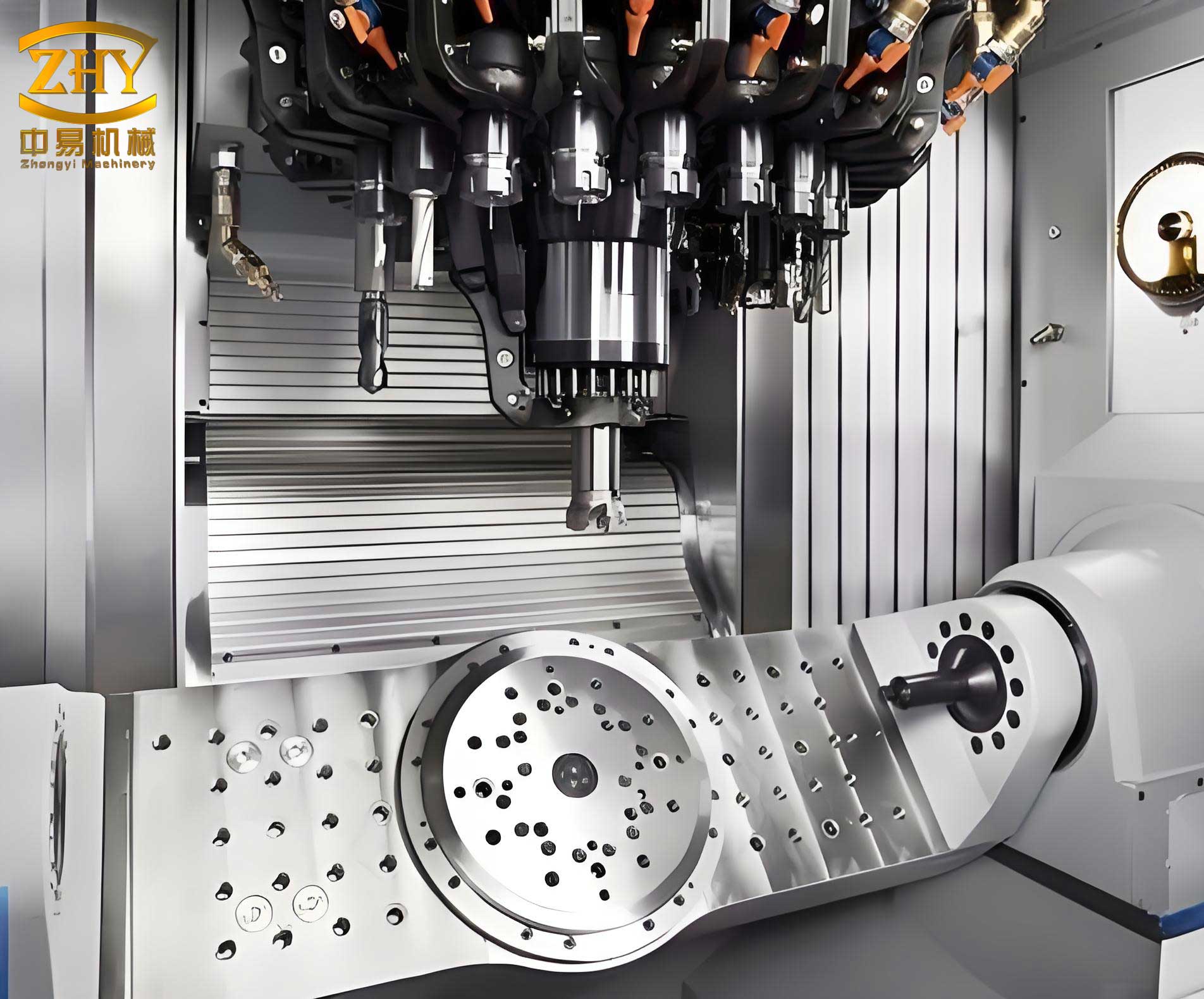
To fundamentally improve the graphite morphology and enhance the inherent quality of high-precision machine tool castings, a comprehensive optimization program was undertaken, focusing on charge design, chemical composition, and melt treatment practices.
Charge Composition and Chemical Philosophy
The first strategic shift was in the charge make-up. The use of pig iron was eliminated entirely to prevent the genetic inheritance of coarse graphite structures often associated with it. The proportion of steel scrap was increased substantially, from 50% to 70%, with the balance being foundry returns. A high steel scrap charge, combined with effective carbon recovery practices (carburizing), promotes graphite refinement and improves its morphology while concurrently contributing to high tensile strength. The cornerstone of the new chemical philosophy was to increase the carbon equivalent to a range above 3.70%. This elevation in CE enhances molten metal fluidity, improves feeding characteristics to achieve denser microstructure, and critically, promotes the formation of Type A graphite even in moderately cooled sections, thereby reducing section sensitivity. A higher CE also contributes to a natural reduction in casting stresses, which is vital for the dimensional stability of a precision machine tool casting. The revised charge and target composition window are detailed in Table 2.
| Steel Scrap | Returns | CE Target | C | Si | Mn | P | S |
|---|---|---|---|---|---|---|---|
| 70 | 30 | 3.67 – 3.83 | 3.10 – 3.20 | 1.70 – 1.90 | 1.00 – 1.20 | ≤ 0.10 | 0.08 – 0.10 |
Initial trials with this modified base composition showed a marked increase in the proportion of Type A graphite. However, minor amounts of undercooled graphite persisted, and a noticeable decrease in average guideway hardness was observed (from ~186 HBW to ~175 HBW). This hardness reduction was attributed to the decreased austenite dendrite fraction resulting from the higher CE, which led to a somewhat weakened matrix. It became clear that to achieve the dual objectives of excellent graphite morphology and requisite mechanical properties, further refinements in melt treatment and selective alloying were necessary.
Melt Treatment and Inoculation Optimization
The melting and treatment process was rigorously optimized. A key addition was the implementation of a high-temperature soaking treatment. The molten iron was held at 1510-1530°C for 5-8 minutes to increase its purity and homogeneity—a step often omitted in traditional practice. Following this, the bath was cooled using clean steel scrap to a temperature suitable for inoculation and pouring.
The selection of an effective inoculant was identified as critical for achieving the desired graphite structure. A controlled experiment was conducted using test castings (500mm x 120mm x 70mm) poured from a single heat. Three different inoculants were evaluated under identical conditions: standard 75% FeSi, a长效孕育剂 (long-life inoculant) based on Si-Ba-Ca, and a potent inoculant based on Si-Sr-Zr. All inoculants were added to the ladle during tapping, with no subsequent stream inoculation, to assess their inherent potency over a short processing time (~6 minutes). The test parameters are consolidated in Table 3.
| Test Block | Inoculant Type | Inoculant Addition (%) | Chemical Composition Range (%) |
|---|---|---|---|
| 1 | 75SiFe | 0.7 | C: 3.10-3.20; Si: 1.60-1.80; Mn: 0.80-1.00; P: ≤0.10; S: 0.08-0.10 |
| 2 | SiBaCa | 0.5 | |
| 3 | SiSrZr | 0.5 |
The test blocks were machined and evaluated for microstructure and mechanical properties. The results, summarized in Table 4, revealed significant differences. While the SiBaCa and SiSrZr inoculants produced essentially 100% Type A graphite (Grade 4), the 75SiFe inoculant resulted in a mix containing some Type E graphite (Grade 3-4). More importantly, the tensile strength achieved with the SiSrZr inoculant was over 10 MPa higher than with the other two, despite similar hardness levels. The SiBaCa inoculant, known for its fade resistance, did not show a significant short-term advantage in this test setup. Microstructural analysis confirmed that the SiSrZr-inoculated material exhibited the finest and most uniform A-type graphite distribution without the occasional chunk graphite observed in the 75SiFe sample. This comparative study conclusively demonstrated the superior efficacy of the SiSrZr inoculant for refining graphite and enhancing the combined properties of the machine tool casting material.
| Test Block | Inoculant | Predominant Graphite Type | Avg. Tensile Strength (MPa) | Avg. Hardness (HBW) |
|---|---|---|---|---|
| 1 | 75SiFe | A + Some E | 220 | 182 |
| 2 | SiBaCa | A | 217 | 185 |
| 3 | SiSrZr | A | 232 | 185 |
Integrated Process Implementation for High-Precision Castings
Based on the findings from the charge, composition, and inoculation studies, a fully integrated production process was established for the high-precision turning bed machine tool casting. The gating system was redesigned to feature multiple, well-distributed ingates along the guideway surface instead of a single heavy ingress point, preventing localized overheating and coarse grain formation.
The chemical composition was fine-tuned to balance graphite morphology with enhanced strength. While the high CE (target >3.70%) promoted Type A graphite and low stress, strategic low-alloying was incorporated to restore and surpass the required strength and hardness levels without compromising graphite structure. The final composition specification is shown in Table 5.
| C | Si | Mn | P | S | Cu | Cr | Sn | CE |
|---|---|---|---|---|---|---|---|---|
| 3.15-3.20 | 1.8-2.0 | 0.80-1.00 | ≤ 0.10 | 0.08-0.10 | 0.5-0.7 | 0.20-0.25 | 0.03-0.05 | 3.75-3.87 |
The melt treatment sequence was finalized as a three-stage process, detailed in Table 6. A key innovation was the addition of a preconditioner to the furnace charge. This step, performed by adding 0.2% of a fine-grained preconditioner with the charge materials, creates numerous nucleation sites in the melt, preparing it for a more effective response to subsequent inoculation—a concept particularly beneficial for electric induction melted iron which tends to have fewer innate nuclei. This was followed by a primary inoculation with 0.3% SiSrZr (0.7-3 mm) during tapping, and a crucial secondary, late-stream inoculation with 0.1% fine SiSrZr (0.2-0.7 mm) during pouring to counteract inoculation fade and ensure a uniform, fine Type A graphite structure throughout the machine tool casting, even in slower-cooling sections.
| Treatment Stage | Material | Particle Size (mm) | Addition Method | Addition Rate (%) | Purpose |
|---|---|---|---|---|---|
| 1. Preconditioning | Special Preconditioner | 0 – 10 | Added with furnace charge | 0.2 | Create nucleation sites in the base melt |
| 2. Primary Inoculation | SiSrZr Inoculant | 0.7 – 3 | Ladle addition during tap | 0.3 | Major graphite modification and refinement |
| 3. Secondary (Late) Inoculation | SiSrZr Inoculant | 0.2 – 0.7 | Stream inoculation during pour | 0.1 | Prevent fade, ensure uniform morphology in all sections |
Furthermore, strict process controls were enforced: the total time from the start of inoculation to the end of pouring was kept under 15 minutes, the pouring temperature was maintained between 1360-1390°C, and the castings were shakeout at a temperature below 280°C to minimize thermal shock and control the development of residual stresses.
Results, Analysis, and Discussion
The implementation of this optimized production methodology yielded transformative results for the high-precision machine tool casting. Separately cast test bars exhibited a tensile strength of 345 MPa, comfortably exceeding the HT300 specification. Metallographic analysis of the guideway sections confirmed the primary objective: the graphite structure was overwhelmingly Type A with a length rating of 4, uniformly distributed in a matrix of approximately 98% pearlite. Phosphide eutectic and carbide content were controlled to less than 1%.
Hardness testing across the four guideways of the bed casting revealed exceptional consistency. Measurements taken at multiple points along each guideway fell within a narrow range of 191 to 202 HBW. The hardness uniformity, expressed as the maximum deviation from the average, was an impressive -4/+5 HBW, indicating a highly homogeneous structure throughout the critical wear surfaces of the machine tool casting. This level of uniformity is essential for consistent wear resistance and machining performance in a high-precision application.
A critical evaluation involved measuring the residual stresses. Using the blind-hole drilling strain-gauge method on the guideways, the maximum principal residual stresses were quantified and compared against castings produced via the traditional low-CE method. The results, presented in Table 7, are striking.
| Production Process | Max. Tensile Stress (σ₁) Range | Max. Compressive Stress (σ₂) Range | Notable Maximum Stress Value |
|---|---|---|---|
| Traditional (Low CE ~3.55%) | +58 to +87 MPa | -72 to -102 MPa | -101.97 MPa |
| New Optimized Process (High CE ~3.78%) | -54 to +67 MPa | -42 to -78 MPa | -77.74 MPa |
The data shows a significant reduction in the magnitude of locked-in stresses. The most severe compressive stress measured was reduced from approximately -102 MPa to -78 MPa, representing a stress reduction of about 24%. This substantial decrease in residual stress is a direct consequence of the higher carbon equivalent and the refined, uniform Type A graphite structure, which accommodates thermal contraction more evenly and reduces internal constraints during solidification and cooling. Lower residual stresses translate directly into reduced distortion during machining and superior long-term dimensional stability for the machine tool casting, which is the ultimate goal for precision machine tools.
The mechanism behind this improvement can be summarized by considering the combined effects. The high steel scrap charge and preconditioning provide a clean melt with ample nucleation potential. The elevated carbon equivalent, calculated as $$CE = C + \frac{Si}{3}$$ and maintained above 3.75%, favors the stable growth of graphite from the austenite liquid, suppressing the undercooling that leads to D/E type graphite. The strategic use of a strong, fade-resistant inoculant like SiSrZr, applied in a dual-stage process, ensures a high density of active nucleation sites throughout the entire solidification process, resulting in a fine, uniform dispersion of Type A graphite. The addition of alloying elements like Cu, Cr, and Sn strengthens the pearlitic matrix without interfering with graphite formation, thereby recovering and enhancing the hardness and strength that might otherwise be slightly lowered by the high CE. The relationship between ultimate tensile strength (UTS) and the key compositional and processing factors can be conceptually represented as a function:
$$UTS \approx f(CE_{high}, [Inoc]_{Sr/Zr}, [Alloy]_{Cu,Cr,Sn}, Process_{controlled})$$
where a high CE and potent inoculation promote good graphite morphology, and the alloying elements strengthen the matrix, leading to a superior combination of properties.
Conclusion
This comprehensive study demonstrates a successful paradigm shift in the production of high-integrity machine tool castings. Moving away from the traditional low-carbon-equivalent approach, the optimized methodology integrates several key principles:
- Charge Design: Eliminating pig iron and utilizing a high percentage of steel scrap (70%) breaks the genetic inheritance of coarse graphite and provides a cleaner base iron, while in-furnace preconditioning enhances nucleation potential.
- Chemical Composition: Deliberately increasing the carbon equivalent above 3.70% promotes the formation of desirable Type A graphite, improves feeding characteristics, and inherently lowers casting stresses. Strategic low-alloying with elements like Cu, Cr, and Sn compensates for any matrix softening, ensuring the final machine tool casting meets all strength and hardness requirements.
- Advanced Melt Treatment: Implementing a high-temperature soak followed by a two-stage inoculation process using a potent SiSrZr inoculant is critical. The late-stream inoculation is especially important for maintaining a high density of active nuclei throughout the pouring and solidification sequence, guaranteeing a uniform, fine Type A graphite structure across all sections of the complex casting.
- Complementary Process Controls: A well-designed gating system to avoid localized overheating, controlled pouring temperatures, and a low shakeout temperature are essential supporting practices that consolidate the benefits of the metallurgical improvements.
The outcome is a high-precision machine tool casting characterized by an optimal microstructure of Type A graphite in a strong pearlitic matrix. This manifests in a superior property profile: high tensile strength (345 MPa), excellent and uniform hardness (191-202 HBW), significantly reduced residual stresses (≈24% lower), and consequently, outstanding dimensional stability and machining performance. This integrated approach has been validated through sustained batch production, establishing a reliable foundation for manufacturing high-quality castings that meet the rigorous demands of modern, high-precision machine tools.