
In the renewable energy sector, wind turbine components must endure harsh operating conditions, including corrosion, sand erosion, humidity, and low temperatures. Among these, the bearing block is a critical part of large-scale wind turbines, requiring exceptional durability and reliability over a lifespan of up to 20 years. As a manufacturer specializing in heavy-duty castings, our company faced a significant challenge with severe slag inclusion defects in bearing block castings, leading to the scrapping of over 100 tons of material and direct economic losses exceeding one million yuan. This issue underscored the urgent need to refine our foundry technology to prevent such defects and ensure the structural integrity of these components.
The bearing block castings are typically made from ductile iron grade QT400-18AL (equivalent to EN-GJS-400-18U-LT), which must exhibit high fatigue strength and low susceptibility to brittle fracture. The castings vary in size, with the smallest having轮廓 dimensions of approximately 2000 mm × 1240 mm × 500 mm and the largest up to 3000 mm × 1800 mm × 500 mm, weighing between 2200 kg and 4200 kg. These components feature complex geometries, including high dynamic load zones where thick ribs (60 mm) intersect with flanges (350 mm), creating regions prone to defect formation. Non-destructive testing requirements, such as ultrasonic and magnetic particle inspection, mandate Level II or higher quality in these critical areas, with the rest of the casting requiring Level III or above. The presence of slag inclusions, which are solid residues of slag or metal oxides embedded within the casting, can severely compromise mechanical properties like toughness and yield strength, leading to premature failure.
From a theoretical perspective, the process from iron melting to casting is inherently complex and irreversible. During high-temperature melting and pouring, it is nearly impossible to completely eliminate oxide slag from entering the mold cavity. Slag inclusions primarily originate from two sources: exogenous slag (primary slag), which includes contaminants and impurities introduced during melting, tapping, spheroidization, inoculation, slag removal, and pouring; and endogenous slag (secondary slag), formed as reaction products during desulfurization and spheroidization. The formation of slag inclusions involves intricate physico-chemical reactions, and in practice, defect analysis relies on operational experience, location, and morphology. Our investigation using scanning electron microscopy (SEM) and energy-dispersive X-ray spectroscopy (EDS) revealed that slag defects appear as irregular, cluster-like formations with darker boundaries and central voids. Composition analysis indicated high concentrations of C, O, Al, and Si, confirming the presence of metal oxides such as SiO₂, MgO, and Al₂O₃. This aligns with the characteristics of primary slag defects, where oxidized aggregates are entrapped in the molten metal during pouring.
To address this, we focused on optimizing the gating system, a key aspect of foundry technology, as it plays a crucial role in slag avoidance and trapping. While measures like increasing pouring temperature, controlling molten iron quality, reducing residual magnesium, and thorough slag removal are beneficial, a well-designed gating system is essential for minimizing slag entrapment. We conducted experiments with three different gating system designs, keeping other casting and melting parameters constant to isolate variables. The experimental setups are summarized in Table 1 below.
| Design Number | Gating System Type | Pouring Cup Type | Filtration Used | Casting Samples | Key Features |
|---|---|---|---|---|---|
| 1 | Slit-type ingate | Transfer ladle + funnel | No | 1-3 | Designed for rapid filling but prone to slag entrainment if slag floating time is insufficient. |
| 2 | Circular ceramic tube ingate | Transfer ladle + funnel | No | 4-6 | Open system with larger cross-sections to reduce turbulence and secondary oxidation. |
| 3 | Circular ceramic tube ingate | Basin-type pouring cup | Yes (foam ceramic filter) | 7-9 | Combines basin cup for slag separation and filtration for enhanced slag removal. |
The experiments were carried out under standardized foundry technology conditions, with each design producing three castings (labeled 1# to 9#). For Design 1, which used a slit-type ingate, castings 1–3 exhibited severe slag inclusions on the upper surfaces, concentrated within a 0–40 mm depth range as verified by ultrasonic testing and machining. This design, while promoting rapid mold filling, often resulted in slag being “sucked” into the cavity due to inadequate slag floating time in the runner. Additionally, prolonged pouring times to compensate for this led to erosion of the sand mold, causing sand inclusions and exacerbating defects. The fluid dynamics in such systems can be described by the Reynolds number formula, which predicts flow regimes: $$ Re = \frac{\rho v D}{\mu} $$ where \( \rho \) is density, \( v \) is velocity, \( D \) is hydraulic diameter, and \( \mu \) is dynamic viscosity. High Reynolds numbers indicate turbulent flow, which increases slag entrainment risk.
In Design 2, with a circular ceramic tube ingate and open gating system, castings 4–6 showed minor, scattered slag defects within 0–15 mm of the upper surface. The open system’s larger cross-sectional areas reduced flow velocity and minimized turbulence, thereby lowering the formation of secondary slag. The efficiency of slag separation in such systems can be modeled using Stokes’ law for particle settling: $$ v_s = \frac{2 (\rho_p – \rho_f) g r^2}{9 \mu} $$ where \( v_s \) is the settling velocity, \( \rho_p \) and \( \rho_f \) are particle and fluid densities, \( g \) is gravity, \( r \) is particle radius, and \( \mu \) is viscosity. This highlights the importance of low flow velocities for effective slag flotation.
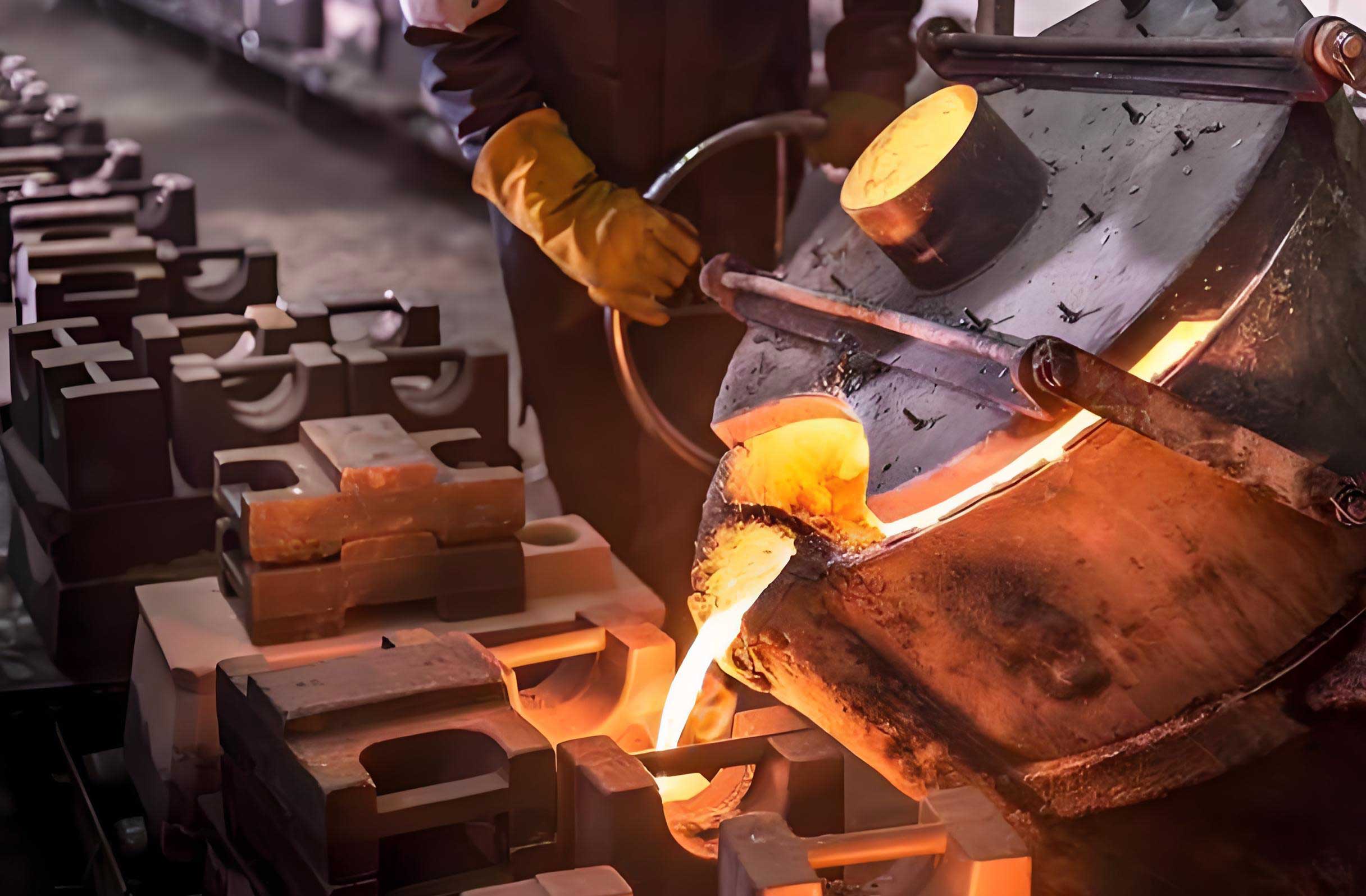
Design 3, incorporating a basin-type pouring cup and foam ceramic filtration, produced castings 7–9 with no detectable slag defects. The basin cup features a dam that regulates flow into the sprue, promoting vertical vortices that enhance slag separation by centrifugal forces. The filtration system included a foam ceramic filter (150 mm × 150 mm × 25 mm, 10 PPI porosity) capable of withstanding temperatures up to 1500°C, which trapped inclusions and reduced turbulence. The filter’s effectiveness can be quantified by a filtration efficiency equation: $$ \eta = 1 – e^{-k L} $$ where \( \eta \) is efficiency, \( k \) is a constant dependent on filter properties, and \( L \) is filter thickness. Combined with a slag collection chamber in the runner, this design ensured stable, uniform metal flow into the mold, effectively preventing slag entrapment.
The experimental results demonstrate the critical role of gating system design in foundry technology for defect mitigation. A comparative analysis of the outcomes is presented in Table 2, summarizing the performance of each design based on defect severity and distribution.
| Design Number | Defect Severity | Defect Depth Range (mm) | Overall Quality Rating | Key Observations |
|---|---|---|---|---|
| 1 | Severe | 0–40 | Unacceptable | Dense slag clusters; associated with turbulent flow and mold erosion. |
| 2 | Minor | 0–15 | Acceptable with reservations | Scattered defects; reduced turbulence but incomplete slag removal. |
| 3 | None | N/A | Excellent | No defects; effective combination of basin cup and filtration. |
Further, the composition of typical slag inclusions was analyzed to understand their formation better. Based on EDS data, the elemental composition of slag defects is summarized in Table 3, which highlights the prevalence of oxides.
| Element | C | O | Mg | Al | Si | Ca | Mn | Fe | Others |
|---|---|---|---|---|---|---|---|---|---|
| Wt. % | 7.00 | 29.45 | 0.52 | 18.92 | 10.61 | 1.17 | 1.59 | 28.63 | 2.11 |
The high oxygen content confirms the oxidative nature of these inclusions, with reactions such as: $$ 2\text{Mg} + \text{O}_2 \rightarrow 2\text{MgO} $$ and $$ \text{Si} + \text{O}_2 \rightarrow \text{SiO}_2 $$ occurring during melting and pouring. In foundry technology, controlling these reactions through proper gating design is essential. The optimized system in Design 3 effectively addresses this by incorporating principles of fluid dynamics and filtration theory. For instance, the pressure drop across the filter can be described by: $$ \Delta P = \frac{\mu Q L}{A K} $$ where \( \Delta P \) is pressure drop, \( Q \) is flow rate, \( A \) is cross-sectional area, and \( K \) is permeability. This ensures that the flow remains laminar, reducing slag entrainment.
Since implementing the optimized gating system from Design 3 in production, over 200 sets of bearing block castings have been manufactured without a single rejection due to slag inclusions. This success underscores the importance of integrating advanced foundry technology into casting processes. The combination of a basin-type pouring cup, foam ceramic filtration, and an open gating system with bottom-filling ingates has proven highly effective in eliminating slag defects. This approach not only enhances product quality but also reduces economic losses and improves sustainability in wind turbine component manufacturing.
In conclusion, the elimination of slag inclusion defects in wind turbine bearing blocks relies heavily on the application of robust foundry technology. Through systematic experimentation and optimization of the gating system, we have demonstrated that a design incorporating filtration and controlled fluid flow can prevent the entrapment of oxides and contaminants. This methodology has broader implications for the casting industry, particularly for large, complex components operating under demanding conditions. Future work could explore the integration of real-time monitoring and computational fluid dynamics simulations to further refine foundry technology and prevent defects in other critical applications.