
In my extensive research on advanced materials for aerospace applications, I have focused on the investment casting process for producing complex brackets from beryllium-aluminum (Be-Al) alloys. These alloys are renowned for their exceptional specific stiffness and strength, making them ideal for weight-critical components in satellites, aircraft, and military systems. However, the inherent challenges in casting Be-Al alloys, such as wide solidification ranges, susceptibility to shrinkage porosity, hot tearing, and cold shuts, often lead to high rejection rates. This study details my comprehensive approach to designing, simulating, optimizing, and validating an investment casting process specifically for a intricate satellite support bracket. My goal was to eliminate key defects and achieve as-cast mechanical properties that meet stringent aerospace standards, thereby demonstrating the viability of the investment casting process for high-performance Be-Al alloy components.
The Be-Al alloy system, typically comprising 60–65 wt% Be and 30–35 wt% Al with minor additions of Ag, Co, and Ge, exhibits a unique metallurgical characteristic: the two primary phases have vastly different solidification temperatures. The beryllium phase solidifies at a much higher temperature than the aluminum phase, leading to a prolonged mushy zone during cooling. This behavior, combined with the alloy’s high thermal conductivity and significant solidification shrinkage, complicates the investment casting process. The bracket chosen for this investigation, as shown in the structural analysis, features a complex geometry with significant variations in wall thickness, thin-walled side plates with lattice structures, and deep recessed windows. Such a design amplifies the risk of defects during the investment casting process, necessitating a meticulous and scientifically grounded methodology.
My methodology began with a thorough analysis of the alloy’s casting characteristics. I employed a vacuum induction melting furnace with a capacity of 100 kg for alloy preparation. The investment casting process chain involved precise wax pattern molding, assembly into a tree, ceramic shell building using a mullite-based system, and controlled dewaxing. The core of my process design relied on computational simulation to pre-emptively identify problem areas. I utilized Huazhu CAE software, a powerful tool for modeling filling and solidification in investment casting processes. The thermal-physical parameters of the Be-Al alloy, crucial for accurate simulation, are summarized in the table below:
| Property | Value |
|---|---|
| Density (g/cm³) | 2.05 – 2.15 |
| Thermal Conductivity (W·m⁻¹·K⁻¹) | 95 – 105 |
| Liquidus Temperature (K) | 1355 |
| Solidus Temperature (K) | 919 |
| Dynamic Viscosity (mPa·s) | 1.17 – 1.83 |
| Solidification Shrinkage (%) | 0.7 |
The simulation setup involved defining the shell thickness (8 mm), preheating temperature, pouring temperature, and boundary conditions. The shell was considered to be in a hot zone at the preheat temperature with an environmental radiation coefficient of 0.5. The filling sequence, critically analyzed through the simulation, revealed potential areas for mistun and cold shuts, especially in the thin sections remote from the ingates. The solidification simulation was even more revealing. By calculating the Residual Melt Modulus (Rm), a key indicator for shrinkage susceptibility, I could pinpoint zones most prone to porosity. The formula for this modulus is central to defect prediction in the investment casting process:
$$ R_m = \frac{R_v}{R_a} $$
where \( R_v \) is the volume of the residual liquid melt and \( R_a \) is the surface area of that residual melt. A low \( R_m \) value indicates a region that is difficult to feed and likely to form shrinkage porosity or cavities.
The initial simulation results for the conventional investment casting process layout were concerning. They predicted severe shrinkage porosity in the central platform area and within the deep window recesses. The platform, being a thick section connected to thinner walls, acted as a thermal hotspot. In the investment casting process, such areas solidify last but are often starved of liquid metal feed because the connecting channels (runners and ingates) freeze earlier. Furthermore, the simulation indicated a high risk of hot tears or cracks in the vertical reinforcing ribs. These ribs, attached to both thick and thin sections, experience differential thermal contraction during solidification. The high-strength, early-solidifying Be phase constrains the later-solidifying Al phase, generating tensile stresses that can exceed the material’s hot strength, leading to crack initiation and propagation. This is a classic failure mode in the investment casting process for such alloys.
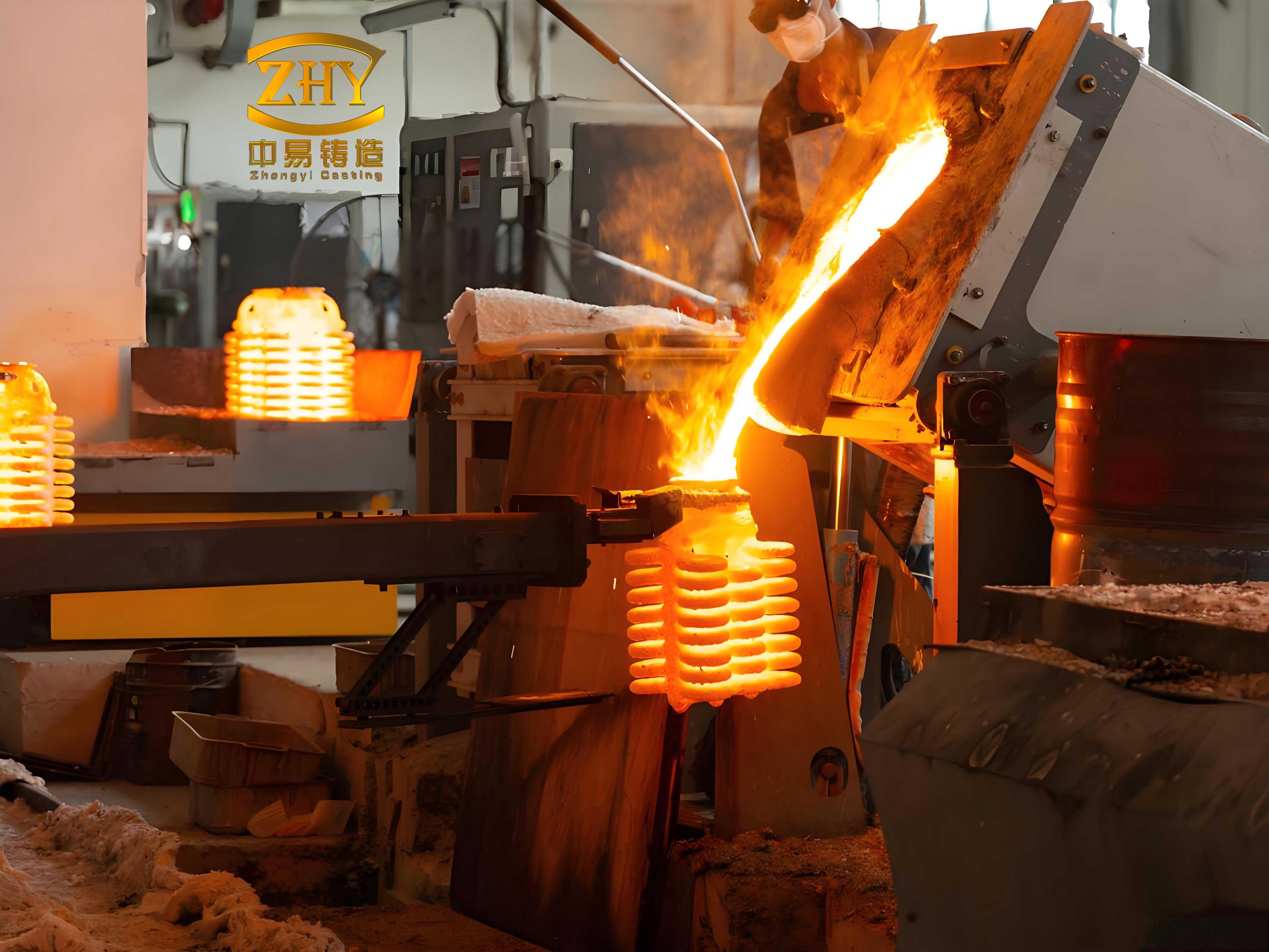
To overcome these challenges, I undertook a systematic optimization of the entire investment casting process system. The gating and feeding system was radically redesigned. The key modifications included: 1) Replacing the standard ingates with elliptical ones to improve flow characteristics and reduce premature freezing. 2) Introducing a strategically placed blind riser (or blind feeder) directly onto the thick platform section. This created a localized feeding channel, ensuring that this thermal center remained liquid longest and could be effectively fed to compensate for solidification shrinkage—a fundamental principle in optimizing the investment casting process. 3) Adding small vent tubes (air ducts) from the top of each major reinforcing rib to connect to the upper edge of the main riser. This ingenious modification served a dual purpose: it allowed trapped air to escape during mold filling, reducing back-pressure and improving fillability of thin sections, and it provided a low-resistance path for liquid feed to these ribs during the final stages of solidification, alleviating tensile stresses and virtually eliminating the hot tearing tendency. 4) Installing a 40 mm long blind pipe in the deep window cavity to act as a thermal sink and a local feed source. These optimizations transformed the thermal and feeding dynamics of the investment casting process.
Parallel to the gating design, the process parameters were rigorously investigated. The preheat temperature of the ceramic shell and the pouring temperature of the molten alloy are two of the most critical variables in any investment casting process. A low shell temperature can lead to cold shuts and mistuns, while an excessively high temperature can aggravate metal-mold reactions and slow cooling, potentially coarsening the microstructure. Similarly, the pouring temperature affects fluidity, feeding capability, and grain size. I conducted a Design of Experiments (DoE) approach, testing three shell preheat temperatures (750°C, 775°C, 800°C) each with three pouring temperatures (1290°C, 1300°C, 1310°C). The outcome of these trials, in terms of defect severity, is consolidated in the following table:
| Shell Preheat (°C) | Pouring Temp (°C) | Cracks | Shrinkage Porosity | Cold Shuts |
|---|---|---|---|---|
| 750 | 1290 | Moderate | Moderate | Severe |
| 1300 | Minor | Moderate | Moderate | |
| 1310 | Minor | Moderate | Minor | |
| 775 | 1290 | None | Moderate | Minor |
| 1300 | None | Minor | None | |
| 1310 | Minor | Moderate | None | |
| 800 | 1290 | None | Moderate | None |
| 1300 | Minor | Moderate | None | |
| 1310 | Minor | Severe | None |
The data clearly indicates that the optimal window for the investment casting process parameters lies at a shell preheat of 775°C and a pouring temperature of 1300°C. This combination successfully eliminated cracks and cold shuts while minimizing shrinkage porosity. The 800°C preheat, although good for surface finish and fill, promoted more severe shrinkage, likely due to an extended solidification time and a less directional temperature gradient. Therefore, 775°C/1300°C was established as the standard for the refined investment casting process.
The effectiveness of the optimized investment casting process was validated through both non-destructive and destructive evaluation. Macroscopic examination of the cast brackets showed a dramatic improvement. The previously cracked ribs were now sound, and the surface quality was excellent without any visible cold shuts. X-ray radiography, a crucial non-destructive testing method in quality control for the investment casting process, confirmed the internal soundness. The dense, thick platform area and the intricate thin-walled lattice sections showed a significant reduction in shrinkage porosity compared to castings produced via the initial process design. The localized feeding from the blind riser and the vent-assisted solidification of the ribs were unequivocally successful.
Microstructural analysis provided deeper insights. Optical microscopy (OM) and scanning electron microscopy (SEM) were performed on sections from critical areas. In samples from the non-optimized process, shrinkage pores were frequently observed along phase boundaries, particularly surrounded by a halo of aluminum-rich phase. This is a direct consequence of the sequential solidification in the investment casting process: the Be dendrites form first, blocking interdendritic channels, and the last Al-rich liquid solidifies in isolated pockets, leaving behind microporosity. The microstructural evolution can be partly described by considering the solid fraction (\( f_s \)) as a function of temperature (T) during solidification. For a binary alloy with a freezing range, the relationship is often approximated by:
$$ f_s = 1 – \left( \frac{T – T_s}{T_l – T_s} \right)^k $$
where \( T_l \) and \( T_s \) are the liquidus and solidus temperatures, and \( k \) is a constant related to the solidification morphology. A wide interval between \( T_l \) and \( T_s \), as in Be-Al alloys, leads to a long period where \( f_s \) is between 0 and 1, creating the vulnerable mushy zone prone to shrinkage and tear formation. In the optimized brackets, the microstructure was notably denser. While some micro-segregation of Al was still present, the continuity of the Be network was improved, and the number and size of shrinkage voids were drastically reduced. The SEM images distinctly showed fewer black pores, indicating higher structural integrity achieved through the controlled feeding in the investment casting process.
The ultimate validation of any manufacturing process is the performance of the final product. Tensile test specimens were extracted from representative sections of the cast brackets. The mechanical properties in the as-cast condition are the most relevant, as they eliminate the influence of any subsequent hot isostatic pressing (HIP) or heat treatment, showcasing the direct capability of the investment casting process. The results, compared against the customer’s specification, are presented below:
| Property | Initial Process | Optimized Process | Customer Requirement |
|---|---|---|---|
| Tensile Strength (MPa) | 200.9 | 248.6 | ≥ 210 |
| Yield Strength (MPa) | 184.7 | 191.8 | ≥ 165 |
| Elongation (%) | 1.86 | 2.10 | ≥ 1.5 |
| Elastic Modulus (GPa) | 138.9 | 195.0 | ≥ 170 |
The improvements are significant. The optimized investment casting process yielded a 23.7% increase in tensile strength, a 0.5% increase in yield strength, a 40.4% surge in elastic modulus, and a 12.9% improvement in elongation. All properties not only met but exceeded the specified requirements. The enhancement in elastic modulus and strength is directly attributable to the reduction in casting defects like porosity, which act as stress concentrators and reduce the load-bearing cross-section. The relationship between tensile strength (\(\sigma_t\)) and defect size (a) can be conceptualized using fracture mechanics principles, where for a given material toughness (\(K_{IC}\)), the strength is inversely related to the square root of the defect size: \(\sigma_t \propto K_{IC} / \sqrt{\pi a}\). By minimizing ‘a’ through process optimization, \(\sigma_t\) increases. Furthermore, the more controlled solidification likely led to a finer and more uniform distribution of the Be phase, contributing to the higher modulus. The investment casting process, when meticulously engineered, can thus produce near-net-shape components with properties suitable for direct application.
In conclusion, my research successfully demonstrates a robust and reliable investment casting process for manufacturing complex, thin-walled Be-Al alloy brackets. By integrating advanced CAE simulation for defect prediction, innovatively redesigning the gating and feeding system with features like blind risers and vent tubes, and meticulously optimizing process parameters (shell preheat at 775°C, pouring temperature at 1300°C), I have overcome the major hurdles associated with casting this challenging alloy. The optimized investment casting process effectively eliminated hot tears and cold shuts, minimized shrinkage porosity, and produced brackets with excellent internal and external quality. The as-cast mechanical properties surpassed all specified targets, validating the process for potential batch production. This work underscores the critical importance of a holistic, science-based approach to the investment casting process, where simulation guides design, and empirical validation closes the loop. It paves the way for the wider adoption of cast Be-Al alloys in demanding aerospace and defense applications, offering a viable route to lightweight, high-performance components. Future work could explore the integration of this investment casting process with post-casting HIP treatments to further enhance ductility and fatigue performance, or investigate the use of novel grain refiners to control the Be phase morphology directly during solidification.