
The development of high-performance machine tool castings is a cornerstone for advancing modern manufacturing capabilities. As the foundational component, constituting 70% to 80% of a machine’s total weight, the quality of the bed casting directly dictates the machining performance, geometric accuracy, and long-term precision retention of high-end CNC equipment. For years, the pursuit of higher strength in these critical components within our industry has often followed a singular, and ultimately limiting, path: the reduction of carbon equivalent (CE). This approach, while achieving target tensile strength, introduces a cascade of detrimental effects including increased shrinkage, elevated residual stress, poor machinability, and reduced damping capacity—all antagonistic to the core requirements of precision and stability. A paradigm shift is necessary. The future of premium machine tool castings lies not in lowering CE, but in mastering the technology to achieve high carbon equivalent, high strength, high stiffness, low alloying, and low stress simultaneously. This article explores this technological frontier, analyzing the limitations of traditional methods and detailing the integrated production system required to realize the next generation of machine tool castings.
The traditional method for producing high-strength grades like HT300 or HT350 has been to aggressively lower the carbon and silicon content. The resulting low-CE iron, while meeting tensile strength specifications on a test bar, creates a material fraught with internal contradictions for a precision machine tool casting. The relationship between tensile strength ($R_m$) and induced casting stress ($\sigma_{cast}$) is positively correlated in this regime. As one increases, so does the other, compromising dimensional stability. This is summarized by the trend:
$$ \sigma_{cast} \propto R_m \quad \text{(for low-CE irons)} $$
Conversely, a higher carbon equivalent inherently promotes lower residual stress, as shown by the general relationship:
$$ \sigma_{cast} \approx k_1 – k_2 \cdot CE $$
where $k_1$ and $k_2$ are positive constants. The historical divergence in practice is starkly evident. A comparative analysis from industry data reveals a significant gap in carbon equivalent values for the same nominal grade between international benchmarks and common domestic practices years ago, a gap that pointed directly to a fundamental difference in material philosophy and capability.
| Grade | International Avg. CE (%) | Domestic Avg. CE (%) | CE Gap (%) |
|---|---|---|---|
| HT250 | 3.95 | 3.75 | 0.20 |
| HT300 | 3.83 | 3.60 | 0.23 |
| HT350 | 3.76 | 3.48 | 0.28 |
This lower CE directly impacts key performance metrics. Elastic modulus ($E$), the primary indicator of stiffness and resistance to deformation under cutting forces, suffers. High-CE, high-strength irons consistently demonstrate an elastic modulus 10-20 GPa higher than their low-CE counterparts of the same tensile strength. Furthermore, machinability, often expressed by the index $m = R_m / HB$, degrades as hardness rises disproportionately. The damping capacity, crucial for vibration absorption and surface finish, is also inversely related to strength in low-CE irons. Therefore, the traditional path creates a material that is strong but stiff, stressful, difficult to machine, and poor at damping—a poor fit for a precision machine tool casting.
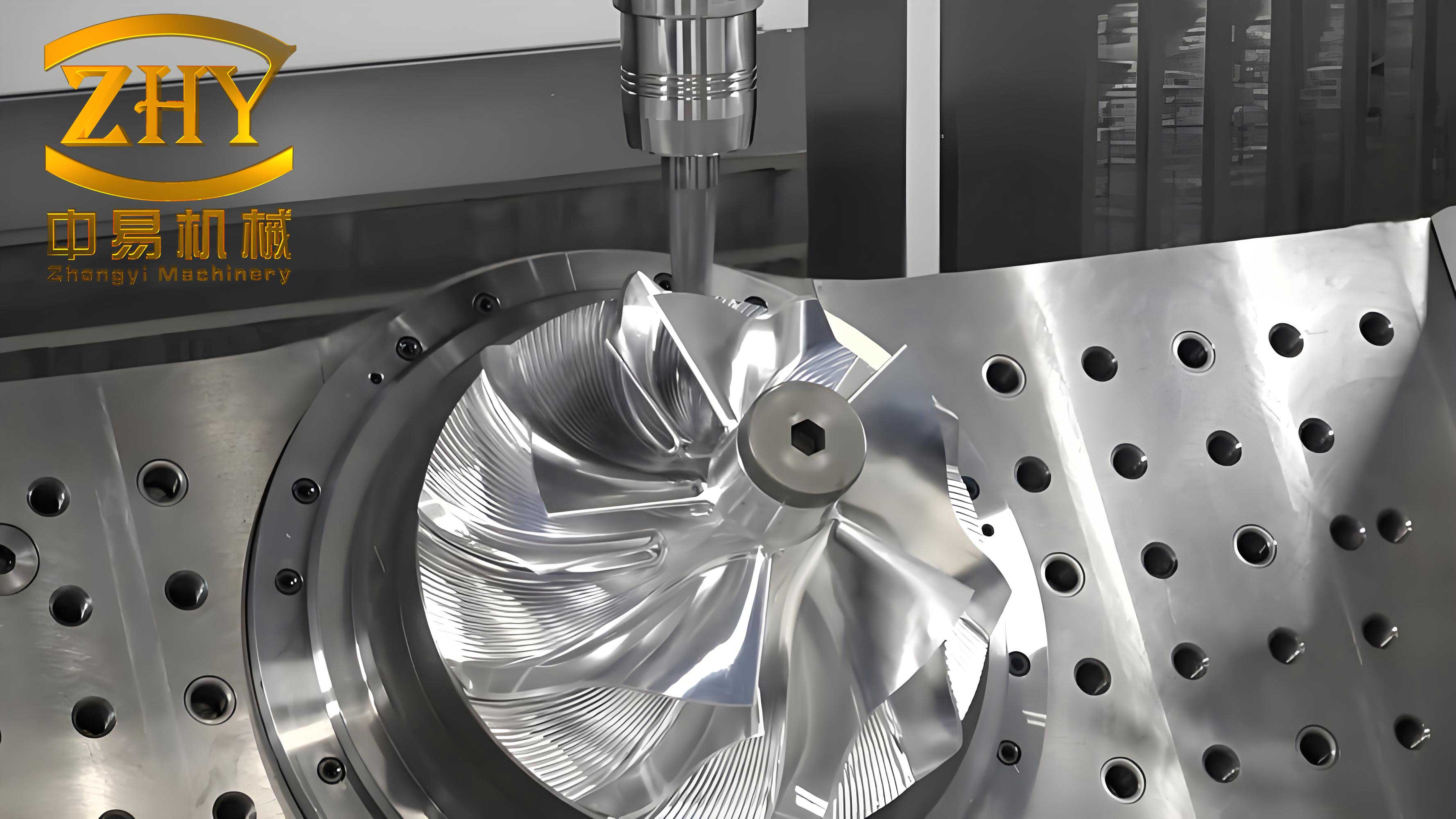
The modern specification for advanced machine tool castings must therefore be a balanced portfolio of properties. It is not merely about a single high number on a tensile test report. The target is a synergistic combination:
- High Strength & Stiffness: For load-bearing capacity and minimal deflection.
- High Carbon Equivalent: For superior castability, lower stress, better damping, and improved thermal conductivity.
- Low Residual Stress: For superior dimensional stability and precision retention post-machining.
- Excellent Machinability: For economic production and good surface integrity.
This balance is quantified through a set of comprehensive metrics beyond simple tensile strength. The eutectic degree ($S_c$) is a foundational parameter, calculated from the carbon ($C$) and silicon ($Si$) content:
$$ S_c = \frac{C}{4.26 – \frac{1}{3}Si} $$
For high-performance grades, $S_c$ should typically be ≥ 0.85, indicating a near-eutectic composition that favors graphite formation and good casting behavior. Furthermore, the冶金 quality is assessed through three derived indices:
- Maturity Degree ($R_G$): Compares actual strength to theoretical maximum. $R_G = \frac{R_m}{(1000 – 800S_c)} \geq 1.0$.
- Hardening Degree ($H_G$): Relates actual hardness to potential hardness. $H_G = \frac{HBW}{(900 – 744S_c)} \leq 1.0$.
- Quality Coefficient ($Q_i$): The ratio of maturity to hardening. $Q_i = \frac{R_G}{H_G} \geq 1.0$.
A high $Q_i$ signifies a material that achieves good strength without excessive hardness, i.e., good machinability and low stress. Achieving these targets with a high CE requires a fully integrated and controlled production system. It is not a single adjustment but a symphony of coordinated processes.
The cornerstone of this system is high-temperature melting combined with a steel scrap carburizing practice. Melting temperatures of 1500–1550°C are critical. This high superheat accomplishes several key functions: it refines the graphite structure, increases the undercooling potential of the high-CE iron (making it more receptive to inoculation), and most importantly, purifies the melt. At these temperatures, a thermochemical cleaning reaction occurs, reducing oxide inclusions (e.g., SiO₂) and decreasing dissolved oxygen, leading to a cleaner, more homogeneous liquid iron. This directly enhances the final properties. The practice of using a high percentage of steel scrap (50-80%) with precise carburizer additions fundamentally improves the nature of the graphite. Unlike graphite inherited from pig iron, which can be coarse, the graphite formed through the dissolution and precipitation of carbon from carburizers in a steel-based melt nucleates on finer, more numerous sites. This results in a finer, more uniform, and more beneficially shaped graphite dispersion, which provides better strength and, crucially, a greater graphite expansion effect during solidification, reducing shrinkage tendency. The superiority of this approach is evident in direct comparisons.
| Process Parameter | Traditional Charge (Pig Iron Based) | Synthetic Iron (High-Scrap Carburizing) |
|---|---|---|
| Typical Charge | High pig iron, lower scrap | >60% scrap, carburizer, no/low pig iron |
| Melt Quality | Higher oxide inheritance | Cleaner, more homogeneous |
| Graphite Morphology | Potentially coarser, less uniform | Finer, more uniform A-type graphite |
| Section Sensitivity | Higher (large hardness variation) | Lower (more uniform properties) |
| Typical Elastic Modulus for HT300 | ~100-110 GPa | 120-130 GPa |
Within a defined high carbon equivalent, the ratio of silicon to carbon ($Si/C$ ratio) plays a pivotal role in determining the balance between graphite formation and matrix strength. A higher $Si/C$ ratio (typically aiming for 0.55-0.60 for alloyed high-CE iron) strengthens the ferrite and increases the amount of pearlite-promoting austenite upon cooling. However, in very high-CE irons, excessive silicon can also coarsen the pearlite. Therefore, the $Si/C$ ratio must be optimized in conjunction with strategic, low-level alloying. The goal of alloying here is not to compensate for low CE, but to refine and strengthen the pearlitic matrix achieved from the high-temperature, high-scrap process. Elements like Copper (Cu), Chromium (Cr), and particularly Tin (Sn) are used in small, controlled amounts (e.g., Sn: 0.02-0.06%). Their primary function is to suppress ferrite formation, increase pearlite content, and, critically, to refine the pearlite interlamellar spacing. The strengthening contribution from refined pearlite is significant, often accounting for over 100 MPa in increased tensile strength.
A particularly powerful and cost-effective advancement in the metallurgy of high-performance machine tool castings is the controlled use of nitrogen (N) in combination with tin. Nitrogen, typically added via ferromanganese nitride additions to achieve levels of 80-100 ppm, has a profound effect on graphite morphology. It promotes shorter, thicker, and more curved graphite flakes with blunted edges. This shape modification reduces stress concentration at the graphite tips and improves the load-bearing capacity of the iron matrix. When combined with the pearlite-refining effect of tin, the synergy is remarkable. The nitrogen modifies the graphite, while the tin refines and secures the matrix, allowing for high strength and high elastic modulus to be achieved at carbon equivalents above 3.8%, with minimal reliance on more expensive alloying elements. The production window for nitrogen is narrow, requiring precise process control, but the benefits are substantial. The target properties for such an advanced HT300 grade can be defined as follows:
| Property Category | Control Index | Typical Achieved Range |
|---|---|---|
| Chemical Composition | CE: 3.80-3.90%; C: 3.20-3.30%; Si: 1.75-1.95%; N: 0.008-0.010%; Sn: 0.02-0.06% | As specified |
| Mechanical Properties | $R_m$ ≥ 300 MPa; $E$ ≥ 120 GPa; Hardness: 190-220 HB | $R_m$: 320-360 MPa; $E$: 120-130 GPa |
| Metallurgical Quality | $S_c$ ≥ 0.85; $R_G$ ≥ 1.0; $H_G$ ≤ 1.0; $Q_i$ ≥ 1.0 | $S_c$: 0.88-0.90; $R_G$: 1.10-1.25; $Q_i$: 1.15-1.30 |
| Casting Integrity | Residual Stress (as-cast) ≤ 50 MPa; (after stress relief) ≤ 20 MPa | Achievable with proper process control |
Finally, the benefits of the advanced material must be preserved through careful foundry practice. Inoculation is critical and must be robust, often employing a combination of pre-inoculation (e.g., with SiC or FeSi in the ladle) and late stream inoculation to ensure a high count of A-type graphite. Mold design must account for the different solidification characteristics. Perhaps most importantly, the thermal history of the casting must be managed to lock in low stress. This involves controlled cooling in the mold and a scientifically designed thermal stress relief cycle to reduce residual stresses to the minimal levels required for precision stability.
In conclusion, the evolution of machine tool castings is moving decisively away from the paradigm of low carbon equivalent. The future belongs to materials engineered for holistic performance: high carbon equivalent for castability and damping, high strength and stiffness for operational integrity, and critically, low inherent stress for timeless precision. Achieving this requires an integrated system embracing high-temperature melting, synthetic iron practices based on steel scrap, optimized silicon-to-carbon ratios, strategic micro-alloying with elements like nitrogen and tin, and meticulous process control throughout. This is not merely an incremental improvement but a fundamental redefinition of what constitutes a premium machine tool casting. It is the path to producing machine tool castings that are not only strong but also stable, machinable, and durable—the true foundation for the next generation of precision manufacturing equipment. The widespread adoption of this high-CE, high-performance paradigm will be a key indicator of the technological maturity and global competitiveness of a nation’s advanced manufacturing sector.